You know you should probably be posting on social media. But when you're running a campground or holiday park, dealing with guests, answering the phone, managing your team and tackling everything else that gets thrown at you in a day, figuring out what to post on Instagram probably isn't at the top of the list.
The good news? Social media doesn't need to become another full-time job. At RMS, we work with hospitality and outdoor accommodation businesses every day, and one thing we hear constantly is that social media feels like a chore nobody has time for. It doesn't need to be.
You don't need to post every day, you don't need to be on every platform and you definitely don't need every Reel to look professionally produced. What matters is using the time you do have well.
This post builds on RMS's Hospitality Learning Labs webinar, "How to Nail Your Park's Social Media Presence," where Maud Bruyere and I shared the real-world park examples.
Here's how to make social media work harder for your park, without making a lot more work for your team.
Why social media matters for campgrounds and holiday parks
The way people find their next place to stay is changing, and it's worth taking seriously before you decide how much time to give it.
In RMS's 2026 State of Outdoor Accommodation Report, we found that online search has overtaken word of mouth as the leading way people discover new places to stay. That doesn't mean word of mouth has disappeared. Some of it has simply moved online. People send Reels to their friends, tag the park they're staying at, share holiday photos and follow places they'd like to visit one day.
Here's what the data shows:
- 69% of consumers expect to use social media to help plan travel in the next year — rising to 83% for parents (Sprout Social, Q3 2025 Pulse Survey)
69% of consumers expect to use social media to help plan travel in the next year — rising to 83% for parents ()
- Over 10% of bookings on Hipcamp come from social media posts hosts share themselves
Over 10% of bookings on come from social media posts hosts share themselves
That last point is particularly interesting for parks. We're not just talking about Gen Z scrolling TikTok. Families are using social media as part of planning where they go and what they do when they get there.
Social isn't necessarily where the booking happens, though — at least not yet. Most guests would still rather book directly through a park's own website.
Someone might discover your park through a Reel, Google your name, read your reviews, visit your website and then book direct. Think about the journey in a simple way: social gets their attention, your website helps them decide, and then you need to make it as easy as possible for them to book through your booking engine.
That means something as simple as checking where the link in your Instagram or Facebook bio takes people is worth doing. If someone's interested enough to click, don't make them hunt around for your booking page.
Want to understand more about how today's campers are finding, choosing and booking their stays? Download RMS's 2026 State of Outdoor Accommodation Report for the latest insights from 1,500 campers across the US, UK, Australia and New Zealand.
Don't try to be everywhere
Facebook. Instagram. TikTok. YouTube. Trying to maintain every channel when you're already short on time is a quick way to make social feel impossible.
Instead, start with two questions: Who are your guests, and where are they spending their time?
Facebook can be useful for maintaining your existing community, sharing updates and promoting what's happening at your park. Instagram and TikTok lend themselves particularly well to showing people what staying with you actually looks and feels like, while YouTube can be useful when people are actively researching and planning a trip.
But don't make assumptions based purely on someone's age. Our own research threw up some surprises. Millennials were using AI trip-planning tools more than Gen Z, while Boomers were just as likely as Millennials to use camping forums.
Look at your actual guests, what you're trying to achieve and what your team can realistically maintain.
If you've got a small team, doing one platform properly is likely to be much more manageable than trying to keep Facebook, Instagram, TikTok and YouTube alive and posting once every six weeks on all of them.
Pick one. Give it a proper go for 30 days. See what happens. Then build from there.
Be a fan of your own park
One of the easiest ways to make social media harder than it needs to be is to constantly ask, "What content should we create?"
Try asking a different question instead: "What do we already love about this place that we're not showing people?"
You work somewhere people are literally choosing to spend their holidays. There are probably loads of things happening around you every week that a future guest would find funny, useful, beautiful or interesting. You've just stopped noticing some of them because they're completely normal to you.
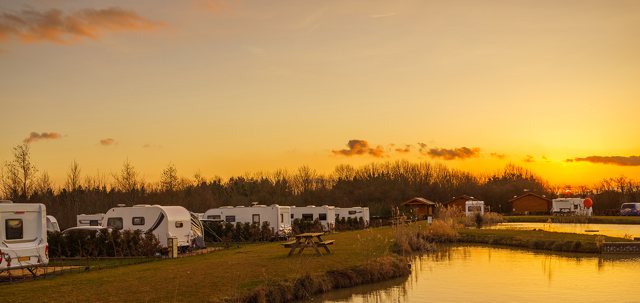
Take a sunset over the lake.
You could post a beautiful photo and write: "Golden hour over the lake. The perfect way to end the day. Who else wants to be here?"
That's a perfectly fine post. But it could probably come from any park.
Now imagine someone from your team walks down to the lake, turns the camera around and says: "I've finished work for the day, but I had to come down and show you this. Look at that."
Suddenly we're not just looking at another sunset. We're getting a feel for the person, the place and what being there is actually like. That's the kind of guest experience people remember and come back for.
Ask yourself: what's completely normal to us, but interesting to a guest?
It could be something guests always comment on, a behind-the-scenes moment, a member of your team or even an animal everybody knows.
That's really what being a fan of your own park is about: looking at it with fresh eyes and showing people the little things that make it worth a stay.
Five social media ideas for your park
Still staring at the blank "create post" screen? Start with the things already happening around you.
- Show the people Introduce someone from your team, tell the story of a regular guest or even introduce the park dog or resident duck everyone knows. Those little characters and stories are what make your park your park.
Show the people Introduce someone from your team, tell the story of a regular guest or even introduce the park dog or resident duck everyone knows. Those little characters and stories are what make your park your park.
- Answer the questions you're already getting Are dogs allowed? What's check-in like? Can guests bring a fire pit? If your team answers the same question again and again, that's content. Get your phone out and answer it on camera — the same questions you'd normally handle through a guest portal or at check-in work just as well as a quick video.
Answer the questions you're already getting Are dogs allowed? What's check-in like? Can guests bring a fire pit? If your team answers the same question again and again, that's content. Get your phone out and answer it on camera — the same questions you'd normally handle through a guest portal or at check-in work just as well as a quick video.
- Show what staying with you actually feels like Walk through a site. Show what happens when someone arrives. Film the view they'll wake up to or take people inside your facilities. This doesn't need a professional camera crew — a phone and someone willing to walk and talk is enough.
Show what staying with you actually feels like Walk through a site. Show what happens when someone arrives. Film the view they'll wake up to or take people inside your facilities. This doesn't need a professional camera crew — a phone and someone willing to walk and talk is enough.
- Show the real stuff Not everything needs to look perfect. Show the team getting through a manic changeover day, someone fixing something behind the scenes, or the weather doing something ridiculous. The everyday stuff is often the most interesting because guests don't normally get to see it.
Show the real stuff Not everything needs to look perfect. Show the team getting through a manic changeover day, someone fixing something behind the scenes, or the weather doing something ridiculous. The everyday stuff is often the most interesting because guests don't normally get to see it.
- Get outside the park Your guests aren't only choosing where they're going to sleep — they're choosing the whole trip. Show them the beach nearby, the walking trail you always recommend, the bakery everyone visits or the pub down the road. Tag those businesses when you feature them — local businesses and tourism accounts may reshare your content, helping your park reach people you wouldn't necessarily have reached on your own.
Get outside the park Your guests aren't only choosing where they're going to sleep — they're choosing the whole trip. Show them the beach nearby, the walking trail you always recommend, the bakery everyone visits or the pub down the road. Tag those businesses when you feature them — local businesses and tourism accounts may reshare your content, helping your park reach people you wouldn't necessarily have reached on your own.
Make social work with the team you have
Now for the question everyone is probably thinking: who's actually going to do all of this? If you're managing a park, checking people in, dealing with maintenance issues and answering the phone, we're not going to tell you to spend three hours making Reels every Tuesday.
If nobody currently owns social:
- Start with 15 minutes a week
- Walk around with your phone, capture a few things and post the best one
- When you're checking your emails, get into the habit of checking your social comments and messages too
If one person owns your social channels:
- Try batching your content — spend an hour every few weeks capturing photos and videos you can draw from
- You don't need separate content for every platform — the same video can usually work across Instagram, TikTok and Facebook, just tweak the caption
If you've got a larger/seasonal team:
- Get everyone involved in spotting potential content
- Create a shared folder where people can drop anything funny, interesting or worth sharing
- One person can still own what actually gets posted, but you've suddenly got a whole team finding the content
The goal, whatever your setup, is to make social a habit rather than another enormous project.
If you want more ideas like this from other park operators facing the exact same staffing question, it's worth joining the conversation in the RMS Community, where other operators share what's actually working for their teams, not just theory.
Let your guests help tell the story
There's another source of content you shouldn't overlook: your guests. If someone tags you in a great photograph or video from their stay, ask whether you can reshare it.
User-generated content doesn't just mean less content for your team to create. It gives future guests a much more genuine view of what staying with you is actually like.
Acres of Wildlife Campground in Maine does this particularly well. Its Instagram account regularly features guest content, including carousel posts filled with photographs of people enjoying their stays. Rather than relying on one perfect hero image, you're seeing the park through the eyes of the people actually staying there — and for a future guest, that's more powerful than a business telling them they'll have a great time.
Look for ideas, not production budgets
It's easy to look at a bigger travel or outdoor accommodation brand on social media and think, "That's great for them. They've got a marketing team." Instead, separate the idea from the production budget.
Campwild, a UK membership community offering access to private land for wild camping, is a good example. Its founders regularly talk directly to the camera, share trip inspiration and capture content while they're actually out doing things. You see the people behind the business — the account has a personality rather than everything coming from a faceless brand.
BIG4 Gold Coast Holiday Park in Australia takes a slightly different approach. It uses POV-style videos to put viewers into the guest experience, alongside content showing its food, facilities, team and activities.
You might not have the same resources as a larger operation, but you don't need them to borrow the idea. Get your phone out. Walk through a site. Take people down the waterslide. Introduce a member of your team. Show them what's for breakfast.
How do you know if your social media is working?
You don't need to track every metric available to you. Start with a few signals that tell you whether people are genuinely interested:
- Saves and shares: if someone saves your post for later or sends it to somebody else, that's a good sign it was useful or interesting to them
- Comments and DMs: there's a big difference between a heart emoji and someone asking, "Can I bring my dog?" or "Have you got availability in June?"
- Clicks: are people interested enough to leave social media and visit your website or booking page? That's a sign your content is doing its job
Pick a couple of these that matter to you, check where you are now and look again in 30 days. Don't be afraid to experiment — social is something you get better at by doing, not something you need to perfect before you start.
Your next 30 days...
You don't need to finish reading this and create a six-month social media strategy. Start here:
- Go through your profiles — check your bio and links, and fix any that don't lead straight to your booking page
- Reply to any comments or messages you've missed
- Decide which platform you're going to focus on
- Post something — one video taken on your phone, a guest photo, or a quick answer to a question you get asked all the time
From there, find a rhythm you can realistically keep up with and check back in 30 days to see what's working. When deciding whether something is worth posting, ask yourself: is this useful, interesting or helping a future guest picture themselves staying with us? If it is, you're probably on the right track.
Want more practical tips for making social media work harder for your park?
Frequently asked questions
- Do I need to be on every social media platform? No. Trying to keep Facebook, Instagram, TikTok and YouTube all active at once is usually what makes social media feel unmanageable in the first place. Pick the one platform where your guests actually spend their time, do it properly for 30 days, and build from there.
Do I need to be on every social media platform?
No. Trying to keep Facebook, Instagram, TikTok and YouTube all active at once is usually what makes social media feel unmanageable in the first place. Pick the one platform where your guests actually spend their time, do it properly for 30 days, and build from there.
- Which platform is right for my park?It depends on your guests, not just their age. Facebook tends to work well for maintaining an existing community. Instagram and TikTok are better for showing what staying at your park actually looks and feels like. YouTube can help people who are actively planning a trip.
Which platform is right for my park?It depends on your guests, not just their age. Facebook tends to work well for maintaining an existing community. Instagram and TikTok are better for showing what staying at your park actually looks and feels like. YouTube can help people who are actively planning a trip.
- Do I need professional photos or video equipment? No. A phone is enough. Rough, authentic content tends to perform just as well — sometimes better — than anything overly polished, especially in travel and hospitality.
Do I need professional photos or video equipment?
No. A phone is enough. Rough, authentic content tends to perform just as well — sometimes better — than anything overly polished, especially in travel and hospitality.
- Who should be responsible for posting? Whoever can realistically keep it up. If nobody currently owns it, start with 15 minutes a week. If you've got a team, get everyone spotting content and drop it into a shared folder, with one person owning what actually gets posted.
Who should be responsible for posting?
Whoever can realistically keep it up. If nobody currently owns it, start with 15 minutes a week. If you've got a team, get everyone spotting content and drop it into a shared folder, with one person owning what actually gets posted.
- Can I use the same content across different platforms? Yes. The same video can usually work across Instagram, TikTok and Facebook — just tweak the caption to suit the platform.
Can I use the same content across different platforms?
Yes. The same video can usually work across Instagram, TikTok and Facebook — just tweak the caption to suit the platform.
- How do I know if my social media is actually working? Don't try to track everything. Start with saves and shares, comments and DMs, and clicks through to your website or booking page. Pick a couple of these, check where you're at now, and look again in 30 days.
How do I know if my social media is actually working?
Don't try to track everything. Start with saves and shares, comments and DMs, and clicks through to your website or booking page. Pick a couple of these, check where you're at now, and look again in 30 days.
- What should I actually post? Start with what's already happening around you: introduce your team or a regular guest, answer a question you get asked all the time, show what staying with you actually feels like, share the unpolished everyday moments, or point people to what's worth doing around your park.
What should I actually post?
Start with what's already happening around you: introduce your team or a regular guest, answer a question you get asked all the time, show what staying with you actually feels like, share the unpolished everyday moments, or point people to what's worth doing around your park.


.jpg)