Strategy
You don’t need 10K followers to make money on Instagram. Learn how many followers you need for Gifts, Subscriptions, brand deals, and more.
Here’s a secret about making money on Instagram: your follower count doesn’t matter nearly as much as you’d think.
Some monetization options kick in at 500 followers. Others don’t have a follower minimum at all.
Below, we’ll break down the main ways to make money on Instagram, plus how many followers you need for each one.
Key takeaways
- There are several ways to make money on Instagram. You can earn through the Gifts, Subscriptions, Badges, affiliate sales, brand deals, and more.
- If you’re a smaller creator, you can still get paid. Brand deals and affiliate marketing have no follower minimum.
- Engagement is your secret weapon. Brands want proof that your audience is paying attention, and engagement is one way to show it.
How many followers do you need on Instagram to get paid?
You don’t need a specific number of followers to make money on Instagram. Even with a small following, you can still earn through brand deals and affiliate marketing.
It’s a different story if you want to use Instagram’s monetization tools. For example, you need 500 followers to receive Gifts, and 10,000 followers to unlock Subscriptions and Badges.
Bottom line: Having more followers opens more doors, but you can start earning long before you hit the big numbers.
Meet the Suite
Understand what matters, decide what to do next, and take action across every social workflow — all from one connected suite.
Instagram follower thresholds by monetization feature
Here’s how Instagram’s monetization tools stack up by follower count:
What can you monetize with under 1,000 followers?
With under 1,000 followers, you can still make money on Instagram through Gifts, brand partnerships, affiliate commissions, or selling your own products or services. Most of these options don’t have a minimum follower requirement.
Receive Gifts on Reels
Once you have 500 followers, viewers can send you Gifts on your Instagram Reels. It’s a simple way for your most loyal followers to show their support, even before brands start calling.
Just keep in mind that earnings aren’t predictable. How much you earn is entirely up to your viewers, so think of it as a bonus, not something you can always rely on.
Work with brands
You don’t need a massive following to land a brand deal. In fact, micro- and nano-influencers are expected to own 45% of influencer marketing budgets in 2026, according to eMarketer.
At this stage, there are a few ways to work with brands. For example, you could get paid to share a sponsored post with your followers, or create user-generated content (UGC) for a brand to share on its own channels.
With UGC, your follower count matters a lot less because brands are paying for the content you create, not access to your audience.
Earn affiliate commissions
Affiliate marketing lets you earn a commission when someone buys a product through your unique link or code.
On Instagram, that might look like sharing your favorite running shoes in a Reel, then adding your affiliate link to your bio. Every time a follower buys through that link, you get a cut of the sale.
Pro tip 💡: Make sure to disclose any affiliate links. Instagram requires it, and it’s also just good practice.
Sell your own products or services
If you have something of your own to sell, Instagram can also help you find customers, no matter how many followers you have.
A personal trainer, for example, might share workout routines on Instagram, then point followers to one-on-one coaching in their bio.
The upside is that you’re not waiting for Instagram or a brand to pay you. Your content brings people in, and your product does the rest.
What are Instagram’s native monetization tools, and what do they require?
Instagram offers four main ways to pay creators directly: Gifts, Subscriptions, Badges, and Bonuses. Most require a professional account, a minimum age of 18, and a certain number of followers. Bonuses are the exception, since they’re invite-only.
Gifts (500 followers)
Gifts is a feature that lets viewers tip you on your Reels. They buy Stars in the Instagram app, then use them to send Gifts on the Reels they love.
To turn on Gifts, you’ll need:
- At least 500 followers
- A professional account
- To be 18 or older
- To live in a country where Gifts are available (full list here)
There are a couple of fine-print rules, too. Collab posts can’t earn Gifts, and neither can accounts that mainly post content for kids.
It’s also worth noting that Instagram takes its cut when someone buys Stars. So if a fan sends a $10 Gift, don’t expect the full amount.
Subscriptions (10,000 followers)
Subscriptions let your biggest fans pay a monthly fee for exclusive content. You set the price, and they get access to features like subscriber-only Stories, posts, and Lives. Subscribers also get a special badge next to their name, so they stand out in your comments and DMs.
To qualify, you’ll need:
- At least 10,000 followers
- A professional account
- To be 18 or older
- To live in an eligible country (full list here)
Note: Subscriptions aren’t available to accounts that mainly post content for kids.
Badges (10,000 followers)
While you’re hosting an Instagram Live, viewers can buy Badges for $0.99, $1.99, or $4.99. In return, they get a heart icon next to their username in the comments. And, if they ask a question during the Live, it gets highlighted.
To qualify, you’ll need:
- At least 10,000 followers
- A professional account
- To be 18 or older
Fans can buy as many Badges as they want, up to $250 per Live. As always, this feature isn’t available to accounts that mainly post content for kids.
Bonus programs (invite-only)
For a limited time, Instagram is testing bonuses that pay you for your content. There are two types: bonuses for Reels, and bonuses for carousels and single-image posts.
But, there’s a catch. Bonuses are invite-only, so Instagram has to come to you. If you receive an invite, you’ll find it in your professional dashboard.
Here’s how to qualify for an invite:
- Reels bonuses: At least 5 million views over the previous three consecutive months. This one is only available in the U.S. and South Korea.
- Photo and carousel bonuses: A minimum number of views per month for three consecutive months. In the U.S., for example, you need at least 5 million views per month.
You’ll also need to be 18 or older and have a professional account.
Why do brand deals and affiliate marketing have no follower minimum?
Brand deals and affiliate marketing have no follower minimum because Instagram doesn’t run them. They’re agreements between you and a brand, so the brand decides who to work with, not Instagram.
Brands care about fit, not just reach
Follower count gets a lot of attention, but it rarely seals the deal. Brands want the right audience, not just a big one. That’s why they also look at factors like audience fit, engagement, and content quality.
Brands only pay for results
With affiliate marketing, you earn a commission when someone buys through your link or code. If nobody buys, the brand doesn’t pay.
Since there’s almost no risk for the brand, there’s little reason to set a minimum. If your audience trusts your recommendations, that matters a lot more than how big it is.
Try the no. 1 Instagram scheduling tool for free — no strings attached
Get started today and try Hootsuite completely free. Then sit back, relax, and watch your Insta stats skyrocket.
Does engagement rate matter more than follower count?
For most brands, engagement rate matters just as much as follower count, if not more. A big audience looks nice, but they want to know whether people actually pay attention to what you post.
Here’s why engagement matters to brands:
- It shows people are listening. Likes, comments, shares, and saves prove your audience does more than scroll past. That’s what brands are really paying for.
- It’s harder to fake. Followers can be bought, but a lively comment section is much harder to manufacture.
- It helps brands predict results. Past engagement is one of the best clues for how a partnership will perform.
Pro tip 💡: Need help calculating your engagement rate? Skip the math and use our free engagement calculator here.
How do you start monetizing Instagram step by step?
To start monetizing Instagram, start by switching to a professional account and picking a clear niche. Then, turn on any native features you qualify for, build a media kit, and start pitching brands directly.
Here’s how it breaks down:
- Switch to a professional account
- Pick a niche
- Check your monetization eligibility
- Build a media kit that leads with engagement
- Pitch brand deals and affiliate partnerships
1. Switch to a Professional (Creator or Business) account
Personal accounts can’t access native monetization tools on Instagram, so you’ll need to switch to a Creator or Business account.
The switch only takes a minute in your account settings. And as a bonus, you’ll get access to insights, which come in handy later.
2. Pick a niche
Your niche is the main topic your content revolves around. Think skincare, budget travel, home workouts, or even something as specific as sourdough baking.
It might feel limiting at first, but a clear niche makes it easier to attract an audience. Followers know what to expect from you, so they’re more likely to stick around.
3. Check your monetization eligibility
Open your professional dashboard to see which monetization tools are available to you.
If you have 500 followers, start with Gifts. At 10,000 followers, you can add Subscriptions and Badges. Each tool needs to be turned on separately, and you’ll need to set up a payout account before any money can reach you.
Don’t worry if your options look a little thin at first. Your list will grow as your audience does.
4. Build a media kit that leads with engagement, not just followers
A media kit is basically your résumé as a creator. It tells people who you are and why they should work with you. Most media kits include:
- A short bio
- Audience demographics
- Your engagement rate and average views
- A few examples of your best content
- Any past brand partnerships or results
Put your engagement numbers front and center, especially if your follower count is on the smaller side. A strong engagement rate can make a brand look twice, even if your audience is still growing.
5. Pitch brand deals and affiliate partnerships directly
You don’t have to wait for brands to find you. Reach out to the ones you already use and love, since those partnerships feel the most natural.
As for affiliate partnerships, look for programs from brands in your niche. Many companies run their own, like Amazon’s affiliate program.
What do brands look at besides follower count when vetting creators?
Brands look at follower count to get a quick sense of a creator’s reach, but they rarely stop there. Engagement, audience fit, and how the creator handles brand work can matter just as much.
We spoke with Sarah Moore, Senior Director of Digital Strategy at G7 Marketing, about what brands look at beyond the headline number.
They balance follower count with engagement
Follower count is a quick way to gauge a creator’s potential reach. But as Moore points out, it only tells you so much.
“Somebody’s follower count is simply a metric that tells you how big the room is,” she shares. “Engagement rate tells you how many of them are actually listening.”
For Moore, this is where a smaller creator can nudge out a much bigger one: “I’d rather partner with a creator who has 2,000 real fans than one with 500,000 followers whose content is no longer showing on their audience’s feed.”
They look at the comment section
There’s a big difference between following a creator and actually connecting with them. The comment section is where brands can spot that difference.
Moore recommends looking at the conversations happening there. Are people asking questions, replying to the creator, or talking to each other? That kind of back-and-forth gives you a much better sense of how connected an audience really is.
They look at how the creator handles brand work
Brands also want to see how a creator’s audience reacts to sponsored posts. Ultimately, the best partnerships feel like a natural part of the creator’s content, not an interruption.
“If their posts feel like a scripted break from their real content, their audience will notice,” Moore observes.
How does Hootsuite help brands manage Instagram and creator partnerships?
Hootsuite helps brands keep Instagram content and creator partnerships organized in one place. Perch covers the day-to-day publishing work, and Lumen tells you what people are actually saying once your content is out in the world.
Plan and schedule Instagram content with Perch
Instagram is a content machine. Between Reels, carousels, Stories, static posts, and creator content, there’s a lot to keep track of.
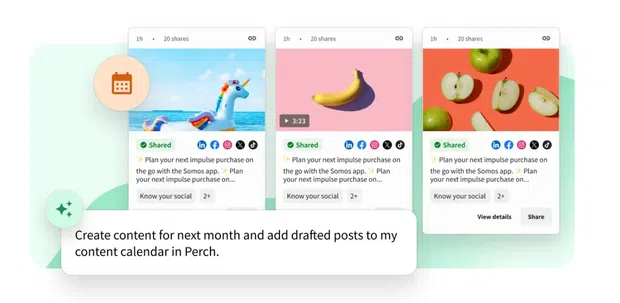
Perch keeps all of it on one calendar. You can see every post across your channels at a glance, drag things around when plans change, and spot gaps or clashes.
Perch also recommends the best times to post based on your specific audience, so your big creator collab doesn’t go live at 2 a.m. on a Sunday.
Discover creators and measure results with Lumen
Picking the right creator is part gut feeling, part homework. Lumen handles the homework. It shows you the top voices in your space, helping you see which partnerships have real potential.
After a campaign goes live, Lumen tracks what happens next. Are people talking about your brand more? Is the chatter positive? Did you gain ground compared with your competitors?
That way, you’ll know which partnerships deserve a sequel.
FAQ: Instagram followers and getting paid
How many followers do you need to get paid on Instagram?
There’s no single follower count you need to start making money on Instagram. For example, brand deals and affiliate marketing are open to content creators of almost any size. Instagram’s own monetization tools do have thresholds, though. Gifts on Instagram Reels start at 500 followers, while Subscriptions and Badges require 10,000.
Can you make money on Instagram with 1,000 followers?
Yes. At 1,000 followers, you can still make money on Instagram, even though you’re in micro-influencer territory. You can earn through sponsored content, affiliate links, UGC, or by selling physical or digital products of your own. Your earning potential depends less on hitting a specific target of followers and more on whether people actually engage with your content.
How do Instagram influencers make money?
Instagram influencers make money by building several income streams, including sponsored posts, branded content, affiliate commissions, Subscriptions, Gifts, Live Badges, and selling products or services. Many creators use Instagram Stories and Lives to promote products or drive people to affiliate links.
Does engagement rate matter more than follower count?
For many brands, yes. Engagement rate can matter just as much as follower count because it shows whether people actually care about what you post. That’s why micro-influencers can sometimes be more attractive than macro-influencers or even mega-influencers. A smaller creator with an active community may be more likely to drive clicks, comments, or sales.
What are the best ways to monetize your Instagram account?
The best monetization strategies combine a few different revenue streams. You might earn through brand partnerships, affiliate marketing, Instagram’s native tools, or by selling products and digital products of your own. If you use Instagram’s built-in monetization features, make sure your account and content also follow Meta’s content monetization policies.
Can Hootsuite help manage Instagram creator partnerships?
Yes. Hootsuite can help you manage both the content side and the performance side of an Instagram creator partnership. With Perch, you can plan brand posts around creator content, keep approvals moving, and schedule everything from the same calendar. With Lumen, you can find creators in your space, then track mentions and sentiment once the campaign is live.
Run smarter Instagram creator campaigns with Hootsuite. Use Lumen to spot influential voices in your space, then use Perch to plan, schedule, and manage your Instagram content. Try Hootsuite free today.
The #1 social media tool
Create. Schedule. Publish. Engage. Measure. Win.
By Erin Rodrigue
Erin Rodrigue is a writer and content strategist who knows her way around a sentence and a strategy. A former associate marketing manager at HubSpot, she covers AI, social media, and SEO to help marketers stay ahead of what’s next.
The #1 social media tool
Create. Schedule. Publish. Engage. Measure. Win.