Key Takeaways
- An AI customer engagement platform chooses and delivers each customer’s next message across channels.
- AI evaluates behavior, goals, and guardrails to select content, timing, channel, and frequency.
- The operating loop turns trusted data into a decision, an action, and measurable learning.
- One platform can coordinate onboarding, conversion, retention, and win-back while preserving customer context.
- Evaluate decision quality, channel coordination, marketer control, measurement, and trusted data activation.
An AI customer engagement platform is the system a marketing team uses to decide and deliver each customer’s next message across channels. AI reads live behavior and chooses what to send, where, and when. The system coordinates marketing messages and lifecycle experiences, rather than contact-center conversations.
You will learn the platform’s components, operating loop, lifecycle uses, and category boundaries. You will also see what changes for leaders and buyers.
What an AI Customer Engagement Platform Is Made Of
An AI customer engagement platform combines five connected components. Together, they turn trusted customer signals into governed marketing decisions, coordinated experiences, and measurable outcomes.
This model connects customer engagement to a repeatable operating loop.
How an AI Customer Engagement Platform Works
The mechanism follows a simple sequence: Data → Decision → Action. Marketers define the goal and boundaries while AI evaluates changing customer context.
1. Data: Recognize the Signal
The platform combines profile context with observable events, including browsing, trial activity, purchases, message engagement, and inactivity. Data quality, consent, and aligned identities determine whether the next decision reflects what the customer is doing.
Running example: Imagine a customer using a hypothetical subscription fitness app. The customer completes a workout, views premium recovery content twice, and leaves without upgrading.
2. Decision: Choose the Next Message
AI interprets those signals against a marketing goal, such as increasing conversion without over-messaging. It evaluates eligibility, content, channel, timing, frequency, and whether sending nothing is the better choice.
Input → interpretation → output: Recovery interest and active app use → strong intent without disengagement → show an in-app recovery preview now and delay email.
3. Action: Deliver, Measure, and Learn
The system delivers the selected experience while respecting consent, frequency, and brand rules. Your team measures whether the customer views, ignores, converts, or changes behavior after the message.
For example, the customer starts a premium trial, shifting the next objective from conversion to successful adoption.
Each response creates a new signal, so the next decision starts with fresher context.
What an AI Customer Engagement Platform Does Across the Lifecycle
The same decision loop can support a connected customer engagement journey. It changes the goal and response as customer intent evolves.
Onboarding: Guide the First Useful Action
Adaptive onboarding focuses on first value, not completing a fixed welcome sequence. For example, after the fitness app customer finishes a short first workout, the system recommends a beginner plan based on that action.
Conversion: Respond to Demonstrated Intent
Repeated premium-content views reveal more intent than a broad demographic segment. Signal → response: The customer revisits recovery content, so the app shows a useful recovery-plan preview while the customer remains active.
Retention: Reinforce Ongoing Value
The platform compares recent activity with the customer’s normal pattern. It adjusts content and cadence when workout frequency begins to decline.
For example, the app recommends a shorter plan through the customer’s preferred channel instead of repeating upgrade messages.
Win-Back: Re-Enter With Relevant Context
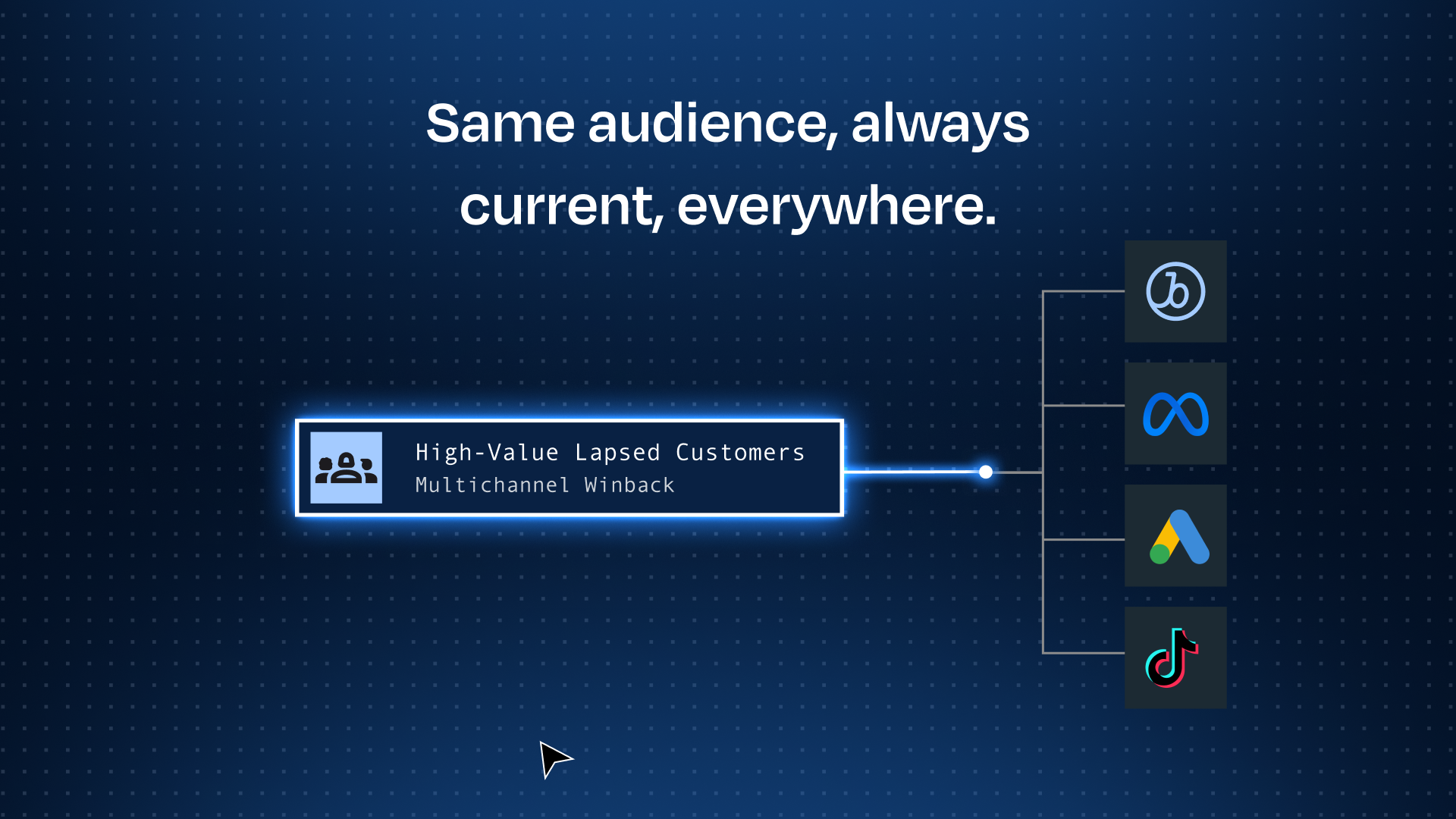
A win-back campaign uses prior preferences, past value, and inactivity length. The platform reconnects without restarting onboarding or repeating conversion prompts.
Win-back decision: For example, the app offers a seven-day return plan tied to the customer’s previous interest in recovery content.
What an AI Customer Engagement Platform Is Not
Several adjacent tools support customer engagement, but each serves a different primary job within the broader marketing technology stack.
These tools can work together when each has a clear role in your data and engagement architecture.
What It Means for Marketing Leaders and Chief Marketing Officers
An AI marketing platform changes how leaders direct work. A chief marketing officer (CMO) sets the decision system, while teams improve the inputs and outcomes.
- Strategy: Define growth goals, decision policies, and acceptable tradeoffs instead of approving every campaign step.
- Team: Shift effort from coordinating isolated sends toward improving signals, content options, and lifecycle programs.
- Measurement: Connect channel activity to conversion, retention, and customer value rather than judging each channel alone.
- Governance: Set acceptable data use, approval rules, frequency limits, and explainability standards before scaling decisions.
A clear engagement strategy keeps human judgment visible while automation handles repeatable execution.
Questions to Ask Before Buying
A focused evaluation should test whether a platform improves customer-level decisions while preserving your team’s control, data standards, and ability to measure outcomes.
- Can the platform explain which signals shaped a decision and let your team set goals and guardrails?
- Can it coordinate content, timing, frequency, and channel for each customer rather than each broad segment?
- Can marketers build, test, and adjust lifecycle programs without routine engineering dependence?
- Can it activate trusted data from your source of truth and measure outcomes across the lifecycle?
- Can it support enterprise consent, governance, scale, and operational reliability?
Use the deeper buying guide to turn these questions into a structured evaluation.
How Iterable Does It
We activate trusted data from your source of truth to power decisions across customer engagement. Nova Intelligence is our native AI layer: Decisioning chooses each customer’s channel, timing, and content from their behavior and engagement patterns, and Predictive Audiences identifies the customers most likely to convert on goals you define.
- Decide: Nova Decisioning picks the next channel, timing, and content for each customer.
- Coordinate: Journeys runs adaptive, event-driven workflows across channels.
- Deliver: Campaigns creates and sends messages across email, SMS, push, in-app, and more.
For example, Therabody achieved a 45% higher conversion rate with Iterable.
Frequently Asked Questions
These concise answers clarify the category, its operating model, its lifecycle role, and its relationship to adjacent marketing systems.
1. What Is an AI Customer Engagement Platform?
An AI customer engagement platform is the marketing system that decides and delivers each customer’s next message across channels. AI uses current behavior to select content, channel, and timing. The platform coordinates lifecycle marketing rather than contact-center or service conversations.
2. How Does an AI Customer Engagement Platform Work?
It follows a data → decision → action loop. Customer signals provide context, AI chooses the next message, and the platform delivers it. Marketers define goals and guardrails, while each customer response becomes a new signal for the next decision.
3. What Does an AI Customer Engagement Platform Do?
It coordinates onboarding, conversion, retention, and win-back based on each customer’s current context. The platform adjusts message content, channel, timing, and frequency, then measures outcomes so future cross-channel customer engagement decisions become more relevant.
4. What Does an AI Customer Engagement Platform Mean for a CMO?
For a CMO, the platform shifts leadership from approving individual sends to defining goals, guardrails, and measurement. It connects channel execution to conversion, retention, and customer value while keeping people accountable for strategy, risk, and acceptable AI use.
5. Is an AI Customer Engagement Platform the Same as a CDP?
No. A customer data platform unifies and organizes customer data. An AI customer engagement platform activates trusted data to decide and deliver marketing interactions across channels. The two can work together, with each serving a distinct role in the marketing stack.
Turn Customer Signals Into Better Marketing Decisions
An AI customer engagement platform creates value by connecting current customer signals to governed, cross-channel decisions. The right choice makes that decision loop clearer and more useful for marketers, not merely more automated.
Your Checklist for Unlocking the Power of AI: Get the checklist