Strategy
AI search optimization helps your brand show up in AI answers. Here’s how it works, and what you can do to get cited.
“Just Google it” was the answer to almost every question. Now, there’s a good chance someone will “just ask ChatGPT” instead.
That changes things for marketers. Ranking on page one still matters. But now you also want AI tools to mention your brand (and get the details right).
Here’s how to make your brand easier for AI search tools to find and cite.
Key takeaways
- AI search optimization helps your brand get found and cited in AI answers.
- It builds on SEO. Strong, crawlable pages are still the foundation.
- AI looks beyond your website. Social posts, especially from Reddit and LinkedIn, can also show up as sources.
- AI favors content that answers questions directly and adds something original.
- Hootsuite can help at every step, from tracking your brand in AI answers with Lumen to publishing content with Perch.
What is AI search optimization?
AI search optimization is the process of making your brand and content easier for AI tools like ChatGPT, Gemini, Perplexity, and Google’s AI Overviews to find and cite in their answers.
Traditional search hands people a list of blue links. AI search builds them an answer, with a few sources tucked underneath. The goal is to get your brand into that answer, whether it’s mentioned, recommended, or cited as a source.
Meet the Suite
Understand what matters, decide what to do next, and take action across every social workflow — all from one connected suite.
AI search optimization vs. SEO vs. AEO vs. GEO
In this guide, we use “AI search optimization” as the big-picture term for getting your brand into AI answers. Here’s how it compares with SEO, AEO, and GEO:
On paper, SEO and AI search optimization look like separate jobs. In practice, they’re pretty tangled up.
As Logan Freedman, Global Head of SEO and AI Search at Manychat, puts it, “AI search optimization is the final form of SEO, not a replacement for it. You still need the fundamentals, because if a crawler can’t read your site, no model will cite it.”
So if you’ve already put work into SEO, good news: none of it goes to waste. But optimizing for AI search means thinking bigger than your website. (More on that below.)
Why does AI search optimization matter for marketers?
AI search optimization matters because AI is changing how people find and compare brands. They can ask an AI chatbot what to buy, which brands to consider, or what a product costs. If your brand isn’t part of the answer, it quietly drops out of the decision.
1. Brand visibility is bigger than your website
AI tools piece together their answers from all corners of the web.
To see this for yourself, Freedman has a simple exercise: Run a “best tool for X” prompt through ChatGPT or Perplexity, then look at the citations. Odds are, you’ll see Reddit threads, review sites, and YouTube videos.
“The brand’s own page is rarely the source. That tells you the signal is your whole company, not just your site,” he says.
The brands that win will be products people genuinely talk about, backed by marketing that’s firing on every channel at once.
The brands that win will be products people genuinely talk about, backed by marketing that’s firing on every channel at once.
2. Traditional website traffic is under pressure
AI Overviews are taking a big bite out of website traffic. And it makes sense: if the answer is sitting right at the top of the results page, there’s less reason to keep scrolling.
In a 2026 study of 300,000 Google search terms, Ahrefs found that when an AI Overview appeared at the top of the page, the top-ranking website had a 58% lower click-through rate than it would have without one.
Getting the top spot on Google is still important, but you also need to consider how to show up in AI-generated answers.
3. People are already turning to AI for research
Traditional search engines still lead when it comes to research, but AI is gaining ground.
Almost 25% of customers cite AI-powered platforms as their top research tool, according to Adobe’s report. That’s a quarter of your potential customers who could be sizing up your brand inside a chat window.
How do AI search tools decide what to cite?
AI search tools don’t publish exactly how they choose sources. But generally, they’re more likely to cite content that’s relevant, credible, and original, on pages they can find and read.
Content factors
Here are five qualities that make content useful to AI search tools:
- Relevance: The content directly answers the person’s question.
- Originality: It offers something new, like firsthand experience or original research.
- Credibility: The content comes from a reputable source, and its claims are backed by evidence (think: named sources, experts, or data).
- Depth: The topic is covered thoroughly. Completeness is the goal, not length.
- Freshness: The information is accurate and up to date.
Technical factors
AI tools also need to be able to find, access, and make sense of your content. Here’s what matters on the technical side:
- Crawlability: Your page is open to AI crawlers.
- Page structure: Your content is organized with clear headings and logical sections.
- Content accessibility: Important information is available as readable text, not stuck in images or JavaScript.
- Indexability: Your page can be added to search engine indexes, making it easier for AI tools to find.
How do you optimize your content for AI search?
To optimize your content for AI search, focus on answering questions directly and backing them up with credible, original information. Then make sure AI tools can actually find and read your pages.
Here’s how to do it:
- Start with real questions
- Answer the question directly, then add depth
- Structure pages with clear headings, lists, and tables
- Back claims with named, linked sources
- Add original data and expert quotes
- Use schema markup and keep pages crawlable
- Keep key pages fresh
1. Start with real questions
Build a list of the questions your customers would actually ask. Most fall into a few buckets:
- Comparisons: “What’s the best X for Y?”
- Decisions: “Should I use X or Z?”
- Costs: “How much does X cost?”
- Tradeoffs: “What are the drawbacks of X?”
- Specific situations: “What’s best for a small team with a limited budget?”
Sales calls, support tickets, Reddit threads, and social mentions are all good places to look.
2. Answer the question directly, then add depth
Lead each section with the answer, then add the details later. Clear, direct answers make your content easier for AI search tools to interpret and reference.
For example, if a heading asks, “How much does X cost?” give the price first. Then explain plans, exceptions, or anything else people need to know.
3. Structure pages with clear headings, lists, and tables
Clear structure helps AI tools figure out what each part of a page is about, which makes it easier to pull out the right answer.
Start with your headings. Write them the way people actually ask questions, like “Is X worth it for small teams?” Then break up your content with:
- Numbered lists for steps
- Bullet points for options or features
- Tables for comparisons
Bonus: These tactics make your content easier for human readers to skim, too.
4. Back claims with named, linked sources
When you share a stat or make a claim, name the source and link to it. Clear sourcing shows your content is grounded in something real, which makes your page a safer bet for AI tools to cite.
5. Add original data and expert quotes
If your page says the same thing as 50 others, AI has no particular reason to pick yours. So give it something it can’t replicate, like original research, survey results, firsthand testing, or quotes from people with relevant expertise.
You don’t need a massive research budget, either. Even a small experiment or a genuinely useful observation adds something new to the conversation.
6. Use schema markup and keep pages crawlable
Don’t neglect technical SEO. Check that your pages can be crawled and indexed, and that key information doesn’t live inside images or JavaScript. If AI tools can’t read a page, it doesn’t matter how good the content is.
Next, consider adding schema markup. It’s a type of code that helps search engines interpret what’s on your page, including details like the author or publication date.
Schema markup doesn’t guarantee AI citations, but it does give search engines more context about your content.
7. Keep key pages fresh
AI tools want to give people current answers, so they tend to lean on current sources. A 2026 study by Seer Interactive found that 75% of pages cited by ChatGPT, Gemini, and Perplexity had been updated within the past year.
Freshness matters for accuracy, too. An AI tool might not realize your 2023 pricing page is out of date. It’ll just repeat whatever it finds, so make a habit of reviewing your most important pages.
How do brand mentions and social content affect AI search visibility?
AI search tools regularly pull from social platforms. That makes social content, especially what your customers and fans post, a big part of how AI search sees you.
Social posts can be cited directly in AI answers
Social content can show up as sources in AI answers, and it happens more than you might think. For example, ChatGPT cites LinkedIn in 4.9% of answers, according to a 2026 Searchable study. On Perplexity, that number jumps to 10.9%.
One thing to keep in mind: Posts generally need to be public for AI search tools to find and cite them.
Brand mentions can shape how AI talks about your brand
Your website tells AI what you want people to think. Social media gives it a window into what people actually think. AI pays attention to both.
For example, when I asked ChatGPT if people like Facetune as an editing app, it came back with a list of pros and cons, with links to the Reddit threads behind them.
So if you’re wondering what AI thinks of your brand, start by checking what your customers are saying.
See the top-rated social listening tool in action
See for yourself how Lumen can revolutionize the way your team markets, researches, and reports. Schedule a zero-risk demo now.
How social teams can strengthen AI search visibility
You can’t control what people say about your brand. But you can give them more reasons to talk about you, and more good things to say.
“Social teams just inherited a big part of the AI search job, whether they know it or not,” says Freedman. “The social team’s work is to make content people want to share, build real relationships with the people who use the product, and turn the best of them into evangelists who talk about you frequently and publicly.”
The problem is that most brands haven’t caught up.
“Most marketing teams still treat social as a brand awareness line item and miss that it’s now a search channel,” he says. “So, hey social teams: welcome to the world of SEO and AI search. Glad to have you.”
How do you measure AI search visibility?
You can measure AI search visibility by looking at first-party search reports, running monthly prompt tests, and tracking referral traffic. No single tool shows the full picture yet, so it helps to look at them together.
1. Check first-party search reports
First-party search reports come straight from the search engines themselves. That makes them one of the most reliable ways to see how your website performs, including in AI-powered search.
Start with two free tools you may already use:
- Google Search Console: See how your pages perform in Google Search, including traffic from AI Overviews and AI Mode.
- Bing Webmaster Tools: Track how often your pages get cited in Microsoft Copilot and Bing’s AI answers, plus which pages are getting the most citations.
That gives you a useful baseline, but it’s only part of the picture.
2. Test the same prompts each month
Write down 20–50 questions your potential customers might ask AI, then test the questions on different AI tools, like ChatGPT, Claude, and Gemini.
For each answer, record:
- Mentions: Did AI mention your brand?
- Recommendations: Did AI actually recommend it?
- Position: Was your brand the first recommendation or further down?
- Citations: Did AI link to your website?
- Competitors: Did competing brands also appear?
You can track this in a simple spreadsheet. Repeat the process each month to see how your visibility changes.
3. Check referral traffic and business results
Showing up in AI search is great. But is it actually bringing people to your website?
In Google Analytics, look for referral traffic from AI tools like chatgpt.com, perplexity.ai, and gemini.google.com. Look at which pages visitors land on and whether they take action.
Just remember: Not every AI search will lead to a click. Someone might stumble on your brand in an AI-generated answer and visit your website later through a different channel.
How does Hootsuite help teams show up in AI search?
Hootsuite helps teams manage the social side of AI search visibility. It helps you track how people talk about your brand, stay consistent everywhere you post, and figure out what to create next.
Monitor brand mentions and sentiment with Lumen
If AI is reading Reddit threads, you should be, too.
With , Hootsuite’s social listening app, you can monitor brand mentions across 150+ million websites and 30+ social networks, including Reddit.
Use it to see how people describe your brand (or your competitors), gauge overall sentiment, and spot common questions or misconceptions you can turn into content.
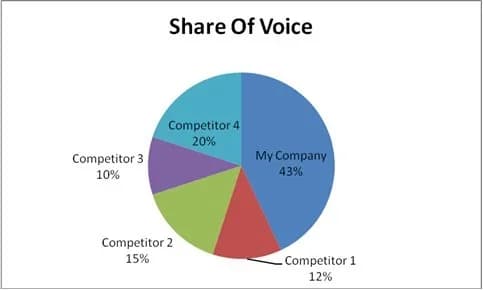
Plus, Lumen’s LLM Insights show how your brand appears in answers from ChatGPT, Gemini, Perplexity, and Claude. Get a visibility score for your brand, plus sentiment and share of voice, so you can see how you stack up against competitors.
Plan consistent content with Perch
When your messaging shifts from channel to channel, AI has a harder time piecing together who you are.
helps teams plan and publish content across every channel from one place, so your brand sounds like itself wherever it shows up. You can also set up custom approval workflows to make sure every post gets the right eyes on it before it goes live.
Ask what to publish next with Wisdom
Wisdom is Hootsuite’s AI agent. Ask it questions in plain language about your brand mentions, competitors, or performance, then get recommendations for what to do next. For example, it can turn those insights into your next draft or campaign idea.
FAQ: Optimizing for AI search
What is AI search optimization?
AI search optimization (also called AI SEO) is the process of making your brand and content easier to find and cite in answers from AI search engines like ChatGPT and Perplexity, plus Google’s AI Overviews (AIO). It involves creating useful content, building topical authority, and making sure AI tools can access your website.
Is AI search optimization different from SEO?
AI search optimization builds on traditional SEO rather than replacing it. Traditional SEO focuses on improving rankings in search results, while AI search optimization focuses on getting your brand mentioned or cited in AI-generated answers. Many of the same tactics still apply, including earning backlinks and following Google’s E-E-A-T guidelines.
Does social media affect AI search visibility?
Yes. AI search tools can surface information from platforms like Reddit, LinkedIn, and Quora. Reviews, discussions, and firsthand experiences may shape how your brand is represented in AI-generated answers. Social content can also appear as a cited source in answers from AI platforms.
Can I see what AI says about my brand?
Yes. You can manually search for your brand across tools like ChatGPT, Gemini, and Claude. You can also use AI visibility tools, like Lumen, to track brand mentions and sentiment over time. Just remember that answers can vary between tools and even between searches. Large language models don’t always give the same response to the same question.
What should marketers prioritize for AI search optimization?
Start with useful content that directly answers your audience’s questions. Then optimize your website for AI search by making sure important pages are crawlable, well-organized, and easy to read. That includes checking your robots.txt file and using structured data where it makes sense. And don’t forget to keep your content accurate. AI tools can retrieve fresh information, even though some of their underlying knowledge comes from older training data.
How does Hootsuite help teams show up in AI search?
Hootsuite helps teams understand how their brand shows up online and create social content that supports AI search visibility. Lumen tracks brand mentions and sentiment across the web, including visibility in AI-generated answers. Perch helps you plan and publish social content, while Wisdom uses your social data to uncover new content opportunities.
Take the guesswork out of AI search with Hootsuite. Use Lumen to see where your brand stands in AI answers, Perch to publish consistently, and Wisdom to find your next content idea. Try Hootsuite free today.
The #1 social media tool
Create. Schedule. Publish. Engage. Measure. Win.
Erin Rodrigue is a writer and content strategist who knows her way around a sentence and a strategy. A former associate marketing manager at HubSpot, she covers AI, social media, and SEO to help marketers stay ahead of what’s next.
The #1 social media tool
Create. Schedule. Publish. Engage. Measure. Win.