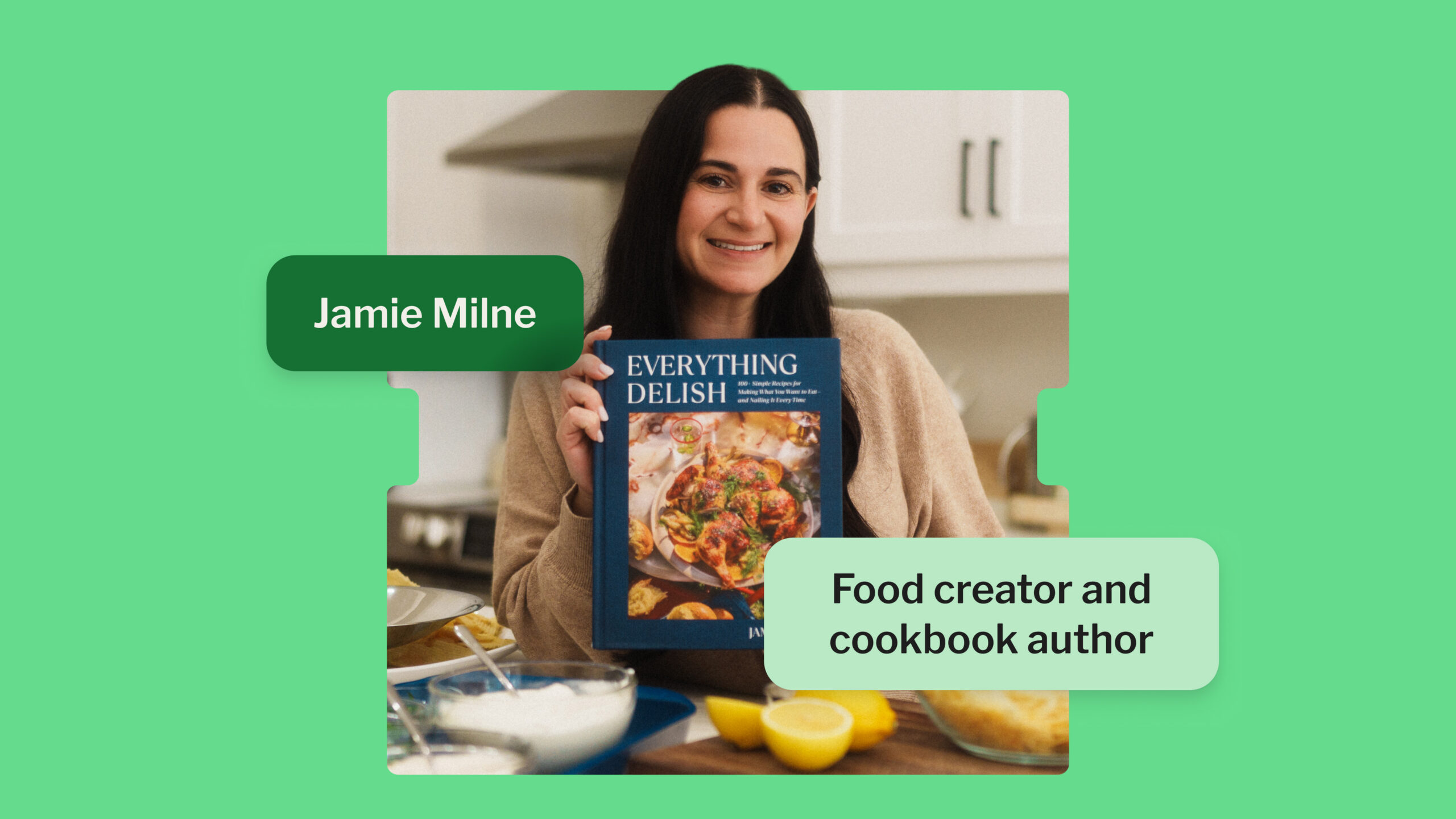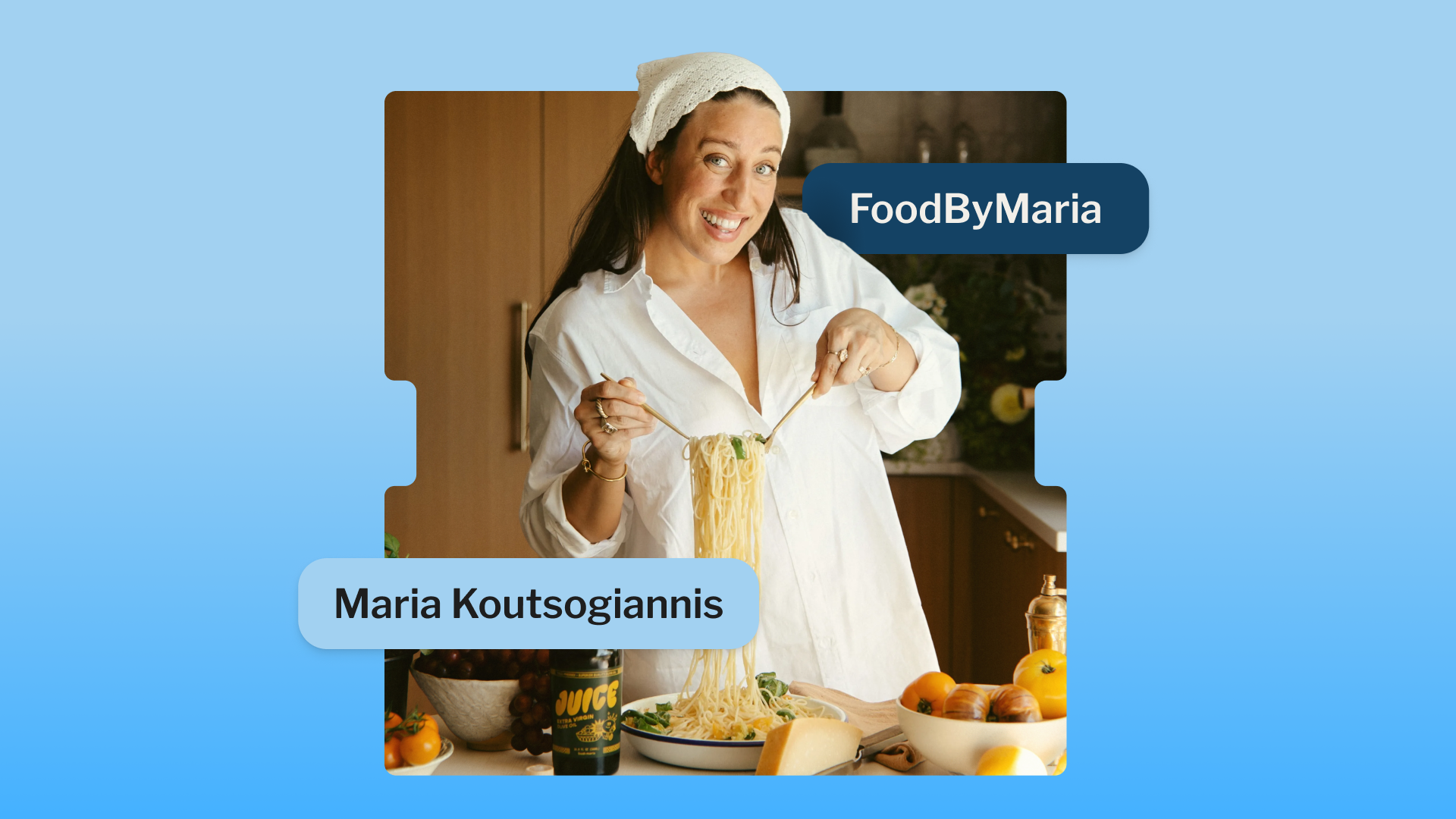
Maria Koutsogiannis, better known as FoodByMaria, has more than 4 million followers across her social platforms, but when she pivoted her content in 2023, she made a call most creators are afraid to make: she deleted her old email list and started over on Kit. Since then, that list has grown to 124,000 subscribers with 50–60% open rates and click rates roughly three to four times the food and beverage industry average. It’s that very same list that just helped launch her cookbook, Greek Out, to #2 in all cookbooks on Amazon in its first week.
Why Maria deleted her 80,000-subscriber list after pivoting to Greek recipes
For most of a decade, Maria built FoodByMaria as a plant-based recipe brand, one oatmeal bowl, smoothie, and Instagram post at a time. Maria’s journey goes back to a basement flat in the UK in 2014 and led her to her own website and an 80,000-person email list on Mailchimp.
In 2023, she went all in on the Mediterranean and Greek recipes she grew up eating: the food that was actually her. It was the right call creatively. It also meant her 80,000 Mailchimp subscribers had signed up for content she wasn’t making anymore.
“Those 80,000 subscribers were used to plant-based recipes,” Maria says. “I didn’t want to drag everyone along and then just watch the numbers plummet, because it’s not what they signed up for. It didn’t make sense.”
She moved her email marketing to Kit and started over with about 10,000 subscribers. Today that number is 124,000 (and growing each week!) of eager subscribers ready to cook her favorite Greek food with her.
Why Maria prioritizes her email list over social media
She has more than 4 million followers across social media, the bulk of them from a single viral stuffed pita recipe. But ask her where the real business lives, and she doesn’t point to social.
“At the end of the day, I don’t own much of my content online when it comes to TikTok, Instagram, YouTube, Threads—any of the platforms,” she says. “I own my website, my app, my cookbook, my products (like my olive oil), and I own my email list.”
Email is also the one channel where she trusts the data.
“I can control whether hot, cold, or warm subscribers see [content],” she says. “I can control the subject line. I have full control of everything that happens, and I can see the accurate data. This is the clearest visual of what’s actually going on in my list’s mind, and what they actually enjoy reading.”
How Maria grew her email list to 124,000 subscribers: four tactics
Rebuilding from 10,000 didn’t happen with one big swing. It happened through consistency and something tangible to trade for an inbox.
1. Lead every promotion with something useful, not just an ask
PDFs, email-only menus, and meal plans are her go-to lead magnet ideas. “You have to give something very tangible to earn someone’s email inbox real estate,” Maria says. Her biggest single driver has been the Sunday Dinner Club, a Mediterranean/Greek-focused meal plan she shares about once a week — good for about 1,000 new subscribers each time.
2. Send often, but send things worth opening
Her team sends three to four emails a week, always built around recipes people actually want to make: an easier version of something they’ve already loved, or something that hits a health goal “without feeling like you’re talking to a gym bro.”
3. Segment instead of blasting
Kit lets her lean on her most engaged, hot-and-warm subscribers first, learn what they click, then use that to slowly bring cold subscribers back in. “It’s literally skyrocketing our clicks,” she says.
Promote the list everywhere the audience already is
Pop-ups, landing pages, links in her social bios. The list gets promoted everywhere her audience already spends time, not just in one place.
This strategy held up under pressure, too. When she started actively promoting a cookbook to that same list, the numbers didn’t drop. “People are pumped. They’re not annoyed,” she says. “The people who are reading are in it.”
How Maria’s email list helped Greek Out reach #2 on Amazon and a spot on the New York Times bestsellers list
When Greek Out launched, Maria’s email list wasn’t a side channel but rather it was core to the strategy, running on two tracks at once.
On social media
She went all in. For three or four months leading up to launch, she posted about the book multiple times a week. She was showing up, talking about it, putting her face in stories in a way she says she doesn’t normally do.
“I was incredibly vulnerable with this book,” Maria says. “I was kind of shameless about it”—telling her audience outright, “Hey, I wrote a cookbook that has all my family recipes in it, and it’s worth every penny.”
On email
Her team built a two-stage plan:
- Three weeks out: the book lived in the footer of every send, always with a link and a reminder: “Secure your copy now, get your 11-recipe bonus booklet” for anyone who pre-ordered. “It was really just consistently talking about the book,” Maria says.
- Final week: a daily countdown walked subscribers through what was actually in the book: the meal-planning system, and the promise that “you’re eating well without feeling like you’re eating well—it’s not dry or bland, it’s delicious and wholesome.”
Maria backed both tracks with PR and brand support to land press and podcasts she couldn’t chase alone. “You only get one shot to get it right,” she says.
It worked in a way that’s easy to measure: Greek Out hit #2 in all cookbooks on Amazon in its first week and secured a coveted New York Times bestseller spot.
Part of her success in securing a bestsellers spot came in part to her pre-sales strategy. Because Kit’s Shopify integration connects her store to her list, every email she sends promoting her products, including her cookbook, olive oil, honey, her app comes back with clean conversion data.
“You get that really nice email that just puts it all in one place,” she says. “I love it.”
This helped her team know what to double down on for pre-sales, for example.
How to do this in Kit
1. Segment by engagement
Use tags and segments to group hot, warm, and cold subscribers, and prioritize sends to your most engaged group first.
2. Build a landing page or form for your lead magnet
Create an opt-in landing page or embeddable form to trade a PDF, meal plan, or other tangible resource for an email address.
3. Connect Shopify
Link your store with Kit’s Shopify integration to track purchases back to specific sends and segment customers by what they’ve bought.
Maria’s advice for building your own email list
Maria’s path from waitressing to a cookbook deal to a million-follower brand took ten years, and she doesn’t pretend email replaces everything else.
Her advice to creators just starting out: post everywhere, build a real connection with your audience, and take your website and your list seriously, because eventually, you’ll want something that’s actually yours.
“I don’t own everything online,” she says. “Email list is 100% yours.”
For Maria, the cookbook launch isn’t really the finish line.
“I personally look at pub day as the beginning,” she says. “We’re selling this book forever now.” And thanks to her email list on Kit, she has an always-on strategy to sell.
FAQ
How do you grow an email list?
Offer something tangible in exchange for an email address, such as PDFs, email-only menus or meal plans, and promote it everywhere your audience already is. Food by Maria’s Sunday Dinner Club meal plan brings in about 1,000 subscribers each time she shares it.
Should you delete your email list when you change niches?
Maria chose to start over after pivoting from plant-based to Mediterranean recipes, because her 80,000 subscribers had signed up for content she no longer made. It’s a judgment call that depends on how far the new content departs from what subscribers signed up for.
What is a good email open rate and click rate?
Maria earns 50–60% opens and 5–7.5% clicks. According to Klaviyo’s 2026 Email Marketing Benchmarks Report (published February 2026), campaign-email averages for food & beverage brands sit at 31.2% for open rates and 1.7% for click rates.
How can an email list help launch a book?
Maria ran a three-week lead-up with footer mentions, pre-order reminders and a bonus booklet, then a daily countdown in the final week, and Greek Out reached #2 in cookbooks on Amazon.
How often should creators email their list?
Maria’s team sends three to four emails a week, each built around recipes readers want to make. That’s her approach, not a rule.
How do you reintroduce cold subscribers?
Start with your most engaged subscribers, learn what they click, then gradually bring in colder ones.
![Email Marketing Guide for Small Businesses [Tactics + Top Tools]](https://active-campaign.transforms.svdcdn.com/production/general/smb-email-marketing.png?w=1200&h=630&q=82&auto=format&fit=crop&dm=1791575718&s=25e9185b525a52f308166dac40808d87)