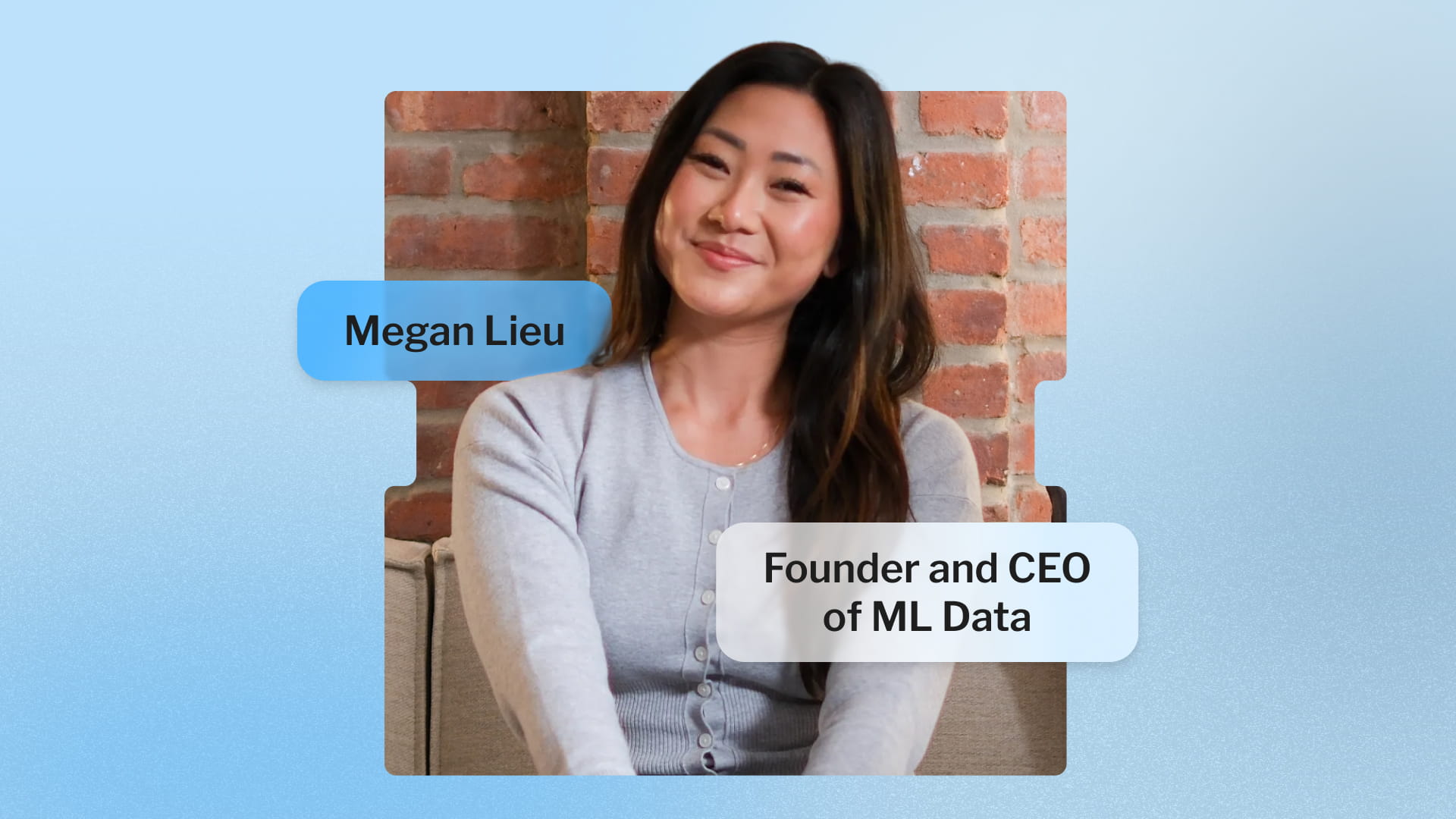
Creator Megan Lieu used Kit’s Subscriber Signals, which shows each subscriber’s influence, engagement and buying signals, to split her 16,000+ subscriber list into tiers. Emails built with that segmentation earn 1.6x higher open rates and 2x higher click rates than her earlier sends.
Megan Lieu built her audience on Instagram and LinkedIn, where she’s grown a following bigger than most email lists will ever be. Email was the smaller, quieter piece of the business where people land after the real work happened somewhere else.
Admittedly, email was an afterthought.
“I had always underestimated the power of my email newsletter platform,” she says. “I started it way after all of my other platforms. I thought of it as just this checkbox—oh, I need to have my own email list—just because people had been telling me.”
That started to change when she moved her newsletter, The Data Diaries, off Beehiiv and onto Kit. The rebrand and migration was about looking more professional. What she didn’t expect was that switching platforms would change how she thought about her whole business.
The moment that shifted things for Megan happened when her email strategist, John McKie, pulled up her list in Subscriber Signals for the first time.
Why sending the same email to everyone stopped working
The issue: Megan sent one message to her whole list, which broke down when she launched a higher-priced course.
Before Signals, Megan’s business ran on two largely disconnected audiences. Instagram was where she sold, using Manychat automations to nurture followers toward her courses. LinkedIn was where she had an equally large following, but no automation tools existed there, so she’d never built any real selling motion on it at all.
“The only reason I could target Instagram was because of Manychat,” she says. “So LinkedIn, I just completely disregarded as a selling channel, even though I have the same amount of subscribers.”
And Megan’s email strategy? It was simple by necessity. She’d send the same message to everyone on her list. If she had a launch coming up, everybody got the same email, regardless of whether they’d ever bought anything from her or barely opened her last send.
That worked fine when email was a supporting channel. But it stopped working when Megan decided to move upmarket with a new offer, the LinkedIn Creator Playbook, at a higher price point than anything she’d sold before.
“I need to have an actual strategy rather than just sending everybody on my email list the same email,” she says.
Higher-ticket offers need more than one touch and more than one message
Megan knew she couldn’t sell a bigger offer to a cold list the same way she’d sold smaller ones through Instagram DMs. She needed to know who on her list was actually ready to hear about it, and what to say to everyone else in the meantime.
Email was supposed to be the bridge between the two, but for most of Megan’s business, it wasn’t doing that job. Her team was trying to combine two audiences with no shared data connecting them.
John describes what they were doing before Signals as building segmentation by hand.
“We were almost making an analog version of Subscriber Signals,” he explains. “It was like looking at HDTV without glasses. You could see it, you roughly knew what was going on, and we had definitely enough data. But then you put glasses on with something like Subscriber Signals, and it’s like, whoa, there’s a lot more detail here that we were missing before.”
What Subscriber Signals revealed about Megan’s 16,000 subscribers
The learning: Megan’s subscribers have a combined following of over 10 million people.
When Signals launched, it gave Megan and her team three things about each subscriber in one place:
- Influence: how big a following they have on their own platforms
- Engagement: how often they open and click her emails
- Buying power: signals of how likely they are to buy
The detail that changed Megan’s targeting most was something she’d never had access to at all: follower counts for each subscriber’s own platforms.
“This is actually kind of game changing,” she says. “As long as we can get people into my email list, we have this information about them in a way that I didn’t before.”
Megan’s team’s read on a subscriber’s fit came from manual research pre-Signals. If she recognized a name replying in her DMs, she had a sense of who they were. Signals gave her a way to understand people by where they actually fell on influence, engagement, and buying signals, without hand-sorting a list of thousands.
“With the LinkedIn Creator Playbook, the course I’m relaunching, I specifically want to target those who have existing followings on other platforms and want to bring their creator knowledge over to LinkedIn,” she says. “In the past, I don’t believe there was any way to see that unless I clicked through their profiles individually.”
How Megan built a tiered email segmentation strategy for her course relaunch
With that data in hand, Megan stopped sending the same message to everyone and started building around tiers. The people who scored highest on influence, engagement, and buying signals got a direct pitch: this is coming up, and it’s for you. Everyone else got a slower build, more context and proof before the ask.
- At the top: Subscribers who scored high across influence, engagement, and buying signals. These were the people most likely to already want what she was building. The message to them was direct: “We think this is perfect for you, and here’s why.”
- Further down the pyramid: Subscribers who hadn’t shown that same signal yet, people Megan calls colder audiences or silent lurkers. Rather than sending them the same pitch, her team put them through a nurture sequence with more context and more proof before making the ask.
That segmentation ran through the first test of the new offer too, a free master class that let Megan and John validate demand before the full launch. The top tier got a direct invitation built around why the master class fit them specifically. Everyone else got a warmer, more gradual build.
“We knew that we would have to tease out that potential fit for the master class a little bit more,” she says. “So we’d have to serve them more emails.”
Ahead of an earlier course launch, Megan and John added email nurture sequences on top of the Manychat funnel they’d always run on Instagram alone.
“All the sales that came in during those two weeks had all pretty much gone through that email funnel,” Megan explains. “We don’t think they would have converted if they hadn’t gone through that nurturing sequence on emails.”
That result from that email nurture sequence and the insight into deeper segmentation now possible through Signals is the center of how Megan plans every launch now.
For the upcoming LinkedIn Creator Playbook relaunch, that same approach, tiered by what Signals shows about each subscriber, replaces what had been mostly guesswork.
Results: 1.6x higher open rates and 2x higher click rates
Emails Megan’s team builds using Signals-informed segmentation now earn a 1.6x higher open rate and 2x higher click rate than the sends she used to build without that data.
It’s also changed what Megan pays attention to day to day. She used to track subscriber growth as a single number. Now she’s watching a second metric alongside it: how engaged each subscriber is.
“It’s not just subscriber growth that I’m paying attention to now,” she says. “It’s the relationship—how engaged they are.”
It’s also changed the volume of work behind each campaign. Testing a new audience used to mean building a poll, setting up automations, and waiting weeks to gather enough data to act.
“I don’t need to do that now,” she says. “I can go straight into Subscriber Signals, I know the offer, I know the target audience, and that’s now going to help us pull instantly what we’ve already got from that list, rather than hoping they open an email and click somewhere.”
Beyond smarter segmentation: finding collaborators and pricing sponsorships from list data
Segmentation solved the immediate targeting problem, but Signals also gave Megan a faster way to spot potential collaborators already on her list, something that used to take real manual work.
“We probably would have had to go line by line, email by email address, to notice if someone we recognized was on the list,” she says. “And now the list is up to 16K. It would have been almost impossible.”
She now has a way to see which subscribers bring an audience of their own, turning her list into a source of potential collaboration and referral partners, not just buyers.
Signals recently flagged one subscriber in particular as worth reaching out to for a collaboration, someone Megan had already been following and considering.
“I look further down in the screen and Subscriber Signals literally says: you should collaborate with this person. I was like, ‘oh, okay, so you’ve thought of this already!’”
That same audience data has started showing up in sponsorship conversations too. Where Megan previously had only Instagram and LinkedIn follower counts to offer a brand, she can now point to how many of her subscribers carry real influence or buying power of their own.
“I do have a very targeted audience that you might want access to,” she says of pitching brands. “So that commands a premium.”
The email list Megan once treated as a “to-do list” is now where she decides who hears about a launch, who she collaborates with, and what she charges sponsors.