Someone drives past two other coffee shops because they’re one stamp away from a free cup. Someone adds one more thing to their cart because a birthday code made them feel seen. Good CX gets a customer to notice you. A good customer loyalty program is the thing that turns noticing into devotion, the reason someone keeps showing up without really thinking about it.
Grab a coffee (bonus points if it’s from a brand with a good rewards app). Here’s everything you need: what a customer loyalty program actually is, how to map the customer loyalty journey, nine program types with real brands doing them well right now, a step-by-step build process, what it really costs, how to prove it is working, and the mistakes that quietly end things before they’ve really started.
Before the point systems and the perks, let’s answer the question underneath all of it: what is customer loyalty?
It’s built the same way any good relationship is, one small good moment stacked on the last. Consistent quality. Service that shows up when it’s needed. The kind of recognition that makes someone feel like a regular instead of a transaction.
How do you actually measure it? A few metrics do most of the work:
- Repeat purchase rate: how often a customer comes back within a given window
- Customer lifetime value (CLV): total revenue you can expect from one relationship
- Net Promoter Score (NPS): how likely they are to tell their friends about you
- Redemption rate: the share of earned rewards people actually use, which tells you whether the spark is real or just polite enrollment
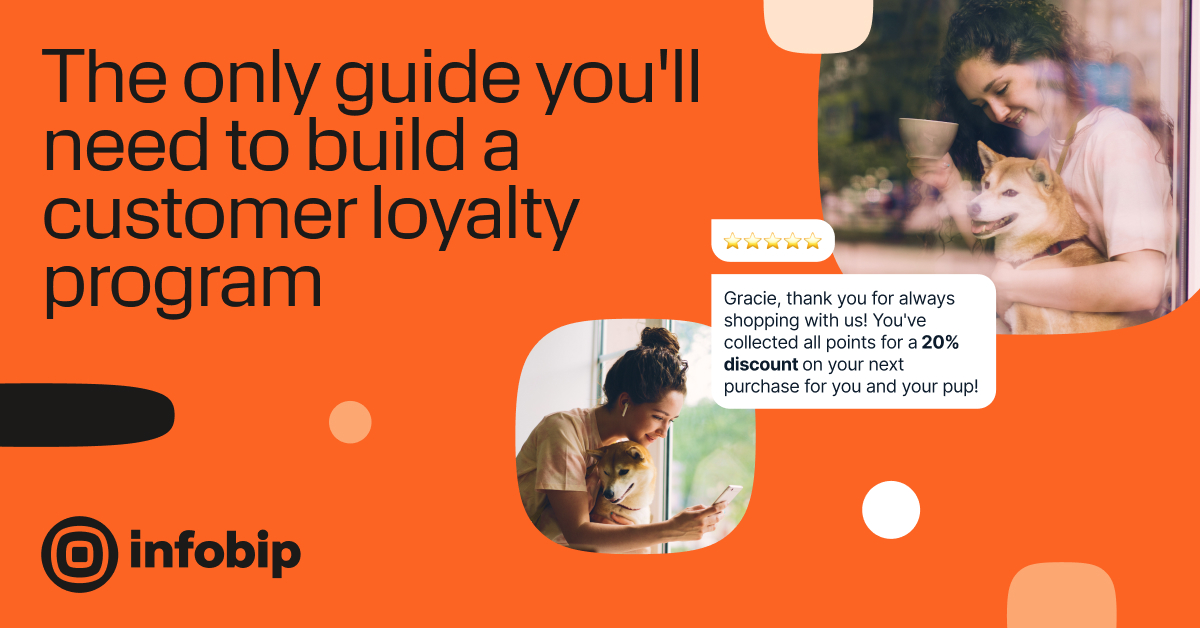
A customer loyalty program is a structured way of rewarding customers for the behaviors you’re hoping to see more of: repeat purchases, referrals, real engagement. In return, they get something back, whether that’s discounts, early access, cashback, or status they get to show off a little.
Simply having a program isn’t the differentiator anymore. The ones that actually work are shaped by real customer data, built around what a specific audience genuinely wants instead of borrowed from a template.
Every relationship has a timeline, and so does this one. Map it before you decide what kind of program to build, because your loyalty program needs to show up at the right beat in the story:
- Awareness: a new customer discovers you exist
- First purchase: the first date, basically
- Engagement: they start interacting with your content, app, or loyalty program
- Repeat purchase: they come back, hopefully because a reward, a status tier, or a habit pulled them back in
- Advocacy: they start telling their friends about you, unprompted, like a proper fan
Knowing where customers usually fall off tells you where the program needs to intervene.
Example: If most people vanish after the first purchase, a program built to reward a full year of loyalty won’t save the relationship. What helps at that stage is something that hooks them fast: a strong welcome offer, an early win, a reason to come back before the spark fades.
You can go tried-and-true here, or get genuinely creative. Here are nine approaches doing real work for real brands right now.
The steady, dependable type. Customers earn points with every purchase and redeem them for products, discounts, or perks.
Example: Starbucks Rewards. Customers earn “Stars” per dollar spent and trade them in for anything from a free drink to merchandise. Starbucks doubles the stars for app orders, which also happens to hand the brand a steady stream of purchase data. Sneaky, in a good way.
Example: The North Face XPLR Pass. Free to join, earning 1 point per dollar. As of October 2026, The North Face retired its seasonal reward drops for a rolling system where points become redeemable 30 days after they’re earned, capped at $150 in redemptions per year. Even programs people genuinely love get a refresh once the redemption data tells a different story.
Steal this: Make the first reward easy to reach. If the first redemption takes six months, you’ve asked for a long-distance relationship before the first date. And put a review date on the calendar from day one, because even the good programs need a tune-up.
The slow burn. Customers climb tiers based on spend or engagement, and the perks get better the higher they go.
Example: Ulta Beauty Rewards. Three tiers, Member, Platinum, and Diamond, with points-per-dollar increasing at each level and perks like a free birthday gift and priority support waiting at the top. It’s a big part of why so much of Ulta’s revenue flows through enrolled members.
Example: Marriott Bonvoy. One of the more elaborate slow burns out there, with elite status earned through qualifying nights rather than raw spend, unlocking bonus points, suite upgrades, and lounge access the further along you get.
Example: Alo Access. Three lighter tiers (VIP, A-List, All Access) based on points accumulated within a rolling 12-month window, plus wellness perks like free access to Alo’s digital fitness studio once you hit the top.
Steal this: Make the first tier reachable and the top tier worth daydreaming about. Set thresholds using your real spend data so plenty of customers can see the next rung from where they’re standing, and decide in advance what happens to someone who slips back down a tier.
The newer, more magnetic type worth watching in 2026. No points, no math. Customers unlock access to products, services, and experiences based on how much they spend.
Example: Lululemon Membership. No points, no percentage discounts, just three tiers (Collective, Collective Plus, Collective Pinnacle) unlocked by annual spend, with perks like early product access, free hemming, and partnerships with wellness brands. The program has grown to roughly 30 million members, proof that access and identity can pull just as hard as savings do.
Steal this: Access only works if it feels scarce and genuine. List what you can offer that costs you little but means a lot, like early drops, events, or a service nobody else bundles. If your best perk is a coupon in a trench coat, you’re running a discount program.
The “I’m serious about this” type. Customers pay an upfront fee to unlock elevated perks immediately.
Example: Amazon Prime. One flat annual fee buys fast shipping, streaming, and a growing bundle of extras. It works because the value clears the fee comfortably, which is the bar every paid program has to hit before customers commit.
Steal this: Before you charge a fee, work out how much a typical member would need to use to break even, and whether they really will. Paid programs also do quiet double duty: someone who pays to belong has already picked you.
Straightforward and a little transactional, in the best way.
Example: American Express cashback cards return a percentage on eligible purchases straight onto the bill, a structure simple enough that customers never have to think twice about whether it’s worth it.
Steal this: Cash is the most honest reward there is, which makes it a natural fit for practical shoppers who buy often. The catch is that a percentage is easy to copy, and a competitor can match it by Tuesday. Pair it with something only you can offer.
Getting your friends to vouch for the relationship.
Example: Revolut. Rewards only release once the referred friend completes a set of qualifying actions, a small design choice that keeps the incentive pointed at genuine new customers instead of empty referral farming.
Steal this: Reward both sides, so the person making the introduction doesn’t feel like they’re doing your marketing for free. Then cap payouts per person and keep an eye out for patterns that look like referral farming.
The playful type. Unlockable levels, quizzes, and surprise-and-delight moments that make earning rewards feel like a game instead of a chore.
Example: Tim Hortons’ Roll Up the Rim. Running for over three decades, the mechanic moved from a physical cup game to a digital one inside the Tim Hortons app. The anticipation of a bigger win kept its pull through the channel shift, the mark of a mechanic that was never really about the coffee cup.
Steal this: The best game mechanics can be explained in one sentence and pay out often enough to keep hope alive. One practical note: contests and prize draws are regulated differently from place to place, so have legal take a look before you launch.
The type that makes a customer feel good about themselves, not just about you.
Example: Warby Parker’s Buy a Pair, Give a Pair. Every purchase funds a pair of glasses for someone in need, giving the purchase weight that a discount code just can’t match, especially for a product as essential as eyewear.
Steal this: The cause has to feel believable for your brand, and you have to show the impact. “You helped fund this,” backed by real numbers, beats a vague “we care.” Customers can smell a cause that was picked at a marketing offsite.
Two brands, one shared inside joke. Customers earn or redeem rewards across both.
Example: PayPal and Spotify. New customers who sign up for Spotify Premium through PayPal get several months free, a low-cost way for both brands to borrow each other’s audience.
Steal this: Pick a partner whose customers look like your dream customers but aren’t yours yet. Then agree up front on who owns the data, who pays for the reward, and how you’ll both measure success. Most partnership breakups are about the spreadsheet, not the vibes.
Still can’t pick? Consider this your matchmaking chart. The effort column is a rough guide to how much work each program takes to run well.
Decide what you’re actually trying to change: repeat purchase rate, churn, average order value. This decision shapes everything that comes after it.
Try this: Pick one primary KPI and one guardrail. “Raise repeat purchase rate from, say, 22% to 28% in 12 months without cutting margin” is a goal. “Increase loyalty” is a mood.
The trap: Trying to fix everything at once. A program built to lift frequency, grow basket size, collect data, and win back lapsed customers will do a so-so job at all four.
Pull together the first- and zero-party data you already have and look for patterns in what different segments actually care about.
Try this: Start with three questions your data can already answer: who buys most often, who spends the most per order, and who bought once and vanished. Those groups want different things, and a quick preference question at signup fills in the rest. Shoppers are usually happy to answer: in Infobip’s 2026 shopping season survey, 66% said they’d share product preferences and 61% their wish list in exchange for better deals.
The trap: Designing for the average customer. Nobody is average, and you’ll end up with a program that’s mildly pleasant for everyone and magnetic for no one.
Match the model to your customers and your economics. High-frequency, low-cost purchases like coffee suit points programs well. Higher-consideration purchases like travel or premium apparel suit tiered or access-based models.
Try this: Write down your average purchase frequency and your gross margin, then check them against the cheat sheet above. If customers buy twice a year, a points program that takes twelve purchases to pay off is a non-starter. Many brands eventually layer types, like points with tiers on top, but earn the right by getting one working first.
The trap: Copying a famous program. A coffee program is built around a near-daily habit, and if your customers show up twice a year, copying it is a recipe for heartbreak.
Tie the reward to what the customer already loves about your brand. Lululemon’s rewards feel distinctly Lululemon, which is a big part of why they land the way they do.
Try this: Offer a mix: something small and fast (a free add-on after the second purchase), something mid-range, and one aspirational reward people brag about. Favor rewards that are worth more to the customer than they cost you, like early access, experiences, and exclusive items.
The trap: Generic discounts on things people would have bought anyway. That’s a margin leak wearing a bow.
Put it at checkout, in your app, and across your messaging channels, and make joining fast enough that nobody talks themselves out of it.
Try this: Launch to one segment or region for 60 to 90 days before going wide, with a control group that doesn’t get the program so you can see the real lift. Make joining take under a minute, with one tap and a reward visible right away. Fix the wobbly bits, then scale.
The trap: A big launch with a clunky signup flow. You only get one first impression, and a welcome email that arrives after the welcome offer expires is not a good look.
Track redemption rate, repeat purchase rate, and program-attributed revenue, then let the data tell you what to adjust.
Try this: Set a rhythm: weekly for enrollment and activation in the early months, monthly for redemption and repeat purchase rate, and quarterly for ROI (the math is coming up below). Compare members to a matched group, not to all non-members.
The trap: Celebrating enrollment. A million members who never redeem is a mailing list with a liability attached.
Running a smaller shop? You don’t need a platform, a points engine, or a department to start. A punch card (paper or digital), an “every tenth order is on us” rule, or a simple email or text list with a birthday treat is a real loyalty program. Track sign-ups, repeat visits, and redemptions in a spreadsheet for a few months. When the spreadsheet starts groaning, that’s your cue to graduate to something with more muscle.
Time for the conversation nobody wants to have on a first date: money. A loyalty program is an investment, and the math is friendlier than it looks once you know which numbers to pull. Here’s what goes on the tab:
- Rewards. The obvious one. If customers earn 1 point per $1 and 100 points buys a $5 reward, you’re giving back 5% of spend at full redemption. Not every point gets cashed in, though. If 60% of points are redeemed, your real cost is closer to 3%. Points that never get used are cheaper for you, but a program that quietly depends on them is one customers eventually stop loving. Aim for generous and sustainable, not sneaky.
- Your margin. Hold that reward rate up against your gross margin. Giving back 5% when your gross margin is 40% hands over one-eighth of your profit on every member purchase. That’s a great deal if members spend meaningfully more, and a painful one if they spend the same and just collect the 5%.
- Technology. Platform fees, integrations with your checkout or point of sale, and the channels you’ll use to talk to members, like email, SMS, push, and WhatsApp. Pricing varies wildly by vendor and scale, so get a few quotes and ask what’s included at launch versus what costs extra later.
- People and time. Someone has to design the offers, answer the “where are my points?” messages, and pull the reports. For a small shop that’s a slice of one person’s week. For a bigger program it’s a team.
- Launch and promotion. Signage, welcome emails, a launch offer, and training so the person at the register can explain the program without sighing. A great program nobody understands is just an expensive secret.
- The balance sheet. In many setups, unredeemed points count as a liability. How that’s treated depends on where you operate and how your program is built, so bring finance in early, not at year end.
Add it all up and you have the number your program has to beat, which is exactly what the next section is for.
Here’s where the romance meets the spreadsheet. The formula is refreshingly simple: ROI equals incremental gross profit minus total program cost, divided by total program cost. The word doing all the heavy lifting is incremental, meaning profit you wouldn’t have made without the program.
Let’s run it with made-up numbers (your real ones are between you and your finance team):
- The members. 10,000 active members spend an average of $400 a year.
- The comparison. A matched group of similar customers who aren’t in the program spends $360. So the program adds $40 per member, or $400,000 in incremental revenue.
- The profit. At a 40% gross margin, that’s $160,000 in incremental gross profit.
- The cost. $60,000 in redeemed rewards, $40,000 in technology and messaging, and $30,000 in team time, for $130,000 total.
- The verdict. $160,000 minus $130,000 leaves $30,000. Divide that by $130,000 and your ROI is about 23%.
A 23% return is a healthy relationship, not a fairy tale, and it’s a far more honest measure than “look how many members we have!” If your number comes out negative, don’t panic. It just tells you what to fix: a reward rate that’s too rich, a lift that’s too small, or costs that are too high.
The catch: your best customers sign up first. Compare members to all non-members and the program gets credit for loyalty that was already there. Instead, hold out a control group (a slice of eligible customers who don’t get the program for a set period) or build a matched comparison using past spend and purchase frequency. It’s the difference between “they love us because of the program” and “the program met people who already loved us.”
Don’t forget the softer returns: referrals, richer first-party data, lower support costs, and fewer discounts spent on winning people back. Track them separately so they don’t muddy the core number, but absolutely bring them to the meeting.
- Use your customer data. A customer data platform pulls together data from every channel so you can see the whole picture of who a customer is and what actually gets a response from them.
- Automate the messaging. Automating loyalty communications through an omnichannel engagement platform lets customers hear about rewards on their preferred channel without your team manually managing every touchpoint.
- Segment relentlessly. When Petpetgo segmented customers by purchase behavior and loyalty status, purchasing frequency doubled. Just don’t love-bomb them: 75% of shoppers in Infobip’s 2026 survey say they unsubscribe because brands message too often.
- Ask for feedback, and actually act on it. Collect it through conversational channels like WhatsApp or Viber, where people are already comfortable typing back.
- Be available. A simple, purpose-built chatbot can field the steady stream of “how many points do I have” questions so live agents can spend their energy elsewhere.
- Win back the ones who’ve drifted. A well-timed push notification after a few quiet weeks, a small voucher, a simple “we miss you,” can bring dormant customers back into the fold.
- Overcomplicating the earn and redeem structure. A confusing points system loses people before they’ve earned their first reward.
- Ignoring the metrics. Only 38% of retailers worldwide have fully integrated systems, and just 34% use orchestration platforms, according to Infobip’s 2026 shopping season research, which makes it easy for redemption and churn data to go unwatched.
- Treating loyalty as a one-time launch. The strongest programs get revisited and adjusted constantly, the way any good relationship needs upkeep long after the honeymoon phase.
- Leading with a discount instead of a relationship. Status, access, and real personalization tend to hold someone’s attention far longer than a percentage off ever will.
Before the big date, run through this list:
- Consent and privacy. Get clear opt-in for marketing messages, explain what data you collect and why, and have legal check the rules where you operate, like GDPR in Europe. Shoppers care, too: 72% in Infobip’s 2026 survey want consent to come from a clear, non-pre-ticked checkbox at checkout.
- Clear terms. Write the earn, redeem, and expiry rules in plain language, including what happens to points when an order is returned.
- Fraud guardrails. Caps on referral rewards, limits on how fast points can be earned, and someone watching for odd patterns.
- One owner. One named person, not a committee, who is responsible for the program.
- A baseline. Record your pre-launch repeat purchase rate, average order value, and churn, so you can prove what changed.
- A control group. Decide who won’t get the program (for now) so you can measure real lift.
- Support ready. The help page, chatbot, or script that answers “how many points do I have?” is live before day one.
A well-designed loyalty program brings customers back and lifts your revenue. But the conversations around it carry just as much weight as the program itself. Keeping every interaction responsive, personal, and available on the channels your customers already use is what turns a loyalty program into the reason someone genuinely feels loyal, instead of just enrolled.
What is a customer loyalty program?
How do I map a customer loyalty journey?
Which loyalty program types are most effective?
How do I measure loyalty program success?
What are common loyalty program mistakes?
How much does a loyalty program cost to run?
How do I calculate loyalty program ROI?