A bank customer suddenly loses mobile service. Calls no longer connect, OTPs stop arriving, and their banking app logs them out. Unknown to the customer, an attacker has persuaded the mobile carrier to transfer their phone number to a SIM or eSIM controlled by the attacker.
That is the human reality of SIM swapping. The message is often just the entry point. The real attack happens when the number is moved, allowing the attacker to receive verification codes and calls intended for the customer.
This guide explains what SIM swapping is, how the attack unfolds, what it means for BFSI and other businesses, and what can be done to stop it before the customer loses money, access, or trust.
SIM swapping, also called a SIM swap attack, SIM card swap, or SIM hijacking, is a fraud technique where someone tricks a mobile network operators (MNOs) into transferring a phone number to a SIM card they control. Once the swap goes through, the victim’s phone loses service and the attacker’s device starts receiving calls and texts instead, including OTPs intended to be sent to victim.
The reason it works is simple: many digital services still treat a phone number as proof of identity. Banks, wallets, email platforms, and consumer services use SMS or voice OTPs to confirm it is really you. If a fraudster controls the number, they can gain access to accounts, intercept phone calls, and control that verification step too.
This is not a device hack. The attacker doesn’t need to infect the phone with malware. They need the carrier relationship, the identity checks, and the recovery flow to fail at the same time.
Most SIM swap attacks follow a familiar pattern:
- Data collection: The attacker gathers the victim’s name, date of birth, address, account details, or other personal details from data breaches, phishing messages, or public sources.
- Impersonation: They contact the mobile carrier or use a self-service path, pretending to be the victim and reporting a lost or damaged SIM.
- Verification bypass: They use stolen details to pass weak identity checks.
- The swap: The carrier deactivates the original SIM and activates a new one on the attacker’s device.
- Account takeover: The attacker receives OTPs, password resets, and recovery links, then uses them to access email, banking, wallets, or customer accounts.
The attack is effective because it turns one compromised identity signal, the phone number, into access to multiple accounts.
A SIM swap scam moves fast, but it often produces warning signs:
- Your phone suddenly shows “no service” or “SOS only”
- You receive a SIM-change confirmation you did not request
- Banking, email, or social apps log you out unexpectedly
Loss of service is an important warning sign, but it is not conclusive. Network outages, damaged devices, roaming issues, account suspension, and local coverage problems can produce similar symptoms.
Customers who suspect a SIM swap should contact the mobile operator through an official channel, ask the operator to suspend or reverse the unauthorized change, contact their financial institutions, secure their email and other critical accounts, and review recent account activity. They should avoid relying on the compromised number as the only recovery channel.
For businesses, signs may appear as failed logins, unexpected password resets, customer complaints, unusual device changes, transaction anomalies, or a sudden increase in support contacts.
Once scammers control a number, they can:
- Intercept SMS and voice OTPs
- Reset passwords tied to the number
- Approve logins or transactions that use the Number Verify API
- Impersonate the victim in calls or messages
- Change recovery details or add a new device
- Access wallets, crypto wallets, loyalty accounts, email accounts, and social network accounts tied to the number
- Attempt unauthorized transfers, purchases, credit applications, or identity fraud
The outcome depends on the account, the service provider’s security controls, transaction limits, device checks, and whether additional authentication is required. A phone number should therefore be treated as a useful identity signal, not as conclusive proof of identity.
For many businesses in banking, fintech, crypto, retail, eCommerce, iGaming, and other industry verticals, that trust gap can translate into direct financial loss, customer churn, and operational pressure on fraud and support teams.
SIM swapping, phone cloning, and port-out fraud are different techniques, but all can put mobile phone number-linked identity at risk. Here’s how they differ and what signs to look for.
For banks, credit unions, fintechs, and card issuers, SIM swapping is more than a telecom issue, it is a breakdown in the customer experience and account security.
Imagine a retail banking customer who is traveling. Their mobile service suddenly stops working: calls no longer connect, the phone shows no service, and OTPs stop arriving. Unknown to the customer, an attacker has targeted their mobile number and is attempting to have it transferred to a SIM or eSIM under their control. The attacker may use personal information obtained through previous data theft or social engineering to pass the carrier’s verification process.
The attacker contacts the mobile carrier and attempts to convince the carrier that they are the legitimate account holder. They may use stolen personal information or other social-engineering techniques to pass a weak verification check and request a SIM replacement or number transfer.
If the transfer succeeds, the customer’s number moves to a SIM or eSIM controlled by the attacker. From that point, calls and SMS messages, including OTPs sent to the number, may be delivered to the attacker instead of the customer.
The victim’s SIM stops working. The phone shows no service, while the attacker begins receiving calls and SMS messages intended for the customer. The banking app may refuse to log in, and a payment or security alert may go unnoticed.
In some cases, the attacker uses an intercepted OTP to reset a password, approve a transaction, or gain access to another account linked to the compromised number.
This is usually when the human impact becomes visible. The customer cannot call the bank because their phone service is gone. They cannot receive the OTP needed to log in. They may see an unfamiliar transaction on another device, or they may only realize after a card is declined at a store. Now the problem is no longer just fraud. It is inconvenience, fear, and uncertainty.
The bank fraud team gets the call. The first job is containment: restrict risky actions, step up identity checks, and verify that the customer is who they claim to be. The second job is recovery: restore access, reverse or block unauthorized activity where possible, and help the customer secure the rest of their accounts.
This is where the business outcome starts to change. A fast response can limit losses. A slow one can turn a single incident into financial loss for the victim, reputational damage for the bank, and potentially regulatory consequences for both the bank and the telecom operator involved in the unauthorized SIM swap.
The best-case outcome is that the business and its network controls interrupt the attack before the next OTP, the next transfer, or the next account reset.
That can mean rejecting risky number changes, flagging a recently swapped number before an OTP is issued, or blocking suspicious traffic before it reaches the customer at all.
If the bank handles the incident well, the customer gets their account back, sees the right controls in place, and feels confident that the business can protect them next time. That is the real win: not just stopping a fraud event, but protecting the trust that supports the customer relationship.
SIM protection is a set of checks across the customer journey, the carrier layer, and the business’s own security flow.
- Add a PIN or passcode to the carrier account
- Use strong and unique passwords and enable two-factor authentication (2FA) with an authenticator app
- If a service provider reports a security incident that may have exposed your information, change your passwords for email and other important accounts and review your security settings
- Be careful with personal data shared publicly
- Enable alerts for SIM, device, password, or phone-number changes
- Treat unexpected account messages as suspicious and verify through trusted channels
SIM swap prevention should be built into critical points in the customer journey: login, password reset, beneficiary change, large and unusual transfer, card activation, and device enrollment.
Real-time mobile-network signals and step-up verification can help businesses assess risk at these points. If a recent SIM change is detected, the business can pause or decline the sensitive action, request stronger identity verification, apply a risk-based cooling-off period, or direct the customer to a safer authentication channel.
NOTE: Infobip’s Network APIs portfolio services can provide additional signals for these decisions. Depending on availability in the relevant market and operator network, Infobip can provide a SIM-swap check. Businesses can use these results in their own risk engine to determine whether to pause an action, request stronger proof of identity, apply a cooling-off period, or use an alternative authentication channel.
Operators are part of the defense chain. Depending on local requirements and risk appetite, useful controls may include:
- Stronger identity verification before processing SIM or eSIM changes
- Carrier-account PINs and additional authentication
- Customer alerts before and after number changes
- Confirmation process with customer
- Cooling-off periods or restrictions on high-risk actions, such as SIM Swap or port-out requests
- Monitoring for unusual support, device, location, and account activity
- Network-level intelligence and coordinated fraud response
The exact control set should account for accessibility, legitimate SIM replacement, roaming, eSIM adoption, emergency recovery, privacy requirements, and local regulation.
The threat is widespread, but the Fraud & Security Trends Report shows that SIM swap defense is becoming a real operational discipline, not just a theoretical control. SIM Swap interactions grew 78% YoY, signaling that businesses are working to improve customer journeys with additional layers of security, including checking number risk earlier in the journey, before a login, reset, or transfer goes through.
The same report shows why that matters. Network API interactions grew 91% YoY, Number Verification grew 5x, and KYC checks grew 88%. That tells a clear story: organizations are moving their defenses closer to the moment of risk, so they can stop suspicious behavior before it materializes as a fraud case for one or many of their customers. For BFSI, the business outcomes are concrete:
- Fewer account takeovers
- Fewer support escalations
- Lower fraud loss
- Higher customer trust
- Stronger compliance posture
For eCommerce, the pattern is similar but the use cases shift toward account takeover, card abuse, loyalty theft, and refund fraud. The vertical changes the wording, but not the logic: protect the customer experience, and the business protects itself.
Network APIs give businesses access to network-derived signals that can support identity, authentication, and fraud decisions. This allows security checks to happen closer to the network event rather than relying only on information provided by the customer. Here’s how we help businesses stay protected:
- Detect recent SIM changes: SIM Swap Detection lets businesses check whether a mobile number has recently been associated with a different SIM. This signal can be used before an OTP, login, password reset, or high-risk transaction to trigger additional verification or temporarily restrict sensitive actions.
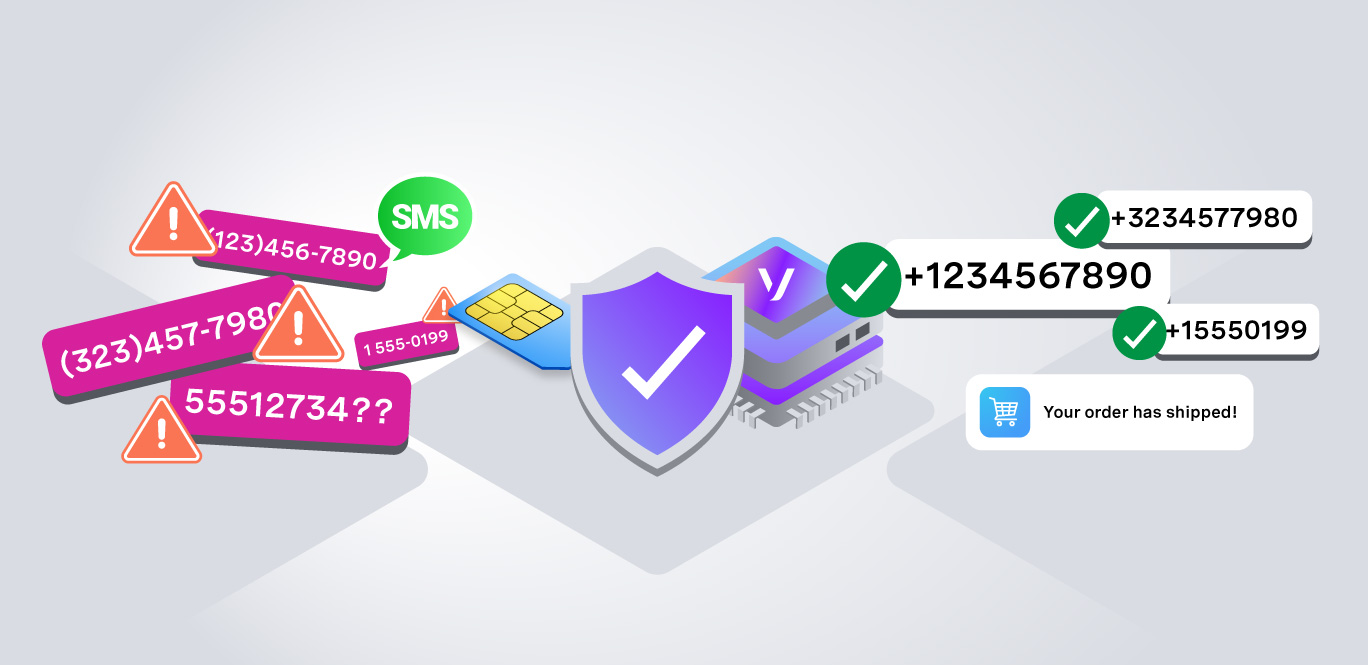
- Verify the mobile number and strengthen authentication: Number Verification helps businesses verify that a customer has control of a mobile number through the mobile network, providing an additional layer of assurance during authentication. SIM-based Number Verification provides a network-based way to verify a mobile number using the SIM in the device, reducing reliance on SMS codes that may be compromised after a SIM swap.
- Protect the messaging layer: For mobile operators, Anam Protect omnichannel firewall helps detect and filter malicious, fraudulent, and unwanted SMS traffic, including phishing and smishing attempts, before it reaches subscribers.
- Keep customers informed and supported: CPaaS can support fraud alerts, authentication messages, recovery instructions, and other customer communications across appropriate channels. Infobip’s AgentOS can further support these interactions by enabling AI-powered agents to provide timely, contextual assistance throughout the customer journey. Together, these capabilities help ensure customers receive clear information and support when an account or number is at risk. They do not replace the security controls above; rather, they complement them by helping customers understand what is happening and what to do next.
- Build recognizable, engaging customer communications with RCS: RCS for Business supports branded sender experiences, rich media, and interactive messaging. When used alongside Network APIs, businesses can add carrier-derived signals, such as phone-number verification or SIM-swap checks, to help strengthen fraud prevention in sensitive customer journeys.
What is a SIM swap scam?
What is SIM protection?
How do I know if I’ve been SIM swapped?
Can SIM swapping happen without my physical SIM?
Is SIM swapping the same as phone cloning?
What should a business do first after a suspected SIM swap?
What should a victim do after a SIM swap?
Which industry verticals carry the highest risk of SIM swap fraud attacks?
What are recent cases of SIM swap attacks, and what were the consequences?