Telecom customer experience now shapes whether subscribers stay, upgrade, or leave. When network performance is comparable, small experience frictions can become decisive. A slow activation, confusing bill, or handoff that loses context can push a subscriber toward churn. This guide shows why CX affects revenue, where the journey breaks, and how operators can fix it.
In telecom, CX is part of the business model. Switching costs are often lower than operators would like, although contracts, device financing, installation, and bundled services can still create friction.
Telecom churn can be material, but rates vary widely by market, segment, contract type, and operator. Customer acquisition often costs more than retention, although the difference varies by market, competitive environment, subsidy model, product, and retention approach.
If an operator has 2 million subscribers and a $25 monthly ARPU (Average Revenue Per User), a 2-percentage-point increase in monthly churn, assuming the subscriber base and ARPU remain constant, would put approximately 40,000 subscribers at risk and represent about $1 million in monthly recurring revenue. Bain & Company reported that companies excelling at customer experience grew revenue 4%–8% above their market.
Network quality is the starting point. Once coverage and speed are close, subscribers care about the rest of the experience.
They care about fast activation, clear bills, quick problem resolution, and self-service that works the first time. Login is one place where friction shows up early. In J.D. Power’s U.S. Telecom Digital Experience Study, app-login satisfaction was 42 points higher than website-login satisfaction among internet service providers and 38 points higher among wireless carriers.
The real differentiators are onboarding simplicity, billing clarity, resolution speed, and digital self-service.
Telecom customer experience covers every subscriber interaction from discovery and activation through usage, billing, support, renewal, and win-back. It includes mobile operators, MVNOs, internet service providers (ISPs), fixed-line providers, and cable operators. It also includes network reliability, billing clarity, and digital self-service. The next step is to see where the journey breaks.
The telecom journey has its own failure points, systems, and messages worth examining.
The journey starts with plan comparison, eligibility, and trust. Then comes credit checks, number porting, SIM or eSIM provisioning, and first-use setup.
The main failure at this stage is silence. When provisioning stalls and no one explains why, uncertainty becomes the first service issue. A better flow gives status by step, instead of only outcome. It says the eSIM request is in progress, porting is being checked, the activation window is two hours, and support is available if the line doesn’t switch on time. This keeps a delay from feeling like a breakdown.
Once the subscription is live, the focus shifts to coverage complaints, outages, planned maintenance, roaming, and data threshold events. A network event is any issue or changes in service, such as an outage or planned maintenance. It becomes a CX problem when the subscriber feels the impact before the operator explains what is happening.
For outages, say what is affected, when the next update will come, what the repair window looks like, and what the subscriber can do now. For roaming or data thresholds, give the usage state and a clear next step. A message that explains the issue but gives no action is weak. A message that reduces uncertainty and gives a path forward is useful and welcomed.
Billing is where trust either holds or cracks. Statement clarity, unexpected charges, overage surprises, roaming costs, payment failures, and dunning all shape how fair the operator seems to the customer.
Bill shock can drive churn in telecom, yet it often gets treated as a finance issue instead of a communication one. The better response is preventative. Send threshold alerts before charging. Offer a relevant upgrade, add-on, or top-up when usage patterns indicate that it may benefit the subscriber. Where supported by the channel, payment flow, authentication model, and regulatory controls, let the subscriber start or complete payment through a secure, authenticated experience. That only works if billing and usage data are unified enough to trigger the right message at the right time.
Support is where many operators lose time and patience. Self-service can handle simple issues. Automation can contain repeat ones. Escalation should handle the rest.
The problem is context loss on handover. If a subscriber starts in chat, moves to Viber, and then calls, they shouldn’t have to repeat the same issue three times. The handoff should carry the transcript, profile, plan state, and open incident status. That’s what makes support feel joined up instead of fragmented.
Renewal is where operators get a second chance. Contract expiry, upgrade cycles, save-desk interactions, and post-cancellation win-back all sit here.
Reactive save desks usually underperform because they arrive too late. By the time a subscriber is ready to cancel, the warning signs are already there. Lower usage, more billing complaints, and clustered support contacts all point to churn risk before the final decision. Retention works best when it starts before cancellation intent has been made explicit.
The root problem is usually a stack of structural defects that make good CX hard to deliver.
A subscriber can appear as several records across billing, provisioning, network, and care systems. That’s how one person ends up with one view in CRM, another in billing, another in the network stack, and another in support.
When those systems don’t agree, the operator can’t answer basic questions cleanly. It can’t know which plan the subscriber is on, whether the line is active, what the last issue was, or whether an alert should go out. Duplicate messages and contradictory instructions follow fast.
A sufficiently unified and timely subscriber view is a major enabler of better communication, automation, and personalization.
Many operators still treat each channel as a separate lane and forget that the subscriber doesn’t. For example, they start in an app chatbot, move to Telegram, then call, and expect the conversation to continue.
When context doesn’t carry over, every handoff feels like a restart. The subscriber repeats the issue, the agent wastes time, and the operator pays twice for the same problem. Fixing this takes a shared conversation record, profile, and routing logic.
The old model waits for the call, while the better model acts before the call happens. Outages, provisioning delays, billing thresholds, and payment failures all create predictable friction. If the operator already knows the event, it should say so first. Well-targeted proactive communication can reduce avoidable contacts by answering predictable questions before subscribers need to call. It also reduces panic, which is often what drives the call.
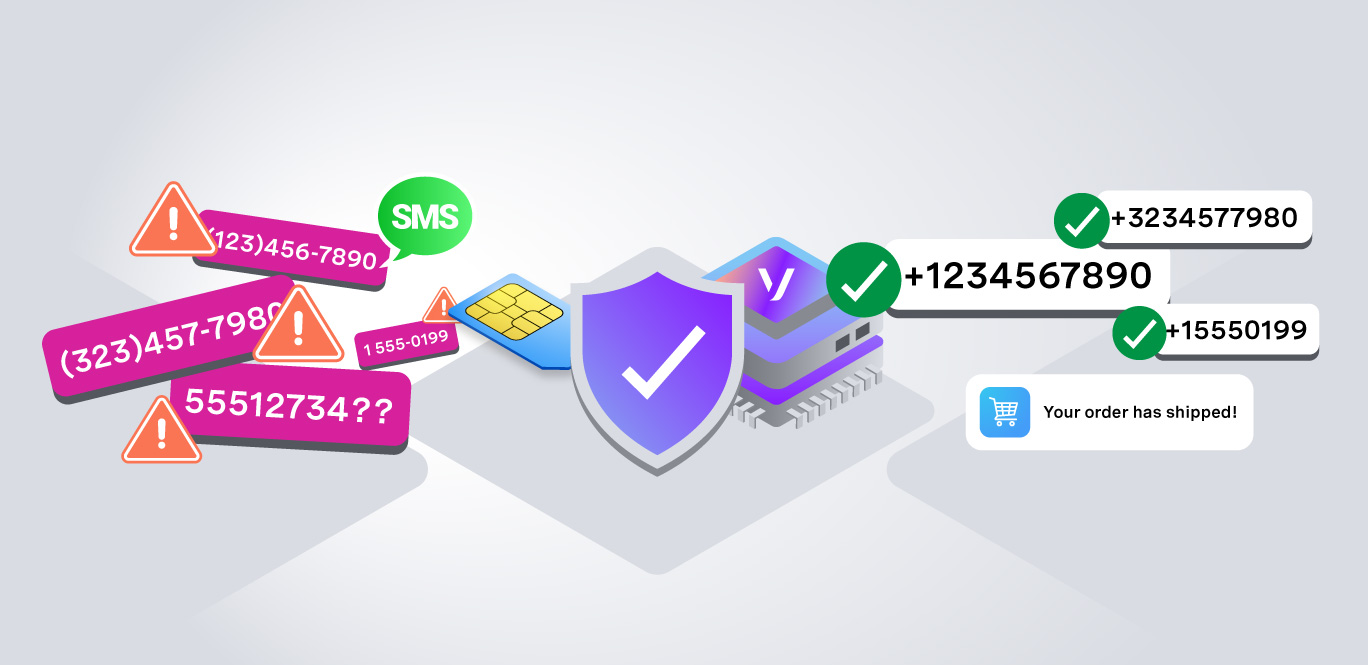
There’s one more failure mode that sits underneath the experience layer. Messages don’t always reach the subscriber. An undelivered OTP, a throttled outage alert, or a sender ID blocked for reputation reasons is a direct CX failure. The same is true for artificially inflated traffic and SMS pumping, which damage revenue and trust. If the message doesn’t land, the experience breaks before the subscriber sees it. Deliverability, throughput, sender reputation, and fraud protection matter as much as the message itself. Once the failure modes are clear, the fix is an operating model.
Here’s the sequence that works.
- Unify subscriber data into a single profile.
- Turn network events into proactive messages.
- Deploy AI agents on high-volume, low-risk journeys first.
- Hand off to human agents with full context.
- Personalize offers from behaviour, not static segments.
- Measure containment, resolution, and revenue.
Start with the profile because everything else depends on it. A usable subscriber profile needs identity, plan, contract, device, usage, billing history, network events, and every past interaction across channels.
The profile should be purpose-limited and governed by role-based access, data minimization, retention rules, consent or another lawful basis, and applicable telecom and privacy requirements.
If the data isn’t unified, the operator can’t trigger the right message, route the right case, or make the right offer. Steps 2 through 6 only work if step 1 is real, current, and available in time to act.
The trigger should be automatic. A network issue, a usage threshold, a payment failure, or a provisioning delay happens. The profile decides who should hear about it, and the right message goes out with the next best action inside it.
For an outage, the message should explain the issue, give a current estimate, and offer a next step. For a data threshold, it should show usage, suggest a plan or top-up, and let the subscriber act immediately. That’s the difference between a notification and useful communication.
Automation works best when it starts with journeys that are repetitive, predictable, and low risk. Balance checks, plan information, activation status, and store or appointment scheduling are solid places to begin.
Billing disputes, identity changes, and payment-sensitive actions belong later, when the guardrails are stronger, and the handoff rules are clear. The right metric for this step is containment rate.
When automation can’t finish the job, the human agent needs the whole story. The handoff should provide the relevant conversation summary, verified customer context, plan state, and open incident status, subject to access controls and data-minimization requirements.
Without that context, the human interaction starts from zero. With it, the agent can focus on the fix instead of playing catch up.
Static segments are too blunt for telecom. Behavior tells a better story. Heavy travel, rising data use, repeated roaming alerts, or a recent support pattern all say more about the right offer than a list ever will.
A travel-heavy subscriber may need a roaming add-on or a better plan. A family that keeps hitting the data ceiling may need a bigger bundle. When the trigger, channel, and timing line up, personalization feels helpful instead of random.
According to McKinsey, companies that grow faster drive 40% more of their revenue from personalization than slower-growing peers. The point isn’t the uplift alone. It’s that the message matches a real need at the right time.
Satisfaction scores are useful, but churn and ARPU show whether the program is paying off. The useful metric set includes containment rate, first-contact resolution, average handling time, cost per contact by channel, churn rate by cohort, and ARPU movement.
That’s how CX becomes operational. You can see what changed, where it changed, and whether it moved the economics and the sentiment.
Agentic AI can extend conversational systems from answering questions to planning and executing multi-step tasks, provided the agent has the required integrations, permissions, and controls. That’s a different leap from scripted IVR or basic chatbots.
A chatbot can answer a question or follow a script. An agent can hold a goal, plan the steps, act across systems, and adapt when the path changes.
A basic chatbot might tell a subscriber the bill is high. An agent can check why, review the usage pattern, test eligibility for a better plan, and, if allowed, execute the change. Instead of simply explaining, it does the work to make the needed changes. Agentic AI is both a conversation and action layer.
The current pattern is cautious, and that’s the right move. Operators are putting agents first into low-risk zones such as billing explanations, plan discovery, appointment scheduling, and service-status queries.
Identity changes, policy-sensitive actions, and payment-sensitive flows generally require stronger authentication, permissions, monitoring, and human escalation.
There is also momentum on the network side, where multi-agent orchestration can help with anomaly detection and root-cause analysis. The common thread is the same. The agent is useful where it can reduce manual work without creating unnecessary risk.
Operators need auditability before autonomy. They need action-level permissions, clear escalation triggers, and human approval for consequential actions. This is crucial in telecom because billing accuracy and subscriber data carry regulatory exposure. An agent that can explain a problem is useful, but an agent that can change something sensitive needs controls that make the decision traceable.
The strongest deployments are the ones that are autonomous where it’s safe and supervised where it matters. AI only works when subscribers can reach the right channel at the right moment, so channel choice still plays a role.
Not every channel fits every moment. The right channel depends on urgency, trust, and how much action the subscriber needs to take.
RCS for Business can provide verified branding, rich media, suggested replies, action buttons, delivery reports, and read receipts where supported by the relevant market and implementation. Coverage and feature availability still depend on device, operating system, carrier, and local deployment conditions.
It’s especially useful where the operator already has a direct relationship with the subscriber and can use the channel for more than plain text. Handset and market availability still shape where it works best.
Chat apps are often the main containment channel in markets where they dominate daily behavior. They are useful for balance checks, plan changes, troubleshooting, and ticket status because they feel familiar and low effort.
The channel strategy has to follow subscriber behavior, not a global default. What works in one market may be irrelevant in another, so the mix should be local.
SMS remains an important fallback and transactional channel because it does not require a dedicated app or logged-in account. It works for OTPs, outage alerts, payment reminders, and roaming notifications because it doesn’t depend on an app, data connection, or logged-in account. That makes deliverability critical. If SMS fails, the most important message may never arrive. The delivery stack behind the channel matters as much as the message itself.
Voice remains useful for disputes, cancellations, accessibility needs, and complex technical faults, particularly when digital self-service cannot resolve the issue. Automated voice can handle routing and containment. Human voice is still the right path for disputes, cancellations, and complex technical faults.
The key is to treat voice as a continuation of the journey. If a subscriber moves from digital to voice, the agent should already know why. The channel mix is only half of the decision. The next one is whether to build, buy, or orchestrate the stack behind it.
Telecom operators already have complex systems in place. The goal is to make them work together.
Business support systems (BSS) usually handle billing and ratings. Operations support systems (OSS) handle provisioning, order management, and network monitoring. Customer relationship management (CRM) handles case management and customer records. Those systems are essential, but they only manage parts of the subscriber’s experience.
An orchestration layer sits above the systems of record and below the subscriber. It brings the unified profile together, decides the next best action, picks the channel, and carries context across the journey. The result is an intentional next move. That’s the role the experience layer should play. It connects data, action, and communication so the operator can respond in real time instead of waiting for batch updates and manual work.
A platform deserves serious evaluation only if it can do all of the following:
- Connect native channels rather than reselling connectivity
- Maintain a real-time subscriber profile
- Trigger automation with governance controls
- Integrate with the contact center
- Support deliverability, compliance, and routing at scale
- Handle telecom-specific fraud risks
If a platform can’t do those things, it isn’t really an orchestration layer. It’s just another tool in the stack. Once the technology choice is clear, measurement becomes much easier to trust.
Measurement only matters when it changes churn or ARPU. A dashboard without that link is just reporting.
Useful CX metrics include NPS (Net Promoter Score), CSAT, customer effort score, first-contact resolution, containment rate, average handling time, and cost per contact. Use NPS directionally, but pair it with operational and financial measures such as first-contact resolution, churn by cohort, cost to serve, and customer revenue.
The business case becomes real when you connect experience metrics to revenue metrics. Track churn by cohort, save-rate by intervention type, and ARPU by engagement level. Then compare those patterns before and after the journey changes.
That’s how CX turns into a financial lever instead of a sentiment exercise. If the work reduces churn and grows ARPU, the program funds itself. If it doesn’t, the team needs to know that fast.
This is where the stack gets practical. The right model for telecom is an orchestration layer that connects data, messages, automation, and support across the journeys that matter.
The value is in the fit. AgentOS can integrate with existing enterprise systems and use data from sources such as CRMs, ERPs, and other systems, while providing a connected layer for customer engagement, automation, and support.
What is telecom customer experience?
Why is customer experience important in telecom?
How can telecom companies improve customer experience?
What is customer experience management in telecom?
What causes customer churn in telecom?
What are the key metrics for measuring telecom customer experience?
How is AI used to improve customer experience in telecom?
What should operators look for in a customer experience platform for telecom?