Candidates are afraid to not seem perfect, but we don't want perfect. I think that's why they all use the AI, because it's perfection-seeking, too.
Candidates are afraid to not seem perfect, but we don't want perfect. I think that's why they all use the AI, because it's perfection-seeking, too.
Most of the anxiety in hiring right now comes from a question nobody has answered out loud: when is a candidate allowed to use AI, and when are they supposed to turn it off? Candidates guess, over-prepare, and lean on the tools for everything because the rules are invisible, and recruiters end up trying to detect behavior they never clearly prohibited. For an AI-first company, where using AI well is part of the actual job, that ambiguity is especially costly. The fix is telling candidates exactly where AI belongs in the process and where it doesn't, so the interview can go back to being a conversation between two people.
Christin Marshall is a Senior Talent Acquisition Specialist on the TA Operations team at Babylist, where AI use is expected in the day-to-day work. Her hiring process is a useful test case because she can't simply screen AI out. She has to teach candidates when to reach for it and when to think without it, and she's learned that most of the tension in the room comes from candidates not knowing which mode they're in.
"Candidates are afraid to not seem perfect, but we don't want perfect. I think that's why they all use the AI, because it's perfection-seeking, too," she says. The candidate reaching for AI mid-interview usually isn't trying to cheat. They're trying to avoid looking unprepared, because no one told them that an honest, imperfect answer is the thing being evaluated. In a Gartner survey of nearly 3,000 candidates, just 26% trusted that AI would evaluate them fairly, and roughly a third worried AI could sink their application outright. When candidates feel watched by a system they don't trust, reaching for the tools is a defensive reflex.
Name the moments where AI belongs
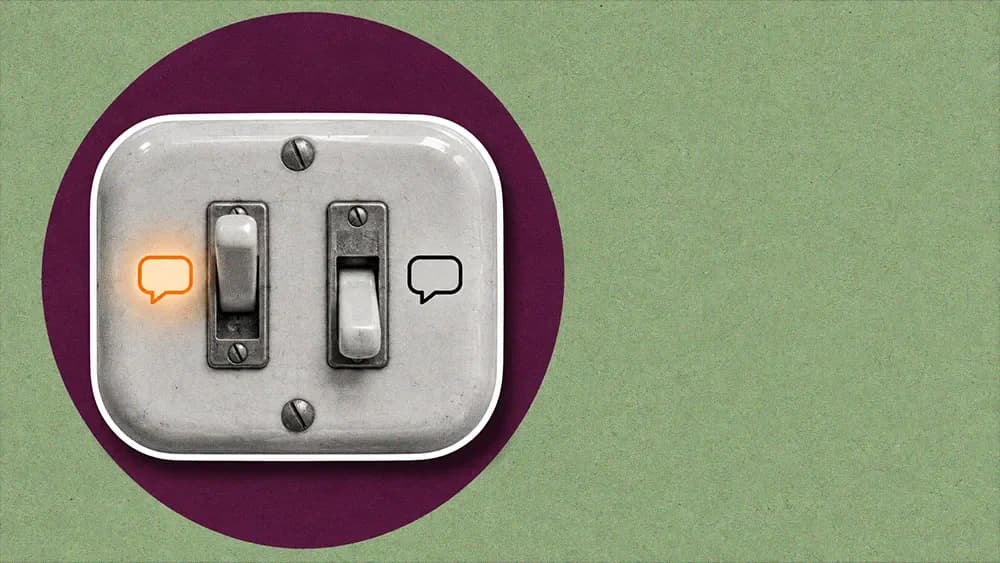
Marshall's team doesn't leave any of this to inference. They tell candidates where AI is welcome and where it's not, in plain terms, before the process starts. "We are a company that's AI-first, and we have AI usage expected in our day-to-day, but our recruiters really clarify when and where it's appropriate during our interview process," she explains.
For a case study that calls for it, they'll say so directly, and even help a candidate get set up with the right tool so no one is disadvantaged by access. The boundary is just as explicit. "Don't use it across all of the interviews, because we need to know that you're comfortable and can use it, but that you also have the free will to think without using the AI." Stated that clearly, the rule stops being a trap. A candidate who knows the expectation can meet it, and the recruiter is no longer guessing whether a long pause means dishonesty or simply nerves.
Make ownership the standard
Underneath the expectations is a value Marshall returns to, and it does a lot of the work that a detection policy can't. At Babylist, she says, one of the core values is that you own your outcome, and that applies to how a candidate uses AI as much as to how an employee does. "AI can help take your thoughts and broadcast them to a wider group, but it still needs to be your original thought."
The distinction is practical. Using AI to sharpen or scale your own thinking is fine and expected. Letting it generate the thinking you were supposed to bring is the failure. The point isn't to police the tool, but to make clear that the candidate, not the model, is accountable for what comes back.
Because the expectations are explicit, Marshall's team can be more relaxed about the thing that makes a lot of recruiters panic. A candidate using AI is not, by itself, a problem. What they're actually screening for is something more human and harder to fake. "Using AI is never a red flag. But if you can't have a conversation with us, that's the actual flag."
This is where the clarity pays off. Once a company has said plainly when AI is appropriate, the remaining signal is simple to read. Can this person connect, respond, and think in real time with another human? An AI-first team still needs this capability, and it's one no tool can supply on a candidate's behalf. Marshall frames her own operating principle the same way: her team uses AI for consistency and keeps a human in the loop to care and to understand. "There's no monopoly on the human," she says.
Earn the trust before you automate it
Marshall's advice to other teams rolling out AI in hiring is to resist the urge to automate ahead of building the foundation. The transparency she extends to candidates is the same discipline she applies internally. "Make sure everything is solid foundationally before you try to automate or add AI to anything at all," she says. The instinct she sees across teams, not just her own, is a fear of giving up familiar tasks, which pushes people to bolt on automation before the underlying process is sound. The gap is widespread. In BambooHR's Redesigning Work report, 54% of organizations said they still lack a clear, documented AI usage policy, even as the tools spread through daily work.
She sees it close to home. "Even within my own team, they want automation on certain things, and I say, 'Okay, yes, we can do that. However, all of these things need to be true before we do that, or it's going to become a bigger problem.'" Her counter is to prove the process works first, then let AI make it faster. Trust, in her telling, isn't something you can install, but rather that you set expectations for, model honestly, and build before the automation ever arrives.