This year is set to rank among the four hottest years on record with elevated temperatures persisting into 2027 because of an unusually powerful El Niño, a new U.N. climate report has found.
The World Meteorological Organization (WMO) report, released on the first day of COP31 on Monday, found the global average surface temperature from January to September was about 2.65°F (1.47°C) above the 1850-1900 pre-industrial average.
The past 12 years have each ranked among the hottest on record, with 2023 through 2026 occupying the top four spots.
Why It Matters
The WMO said higher temperatures are creating pressure on global water resources, with freshwater stored in groundwater, rivers, reservoirs, glaciers and snow continuing a decade-long decline.
In addition, the current El Niño is expected to continue into early 2027 and boost annual global mean temperatures. U.N. officials forecast El Niño will act as a risk multiplier for health.
This is because increased heat, drought and heavy rainfall can contribute to heat-related illness and mortality.
The World Health Organization (WHO) has, for the first time, classified the anticipated health impacts of extreme heat and the record-breaking El Niño as a health emergency.
Alicia White, founder of Project Petals, a United Nations Environment Programme told Newsweek: "The decision to treat El Niño’s expected health impacts as a health emergency is critical for American cities because low-income neighborhoods are the ones that experience the brunt of heat-related illnesses, decline in good air quality, and rising energy bills."
White, whose work focuses on climate resilience in underresourced communities across New York City, continued by explaining that local health systems and community organizations will absorb the largest brunt of adverse effects.
Impact of El Niño
The natural weather pattern is adding to human-caused climate change. El Niño has been intensifying since August and is expected to be the strongest on record by December.
"El Niño and indeed the state of the global climate in 2026 gives new meaning to the phrase off the charts," WMO Secretary-General Celeste Saulo said.
"El Niño doesn't add new heat to the planet. It releases heat from the ocean, which is the warmest ever measured. There is simply more heat available to release.
"We are supercharging our weather and El Niño will be a risk multiplier. Heatwaves, tropical cyclones, and rainstorms are intensifying faster than our historical baselines prepared us for.
"Hundreds of millions of people this year have been exposed to unbearable extreme heat, while the catastrophic ice and rock collapse and flash floods in Nepal highlighted the compound risks facing communities in fragile, warming high-mountain terrain."
Saulo told reporters in Geneva the world should prepare for another record-breaking year in 2027.
Economic and human costs
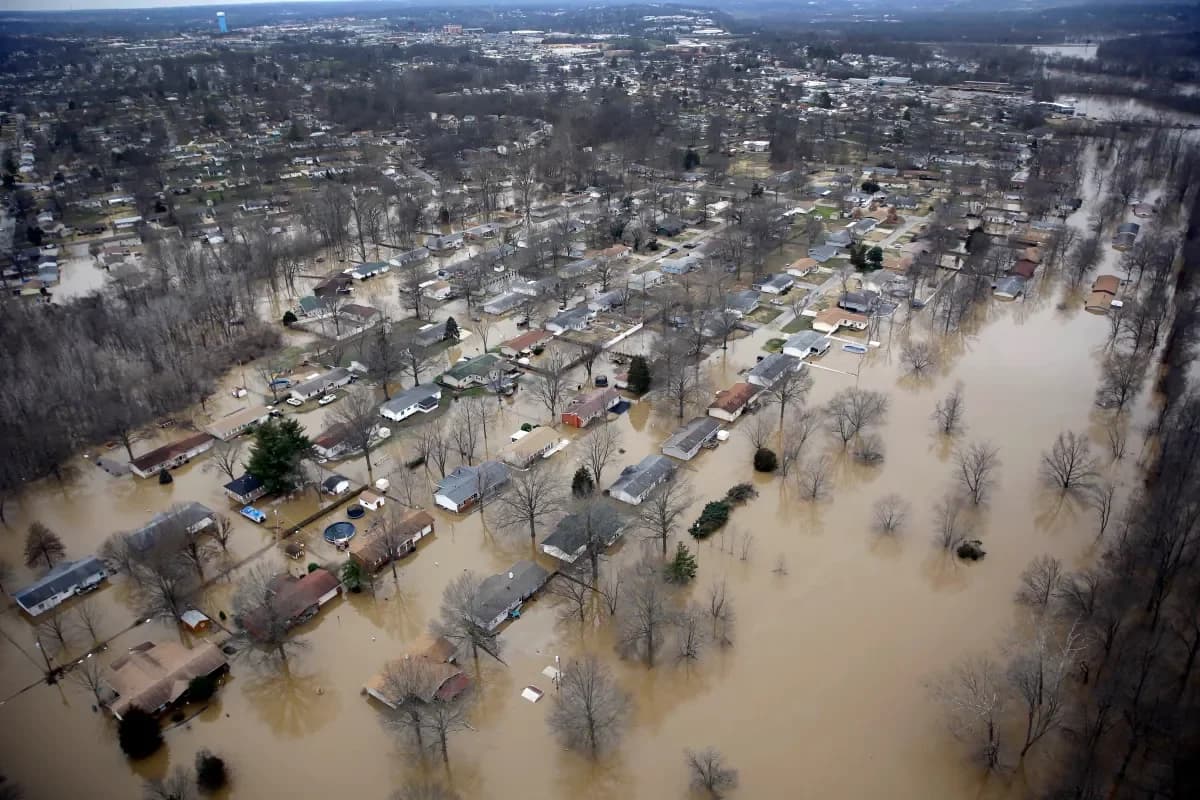
A very strong El Niño typically brings extreme heat, drought and flooding in different regions.
Researchers estimate the powerful 2015-16 El Niño cost the global economy nearly $4 trillion in lost output over the following three years from disruptions to agriculture, supply chains, labor productivity and infrastructure.
Highlighting how El Niño could impact the U.S. specifically, Kelly Trout, Oil Change International Research Director, told Newsweek: "A supercharged El Niño could push global temperatures even higher and shift weather patterns across the United States, increasing the risks of extreme storms and flooding in some regions and drought in others.
U.N. emergency relief chief Tom Fletcher has described the current event as a "wrecking ball" likely to tear through Latin America, eastern and southern Africa, Asia and the Pacific.
Saskia van Gendt, chief sustainability officer at Blue Yonder, said: "In the U.S., the super El Niño will bring warmer, wetter weather to the south, which could help replenish water supplies after previous droughts if those regions can capture the water rather than allowing it to run off.
"Warmer temperatures and more rainfall could also help some winter crops in the Midwest, like wheat. Since El Niño may negatively affect other wheat-producing regions more severely, like Asia and North Africa, the U.S. may have an advantage with global wheat sales.
"Some risks to watch for include flooding in the South and California. Increased rainfall could also disrupt some truck routes in California, for example, and increase the possibility of flooding in the Mississippi River basin. These disruptions could be magnified because droughts in other areas, like the Panama Canal, may reduce other passages."
What Happens Next
"We have entered a new age of climate extremes," UN Secretary-General António Guterres said.
"A supersized El Niño is colliding with a planet already superheated by human-made climate change. Climate records keep falling. The human costs keep rising. And those least responsible are suffering first and worst.
"Leaders must get serious by cutting emissions faster, accelerating a just transition from fossil fuels and delivering the finance and protection vulnerable countries need."
The final State of the Global Climate 2026 report will be issued in March 2027.
The WMO urged delegates at COP31 to invest in observation networks and forecasting.
"We cannot afford to fly blind," Saulo said.
Contact Newsweek editors for this story: Robert Greenalland Ben Kelly