A few weeks ago, shopping without shopping started to feel much less hypothetical.
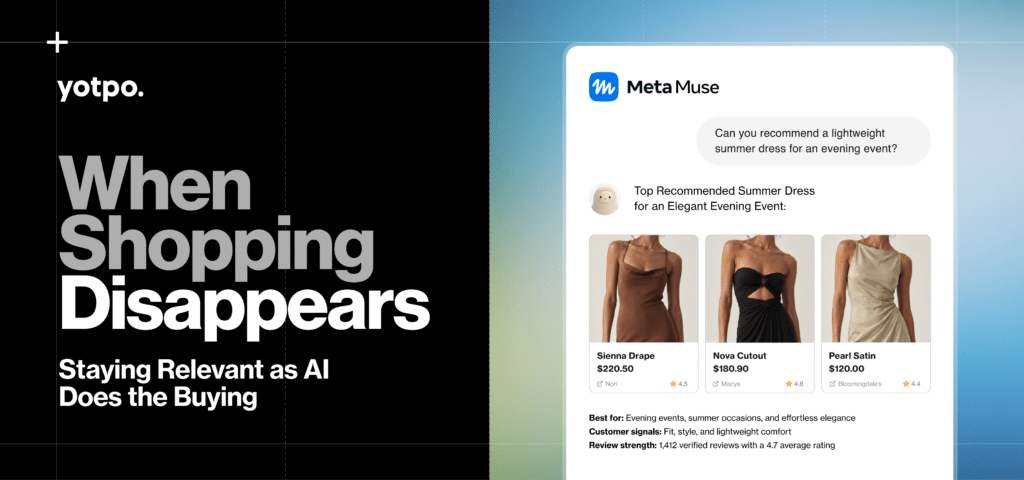
Meta launched Muse, an AI agent that can browse, fill out forms, negotiate and make purchases on someone’s behalf. Then, at Meta Connect, it announced that Muse is coming to its AI glasses. You’ll be able to look at a product, a flyer or a school-supply list and ask the agent to do something about it. No need to pull out a phone or even explain what you’re seeing.
Instinct, another new personal agent, describes its interface even more simply: “There are no new interfaces.” It connects to the devices and applications already in your life and uses them for you.
I keep thinking about what that means for a normal moment in my day. It’s five in the morning, I’m out for an early-morning walk, and it’s darker than I expected. At some point I think, I really need lights for this.
Today, I’ll probably forget by the time I get home. Then I’ll remember again, search for walking lights, open six tabs, read reviews for a product I honestly don’t care that much about, get distracted and eventually order something.
Soon, I might just say it out loud while I’m walking.
“Buy me lights for my next early-morning walk.”
Something on my wrist, or built into my glasses, hears me. The lights arrive. I keep walking. I find this both magical and slightly disturbing. Magical because I got something done without leaving the moment I was in. Disturbing because there is now almost nothing between the thought and the transaction.
I work in marketing and ecommerce, so I spend a lot of time thinking about AI discovery, agents and what brands should do next. But lately I’ve been thinking less about what the technology can do and more about what happens to us when it works.
I keep coming back to four questions.
Where does the scarcity move?
Someone on my team recently showed me a system capable of producing hundreds of videos a week. Making one video used to cost real money and take a real amount of time. Now we can make more than we could ever realistically use. It was impressive. My first thought was, will anyone watch more of them?
For years, making things was one of marketing’s biggest constraints. We organized teams, budgets and timelines around production. AI is making that part dramatically easier.
But people don’t suddenly have more attention because we have more content.
This is the pattern I expect to see across commerce. Writing becomes cheap. Comparison becomes cheap. Execution becomes cheap. Eventually, many transactions become close to invisible.
The hard part moves somewhere else.
Do we understand the customer well enough to make the right recommendation? Does she trust us enough to accept it? Is this worth putting into the world at all? Who is responsible when the system gets it wrong?
We keep using our new capacity to solve the old constraint. Everyone can build, so everyone builds. Everyone can generate content, so everyone generates content. Then we end up with more tools than anyone uses and more messages than anyone can absorb.
Which friction should disappear?
I don’t want to shop for walking lights. For me, they’re functional. I need them to keep me visible at five in the morning. I don’t care much about the brand or what they look like. I want something safe that works. This is a task I would happily hand over completely.
Shoes are different. A dress for an event is different. There is something I enjoy about those purchases.
Looking. Imagining. Trying things on. Sending a picture to someone. Discovering a brand I didn’t know. Occasionally falling in love with something I wasn’t searching for.
In those cases, shopping is part of the value. If an agent jumps straight to the answer, it may take away the part I wanted.
I’ve started thinking about purchases based on two questions. How much do I care about this item? And what happens if the decision is wrong?
The cost of being wrong isn’t only the price. It could be safety, a bad fit, the time required to return something or the disappointment of getting an important purchase wrong.
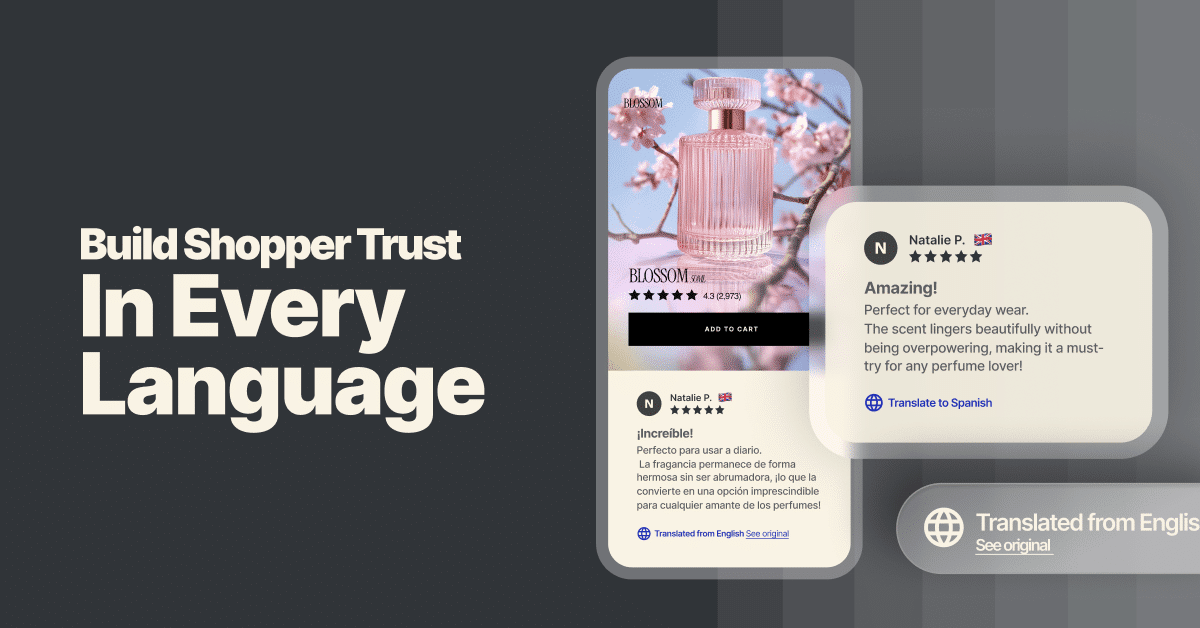
My size is a good example. I’m usually a 35, but a 35 can mean something different from one shoe brand to another. The official size chart rarely tells me enough. A review from someone who normally wears my size, tried the shoe and explains how it actually fit can be far more useful than another paragraph of polished product copy.
That kind of customer detail becomes even more important when an agent is making the recommendation. It needs more than a product description. It needs evidence from people who have already lived with the product.
Some purchases are simply, “Do it for me.”
Others are, “Research it and check with me.”
Sometimes I want AI to explore with me without trying to finish the journey too quickly. And for decisions that are both personal and consequential, I want it to stay beside me while I decide.
The same product can move between these modes. Everyday shoes and shoes for an important event aren’t the same journey. A gift I need tomorrow is different from one I have a month to think about. Another early-morning walker may care deeply about which light she wears, even if I don’t.
The next version of personalization will need to understand more than what I like. It will need to understand how involved I want to be in this decision.
What becomes special when everything is available?
A few days ago, I watched a TikTok about 3 Sisters Archive, a vintage showroom that opened in SoHo this spring.
The creator was walking through the space, looking at vintage designer bags. She wasn’t talking about efficiency or price. She kept coming back to the curation and the feeling that the showroom had the best pieces.
I understood the appeal immediately.
This is almost the exact opposite of asking an agent to buy my walking lights. You go because you want to look. You want someone with taste to have decided what made it into the room. You want to touch things and hear where they came from. You might leave with nothing.
And if you do find something, it feels found.
3 Sisters Archive describes its collection through the stories inside each piece. It is one of several vintage businesses that have recently invested in physical spaces in New York. Rebelonging opened its first SoHo store in June. The NY Archive moved from online drops and a family-apartment showroom into a retail space in Chelsea, built to feel like an emotional world rather than simply a store.
I don’t think those openings prove that AI is sending people back to physical shopping. There are many reasons vintage is having a moment, and many reasons a digital business opens a store.
But I do think they reveal something about the kind of value people can still find in shopping. As producing new things becomes easier, an object with a real history starts to feel different. There is one of it. Someone had to find it, recognize it and choose it. The person curating the room becomes part of the product.
The friction is part of the value.
Some purchases become better when the shopping disappears. Others become better because someone created a shopping experience worth entering.
Where is a brand actually welcome?
Meta says its glasses are designed so AI can “amplify your attention, not take it away.”
That is a beautiful promise. I’m not sure how simple it will be in practice.
An agent could let me stay on my early-morning walk while it handles an errand. That sounds like exactly what I want from technology. I stay outside. I keep moving. I don’t lose twenty minutes to my phone.
But removing the screen doesn’t mean commerce has less access to me. It may mean commerce is always there. Every thought can become a transaction. Every small need can be fulfilled before I have time to decide whether it was really a need.
At the same time, I find myself valuing places that make it harder to split my attention. The library. Yoga. Walking. Dinner with other people. Places where I’m doing one thing and, ideally, nothing is trying to convert me.
I think we’ll become more protective of these pockets of our lives. We may even use AI to protect them. Let the agent deal with the errands so I can stay on my walk or be present with my children.
But brands need to understand the difference between being available in those moments and interrupting them.
That creates a very different discovery problem.
If I need a doctor, I’ll actively search. I want the right provider to be easy to find, credible, available and validated by sources I trust.
Shoes are different. I genuinely like when my feed understands that I’m looking for a certain style and starts showing me brands I haven’t encountered before. In that moment, the algorithm is useful. It is helping me figure out what I want. For walking lights, I may never want to encounter the brand at all. I want my agent to find a reliable option and finish the task.
AEO and agent optimization will matter. Brands will need to understand whether they appear when shoppers ask AI for recommendations, how their products are being described and which sources the answer relies on.
Being discoverable will require more than feeding an agent a clean product catalog. The agent will need evidence. Reviews, customer questions, detailed product information and credible third-party mentions will help it decide whether the product is right for the person asking.
This is the question behind the work we’re doing with Yotpo Discover: when a shopper asks an AI assistant what to buy, what makes one product understandable, credible and recommendable while another disappears from the answer?
But being legible to an agent is only part of it.
Two weeks after Muse launched, Amazon blocked Muse from browsing and buying on its platform. Amazon raised concerns about authorization, security and the customer experience. Underneath that fight is a much bigger question: when an agent stands between the shopper and the store, who owns the relationship?
It also makes me wonder what loyalty means when switching becomes almost effortless.
If my agent can compare every option and move me to a different brand without requiring any work from me, some of what brands once called loyalty may turn out to have been inconvenience.
Real loyalty will have to carry more weight. It could give the customer a reason to tell her agent, “Start with this brand.” It could also give the brand permission to remember what she likes, what fits, what she has already tried and which benefits matter to her.
Points and discounts may still play a role. But the deeper value of loyalty may become permission, preference and memory.
Brands have spent years trying to understand where their customers spend time. I think they’ll now need to understand where customers still welcome discovery, which decisions they want to delegate and which moments they don’t want commerce to enter at all.
That is much closer to understanding a life than defining a segment.
I keep returning to my early-morning walk.
If I ask something on my wrist to buy the lights and continue moving, did technology protect my attention? Or did shopping enter one of the few moments I had to myself?
Probably both.
I don’t think the brands that win will necessarily be the ones that remove the most friction or appear in the most places.
They may be the ones that know when they are useful, when they are wanted and when they should quietly disappear.