Introducing Managed Agent Memory, Managed MCP Server, and new-and-improved Couchbase Operational Insights
AI agents are now some of the busiest users of your data. In June 2026, automated traffic passed human traffic on the web, with 57.5% of requests now coming from machines according to Cloudflare Radar . Every agent you add brings another memory store to keep in sync, another custom integration for security to review, and more GPU capacity to size and pay for. The Couchbase October release takes all three off your plate. Managed Agent Memory gives your agents one memory store that Couchbase runs for you. Managed MCP Server replaces per-agent integrations with one governed path to your data. And serverless Amazon Bedrock models in Capella, with semantic caching, mean no GPU capacity to size and fewer model calls to pay for.
Couchbase has always built for what’s next
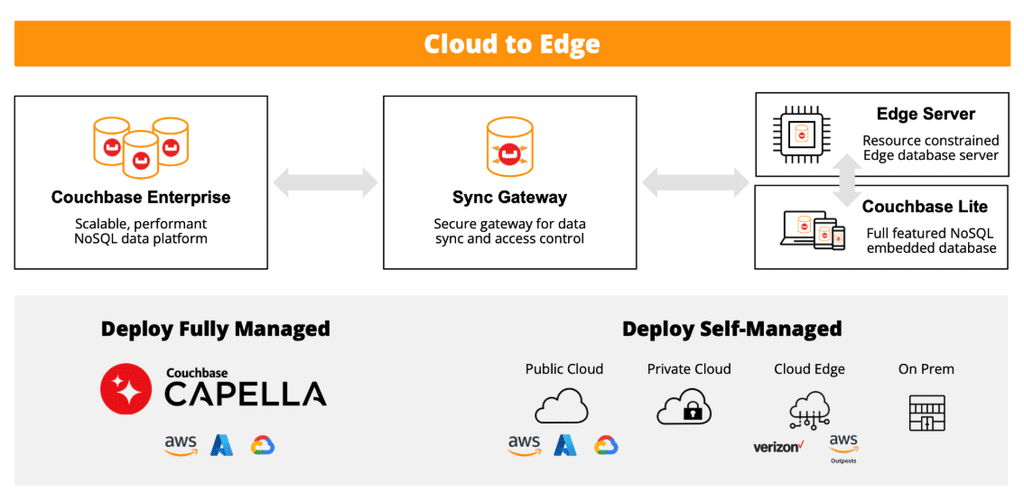
None of this is a pivot. Couchbase started with a memory-first architecture because the applications we were built for needed answers in milliseconds. We took Couchbase out to the edge, onto phones, field devices, and cruise ships, so the business kept running whether the network did or not. And we put vector search inside the same platform instead of handing customers yet another database to run.
Add it all up and you get what agentic AI asks of a data layer: speed at machine scale, flexible data, one place to govern it, and the freedom to run in the cloud, in your own data center, or at the edge. It’s why we call Couchbase the Operational Data Platform for AI®.
In June we introduced the Couchbase AI Data Plane™ on that foundation. This release builds it out.
What’s new in the Couchbase AI Data Plane?
The Couchbase AI Data Plane is the governed data and memory layer that gives AI agents persistent memory, governed access to data and tools, and consistent context from the cloud to the edge. It all runs on one engine and one copy of your data, so agents work with live operational data instead of last night’s extract. Model Service, AI Functions, and Agent Catalog already run as managed services in Couchbase Capella. Now Agent Memory and MCP Server join them on AWS, and Model Service adds two new options.
Managed Agent Memory
Couchbase Agent Memory keeps durable facts, context that expires on a schedule, and semantic recall in one JSON store behind a single API, replacing the three or four separate stores many teams run today.
The managed version provisions from the Capella UI in minutes, and Couchbase handles patches, upgrades, and monitoring. It’s framework-agnostic, uses standard OIDC and OAuth2 for access control, and sends the model only the context it needs, which keeps token spend down.
Managed MCP Server
Model Context Protocol (MCP) is the open standard AI agents use to connect to tools and data. Couchbase MCP Server gives every agent one governed path to your Couchbase data, so nobody writes a custom integration per agent and access rules live in one place.
The managed version runs as a single-tenant server in your Capella environment, ships with more than 20 ready-made tools for schema, queries, and cluster health, and is read-only by default.
Serverless frontier models with semantic caching
Capella Model Service now offers serverless frontier models from Amazon Bedrock, including Claude, Llama 4, Nova, Mistral, and Cohere. You pay per token, so there’s no GPU fleet to provision, size, reserve, or pay for while it sits idle.
The integration also includes semantic and conversational caching for apps and agents built on Bedrock. When a new question means the same thing as one already answered, the answer comes from cache instead of another model call, which can cut LLM calls drastically.
Vectorization over private networking
Embeddings are numeric representations of meaning that power vector search. Creating them often means sending data over the public internet, which is where plenty of AI projects stall in security review. Capella now generates embeddings through your own Amazon Bedrock account over AWS PrivateLink, so the traffic stays private and your operational data stays in Couchbase.
Couchbase Analytics is now Couchbase Operational Insights
Same engine, same team, new name. Capella Analytics is now Capella Operational Insights, the fully managed service. Enterprise Analytics is now Enterprise Operational Insights, for teams that run Couchbase on premises or in their own cloud.
So why rename it? “Analytics” describes a category. “Operational Insights” describes what the product does: real-time analysis on live operational data from Couchbase and other sources, with results written back into the data your apps and agents read next. And starting with Enterprise Operational Insights, it understands meaning as well as numbers.
What’s new in Operational Insights
- Vector search in SQL++: Search by meaning using the query language you already write. Vectors live in your JSON documents next to the rest of the data, so there’s no separate vector database to keep in sync.
- Semantic clustering: The new CLUSTER BY clause groups records by meaning, then counts and aggregates each group in the same query. Find the themes in thousands of reviews or support tickets without tagging a single one.
- Python UDFs: Write custom functions in Python and call them from SQL++ like any built-in, so your own ML models run where the data lives.These capabilities arrive first in Enterprise Operational Insights. That means the sentiment in a support transcript and the revenue on the account can finally sit in the same query.
These capabilities arrive first in Enterprise Operational Insights. That means the sentiment in a support transcript and the revenue on the account can finally sit in the same query.
See it for yourself
- Tour the full October release: See what’s new in Couchbase
- Get to know the AI Data Plane: Explore the Couchbase AI Data Plane
- Watch Operational Insights in action: Watch the Operational Insights video on YouTube
Frequently asked questions
What happened to Couchbase Analytics? Couchbase Analytics is now Couchbase Operational Insights. Capella Analytics became Capella Operational Insights, and Enterprise Analytics became Enterprise Operational Insights. It’s the same product on the same foundation, with a new name and new capabilities like vector search and semantic clustering in SQL++.
Can I run Agent Memory and MCP Server myself? Yes. Both are available self-managed with the same APIs as the Capella versions. Self-managed Agent Memory now supports multi-node deployments for better scaling and high availability.
When are these capabilities available? All of them are generally available now. Managed Agent Memory, Managed MCP Server, and the Amazon Bedrock integration run in Couchbase Capella on AWS, and the new Operational Insights capabilities arrive first in Enterprise Operational Insights.