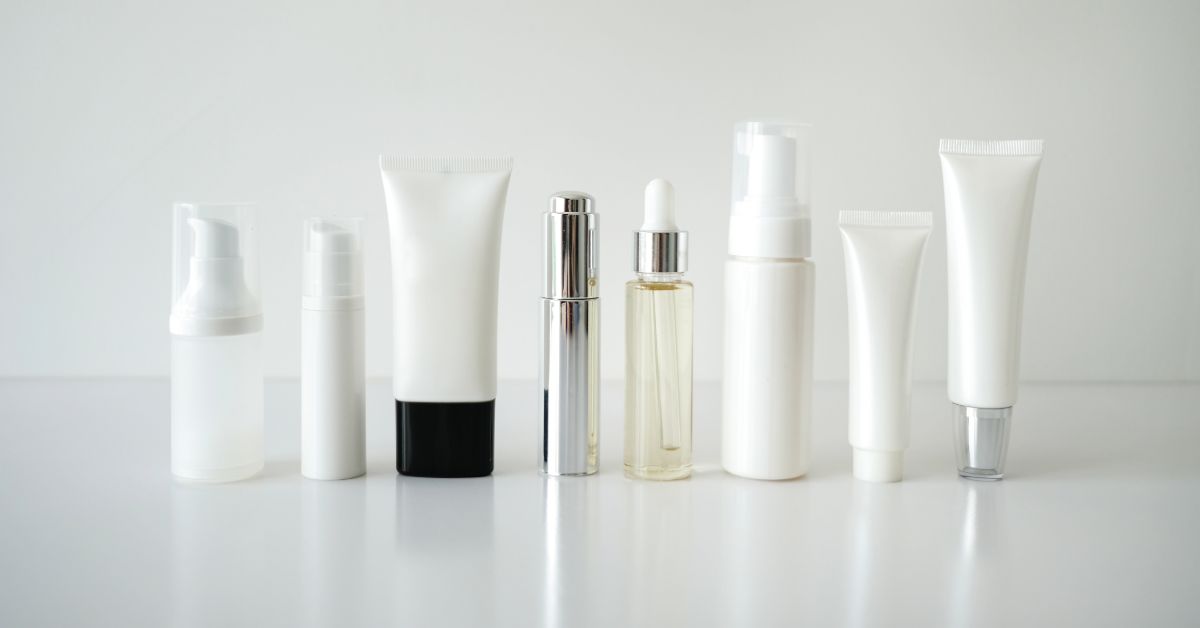
For cosmetic brands, packaging has traditionally been viewed as a vessel for the product. In reality, packaging is an active part of the consumer experience and a critical factor in product safety. As regulations become more stringent, ingredient restrictions expand, and sustainability initiatives drive the adoption of new materials, cosmetic companies face growing challenges in ensuring that packaging materials do not negatively interact with product formulations. This is the problem Ansys, part of Synopsys, aims to solve with CertiSim.
Developed in collaboration with the CosmetoPack® II Consortium, supported by Polymeris for plastics expertise and Cosmetic Valley for cosmetics expertise, CertiSim is a packaging toxicology and safety assessment platform designed specifically for the cosmetics industry. The software helps cosmetic manufacturers, packaging suppliers, and toxicologists evaluate packaging safety, assess potential toxicity risks, and generate compliance-ready documentation more quickly and efficiently than traditional methods.
The Growing Challenge of Cosmetic Packaging Safety
Brands must consider not only the safety of the formulation itself, but also the potential migration of substances from packaging into the product. Factors such as packaging materials, additives, coatings, inks, and product formulations can all influence safety outcomes.
“We have to understand the interactions between formulations and packaging because those interactions can directly influence consumer safety,” says Stephanie Moulin, a regulatory toxicologist and member of the CosmetoPack® II Consortium.
Historically, evaluating these risks has been a highly manual process. Toxicologists and regulatory teams often collect information from spreadsheets, material databases, supplier records, laboratory tests, and engineering documents. The process can take days or weeks and frequently relies on fragmented information from multiple stakeholders across the value chain.
One of the biggest challenges is the lack of a common methodology and language between material suppliers, plastics packaging manufacturers, and cosmetic manufacturers and brands. While each participant possesses valuable information, much of that knowledge has historically remained isolated, making risk assessment difficult and incomplete.
“The plastics industry and the cosmetics industry did not always speak the same language,” says Moulin. “A major part of CosmetoPack's work was creating a common understanding between those stakeholders.”
From Research Project to Industry Solution
CertiSim's origins trace back more than a decade to the work of the CosmetoPack® II Consortium, which includes companies representing the entire cosmetic packaging value chain. Over roughly 15 years, consortium members have developed validated methodologies for assessing interactions between cosmetic formulations and packaging materials.
The consortium established scientific approaches for evaluating migration risks, toxicological thresholds, and compliance requirements. However, translating those methodologies into a practical, scalable solution required sophisticated software expertise. That need ultimately led to collaboration with Ansys.
“CosmetoPack brought together 27 companies across the entire packaging value chain to address one of the industry's biggest challenges: performing consistent and reliable risk assessments,” says Cedric Perben, director at materials manufacturer Eastman and member of the CosmetoPack® II Consortium. “We knew how to build the engine. Ansys helped create the vehicle that allows the industry to use it.”
By combining the consortium's scientific knowledge with Ansys' decades of simulation and materials management expertise, CertiSim emerged as a comprehensive platform that automates and standardizes packaging safety evaluations.
“What we found in Ansys was the missing link,” says Perben. “We had developed and validated the methodology, but we needed an integrator able to transform that knowledge into a practical, maintainable solution.”
Full Coverage
At its core, CertiSim helps users determine whether a cosmetic package is safe for a specific product and whether it complies with regulatory requirements. The software evaluates the entire bill of materials, including packaging components, additives, coatings, and inks. It then combines calculation within two toxicological thresholds and three methodologies developed within the Cosmetopack® II Consortium to estimate the margin of safety (MoS) necessary for cosmetic assessments.
The workflow is designed to be accessible to both engineers and non-experts with the help of its embedded artificial intelligence (AI) chatbot. Users can upload computer-aided design (CAD) files or select package geometries, identify packaging materials from an embedded database containing nearly 3,000 materials, specify the cosmetic product type, and automatically generate compliance assessments. The CertiSim Assistant makes the results easier to understand and is self-contained and offline, with its runtime, model, and curated knowledge base packaged with the product. No external application programming interface (API) or internet connection is required, which helps to keep proprietary formulation and packaging information within the local environment.
Perhaps most importantly, CertiSim can generate documentation suitable for inclusion in Product Information Files (PIFs) and Cosmetic Product Safety Reports (CPSRs), helping organizations streamline regulatory submissions and shorten their product’s go-to-market.
“CertiSim connects trusted materials intelligence, CAD-informed simulation, and contextual AI in one environment,” says Mark Palmer, lead chief technologist, health and life sciences at Ansys. “Deterministic data and calculation engines produce the safety assessment, while the offline assistant explains grounded results and supports users in the application of their knowledge and expertise.”
Accelerating Innovation While Reducing Risk
For cosmetic companies, speed-to-market is a competitive necessity. New product launches often depend on lengthy compatibility testing between packaging and formulations. If an issue is discovered late in development, brands may face costly redesigns, reformulations, and launch delays.
“Companies often develop packaging and formulations in parallel and only discover compatibility issues just before launch,” says Perben. “That can cause delays of six months or more.”
CertiSim addresses this challenge by enabling early migration prediction during the design phase. Rather than waiting for extensive physical testing, teams can identify potential risks much earlier and make informed design decisions before committing to production.
This capability becomes even more valuable as companies experiment with new sustainable materials and recycled-content packaging. Early visibility into potential packaging-formulation interactions enables brands to innovate confidently while maintaining consumer safety and regulatory compliance.
“Innovation drives this highly competitive market, which is why trust, confidentiality, and a common risk assessment methodology are all essential,” says Moulin.
Building the Future of Cosmetic Safety
CertiSim signals a broader shift toward digital, simulation-driven approaches for consumer product safety. By bringing together materials data management, toxicology analysis, regulatory intelligence, and simulation, Ansys helps modernize a process that has historically depended on manual workflows and disconnected systems.
For the cosmetics industry, this means safer products, faster innovation, and greater confidence that packaging is enhancing the consumer experience rather than creating hidden risks. In an increasingly complex regulatory environment, that capability may prove indispensable.
Learn more about CertiSim by seeing it firsthand at Cosmetic 360 October 14-15, 2026.