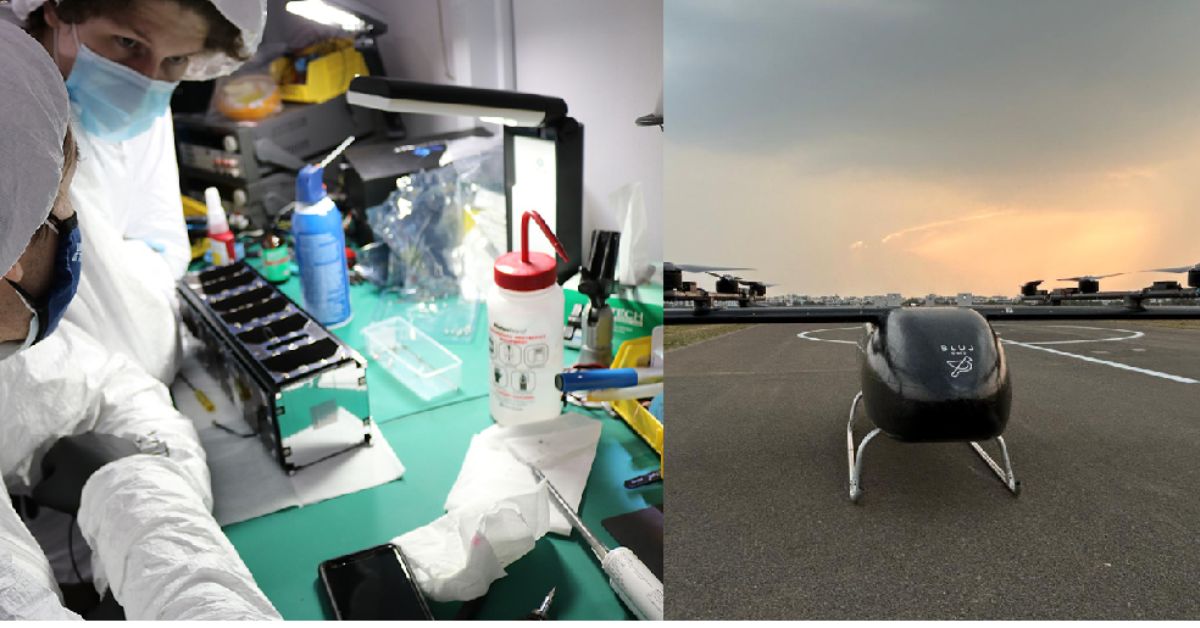
What does an electric vertical take-off and landing (eVTOL) vehicle navigating busy urban airspace and a low Earth orbit (LEO) spacecraft communicating with scientists have in common? Both vehicles increasingly depend on advanced optical technologies to function effectively.
This is true throughout the aerospace and defense (A&D) industry, with optical systems enabling everything from navigation and communications to tracking.
To achieve mission success, these systems must operate flawlessly in some of the harshest environments imaginable, which subject these systems to everything from extreme thermal swings and low light to intense mechanical stress and high radiation.
So how do engineers ensure that optical performance holds up under pressure and throughout the entire operational life cycle while also achieving the utmost precision in their designs? The answer lies in rethinking how these systems are designed, tested, and validated.
The Starting Line: Revisiting Traditional Optical Design Approaches
Historically, optical system development has relied on sequential, discipline-specific workflows.
Optical engineers begin by using ray tracing tools to optimize image quality under ideal conditions. Mechanical and thermal considerations are introduced later, often independently. Physical testing, such as random vibration and thermal cycling, comes next to validate performance.
While this approach has worked in the past, it introduces critical gaps. For example, because optical, mechanical, and thermal analyses are disconnected, engineers often miss how these factors interact in real-world conditions. As a result, performance issues may surface late in development, when fixes are costly and time-consuming.
At the same time, conservative design choices, such as overengineering components to withstand uncertainty, can increase system mass, complexity, and cost.
A Smarter Path: Adopt a Multiphysics Simulation Approach
To overcome these challenges, A&D innovators are turning toward an integrated, simulation-driven approach.
By combining optical, structural, and thermal analyses into a unified workflow, engineers can evaluate system performance under realistic operating conditions before building physical prototypes.
In doing so, innovators can make better-informed design decisions, achieve improved reliability, and minimize late-stage surprises. In fact, this multiphysics simulation approach has the potential to transform the entire optical design process.
How can you use multiphysics simulation to improve your optical precision and resilience? As described in this free white paper, you can accomplish this with seven steps:
- Model optical performance
- Simulate structural behavior
- Evaluate thermal effects
- Perform opto-mechanical-thermal coupling
- Identify sensitivities and design drivers
- Optimize system-level trade-offs early
- Reduce physical prototyping with virtual validation
Innovators can implement such an integrated, simulation-driven approach by relying on Ansys, part of Synopsys, solutions, including:
- Ansys Zemax OpticStudio optical system design and analysis software
- Ansys Mechanical structural finite element analysis software
- Ansys Thermal Desktop thermal-centric modeling software
- Ansys HFSS high-frequency electromagnetic simulation software
The Goal: Accelerating Innovation While Reducing Risk
This integrated aerospace-optical simulation approach delivers tangible business benefits. For instance, by evaluating trade-offs early in the design cycle, teams can optimize for performance, size, weight, cost, and reliability simultaneously to help with avoiding late-stage design issues.
At the same time, virtual validation reduces reliance on physical prototypes and testing cycles. Engineers can explore more design alternatives, iterate faster, and move forward with greater confidence. Thorough sensitivity analyses also help identify which factors matter most, enabling more targeted and efficient design improvements.
This results in faster development timelines, lower costs, and more reliable systems delivered to mission-critical environments.
Visualizing Next Steps for Optimizing Optical System Design for Aerospace
As A&D systems grow more complex, the need for precise, resilient optical systems will only increase. Meeting this demand requires a fundamental shift in how systems are designed and validated.
By integrating Ansys simulation solutions, engineering teams can move beyond siloed workflows and gain a comprehensive understanding of real-world performance from the earliest design stages, developing systems that are not only high performing, but also robust, reliable, and mission ready.
Want to learn more? Download the white paper to explore detailed design strategies and simulation workflows that can help you accelerate your optical system design process and build more reliable optical systems.