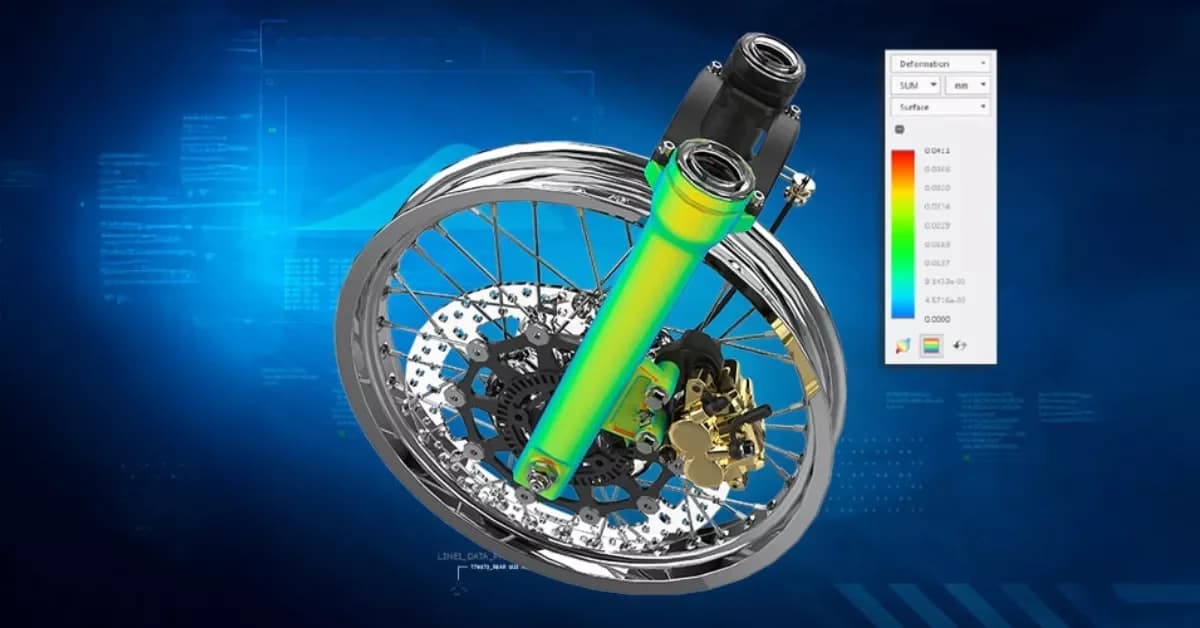
Engineering teams are expected to move quickly without compromising quality. They must evaluate more concepts, respond to changing requirements, reduce physical prototypes, and make confident decisions earlier in product development. The latest release of PTC Creo helps address that challenge with expanded simulation capabilities powered by Ansys technology.
Creo Simulation Live and Creo Ansys Simulation give design engineers access to trusted Ansys solvers as they develop and refine products. The result is faster feedback on design choices, a clearer understanding of product behavior, and a smoother progression from early exploration to higher-fidelity validation.
By applying the right level of simulation as engineering questions evolve, teams can compare alternatives, identify potential performance issues, and improve concepts before late-stage changes become costly. Rapid guidance supports early exploration, while more detailed structural, thermal, modal, and multiphysics analysis helps teams refine assumptions and prepare for validation.
Simulation Insight When Decisions are Still Flexible
Simulation delivers the greatest value when engineers can use it before a design is locked in. Early insight helps teams compare alternatives, identify potential performance issues, and improve a concept before late-stage changes become costly. It also allows simulation specialists to focus on complex validation work instead of revisiting issues that could have been addressed earlier.
With the latest Creo release, teams can apply the right level of simulation as their questions evolve. Creo Simulation Live provides rapid feedback during design exploration, while Creo Ansys Simulation supports more detailed studies for refinement and validation. Both are powered by Ansys technology, giving engineers a consistent foundation for making informed decisions throughout development.
New and Enhanced Capabilities for Simulation-Driven Product Development
The release builds on the Creo and Ansys collaboration with updates designed to improve speed, accuracy, and usability across simulation workflows. Key capabilities include:
- Current Ansys solver technology: Updated solvers support faster, more accurate results across supported physics types.
- Structural, thermal, and modal analysis: Engineers can study stresses, temperatures, vibration behavior, and related performance considerations as designs mature.
- Multiphysics studies: Creo Ansys Simulation Advanced supports combined structural and thermal evaluations, including thermal expansion.
- Improved contact handling: Expanded options help teams address nonlinear contact and nonlinear material use cases with greater confidence.
- Better performance for thin geometry: Solver enhancements improve efficiency for models that include thin components.
- Faster meshing and graphics processing unit (GPU) performance: Performance improvements help shorten analysis cycles and keep engineering work moving.
- Enhanced design guidance: Creo Simulation Live supports rapid structural and thermal feedback so engineers can assess the likely impact of changes as they work.
From Rapid Exploration to Confident Validation
Not every engineering question requires the same level of detail. Early in development, teams often need directional answers:
- Is a concept becoming stiffer?
- Is heat moving as expected?
- Is a design change likely to create a structural concern?
Rapid feedback helps engineers explore more alternatives and converge on stronger concepts sooner.
As the design matures, teams need greater fidelity to refine assumptions and prepare for validation. Creo Ansys Simulation provides Ansys-powered structural, thermal, and modal analysis for this next stage. The advanced offering extends those capabilities to multiphysics studies and more complex contact and material behavior. This progression helps design engineers and simulation analysts collaborate from a stronger starting point and focus detailed reviews on the questions that matter most.
Better Engineering Decisions, Better Business Outcomes
Earlier, more accessible simulation insight can improve more than technical performance. It can reduce avoidable rework, lower dependence on physical prototypes, protect delivery schedules, and create more room for innovation. Engineers gain timely feedback, managers gain greater confidence in development progress, and business leaders gain a more efficient path to high-quality products.
The latest Creo release demonstrates how PTC and Ansys continue to bring proven simulation technology closer to everyday product-development decisions. By connecting rapid guidance with higher-fidelity analysis, teams can learn faster, resolve issues sooner, and move from concept to validation with greater confidence.
Earlier Insights for a Competitive Advantage
The latest Creo release gives engineering teams a practical way to apply trusted Ansys technology at the moments when design decisions have the greatest impact. With rapid feedback from Creo Simulation Live and higher-fidelity analysis from Creo Ansys Simulation, teams can explore more concepts, uncover issues sooner, reduce costly rework and physical prototypes, and advance stronger designs to validation faster.
Don’t wait until late-stage testing to discover problems that could have been addressed earlier. Explore Creo Simulation Live and Creo Ansys Simulation to see how Ansys-powered capabilities can accelerate your product-development workflow. Contact Ansys today to review your engineering goals, identify the right simulation capabilities for your team, and build a clear path toward faster, more confident product decisions.