Artificial intelligence (AI) has become part of every conversation about the future of aerospace, defense, and complex systems engineering.
Organizations are investing heavily in AI to automate analysis, accelerate decision-making, generate insights from data, and support increasingly autonomous operations. The potential is significant.
But there is a growing misconception that AI itself is the answer. It isn’t.
The organizations achieving the greatest value from AI are discovering an important reality: Intelligent systems are only as effective as the environment used to develop, train, validate, and operate them.
AI can process vast amounts of information, but it cannot understand mission context unless that context exists. It cannot learn effectively without representative data. And it cannot be trusted in operational environments unless it has been rigorously tested against realistic scenarios.
In short, AI alone does not create mission readiness.
Mission readiness requires context, confidence, and continuous validation. That is where digital mission engineering becomes essential.
The Challenge: More Complexity, Less Time
Engineers and operators face unprecedented pressure.
Modern systems are increasingly cyberphysical in nature: connected, software-defined, autonomous, and data-driven. Missions must account for evolving threats, changing operational conditions, and interactions across domains — land, sea, air, and space — while navigating growing geopolitical uncertainty and international conflicts.
At the same time, organizations are expected to deliver capabilities faster than ever. They must evaluate more mission scenarios, analyze larger volumes of data, and make decisions on increasingly compressed timelines.
Traditional approaches struggle to keep pace. Many engineering and operational workflows still rely on siloed analyses, manual processes, and late-stage validation, making it difficult to understand how systems will perform in realistic mission environments before deployment. Even when AI is deployed, it is often deployed as a disconnected point solution, limiting the value it can bring. The result is increased risk, longer development cycles, and reduced confidence in mission outcomes.
AI offers a powerful opportunity to address these challenges. It can help automate analysis, accelerate decision-making, and uncover insights that would otherwise be difficult to identify. However, realizing that value requires more than advanced algorithms. AI must be developed, trained, tested, and operated in realistic mission context to produce outcomes that organizations can trust.
The question is no longer simply, “How do we use AI?” It is, “How do we ensure that AI can be trusted to perform when missions matter?”
Why AI Needs a Virtual World
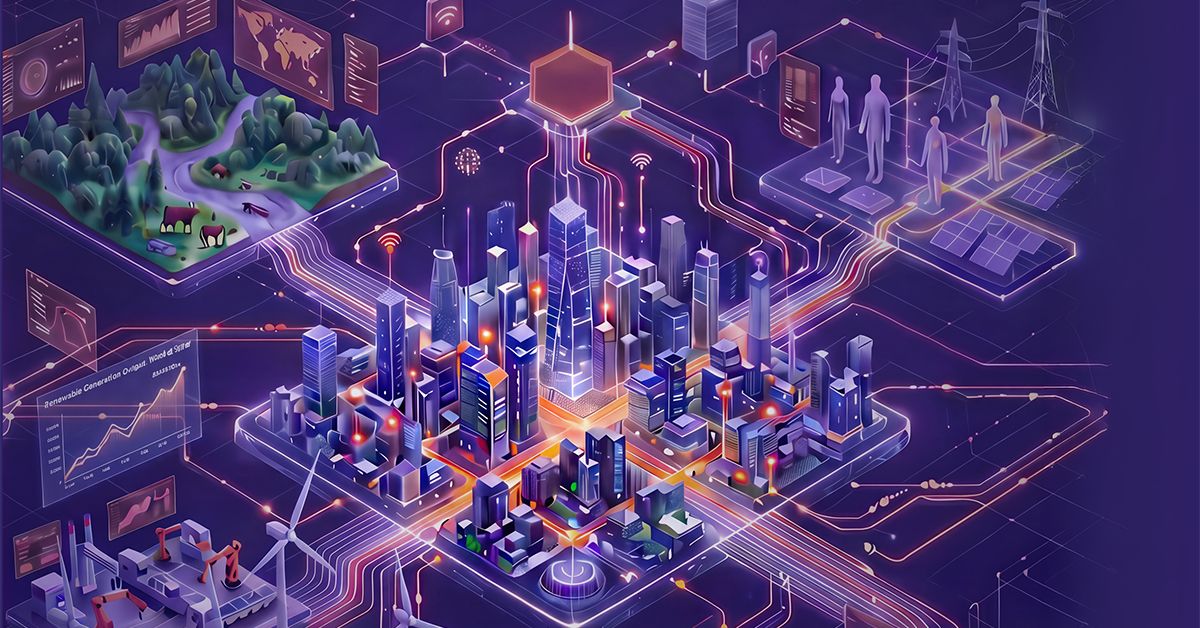
AI systems create value when they help people make better decisions. That requires more than algorithms; it requires mission context. Whether organizations are training autonomous systems, evaluating mission alternatives, supporting operators, or conducting what-if analyses, AI needs a world model: a realistic representation of the mission environment that enables it to understand relationships, evaluate alternatives, and anticipate outcomes.
Digital mission engineering provides a virtual world that enables teams to:
- Explore mission alternatives and trade-offs
- Conduct mission planning and what-if analyses
- Support operator and analyst decision-making
- Generate and validate operational scenarios
- Create synthetic training data when needed
- Assess mission effectiveness before deployment
Instead of hoping that an AI-enabled system performs correctly in the field, organizations can develop confidence before deployment. Digital mission engineering becomes the environment where AI learns, matures, and proves itself.
But the value of AI is not limited to the engineers who build and validate systems. At many organizations, the people making mission-critical decisions are operators, analysts, planners, and leaders who need answers quickly. Emerging AI capabilities, including natural language interfaces, intelligent assistants, and automated workflows, have the potential to make mission engineering insights more accessible to a broader audience while preserving the fidelity and rigor of underlying engineering models.
Rather than replacing engineering expertise, these capabilities help extend it by putting trusted mission insights into the hands of the people responsible for planning, evaluating alternatives, and making operational decisions.
AI Drives Mission Readiness Across the Entire Lifecycle
A common mistake is viewing AI as a point solution. In reality, AI creates value across the entire mission lifecycle.
During development, AI can accelerate scenario generation, automate analyses, and help engineers evaluate larger design spaces.
During training, AI models require realistic operational data and environments to learn effectively.
During validation, organizations must test performance against representative mission conditions and failure scenarios.
During operations, AI can support decision-makers with insights, recommendations, and adaptive workflows.
And after deployment, AI continues to benefit from the mission context provided by digital mission engineering, improving performance and supporting future missions.
Mission readiness is a continuous process of development, training, validation, operation, and adaptation. Organizations that treat AI as a lifecycle capability rather than a stand-alone technology will create more resilient, trustworthy systems.
The Emerging Competitive Advantage
As AI adoption accelerates, access to algorithms will become less of a differentiator. The competitive advantage will increasingly come from an organization’s ability to create, manage, and exploit mission context.
Teams that can simulate realistic operations, generate high-quality training data, validate outcomes, and continuously refine performance will outperform those relying on isolated AI initiatives. Success will depend not only on AI capabilities themselves but on making advanced mission engineering workflows easier to access, automate, and operationalize for a wider range of users.
The future belongs to organizations that can connect AI to a broader digital engineering ecosystem. This is the role of digital mission engineering — not simply enabling AI but enabling organizations to trust it.
Looking Ahead
The conversation around AI is rapidly evolving from what is possible to what is deployable. The challenge is no longer whether AI can generate insights or automate tasks but whether it can ensure that intelligent systems can operate reliably in complex, unpredictable environments.
This requires more than algorithms. It requires realistic mission context, continuous validation, and a digital environment capable of supporting intelligent systems throughout their lifecycle.
The future of mission readiness will not be built on AI alone. AI provides intelligence. Digital mission engineering provides mission context by supporting the creation and maintenance of the world model. Together, they enable organizations to make better decisions, reduce risk, and accelerate mission readiness.
Continuing the Conversation
This article is the first in a series exploring how AI and digital mission engineering work together to accelerate mission readiness across development, validation, operations, and decision support.
In our next post, we’ll explore how organizations are applying AI-driven digital mission engineering to transform space operations, helping teams turn growing volumes of mission data into actionable insights. Stay tuned for “AI for Space Operations: From Data Overload to Intelligent Decision Advantage.”
Want to learn how leading organizations are putting these concepts into practice? Join our upcoming AI-driven digital mission engineering webinar series, where subject matter experts will share real-world applications across space operations, autonomous systems, and emerging agentic workflows.