Key takeaways:
- IBM and Lockheed Martin are launching a new Swiss quantum innovation hub at ETH Zurich, to be anchored by Switzerland's first IBM Quantum System Two.
- The country’s first IBM Quantum System Two, powered by an IBM Quantum Nighthawk r2, will be operational at ETH’s Swiss National Supercomputing Centre in Lugano by the end of 2026.
- IBM will operate the IBM Quantum System Two; ETH Zurich will provide expertise, resources, and coordinate access for Swiss organizations.
- Swiss universities, startups, and companies can gain quantum access for chemistry, materials science, optimization, and financial services research, as well as anchor initiatives to foster Switzerland’s workforce and talent.
- The project also advances the ongoing strategic collaboration between Lockheed Martin and IBM, combining Lockheed Martin innovations in quantum sensing and additive manufacturing with IBM’s expertise in quantum computing and AI.
IBM and Lockheed Martin—together with ETH Zurich, the Swiss Federal Institute of Technology—have launched a quantum innovation hub in Switzerland. It will soon be anchored by the country's first IBM Quantum System Two, to be installed at the Swiss National Supercomputing Centre (CSCS), an ETH Zurich campus in Lugano, in the southern part of the country. Here's what the announcement means for Switzerland's researchers, companies, and students.
Read the official announcement in the IBM Newsroom.
What is the Swiss Quantum Innovation Hub?
The Swiss quantum innovation hub is a new initiative—established by IBM and Lockheed Martin—at ETH Zurich that will expand quantum computing access across Swiss institutions to fuel the country’s quantum ecosystem, research, and workforce. It will be anchored by Switzerland's first IBM Quantum System Two, to be installed at CSCS.
Expected to be operational by the end of 2026, the IBM Quantum System Two at CSCS will give Swiss academia, research and industry on-site access to one of IBM's most advanced quantum computers, along with access to ETH Zurich’s expertise, resources, and technologies to grow the country's quantum ecosystem.
Who is involved, and what is each party’s role?
The Swiss Quantum Innovation Hub brings together multiple organizations, each with a distinct role:
- ETH Zurich will coordinate access to the hub and its quantum computer, and will provide expertise, resources, and technologies for Swiss industries, startups, and academia, including access to the quantum computer.
- Lockheed Martin will collaborate with IBM and the Swiss ecosystem to explore topics such as quantum sensing applications for navigation and the improvement of additive manufacturing of metallic alloys.
- IBM will operate the quantum computer and conduct joint research with Lockheed Martin and other participating Swiss institutions.
- CSCS, the Swiss National Supercomputing Centre in the city of Lugano, will host the system and provide technical infrastructure such as power, cooling, and security.
The IBM–ETH Zurich agreement to install and operate the system runs for an initial three-year period, through 2029.
IBM Quantum System Two is IBM's flagship quantum computing system and the cornerstone of an emerging computational paradigm known as quantum-centric supercomputing. It already runs at IBM sites in New York and at partner centers in Kobe, Japan, and San Sebastián, Spain, with more installations underway.
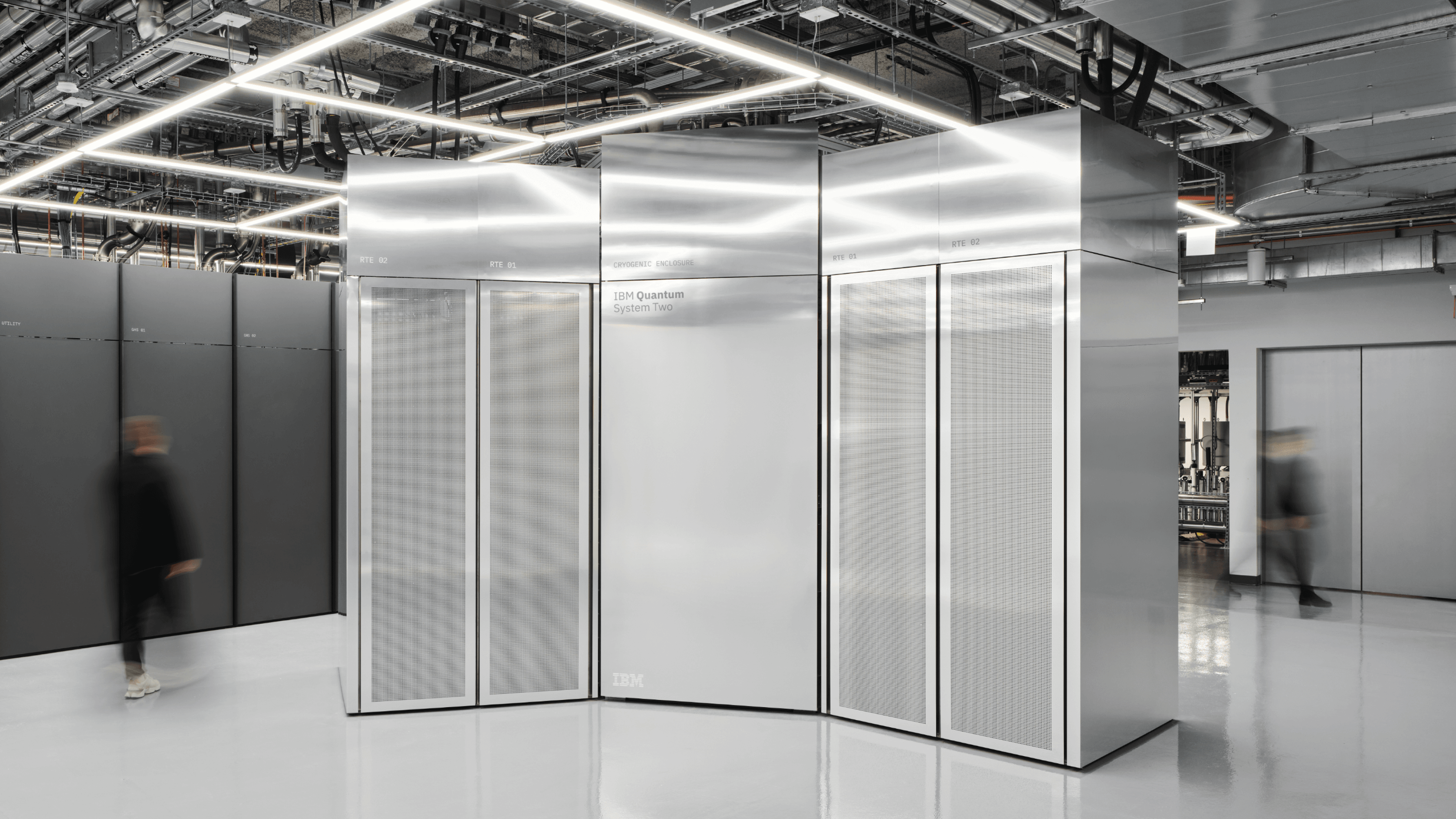
Each system combines scalable cryogenic infrastructure to hold qubits at temperatures near absolute zero, classical runtime servers to support hybrid workflows, and modular qubit control electronics to deliver signals to each quantum processing unit (QPU). For researchers and organizations in Switzerland, the new system will provide access to one of IBM's most advanced quantum processor—IBM Quantum Nighthawk r2.
What is IBM Quantum Nighthawk r2?
IBM Quantum Nighthawk r2 is the fastest and most advanced processor IBM has made available to users. It features 120 programmable qubits and a new high-speed qubit reset architecture that allows it to execute more than 100,000 circuits per second, delivering up to 25x the circuit throughput (maximum circuits per second) of its predecessors in the IBM Quantum Heron processor family.
The Nighthawk r2 processor was designed to help researchers run larger and more complex quantum workloads more efficiently. It has already demonstrated accurate computations on quantum circuits containing 7,500 gates, an important milestone on the IBM Quantum Roadmap. Its installation at CSCS for the Swiss quantum innovation will give researchers and industry collaborators access to the same cutting-edge technology that enabled recent demonstrations of quantum advantage through trusted computation.
Who will have access to the new system, and what will they be able to do with it?
ETH Zurich will coordinate access to the new system. Users are expected to include researchers at Swiss industries, startups, and academia that join the innovation hub.
Organizations that join the hub through ETH Zurich will have access to IBM's fleet of quantum computers over the cloud and, upon deployment, to Switzerland's own dedicated IBM Quantum System Two. This will help the Swiss community accelerate research and build new use cases across chemistry, materials science, optimization, financial services, and more. Housed in the same facility as the Alps supercomputer at CSCS, the system will let researchers explore complex materials, molecules, and chemical processes that are difficult to simulate on classical computers alone.
How does this support Switzerland’s workforce and talent?
Beyond bringing state-of-the-art quantum hardware to the Swiss research community, the new hub will also give members access to the IBM Quantum Network and IBM Quantum Platform learning offerings. This includes coursework, certifications, and workshops, along with support for hackathons, conferences, and other events. By providing direct access to one of the world's most advanced quantum computers, the initiative aims to encourage more students and researchers to build quantum skills.
What additional research projects are planned in the new Swiss Quantum Innovation Hub?
In addition to ETH Zurich’s quantum research projects, Lockheed Martin and IBM are planning two initial research projects for the new hub, with one exploring quantum sensing applications for navigation, and the other focused on additive manufacturing of metallic alloys. The work will extend an ongoing strategic relationship between the two companies in quantum computing and AI.
How does this build on IBM’s history of collaboration in Switzerland?
IBM has worked closely with Swiss institutions for nearly 100 years, and its research laboratory, based in Zurich for 70 years, has since contributed to the country’s scientific ecosystem for many decades. The announcement of the new Swiss hub for quantum innovation also builds on another recently announced initiative—a 10-year collaboration between IBM and ETH Zurich to advance the next generation of algorithms for AI and quantum computing.
How can I get started?
Swiss organizations can engage with the hub through ETH Zurich as access becomes available. To start learning quantum computing today, sign up for a free account on IBM Quantum Platform and explore the many Learning resources available there.