Editor’s Note: This blog is the final installment of a three-part series on the consumer buying shifts changing retail fulfillment. Missed the earlier posts? Read Part 1, Beyond Black Friday: Managing the Volatility of Unpredictable Retail Demand, and Part 2, Why Physical Stores Still Matter to Fulfillment.
Previously in this series: Part 1 showed how social discovery compresses the buying window, with 59% of shoppers buying after discovering a product on social media, and how product availability outranked delivery speed. Part 2 showed that physical stores remain the most-used purchase channel (48%), which means store replenishment and direct-to-consumer orders must be fulfilled from the same operation. Part 3 follows inventory in the other direction: back into the warehouse.
Key Findings at a Glance
- 46% of U.S. shoppers bracketed an apparel purchase in the previous six months, and 29% did so multiple times.
- Bracketing is highest among Gen Z (61%) and Millennials (52%), the same generations most likely to buy after social discovery.
- The National Retail Federation and Happy Returns projected U.S. merchandise returns would total $849.9 billion in 2025, including 19% of online sales.
- nGroup Performance Partners increased returns putaway productivity from 124 to 285 units per hour after integrating Locus Robotics AMRs with the Optoro returns platform.
A female shopper orders the same jacket style in small, medium, and large. Before she completes the purchase, she already plans to keep one and send the other two back.
The order system records demand for three jackets. For the warehouse, that purchase begins a round trip: three units are picked, packed, and shipped, followed by two units that must be received, inspected, dispositioned, and, when appropriate, returned to sellable inventory.
This behavior is called apparel bracketing, and 46% of apparel shoppers surveyed by Locus Robotics said they had done it within the previous six months.
What Is Apparel Bracketing?
Apparel bracketing is the practice of purchasing multiple sizes or variations of an apparel item with plans to return what the shopper does not keep. Unlike an unplanned return caused by damage, dissatisfaction, or another issue, a bracketed purchase creates anticipated outbound and inbound work from the start.
Bracketing Is Highest Among Younger Shoppers
In the Locus Robotics survey of 1,000 U.S. consumers, 46% of respondents said they had bracketed an apparel purchase in the previous six months. The practice was considerably more common among younger shoppers: 61% of Gen Z and 52% of Millennials had bracketed a purchase, compared with 37% of Gen X and 15% of Baby Boomers.
The generations most likely to bracket purchases are also the most likely to act on social discovery. In the same survey, 79% of Gen Z and 75% of Millennials bought an apparel, beauty, or skincare product after first discovering it on social media. For fulfillment operations, that combination can accelerate both sides of the inventory cycle: demand develops quickly, and a portion of the inventory may return shortly after delivery.
Following One Bracketed Order Through the Warehouse
The three-jacket order creates work in both directions. Outbound, the small, medium, and large jackets are picked, packed, and shipped as one order. If the shopper keeps the small and returns the medium and large, those two units begin a separate inbound workflow involving receiving, inspection, disposition, and putaway before eligible inventory can become available for sale again.
The retailer records one completed sale, but the warehouse handles five unit movements: three jackets going out and two coming back. The returned medium and large also generate receiving, inspection, disposition, putaway, and inventory transactions that would not exist in a single-item purchase.
Returns putaway is the movement of returned merchandise to an appropriate putaway location so it can be restored to sellable inventory. For the returned medium jacket, completing that step determines when the item becomes available for another order.
Why Returns Speed Affects Product Availability
In Part 1 of this series, 33% of shoppers said an unavailable item, size, shade, or formula had caused them to abandon or delay a purchase. Another 22% cited inaccurate online availability.
Now consider the returned medium jacket. If it has arrived at the warehouse but remains in receiving, inspection, or a returns staging area, the retailer may be unable to offer it to the next shopper. The unit is physically in the building but has not yet completed the transactions and movements required to become sellable inventory again.
Returns speed therefore affects more than reverse-logistics productivity. It influences how quickly available inventory can be presented accurately across stores and digital channels.
The scale is significant. The National Retail Federation and Happy Returns projected that U.S. merchandise returns would total $849.9 billion in 2025, including 19% of online sales.
Retailers need to plan for returns as a recurring inventory flow with its own labor, space, system, and material-movement requirements.
What Should Retailers Evaluate When Automating Returns Workflows?
Retailers automating returns should evaluate whether the system can move returned merchandise efficiently, maintain accurate inventory transactions, and redirect capacity as outbound and inbound workloads change. Run the medium and large jackets through these questions:
- Workflow coverage: Can the same automation support outbound picking and the movement of returned jackets through receiving, inspection, disposition, and putaway?
- Putaway speed: Once a jacket is cleared for resale, how quickly can it reach the appropriate storage or pick location?
- Resource reallocation: Can robotic capacity shift to returns putaway when inbound volume rises without leaving higher-priority outbound work unsupported?
- Inventory accuracy: When the medium jacket is put away, does the system complete the transactions needed to make it visible and available for the next order?
- Exception handling: How does the workflow handle a returned jacket that cannot immediately return to sellable inventory?
- Integration: Can the automation exchange accurate task and inventory data with the WMS, returns-management platform, ERP, and other required systems?
Outbound demand and returns volume do not always rise at the same time. An operation may need more capacity for DTC picking during one shift and more support for returns putaway during another. Automation that can be reassigned among supported workflows gives operators more options as those workloads change.
The returned jacket illustrates the task at the unit level. nGroup Performance Partners manages that challenge at a much greater scale.
Proof in Practice: nGroup Performance Partners and Optoro
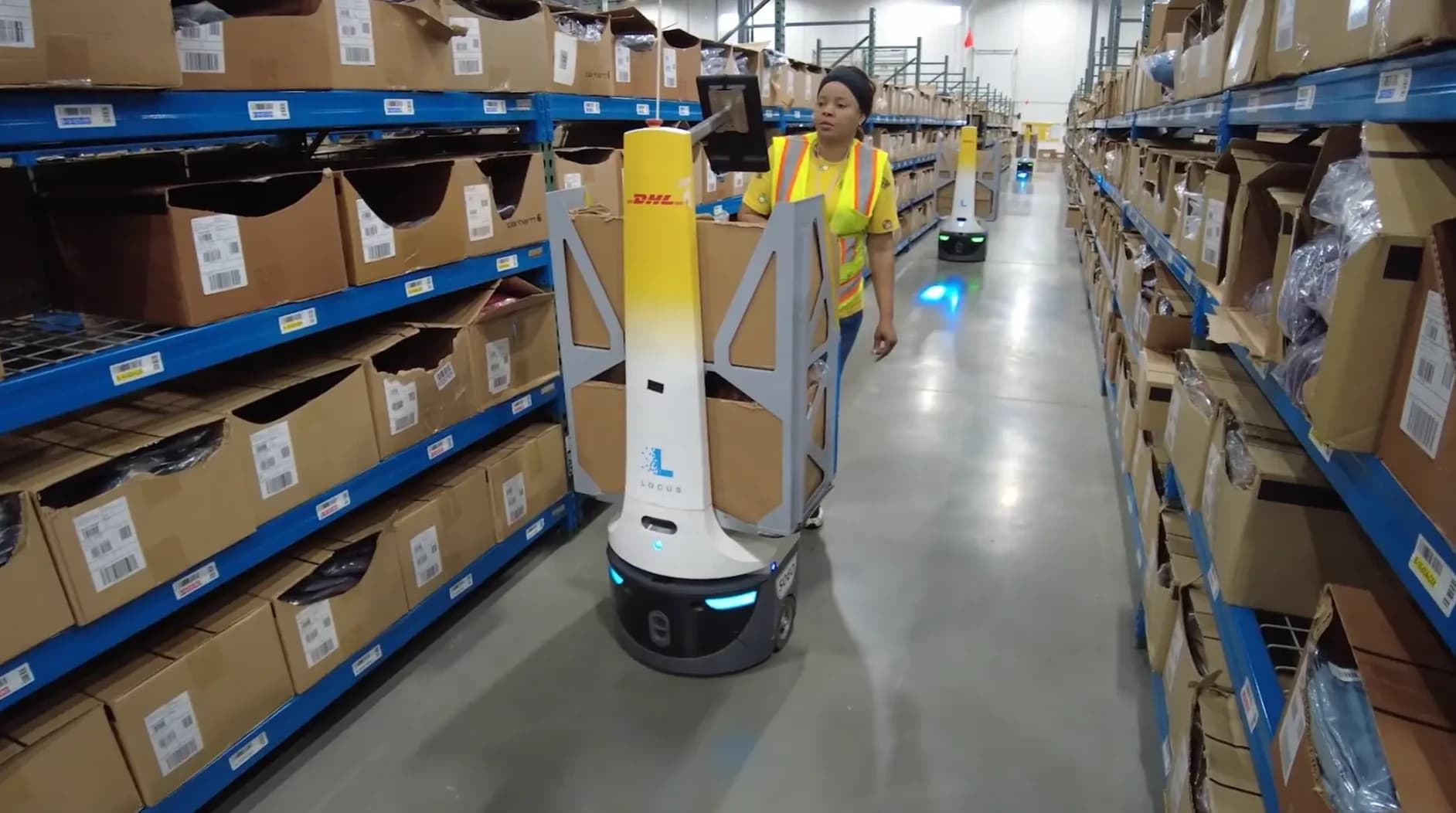
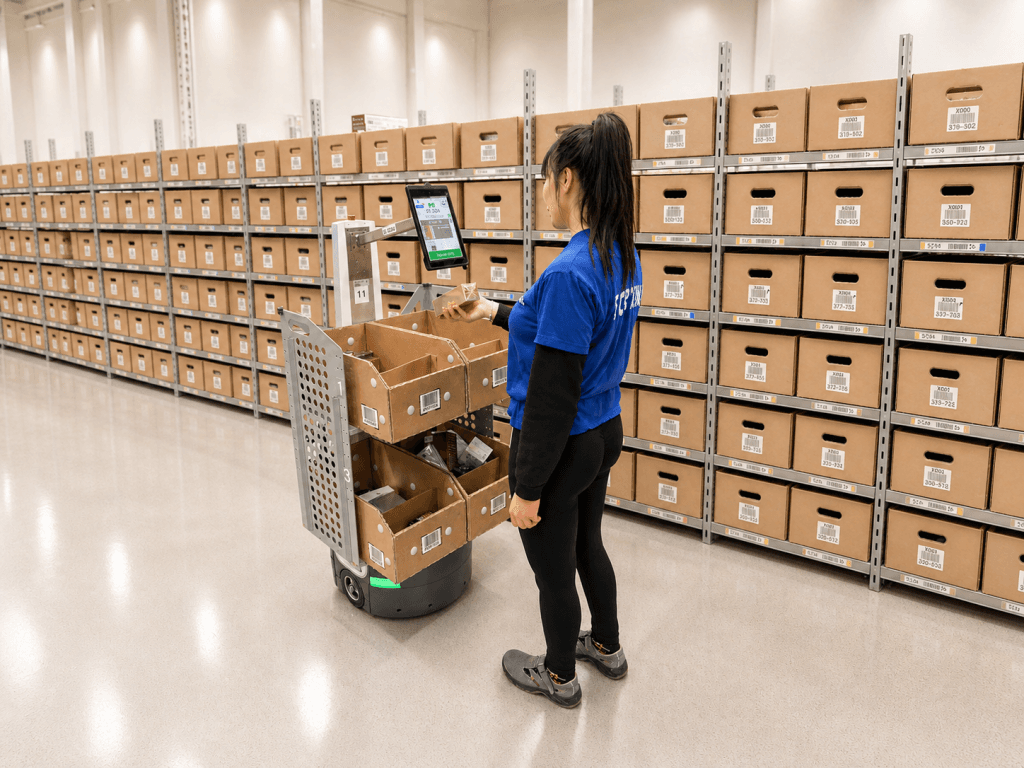
nGroup Performance Partners integrated Locus Robotics autonomous mobile robots (AMRs) with the Optoro, now part of Blue Yonder, returns platform to automate the movement of returned merchandise to putaway locations.
The operation:
- Increased returns putaway productivity from 124 to 285 units per hour
- Processes close to one million putaway units per month
- Improved transaction accuracy
Together, Optoro and Locus Robotics connect returns intelligence with physical execution. Optoro determines where returned merchandise should go, while Locus Robotics AMRs move eligible inventory to the assigned putaway locations. That helps shorten the path between a return decision and the unit’s next available use.
One Fulfillment Network, Three Consumer Shifts
Across this series, the research points to three consumer shifts that land in the same fulfillment operation:
The jacket’s full journey touches all three shifts. Social discovery can accelerate demand for a particular style. The jacket may be purchased through a store or one of several digital channels. If the shopper brackets the purchase, two sizes then travel back through the fulfillment network before they can be sold, redirected, or otherwise dispositioned.
Each shift creates a different planning window, order profile, inventory movement, and capacity requirement. Fulfillment operations need to absorb those changes without redesigning the building or dedicating automation permanently to one narrow workflow.
Automation is already a priority. Interact Analysis found that 79% of the order-fulfillment executives and facility managers surveyed considered automation a high or top priority, while integration complexity was the leading adoption barrier.
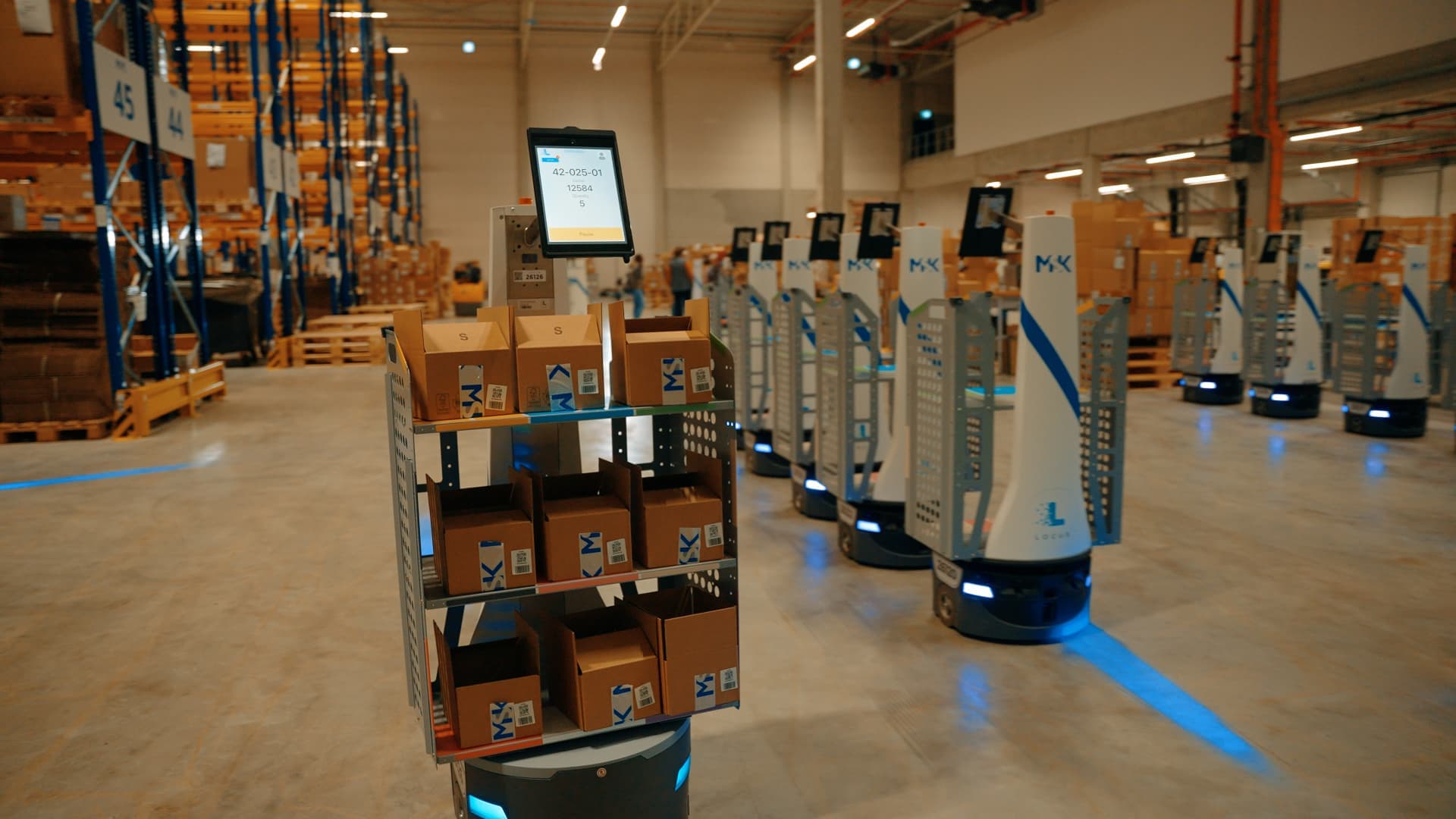
LocusONE supports collaborative and fully autonomous fulfillment by coordinating robots, associates, tasks, priorities, and workflows with existing WMS and ERP systems. Retailers can apply Locus Origin and Locus Vector to supported picking, putaway, replenishment, returns, sortation, and transport workflows, while Locus Array provides fully autonomous picking, transport, and order consolidation.
That range allows retailers to match automation to the work occurring now and adjust the mix as consumer behavior, channels, and inventory flows change.
Get the Complete Research
Download “From Viral Demand to Intentional Returns” for the full findings across all four consumer shifts, including the delivery expectation data not covered in this series.
Explore Flexibility-First Automation Solutions.