Online pharmacies have evolved from a niche convenience into a growing channel for healthcare delivery. Consumers increasingly expect the same flexibility from prescription fulfillment that they receive from retail eCommerce, driving continued adoption of mail-order and digital pharmacy services.
That growth is creating new demands across pharmaceutical supply chains. Medications must be stored, tracked, and delivered under strict regulatory requirements while meeting rising expectations for speed, visibility, and convenience.
Recent industry research shows that mail-order pharmacies are gaining ground with consumers. The 2025 U.S. Pharmacy Study found that mail-order pharmacies scored 697 in customer satisfaction, compared with 643 for traditional chain drugstores.
During an episode of the Warehouse Automation Matters podcast, Guy Courtin, Vice President of Industry and Global Alliances at Tecsys, discussed how increasing online pharmacy adoption is changing fulfillment operations and introducing new logistics challenges.
“Pharmacy is really a retail extension of healthcare,” Courtin explained. “If you and I need a prescription, that’s a retail transaction.”
As more prescription volumes move online, pharmaceutical organizations must balance convenience with compliance, product integrity, and patient safety.
Why Are Online Pharmacies Growing So Quickly?
Online pharmacies are growing because they give patients more convenient ways to refill, manage, and receive medications. Home delivery, automated refills, digital prescription management, and mobile applications can reduce the time and effort required to obtain medications, particularly for patients managing chronic conditions.
Consumer interest continues to grow. According to the 2025 U.S. Pharmacy Study, 63% of mail-order pharmacy customers were interested in using a digital pharmacy, up five percentage points from 2024. Among consumers familiar with digital pharmacy brands, Amazon Pharmacy had the highest recognition.
For supply chain leaders, that increased adoption translates into growing prescription volumes moving through fulfillment centers and delivery networks. Unlike traditional pharmacy models, online pharmacies rely on logistics operations to serve as a critical extension of the patient experience.
What Makes Online Pharmacy Logistics Different from Traditional eCommerce?
Online pharmacy logistics differs from traditional eCommerce because prescription fulfillment must protect patient safety, medication integrity, and regulatory compliance throughout the order lifecycle. The specific requirements vary by medication and delivery model.
Operational Requirement
How it Affects Online Pharmacy Logistics
Prescription verification
Each order must be matched to a valid prescription and the correct patient before fulfillment.
Patient privacy
Personal and healthcare information must be protected throughout order processing and delivery.
Controlled-substance handling
Certain medications require additional security, documentation, and delivery controls.
Temperature control
Temperature-sensitive medications may require controlled storage, packing, transportation, and monitoring.
Expiration-date management
Inventory must be managed by expiration date to reduce waste and prevent unsuitable products from being shipped.
Product serialization
Package-level identifiers help organizations verify products and preserve their movement history.
Delivery verification
Some medications require proof of delivery, an adult signature, or confirmation that the correct recipient received the order.
Pharmaceutical returns
Returned medications may require quarantine, documentation, secure collection, or disposal rather than conventional restocking.
The consequences of a fulfillment error can also be significantly higher. While a delayed consumer delivery may create inconvenience, a delayed medication shipment can disrupt treatment schedules and affect patient outcomes.
For logistics providers, success depends on maintaining accuracy and compliance while delivering the speed and convenience consumers increasingly expect.
Why Cold Chain Logistics Matters for Modern Pharmaceutical Fulfillment
One of the most significant changes affecting pharmaceutical logistics is the rapid growth of temperature-sensitive medications.
The pharmaceutical industry continues to invest heavily in biologics and specialty therapies. Industry analysis estimates that the global biologics market reached approximately $487 billion in 2025, while biologics now account for roughly 40% of drugs in development pipelines at major pharmaceutical companies.
Many of these therapies have strict temperature requirements throughout storage and transportation. Research shows that 45% of today’s top-selling pharmaceutical products require refrigeration, and approximately half of newly launched medicines are expected to require cold-chain storage.
These trends have raised the importance of cold chain logistics across pharmaceutical fulfillment operations.
“Cold chain management is massive,” Courtin said.
Maintaining temperature integrity requires coordination across every stage of fulfillment, including warehousing, picking, packing, transportation, and final delivery. Even brief temperature excursions can impact product quality, create compliance concerns, and increase operational costs.
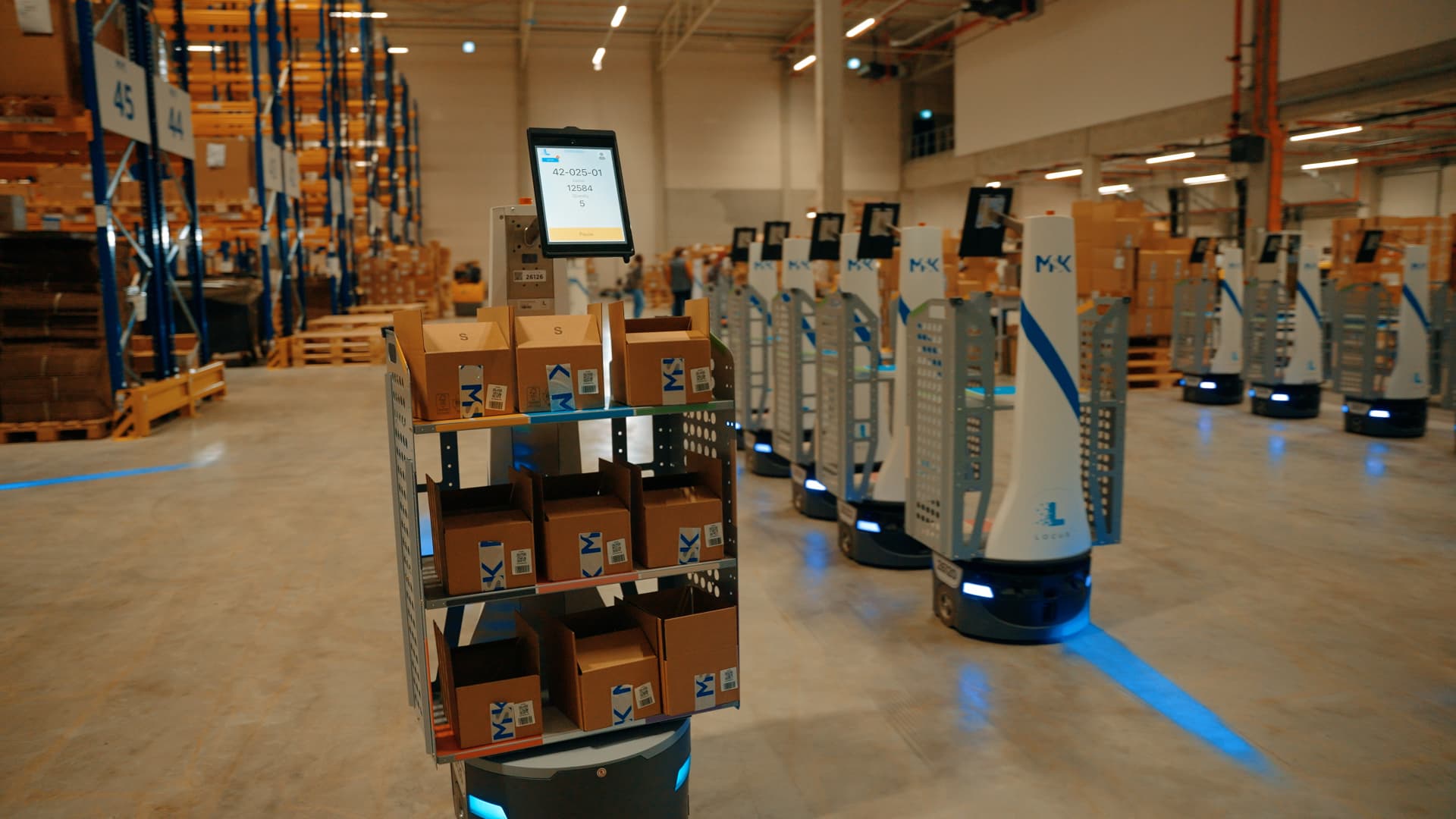
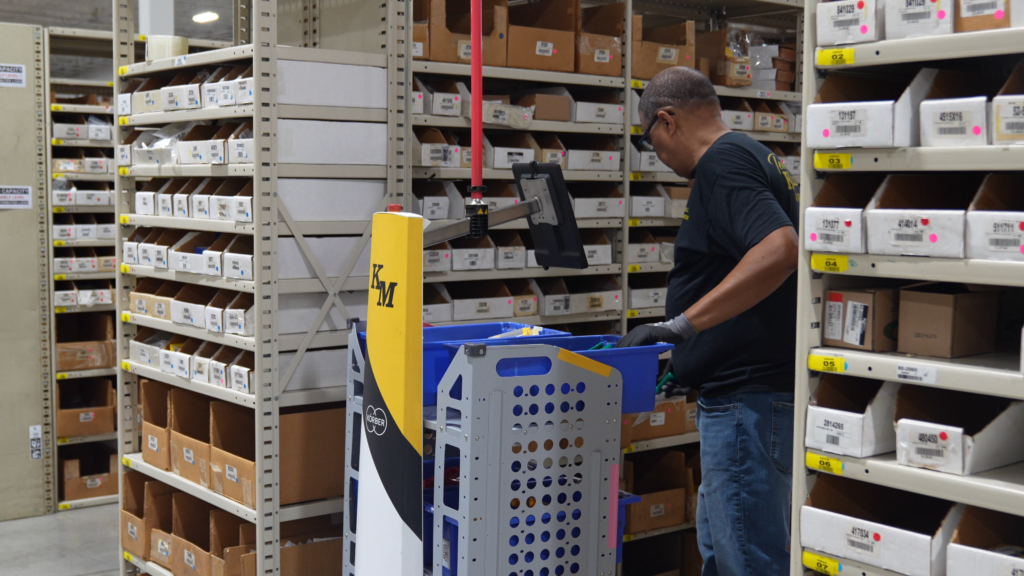
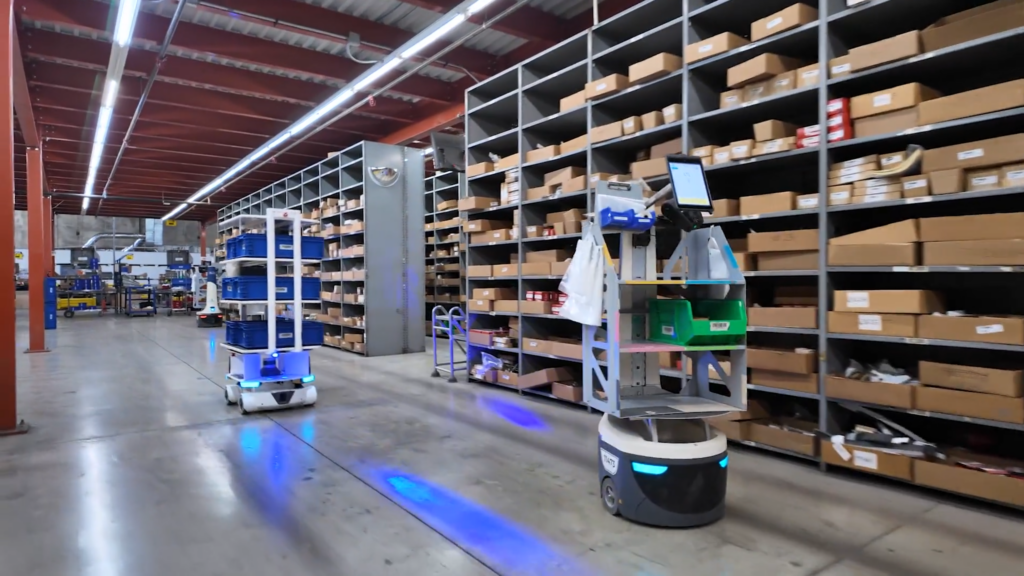
These requirements are driving healthcare and pharmaceutical distributors to invest in technologies that help maintain efficiency, traceability, and product integrity throughout fulfillment operations. For example, UPS Healthcare deployed Locus Robotics within a facility handling pharmaceutical products, medical devices, and cold-chain inventory. The robots operate throughout the facility, including 2-8°C cooler storage, and improve order accuracy, compliance, and traceability. As more biologics and temperature-sensitive therapies move through distribution networks, automation can help organizations scale fulfillment operations while supporting the specialized requirements of cold-chain logistics.
Read the UPS Healthcare case study to learn how Locus Robotics autonomous mobile robots (AMRs) helped UPS Healthcare increase lines picked by 54% within six months in a cold-chain environment.
The deployment shows how automation can increase throughput inside temperature-controlled operations while capturing the order and traceability data required for healthcare distribution.
How Track-and-Trace Technology Supports Drug Safety
Track-and-trace technology supports drug safety by creating a documented record of where a medication has been, how it was handled, and who received it. That visibility helps manufacturers, distributors, pharmacies, and regulators verify product authenticity, investigate exceptions, and respond more quickly when a product may be illegitimate or compromised.
The U.S. Food and Drug Administration’s Drug Supply Chain Security Act (DSCSA) established a framework for interoperable electronic tracing of prescription drugs as they move through the supply chain. The legislation is designed to improve visibility, help prevent counterfeit products from entering distribution channels, and enable faster responses when issues arise.
To support these requirements, pharmaceutical organizations are investing in technologies such as:
- Serialization systems
- Electronic chain-of-custody records
- Real-time shipment monitoring
- Smart sensors
- End-to-end visibility platforms
“Track and trace is essential for pharmaceuticals,” Courtin explained. “It ensures that what you’re receiving is what you should be getting.”
As online pharmacy volumes increase, these systems will become increasingly important for identifying exceptions and preserving product history across distributed fulfillment networks.
How Regulatory Compliance and Returns Add Complexity
Pharmaceutical fulfillment operates within a highly regulated environment.
Organizations must comply with requirements governing storage, transportation, documentation, security, and product handling. Controlled substances often introduce additional safeguards designed to ensure medications reach the correct patient while maintaining appropriate records throughout the process.
Returns introduce additional compliance and product-handling requirements. Medications cannot always be returned to saleable inventory, and certain products require controlled collection, documentation, quarantine, or disposal procedures. Pharmaceutical reverse logistics therefore requires more restrictive workflows than conventional retail returns.
As online pharmacy programs continue to expand, organizations must develop fulfillment processes that maintain compliance while supporting efficient operations and positive patient experiences.
What Technologies Are Shaping the Future of Pharmaceutical Logistics?
Pharmaceutical logistics technologies improve specific parts of fulfillment, from inventory planning and order execution to monitoring and delivery. Key applications include:
- Warehouse automation and autonomous mobile robots to increase picking capacity and reduce unnecessary travel
- AI-powered inventory management to identify demand patterns and reduce the risk of stockouts or excess inventory
- Predictive demand planning to position medications closer to anticipated demand
- Real-time monitoring systems to track temperature, location, and handling conditions
- Automated fulfillment workflows to enforce order, verification, and documentation requirements consistently
Used together, these technologies can improve inventory accuracy, increase throughput, strengthen traceability, and help operations scale without relying on proportional increases in labor.
Alternative delivery methods may also improve medication access in remote or difficult-to-reach locations. During the podcast discussion, Courtin cited prescription drone deliveries serving small islands in Germany as an example. These specialized use cases show how pharmaceutical delivery networks may extend beyond conventional parcel transportation when distance, urgency, or geography creates access challenges.
The Next Chapter of Pharmaceutical Fulfillment
Online pharmacy growth is bringing prescription fulfillment, specialized medication handling, and direct-to-patient delivery into the same operational network. Pharmaceutical organizations must now scale order volume while protecting product integrity, maintaining traceability, and meeting regulatory requirements.
Cold-chain capabilities, connected data, and warehouse automation give these operations a stronger foundation for growth. The organizations best prepared for the next stage of online pharmacy adoption will be those that can increase fulfillment capacity without sacrificing accuracy, visibility, or control.
Explore Healthcare and Pharmaceutical Fulfillment Solutions
Healthcare and pharmaceutical distribution requires accurate order execution, complete traceability, and workflows that can adapt to ambient and temperature-controlled inventory. Locus Robotics helps organizations increase fulfillment productivity and capacity while capturing the data required to support order accuracy and regulatory compliance.
Learn how Locus Robotics helps healthcare and pharmaceutical distribution:Healthcare & Pharmaceutical Fulfillment Solutions
Editor’s Note
This article was originally published on October 23, 2024, and has been substantially updated to reflect current developments in pharmaceutical logistics and warehouse automation.
Originally published: October 23, 2024
Frequently Asked Questions
What KPIs should pharmaceutical fulfillment operations monitor?
Pharmaceutical fulfillment operations should monitor order accuracy, lines picked per hour, on-time shipment rate, inventory accuracy, exception rate, temperature-excursion rate, traceability completeness, and order cycle time. Operations handling controlled or temperature-sensitive products should also track quarantine volume, expired inventory, chain-of-custody exceptions, and the time required to investigate fulfillment discrepancies.
How can online pharmacies prepare fulfillment operations for volume growth?
Online pharmacies can prepare for higher order volume by evaluating capacity at each stage of fulfillment, including receiving, storage, replenishment, picking, verification, packing, and carrier handoff. They should identify workflows that depend heavily on manual travel or disconnected data, model expected prescription volume by storage condition and confirm that traceability controls will remain effective as throughput increases.
What should pharmaceutical companies evaluate before introducing warehouse automation?
Pharmaceutical companies should evaluate product-handling requirements, temperature zones, order profiles, existing warehouse systems, validation needs, traceability workflows, and employee safety. They should also confirm whether an automation solution can operate across required storage conditions, capture picking data, integrate with the warehouse management system, and scale without disrupting regulated workflows.
How can pharmaceutical fulfillment operations reduce medication picking errors?
Operations can reduce medication picking errors by combining barcode validation, directed workflows, product and location verification, exception alerts, and complete digital pick records. Slotting look-alike or sound-alike products carefully, separating storage conditions, and reducing manual handoffs can provide additional safeguards. Warehouse automation should reinforce verification requirements rather than bypass them.