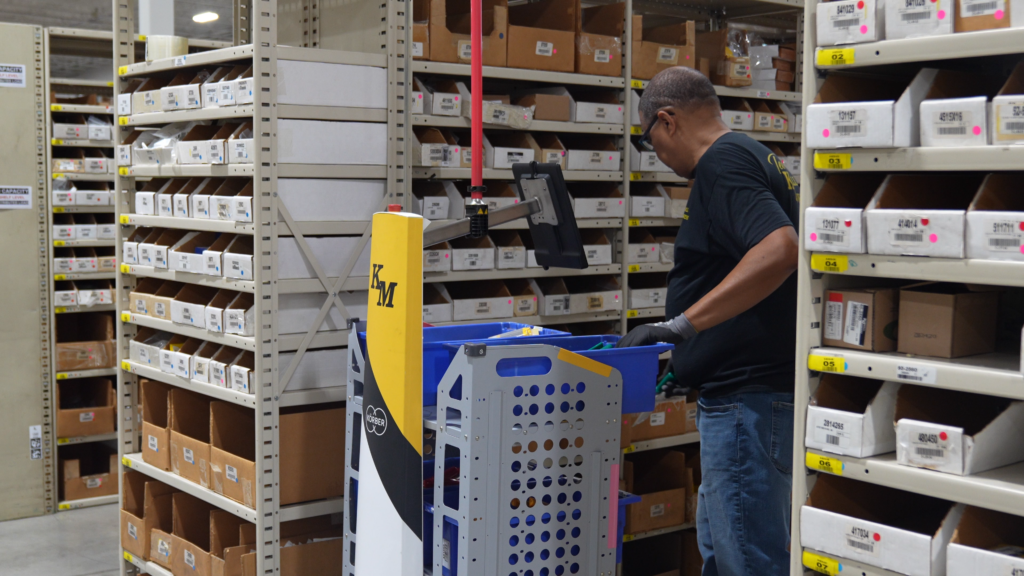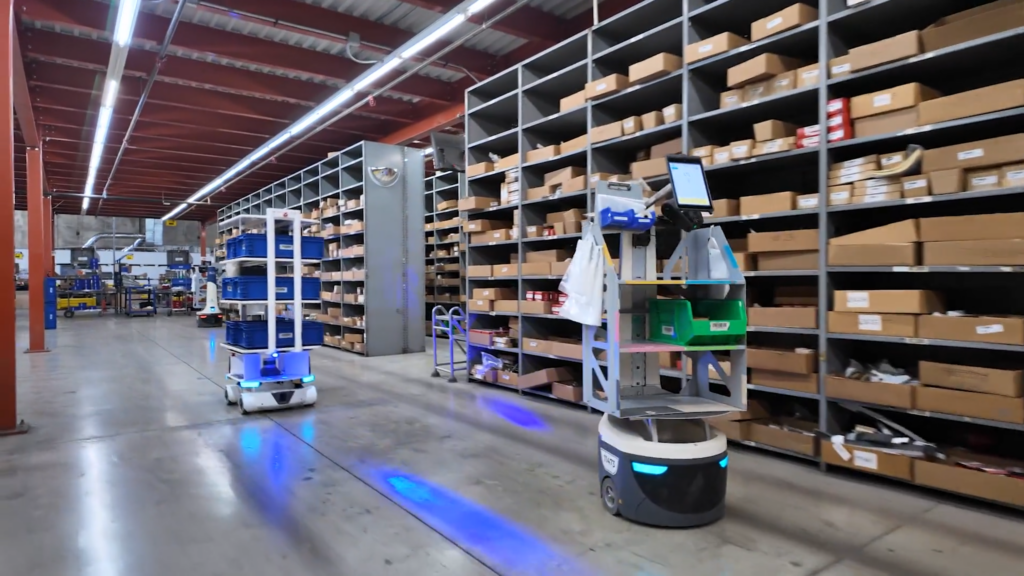
A healthcare warehouse may process pharmaceuticals, medical devices, laboratory supplies, vaccines, and temperature-sensitive products in the same facility. Each order must be fulfilled accurately, inventory movements must be traceable, and products may require specialized handling from receiving through shipment.
Those requirements make healthcare fulfillment fundamentally different from many traditional warehouse environments. As healthcare distribution networks expand and product portfolios become more complex, organizations are increasingly looking to automation to improve operational performance while maintaining the visibility and control healthcare products require.
This guide explains what healthcare warehouse automation is, what makes healthcare fulfillment unique, how organizations are applying automation across warehouse workflows, and what to consider when evaluating an automation solution.
What is Healthcare Warehouse Automation?
Healthcare warehouse automation uses software, robotics, data capture technologies, and workflow management tools to support the storage, movement, tracking, and fulfillment of healthcare products within warehouses and distribution centers.
These solutions can be applied across a variety of workflows, including:
- Low-unit-of-measure (LUM) picking
- Case picking
- Putaway
- Replenishment
- Sortation
- Returns processing
- Point-to-point material transport
- Order consolidation
Healthcare warehouse automation is distinct from clinical automation, pharmacy dispensing systems, laboratory automation, or patient-facing technologies. Its primary purpose is to improve how products move through the supply chain while supporting the operational requirements unique to healthcare and pharmaceutical fulfillment.
For many organizations, automation is not about replacing existing warehouse teams. Instead, it is about providing workers with technology that helps them complete tasks more efficiently, consistently, and accurately while maintaining visibility into inventory and fulfillment operations.
Why Healthcare Warehouses Have Unique Fulfillment Requirements
Healthcare warehouses support a broad range of products, customers, and fulfillment models. As a result, they often face operational requirements that differ from those found in many traditional distribution environments.
Product Complexity
A healthcare distribution operation may manage pharmaceuticals, biologics, vaccines, medical devices, surgical products, laboratory supplies, personal protective equipment, and general healthcare consumables within the same facility.
Each category can have different storage requirements, handling procedures, fulfillment workflows, and inventory controls. As product assortments expand, warehouses must manage more SKUs, more inventory locations, and more operational complexity.
Accuracy, Traceability, and Recall Readiness
Many healthcare products require detailed tracking throughout the fulfillment process.
Organizations may need visibility into:
- Lot numbers
- Expiration dates
- Product movement history
- Shipment records
- Inventory status
Maintaining accurate records helps support day-to-day operations and can simplify investigations when inventory issues arise. It also helps organizations determine where products have been stored, picked, or shipped if a recall or product concern needs to be addressed.
Temperature-Controlled and Specialized Products
Many healthcare products require controlled environments or specialized handling procedures.
These requirements can affect how products are received, stored, replenished, fulfilled, and shipped. Operations handling pharmaceuticals, biologics, vaccines, and other temperature-sensitive products often need fulfillment processes that support both efficiency and product integrity.
Global Supply Chain Dependencies
Healthcare supply chains span manufacturers, distributors, transportation providers, healthcare systems, pharmacies, and care facilities around the world.
Nearly 70% of medical devices marketed in the United States are manufactured exclusively overseas, according to a report by the American Health Association (AHA).
At the same time, according to the European Commission, more than 50% of reported medicine shortages in EU and EEA countries during 2022 and 2023 were linked to manufacturing issues, demonstrating how upstream challenges can affect product availability downstream.
How Healthcare Organizations Use Warehouse Automation
Healthcare organizations apply warehouse automation across a range of fulfillment workflows, from each-picking and replenishment to returns processing and material transport. While the specific use case varies by operation, the goal is typically the same: improve fulfillment performance while supporting the accuracy, traceability, and control healthcare products require.
Healthcare Warehouse Automation in Practice
Healthcare and pharmaceutical organizations are using warehouse automation to address a variety of operational challenges:
- DHL Healthcare reported a 50% reduction in quality issues along with fewer customer complaints after deploying Locus Robotics technology.
- UPS Healthcare uses automation to support visibility and traceability across healthcare fulfillment operations.
- Concordance Healthcare Solutions reported a 98% reduction in training time, helping accelerate associate onboarding and operational readiness.
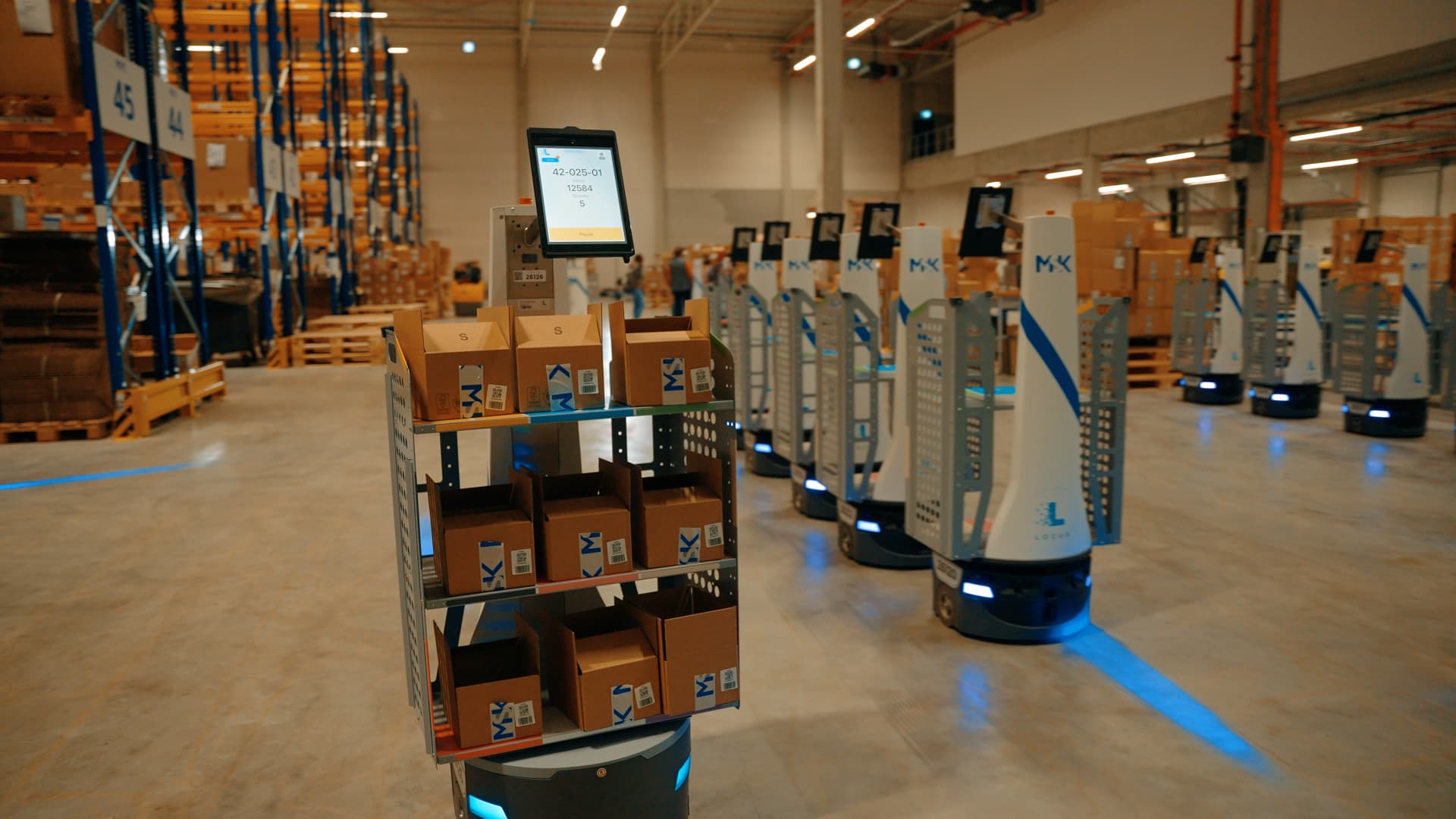
- MSK Pharma Group uses automation across high-volume pharmaceutical distribution operations and can dynamically reallocate robotic capacity between facilities to support changing business requirements.
These examples show how healthcare and pharmaceutical organizations are applying automation to address different operational challenges, from quality and training to visibility and scalable capacity.
Frequently Asked Questions About Healthcare Warehouse Automation
What is healthcare warehouse automation?
Healthcare warehouse automation uses software, robotics, data capture technologies, and workflow management tools to support the storage, movement, tracking, and fulfillment of healthcare products within warehouses and distribution centers.
Can healthcare warehouse automation support lot and serial number tracking?
Yes. Many automation solutions can support workflows that capture lot numbers, serial numbers, expiration dates, and other product information as work is performed. Specific requirements depend on the products being handled and the systems used within the operation.
Can autonomous mobile robots operate in temperature-controlled healthcare environments?
Some autonomous mobile robot solutions are designed to operate in cooler warehouse environments. Organizations should evaluate operating ranges, charging requirements, and environmental conditions when assessing automation for temperature-controlled facilities.
Does healthcare warehouse automation require replacing an existing WMS?
Not necessarily. Many warehouse automation solutions are designed to integrate with existing warehouse management systems, allowing organizations to modernize workflows while preserving core software investments.
Building a More Adaptable Healthcare Supply Chain
Healthcare fulfillment requires organizations to balance efficiency with accuracy, traceability, product integrity, and service performance.
Warehouse automation can help healthcare organizations modernize critical workflows, improve operational consistency, and create more adaptable fulfillment operations. By starting with the right workflows and selecting solutions that align with healthcare-specific requirements, organizations can build supply chains that are better equipped to support both current demands and future growth.
Ready to explore healthcare warehouse automation? Learn how Locus Robotics helps healthcare and pharmaceutical organizations improve fulfillment performance, support traceable workflows, and scale operations with flexible warehouse automation solutions.