An order can be completely accurate in the system and still go wrong in the warehouse. The inventory may be available, and the order may be assigned to the right fulfillment location. But someone still has to find the products, verify them, pack the order, and get it ready for the carrier.
That is where picking and packing comes in. For eCommerce businesses, picking and packing connects warehouse inventory to the shipping process. A good workflow helps orders move quickly without sacrificing accuracy, while a messy one can lead to wrong items, missing products, packing mistakes, delayed shipments, and a lot of double-checking.
As order volume grows, the goal is not simply to pick and pack faster. It is to build a process that makes the right order easier to fulfill correctly the first time.
What Is Picking and Packing in eCommerce?
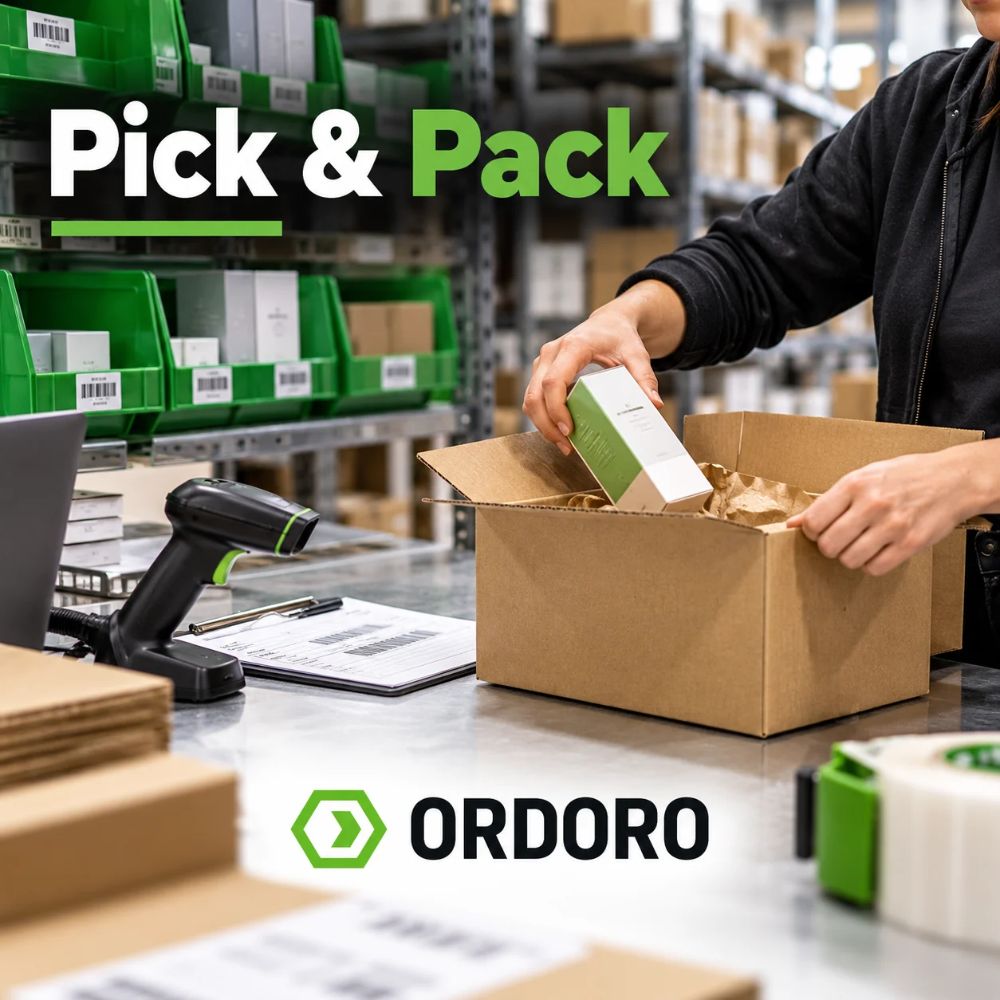
Picking and packing are two connected steps in the eCommerce order fulfillment process. Picking is the process of locating and collecting the products needed for an order. Packing happens after those products have been picked and includes verifying the order, choosing the appropriate packaging, adding any required paperwork, and preparing the shipment for a shipping label and carrier.
For a single order, the process may be as simple as walking to a shelf, grabbing an item, putting it in a box, and printing a label. Once a business is fulfilling dozens, hundreds, or thousands of orders, those same steps need more structure. A typical workflow may move from order ready for fulfillment to pick list creation, picking, verification, packing, and then into shipping.
Each handoff matters. If the pick list is unclear, the wrong item may be collected. Or if the verification is skipped, an error can make it all the way into the box. If package details are wrong, the shipping step can be affected too. The stronger the picking and packing process is, the easier it becomes to keep fulfillment moving without creating extra work later.
How Pick Lists Help Keep Fulfillment Organized
A pick list tells the warehouse team what needs to be collected for fulfillment. Depending on the operation, it may include product names, SKUs, quantities, warehouse locations, order numbers, or other information needed to find the right items.
The value of a pick list is not just that it tells someone what to grab. It gives the picking process structure. Instead of relying on memory or opening orders one by one, the team has a clear view of what needs to be collected and, ideally, where those products are located.
This becomes more important as the warehouse grows. If products are spread across shelves, bins, or multiple locations, every unnecessary trip adds time. Accurate warehouse information helps reduce that wasted movement, which is one reason picking works best when it is connected to strong warehouse management and reliable inventory counts.
The pick list should answer a practical question quickly: What do I need, and where do I find it?
Individual Picking vs. Batch Picking
There is more than one way to organize picking, and the right method depends on order volume, product mix, warehouse layout, and how complicated the orders are.
With individual order picking, a worker completes one order at a time. They collect the products for Order A, bring them to the packing area, then move on to Order B. This can work well for lower volumes or orders that need special attention.
Batch picking groups multiple orders together so the picker can collect shared products in one pass through the warehouse. If five orders all contain the same water bottle, the team can pick five bottles in one trip instead of returning to the same shelf five separate times.
That may sound like a small difference, but repeated across hundreds of orders it can save a lot of walking and handling time.
For a quick walkthrough, see how to create batch pick and pack lists in Ordoro.
Batch picking also makes verification more important. Once several orders are being handled together, the team needs a reliable way to make sure the right quantity of each item ends up with the correct order. That is where barcode scanning and order verification can help keep speed from turning into mistakes.
Picking methods can get more specialized as order volume grows. For a deeper look at discrete, batch, wave, and zone picking, see Ordoro’s Pick and Pack Strategies guide.
How Order Verification and Barcode Workflows Reduce Errors
Picking quickly is only useful if the right product makes it into the box.
A single warehouse mistake can turn into several more tasks later: a customer support ticket, replacement shipment, return, additional postage, inventory correction, and a customer who did not receive what they ordered.
Order verification adds a checkpoint before the shipment is completed. Barcode scanning can make that process faster and more consistent by confirming that the item being packed matches the item on the order.
For businesses with similar SKUs, multiple sizes or colors, or high order volume, that extra confirmation can be especially useful. Instead of relying only on a product name or visual check, the barcode gives the team another way to verify that the correct item is in hand.
This can also help with kitting in eCommerce when a shipment contains kits, bundles, or multiple component products. The more pieces an order contains, the more useful it becomes to have a repeatable verification step before the box is sealed.
The goal is not to add more work for the warehouse team. It is to catch mistakes while they are still easy to fix.
Packing Is More Than Putting Products in a Box
Once the order has been picked and verified, packing turns those items into a shipment.
That includes choosing appropriate packaging, protecting the products, including any required paperwork, and confirming the package details that will be used for shipping.
Good packing needs to balance several things at once. The package has to protect the order, but oversized packaging can increase shipping costs. The team needs to move efficiently, but rushing can lead to missing items or damage. The packaging process should also be consistent enough that different employees can handle the same type of order without reinventing the process each time.
Packing slips can help by giving the warehouse team and customer a record of what is included in the shipment. Depending on the workflow, they may list products, quantities, order information, or other details used during fulfillment.
The packing stage also feeds directly into shipping. Package weight and dimensions can affect carrier pricing, so accurate shipment information matters before the label is purchased. That is where picking and packing connects naturally to shipping rate shopping.
Picking and Packing Across Multiple Warehouses
Picking becomes more complicated when inventory is spread across several locations.
A product may be available somewhere in the business but not at the warehouse responsible for fulfilling a particular order. That distinction matters because a company-wide inventory total does not always tell the picker what is physically available in front of them.
This is why picking and packing needs to stay connected to warehouse and fulfillment-location decisions. Before the pick list is created, the system should have a clear idea of which location is responsible for the order and which inventory is available there.
That connects back to virtual warehouses for eCommerce. A warehouse may represent a physical facility, supplier, 3PL, or another fulfillment workflow, and that structure can affect which orders appear for a particular team to pick and pack.
When location information is clear before picking begins, the warehouse spends less time discovering problems halfway through the process.
How Picking and Packing Connects to Inventory Accuracy
Picking is one of the places where inventory data and physical inventory meet.
The system may say a product is available, but the picker is often the person who discovers whether that number is accurate. If an item is missing from the shelf, stored in the wrong location, or damaged, the discrepancy becomes a fulfillment issue immediately.
That is why picking and packing should not operate separately from eCommerce inventory management. Every successful fulfillment depends on accurate inventory, and every warehouse exception can provide information that helps improve those counts.
The same applies to receiving inventory. If incoming products are received incorrectly or assigned to the wrong warehouse, the problem may not become obvious until someone tries to pick them for an order.
Accurate receiving, inventory, warehouse locations, and picking all reinforce each other. If one part falls out of sync, the warehouse team usually feels it first.
How Picking and Packing Affects Shipping
Picking and packing sits directly before shipping, so the quality of the warehouse workflow affects what happens next.
Once the order is packed, the team needs accurate package information to compare carrier options and create the label. If the wrong box is used, the weight is incorrect, or the order has to be reopened because an item was missed, the shipping process slows down too.
A clean handoff means the order arrives at the shipping step complete, verified, and ready for a service to be selected.
For businesses using multiple carriers, the team can then compare options based on cost, delivery speed, customer expectations, and other shipment details. Our guide to shipping rate shopping covers that decision in more detail.
This is why picking, packing, and shipping work best as parts of the same fulfillment workflow rather than separate tasks managed in isolation.
Common Picking and Packing Problems
Most picking and packing problems are small on their own, but repeated across a busy warehouse they can become expensive. Common issues include:
- Picking the wrong SKU, size, color, or quantity
- Products being stored somewhere other than the location shown in the system
- Packing an order without verifying the items
- Using oversized packaging that increases shipping costs
- Missing packing slips or other required paperwork
- Reopening packages because an item was forgotten
- Batch-picked items being assigned to the wrong order
- Inventory counts not updating when warehouse exceptions are found
The best workflows reduce the number of decisions and manual checks employees have to make from memory. Pick lists, warehouse locations, scanning, verification, packing standards, and connected shipping information all help create a process that is easier to repeat correctly.
How Ordoro Supports Picking and Packing Workflows
Ordoro connects picking and packing to the broader order fulfillment process so teams can move from order management into warehouse and shipping workflows without treating each step as a separate system.
Features such as packing lists, batch workflows, Scan/Verify, warehouse management, and shipping tools can help eCommerce teams organize what needs to be fulfilled, verify products before shipment, and move completed orders into label creation and tracking.
That becomes more useful as fulfillment volume grows. Instead of building separate processes for order management, inventory, warehouse work, and shipping, businesses can keep more of the workflow connected from the moment the order arrives until the label is created.
You can learn more about Ordoro’s Shipping and Order Management tools and Inventory Management capabilities.
Frequently Asked Questions About eCommerce Picking and Packing
What is picking and packing in eCommerce?
Picking is the process of locating and collecting the products needed for an order. Packing is the process of verifying those products, preparing them for shipment, and getting the package ready for a shipping label and carrier.
What is a pick list?
A pick list is a document or digital list that tells warehouse workers which products and quantities need to be collected for fulfillment. It may also include SKUs, warehouse locations, order numbers, and other information used during picking.
What is batch picking?
Batch picking is a method where products for several orders are collected during the same warehouse picking run. It can reduce repeated trips to the same product locations and improve efficiency at higher order volumes.
How does barcode scanning help with picking and packing?
Barcode scanning can help verify that the product being picked or packed matches the product required by the order. This can reduce errors involving similar SKUs, sizes, colors, or quantities.
What is the difference between a pick list and a packing slip?
A pick list is primarily used by the warehouse to collect products for fulfillment. A packing slip generally accompanies or helps verify the completed shipment and lists the products included in the order.
How can eCommerce businesses reduce picking errors?
Clear warehouse locations, accurate inventory, organized pick lists, barcode scanning, order verification, and repeatable packing workflows can all help reduce errors.
Is batch picking always better than picking one order at a time?
No. Batch picking can be more efficient at higher volumes, especially when several orders contain the same products. Individual picking may still make more sense for lower-volume, oversized, complicated, or highly customized orders.
How does picking and packing affect shipping costs?
Packing choices can affect package weight and dimensions, which can influence carrier rates. Accurate packing information also helps businesses compare shipping services before purchasing a label.
Make the Warehouse Handoff Easier
Picking and packing is where an order stops being information on a screen and starts becoming a physical shipment. That makes it one of the most important handoffs in eCommerce fulfillment.
Accurate inventory helps the team know what should be available. Warehouse locations help them find it. Pick lists organize the work. Verification helps catch mistakes. Packing prepares the order for the carrier, and accurate package information sets up the shipping decision that comes next.
When those steps stay connected, the warehouse can spend less time fixing preventable mistakes and more time getting orders out the door.
Ready to connect order management, inventory, warehouse workflows, and shipping? Start a free trial of Ordoro and see how the fulfillment process can work together.