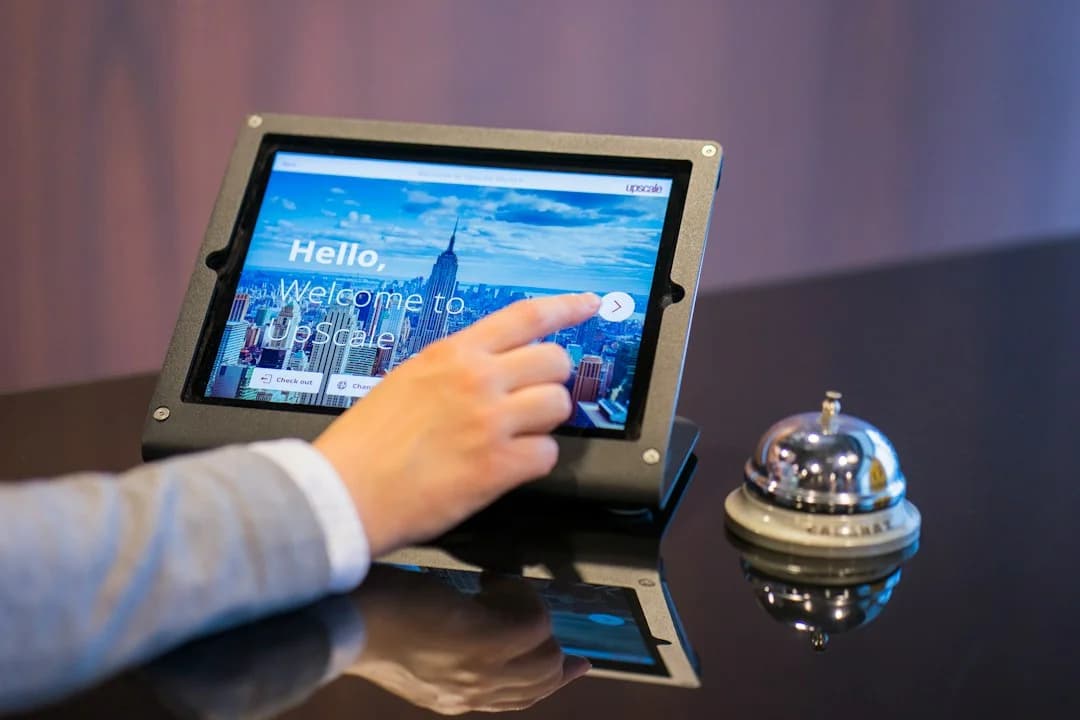
The PMS should cover reservations, room inventory, housekeeping, billing and reporting, while the hotel’s technology setup should also account for OTA connectivity, foreign guest reporting, electronic invoicing and payment workflows. Hotelogix is one PMS option to evaluate against these requirements.
Your New Hotel Is Ready. What About Your Software?
Imagine opening a 30-room boutique hotel in Da Nang. The rooms are furnished, staff have joined, and reservations are arriving through Agoda, Booking.com, Traveloka and your website.
Now you need to manage room availability, guest deposits, check-ins and housekeeping. Some guests may change their bookings before arrival. Others will need invoices or have special requests.
Handling everything through spreadsheets becomes difficult when several employees work with the same records.
Vietnamese hotels must also prepare for foreign guest registration and electronic invoicing requirements.
A cloud property management system (PMS) helps bring daily hotel operations together. This guide explains what software a new hotel needs, the setup process, local requirements, costs and how Hotelogix can support your opening.
Why PMS Planning Matters for Hotels Opening in Vietnam in 2027
Hotels opening in 2027 need to prepare their operating systems before the first guest arrives.
For a new 20+ room property, that preparation can include room inventory, rate plans, OTA connections, direct bookings, guest records, billing, payments, housekeeping, reporting and staff permissions.
Vietnam’s regulatory environment also requires hotels to keep their operating procedures current. Foreign guest temporary residence declarations and electronic invoicing requirements should be checked against the rules in force when the hotel opens.
The PMS should therefore be treated as part of the hotel’s pre-opening technology plan, not as software to install after operations have already started.
Quick Answer: Does a New 20-Room Hotel Need PMS Software?
A 20-room hotel in Vietnam is not legally required to purchase a PMS simply because of its room count. However, managing several booking channels, room assignments, guest bills and housekeeping records manually takes time. A cloud PMS gives employees access to shared information. Hotels should select and test their software before accepting live reservations.
What Should a New 20+ Room Hotel in Vietnam Look for in a PMS?
A new 20+ room hotel in Vietnam should choose a PMS based on its daily operating needs, booking channels and local requirements.
Before signing a PMS contract, check whether the system can handle:
- Reservations: Direct, OTA, phone and walk-in bookings in one system.
- OTA connectivity: Connections to the booking channels your hotel plans to use, including Agoda, Booking.com, Traveloka and other required channels.
- Room management: Room assignments, extensions, room moves and room status.
- Housekeeping: Shared room-status updates between reception and housekeeping.
- Guest billing: Deposits, room charges, additional services, payments and checkout.
- Guest reporting: The information and exports needed for applicable foreign guest reporting procedures.
- E-invoicing: Compatibility with the hotel’s chosen electronic invoicing process.
- Payments: Support for the payment methods and providers the hotel plans to use.
- Reporting: Occupancy, ADR, RevPAR, revenue and operational reports.
- User permissions: Different access levels for reception, housekeeping, finance and management.
- Remote access: Secure access for authorised owners and managers when they are away from the property.
- Implementation: Room setup, rate configuration, OTA mapping, staff training and testing before opening.
The best PMS for a new hotel is not necessarily the one with the longest feature list. It is the one that fits the hotel’s actual workflow from booking → room assignment → housekeeping → guest billing → payment → checkout → reporting.
Before going live, ask the PMS provider to demonstrate this complete workflow using your planned room types, booking channels and billing process.
Does a 20-Room Hotel Need a Cloud PMS?
A hotel’s room count is one factor in choosing software. The number of employees, booking sources and guest services matters just as much.
Consider two properties with 20 rooms.
The first is a small guesthouse that receives most reservations through direct calls and has one employee handling the front desk.
The second is a boutique hotel in Da Nang with four room categories, bookings from several OTAs, a restaurant and employees working different shifts.
The second property needs more coordination. Reception must know which guests are arriving, housekeeping must prepare the correct rooms, and finance needs accurate payment records.
A PMS can help employees manage that information without maintaining several separate files.
Can a New Hotel Start With Excel?
Yes. Excel or Google Sheets can record reservation dates, guest names, room numbers and deposits.
For a small property with limited bookings, this may be manageable.
Problems arise when several employees update the same information. Suppose a guest extends a reservation by two nights. Reception changes the spreadsheet, but housekeeping still has the original checkout date. The room may also remain available on an OTA if no one updates the channel.
A spreadsheet can record the change, but it does not automatically connect the hotel’s departments or booking platforms.
For a hotel planning to sell through several channels, a PMS with suitable distribution connections is worth considering before opening.
What Changes Between 10, 20 and 50 Rooms?
As a hotel grows, staff usually handle more room categories, reservations, payments and guest requests.
These are examples, not fixed rules. A 15-room resort with a restaurant and several booking platforms may have more complex operations than a 40-room accommodation-only hotel.
Why 20+ Rooms Can Be a Practical PMS Decision Point
Room count alone does not determine whether a hotel needs a PMS.
A 20-room guesthouse with one booking source may operate differently from a 20-room hotel receiving reservations from several OTAs, its own website and direct enquiries.
Once a hotel has multiple booking sources and several employees handling reservations, the operating workload increases.
A 20+ room hotel may need to coordinate:
- Multiple room categories
- OTA reservations
- Direct website bookings
- Room assignments
- Housekeeping status
- Guest deposits
- Payments and refunds
- Restaurant or service charges
- Staff permissions
- Daily reports
- Rate changes
- Cancellations and extensions
The better question is not:
“Do I have enough rooms to need a PMS?”
It is:
“Can my team reliably manage reservations, rooms, payments and reports without a central system?”
If the answer is no, setting up a PMS before opening can give the team one shared system for daily hotel operations.
Why Multiple OTA Channels Increase Complexity
A new hotel may receive reservations through Agoda, Booking.com, Traveloka, Expedia and its own website.
Each confirmed reservation changes the number of rooms available for sale.
Suppose the last Deluxe Room is booked through Agoda. If the inventory on Booking.com is not updated, another guest may book the same room.
A channel manager connected to the PMS can exchange room availability, rates and reservation information with supported platforms.
This reduces manual updates, but it does not remove every possibility of a double booking. Incorrect room mapping or a failed connection can still cause problems.
Hotels should test reservations, cancellations and date changes before activating their channels.
When Should a New Hotel Select Its PMS?
Ideally, before the hotel begins accepting live bookings.
Many properties start receiving reservations weeks or months before opening. Those bookings need a reliable place to be recorded, along with the agreed rates, deposits and arrival dates.
Choosing the PMS early also gives employees time to learn the system.
A new hotel should aim to have its room inventory, booking policies, billing process and staff permissions configured before reservations begin.
Cloud PMS vs On-Premise Hotel Software
Cloud PMS software runs on infrastructure managed by the provider and is accessed through supported internet-connected devices.
On-premise hotel software runs on local or dedicated infrastructure maintained by the hotel or its IT service provider.
A cloud PMS can be practical for an independent hotel without an internal IT team.
However, hotels in locations with unreliable internet should check backup connectivity and ask what functions remain available during an outage.
What Happens When You Open Without a PMS?
A hotel can operate without PMS software, but employees still need to manage every booking, payment and room change.
Consider a 30-room property on its first busy weekend. Ten guests are checking in, several rooms need cleaning and new reservations are arriving online.
Reception needs current booking information. Housekeeping needs accurate room assignments. Finance must keep track of deposits and payments.
If the information is stored in separate files, employees may spend much of their shift checking records rather than completing guest requests.
Double Bookings Across OTAs
Double bookings can occur when two booking channels sell the same available room.
For example, a guest reserves the last Family Room through Booking.com. An employee forgets to update availability on Agoda, where the room remains open for sale.
The hotel may then have to find alternative accommodation for one guest.
A connected PMS and channel manager can reduce this risk by exchanging inventory updates across supported channels.
Missing Direct Reservations
Not every booking arrives through an OTA.
Guests may call the hotel, send an email or contact the property through social media.
If a receptionist confirms a room but forgets to record the reservation, that room may still appear available elsewhere.
All confirmed bookings should enter the hotel’s main reservation system, regardless of their source.
Incorrect Room Availability
A vacant room is not always ready for a guest.
A room may need cleaning, inspection or maintenance after checkout.
When housekeeping and reception use separate records, employees may have different information about the same room.
A PMS with housekeeping functions allows staff to maintain room status in a shared system.
Slow Front Desk Check-Ins
At check-in, reception must locate the reservation, confirm guest details, check room readiness and record payments.
If those records are spread across separate files, each step can take longer.
A PMS helps reception access reservation, room and billing information through the same operating system.
Housekeeping and Reception Confusion
Suppose a guest changes rooms after reporting an air-conditioning problem.
Reception must update the assignment. Housekeeping needs to know which room is now occupied and which needs attention.
If one department misses the update, staff may prepare the wrong room.
Shared room-status records help the teams coordinate their work.
Guest Deposit and Billing Errors
A guest may pay a VND 1,000,000 deposit before arrival and later order food or laundry during the stay.
The final bill must account for the advance payment, accommodation charges and additional expenses.
When transactions are maintained separately, staff may overlook a deposit or enter a charge twice.
A PMS with folio management and compatible POS functions can bring the relevant transactions into the guest account.
Incomplete Daily Revenue Reports
Managers need to know how many rooms were sold, what revenue was recorded and whether guests have outstanding balances.
Spreadsheets can contain these figures, but employees must prepare and reconcile the reports.
A PMS can produce reports using the reservation and financial records entered into the system.
Common reports include occupancy, average daily rate (ADR), revenue per available room (RevPAR), arrivals, departures and payment summaries.
More Manual Work for Small Hotel Teams
A new hotel may begin with only a few employees managing front desk activities.
One receptionist may answer enquiries, create bookings, process check-ins and handle payments during the same shift.
Repeated data entry adds work and increases the chance that records will differ.
A connected PMS reduces the need to maintain separate operational records, although employees still need to check their work.
A Busy Day at a 30-Room Hotel: Manual Records vs PMS
Technology does not replace proper hotel procedures. It gives employees a shared place to record and review the information.
Essential Software for a New Vietnamese Hotel
A new hotel does not need to buy every hospitality application before opening.
Start with the software required for reservations and guest stays. Add other systems according to the services the property offers.
Hotel Property Management System
A PMS manages reservations and the daily activities linked to guest stays.
For a 20–50-room hotel, the main functions generally include front desk operations, room inventory, housekeeping, guest records, billing and reporting.
Hotelogix offers these core PMS capabilities and can be evaluated as the property’s main operating system.
Channel Manager for OTA Reservations
A channel manager connects room rates, availability and reservations with supported online booking platforms.
For a hotel selling through Agoda, Booking.com, Traveloka and Expedia, this can reduce the need to update each account manually.
Before choosing a provider, confirm the exact channels supported and test how cancellations, booking modifications and rate restrictions work.
Direct Booking Engine
A booking engine allows guests to reserve rooms through the hotel’s website.
Guests can select dates, compare room categories and confirm a booking.
The booking engine should connect with the PMS so that reservations reach the main hotel record.
Hotelogix offers a web booking engine that can work with its PMS. The hotel should confirm the package and payment setup.
Hotel POS and Guest Billing
Hotels with restaurants, bars or other paid services may need a point-of-sale system.
For example, if a guest orders dinner and asks for the amount to be added to the room, a compatible POS and PMS can post the charge to the guest folio.
Confirm which POS products are supported and how refunds, corrections and taxes are handled.
Housekeeping Management
Housekeeping functions help employees track rooms that are occupied, vacant, dirty, being cleaned or ready.
This matters when several guests arrive shortly after checkout time.
The receptionist should review the latest housekeeping status before assigning a room.
Payment and Accounting Integrations
A Vietnamese hotel may accept cash, bank transfers, cards and QR payments through suitable providers.
The PMS should record payments against the correct reservation and support reconciliation with the hotel’s financial records.
However, a PMS does not automatically connect with every local bank, payment provider or accounting product.
Check the actual supported integrations before buying.
Guest Registration and Reporting Workflow
Hotels must maintain the guest information needed for their applicable accommodation reporting requirements.
For foreign guests, employees need a process for checking identification details and completing the required temporary residence declarations.
The PMS may help store guest and stay records, but the hotel must verify whether it supports the necessary exports or connections.
Revenue Reporting and Owner Dashboard
Owners may want to check occupancy, ADR, RevPAR and room revenue without visiting the property.
A cloud PMS can provide access to available hotel reports through supported devices.
Before opening, decide which reports managers need daily and which employees should have access.
New Vietnamese Hotel Technology Stack
Hotelogix provides core hotel management functions. Local invoicing, payment and government reporting connections must be confirmed separately.
Vietnam-Specific PMS Requirements for New Hotels
A hotel PMS in Vietnam should be evaluated against both standard hotel operations and the property’s local requirements.
Before opening, check:
- OTA connectivity: Agoda, Booking.com, Traveloka and other required channels.
- Guest reporting: Processes for collecting and handling information required for foreign guest declarations.
- Electronic invoicing: Compatibility with the hotel’s approved e-invoicing process.
- Payments: Cash, cards, bank transfers and the payment methods used by the property.
- Currency: VND billing and any required foreign-currency handling.
- Guest data: User permissions, access controls and data protection procedures.
- Billing: Room charges, deposits, additional services, payments and corrections.
- Reporting: Occupancy, ADR, RevPAR, revenue and operational reports.
- Integrations: POS, booking engine, payment, accounting and invoicing systems.
- Staff training: Training for reception, housekeeping, finance and management teams.
The exact legal, tax, reporting and payment requirements depend on the hotel’s business structure and operations. Confirm the current requirements with the relevant Vietnamese authorities and verify every software integration with the provider before opening.
Want to See Hotelogix in Action
Book a Live Demo
Hotel PMS Setup Before Opening
Once the hotel chooses a PMS, the next task is configuring it for the property.
Room categories, rates, booking rules and employee responsibilities should be ready before live reservations begin.
Create Room Types and Inventory
Start by entering every physical room into the system and assigning it to the correct category.
For example, a 30-room boutique hotel may have:
Check that room categories match those used on the website and connected OTAs.
Incorrect mapping can cause availability problems even when the systems appear connected.
Configure Daily Rates and Packages
Decide how each room category will be priced.
A hotel in Da Nang may set different rates for weekdays, weekends and peak holiday periods.
It may also offer breakfast packages or special rates for longer stays.
Enter the rates into the PMS and check how they appear on connected booking channels.
Set Deposit and Cancellation Policies
The hotel needs clear rules covering advance payments, cancellations, no-shows, early check-in and late checkout.
For example, a guest may pay a deposit when booking and settle the remaining amount at checkout.
The policy should explain when the deposit is refundable and how changes affect the reservation.
Connect Agoda and Booking.com
Once inventory and rates are ready, configure the required channel manager connections.
Match each OTA room category and rate plan with the correct PMS inventory.
Test a new reservation, cancellation and date change before allowing live sales.
The same process applies to other channels such as Traveloka and Expedia where supported.
Prepare Website Reservations
If the hotel accepts direct bookings, test the booking engine.
Choose dates, select a room, complete a reservation and confirm that the details appear correctly in the PMS.
Also check the confirmation message, payment process and booking conditions.
Configure Guest Profiles and Folios
Set up how the hotel records guest details, room charges, deposits and additional services.
A folio should show the charges and payments linked to a particular stay.
If restaurant or laundry expenses will be added to guest bills, test those transactions through the approved POS or billing process.
Set Up Housekeeping Status
Agree on the room statuses employees will use.
These may include vacant and clean, vacant and dirty, occupied, cleaning in progress and out of order.
Train housekeeping employees to update room status when their work changes the room’s readiness.
Create Staff Roles and Permissions
Reception employees need access to reservations and guest information. Housekeeping staff need room status details. Finance employees may require billing and reporting access.
Give employees individual accounts rather than sharing one administrator login.
Permissions should match each employee’s responsibilities.
Configure Reports and Night Audit
Decide which reports management needs at the end of every business day.
These may include arrivals, departures, occupancy, revenue, payments and outstanding balances.
If the PMS supports night audit, train the responsible staff on the steps required to complete the daily closing process.
Test Reservations Before Launch
Before accepting live guests, run sample bookings and transactions.
Test a guest who changes arrival dates, a cancelled booking, a room upgrade and a partial payment.
Also practise checkout with restaurant charges and an advance deposit.
Check the resulting room inventory, guest folio and daily reports.
Suggested resource: Vietnam Hotel PMS Pre-Opening Setup Checklist
Use this checklist to confirm room inventory, rates, booking channels, guest records, payments and staff access.
Foreign Guest Registration in Vietnam
Vietnam has specific rules for declaring the temporary residence of foreign guests.
Hotels must prepare for these requirements before opening, particularly if they expect international visitors.
Circular 87/2026/TT-BCA, issued by the Ministry of Public Security on June 9, 2026, took effect on July 24, 2026. It sets out the methods for declaring and receiving information about foreigners staying at accommodation establishments.
Who Must Report Foreign Guest Arrivals?
Accommodation establishments are responsible for arranging the required temporary residence declarations for foreign guests.
The hotel should assign an employee to prepare and submit the information, with a supervisor responsible for reviewing the process.
Employees must understand that recording the guest in the PMS is different from completing the official declaration.
Guest Information Required at Check-In
The hotel needs accurate information from the guest’s identification and stay documents.
Circular 87/2026/TT-BCA identifies declaration details that include the guest’s name, gender, date of birth, nationality, passport or international travel document number, relevant residence permission information and expected temporary stay.
The front desk should collect the required details and verify them against the guest’s documents.
Access to this information should be restricted to employees who need it for their work.
Electronic Temporary Residence Declaration
Vietnam provides an electronic temporary residence declaration process.
Under Article 7 of Circular 87/2026/TT-BCA, the declarant accesses the official electronic system using the registered account and submits the required foreign guest information.
For electronic submissions, the declaration must be made immediately when the foreign guest arrives at the accommodation establishment.
A booking made several weeks before arrival does not complete the reporting requirement.
The hotel should arrange access to the current official system before opening and train the employees responsible for submitting declarations.
Timing Requirements for Electronic and Paper Declarations
Electronic and paper declarations have different timing rules.
The paper declaration process also includes an immediate communication requirement before the form is delivered, as set out in the circular.
Hotels should follow the method and procedure accepted by the relevant authorities.
Assigning Reporting Duties to Front Desk Staff
The hotel manager should establish a written procedure for foreign guest arrivals.
For example, the receptionist checking in the guest may prepare the required information, while the shift supervisor confirms that the declaration has been completed.
The procedure should explain who handles submissions during evenings, weekends and staff changes.
Managing Missing or Incorrect Guest Information
A guest may arrive with incomplete documents or a booking that contains incorrect personal details.
Employees should follow the legal procedures rather than inventing information or submitting inaccurate records.
- PMS subscription