Hotel access gets complicated quickly. Guests, housekeeping teams, maintenance staff, vendors, and managers all need to move through your property, but they shouldn’t all have access to the same places or at the same times.
That challenge only grows as you add properties, inherit different lock brands, and introduce more people and processes. A modern access control strategy helps you manage those variables consistently without requiring every hotel to operate exactly the same way.
Key takeaways
- Hotel access control determines who can enter which spaces and when, extending beyond the lock or credential itself.
- Connecting access with your PMS can help automate guest access around reservation and stay information.
- Role-based and time-bound permissions give guests, employees, and vendors the access they need without unnecessarily broad or permanent credentials.
- As your portfolio grows, standardizing access policies and visibility can be more important than standardizing every lock or property.
What is hotel access control, and how does it work?
A lock secures a physical door. A credential, such as a key card, PIN, fob, or mobile key, gives someone a way to unlock it. Access control is the system behind both that determines whether that credential should work.
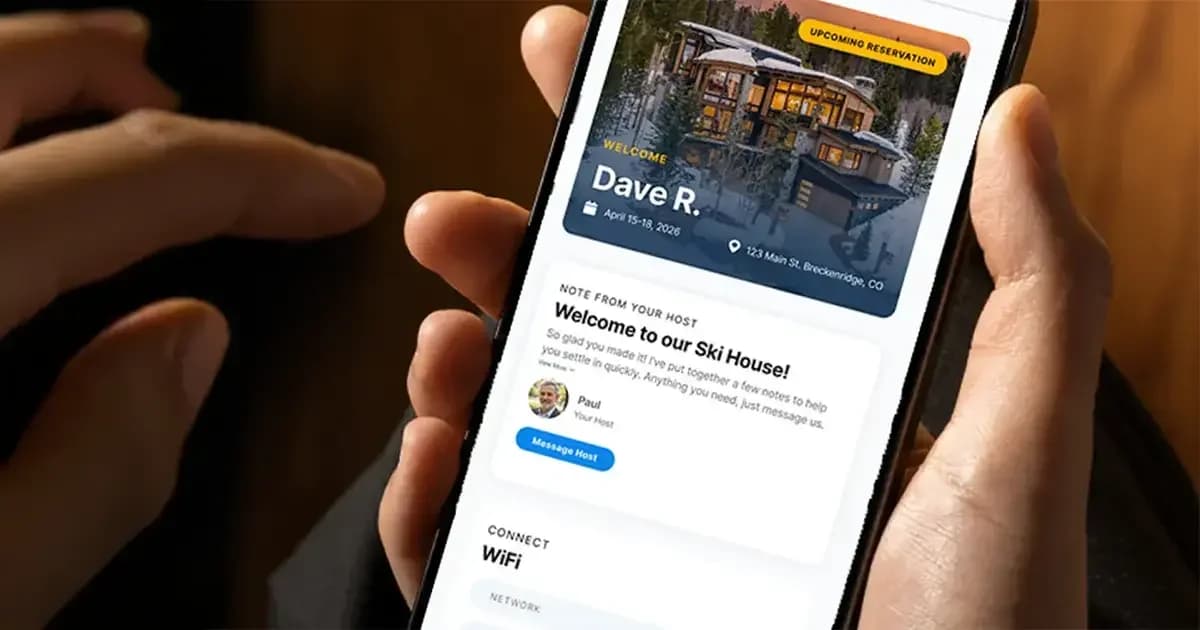
Consider a guest checking into your hotel for a two-night stay. Their credential might work from the time their room is ready until checkout and provide access to their room, the main entrance, fitness center, or other approved areas.
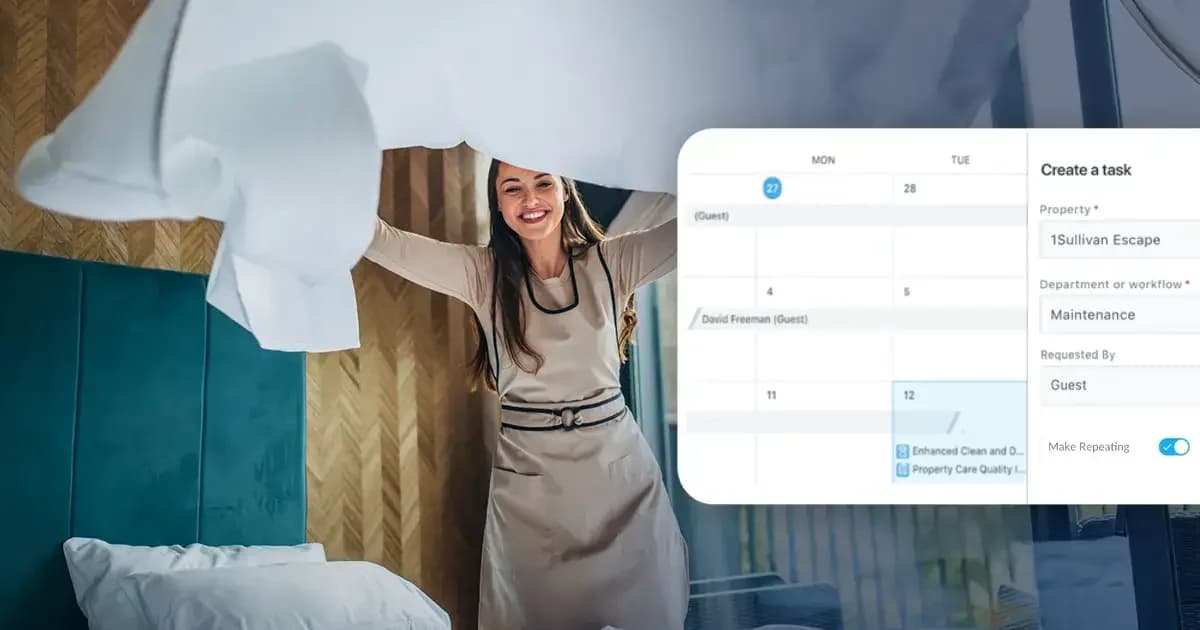
Your housekeeping team needs different permissions. Their credentials might work during scheduled shifts and provide access to guest rooms and housekeeping areas. A contractor may need even narrower access, such as entry to a mechanical space for only the duration of an afternoon service visit.
In each case, access control provides the logic behind who can enter a particular space and when.
An access control environment typically brings together four components:
- Credentials: PINs, cards, fobs, or mobile access.
- Hotel lock systems and access hardware: Devices securing guest rooms, entrances, amenities, back-of-house spaces, and other areas.
- Access management software: The system controlling users, schedules, permissions, and access rules.
- Your PMS and other operational systems: Platforms containing reservation details and other information that can inform access.
Connecting these pieces turns individual electronic locks into a broader access strategy. Your property management system, for example, already knows when a guest is scheduled to arrive and depart. When your PMS and access platform communicate, that reservation information can help drive the access workflow rather than requiring your team to manually manage credentials throughout every stay.
What should you look for in a hotel access control system?
Choosing an access control solution isn’t only about finding the right smart lock. Think about how the system will affect your team’s daily operations and whether it can continue meeting your needs as your hotel evolves.
Here are several capabilities worth considering.
Scheduled and time-bound access
You should be able to control when a credential works as well as where it works.
A guest credential can correspond to a stay, while staff credentials can follow scheduled shifts. Vendors or contractors can receive access only during their scheduled appointment.
This can help prevent temporary access from quietly becoming permanent access.
Fast credential revocation
Employees leave. Vendors change. Credentials get lost or compromised.
Your team should be able to revoke a credential quickly without needing to retrieve a physical key or physically visit the door.
Audit trails
Access logs can help you see when credentials were used and at which access points. That visibility is useful when you’re investigating an access issue or simply need a clearer picture of activity around the property.
Remote management
You won’t always have the right person standing behind the front desk when an access issue comes up.
The ability to manage credentials and permissions remotely can be especially useful for after-hours arrivals, lean staffing models, and multi-property operations.
PMS and technology integrations
Your access system shouldn’t become another technology silo.
Your PMS already contains much of the information required to determine when a guest should receive access and when that access should end. Connecting those systems can reduce duplicate data entry and repetitive credential management.
The goal isn’t simply to add another piece of hotel technology. It’s to make access part of the workflows your team already uses.
Hardware flexibility
It’s also worth thinking beyond the hardware you use today.
If you renovate part of the property, change lock models, or acquire another hotel, will you need to start over? Or can your access management approach accommodate different compatible hardware?
That flexibility becomes increasingly valuable as your portfolio grows.
How do you standardize access across a growing hotel portfolio?
At one hotel, an inconsistent access process might create a little extra work. Across five, 10, or 20 properties, those inconsistencies can become much harder to manage.
Every hotel you open or acquire can introduce different lock brands, operating procedures, employee roles, vendors, schedules, and property layouts.
If each hotel develops its own approach to access, those differences multiply as you grow.
That’s why a new opening or acquisition is an ideal time to define your access structure. Start with three questions:
- Who needs access?
- Which spaces do they need to enter?
- When should that access begin and end?
From there, you can create repeatable permissions based on roles rather than managing everything credential by credential.
For example:
- General managers may need broad, ongoing access to the hotel they oversee.
- Regional managers may require appropriate management access across several properties.
- Housekeeping and maintenance teams can receive permissions based on their responsibilities and schedules.
- Contractors and vendors can receive time-limited access to specific areas.
- Corporate staff can have consistent permissions across the portfolio based on their responsibilities.
This gives you a starting point for every new property rather than reinventing your access policies each time you grow.
Standardize what matters and keep local flexibility
Standardization doesn’t mean every hotel needs to operate exactly the same way.
Your organization might standardize:
- Role and permission structures
- Employee onboarding and offboarding
- Credential expiration requirements
- Vendor access policies
- Regional and corporate permissions
- Security and audit procedures
At the same time, individual hotels can retain control over staff schedules, local vendors, amenities, building layouts, and property-specific access requirements.
Think of it as creating a common set of guardrails rather than an identical setup at every location.
The same approach can help when you’re dealing with mixed lock brands.
An acquired property may not have the same hardware as the rest of your portfolio. Even within one hotel, you may have different access hardware across guest rooms, entrances, amenities, and back-of-house spaces.
Immediately replacing every lock may not be practical or cost-effective. Instead, look at whether you can standardize the management layer while allowing compatible hardware to differ.
That can give you a path to modernize individual properties over time rather than making a portfolio-wide hardware replacement a prerequisite for consistent access management.
Build visibility across your portfolio
Standardizing access also makes it easier to answer questions that become increasingly important as you grow:
- Who currently has access to each property?
- Which doors or spaces can they enter?
- When does their access expire?
- Does a former employee still have an active credential?
- Which vendors currently have access?
- What access has recently changed?
You shouldn’t need to call individual hotels or log into several unrelated systems to find basic answers about access across your portfolio.
Greater visibility can also make employee changes easier to manage. If someone moves from one property to another or leaves the organization altogether, centralized management gives your team a clearer way to update their permissions accordingly.
Create consistency without making every property identical
Ultimately, standardizing hotel access isn’t about making every property, lock, or workflow identical.
A 30-room boutique hotel may operate very differently from a larger urban property or resort. Those differences should be reflected in how access works.
What you can standardize is your broader philosophy: people should have access to the spaces they need for the period they need it. Temporary access should be easy to expire or revoke. Your team should have visibility into access activity. And your systems should work together wherever possible so employees aren’t manually carrying information from one platform to another.
As your portfolio grows, those principles give you a more consistent foundation without taking away the flexibility each property needs.
And that may be the biggest difference between simply installing electronic locks and building an access strategy: instead of thinking one door or room key card at a time, you’re managing access as part of the larger guest and operational journey.
For more on finding the right balance between technology and high-touch hospitality, read RemoteLock’s Rethinking the boutique hotel front desk: what to automate, what to keep human.
A post by RemoteLock
RemoteLock has been automating access control and improving on-site property operations efficiencies across multiple industries, including vacation rental and multifamily, for more than ten years. As a leading access-centered property operations software platform provider with more than 10,000 customers in 75+ countries, RemoteLock helps property managers enable, control, and automate access and climate control across their portfolio. RemoteLock’s platform saves property managers time and money through the elimination of tasks for onsite staff and helps scale businesses with greater confidence. It is differentiated by its dozens of integrations with applicable hardware and business software systems for an easy-to-use, turn-key solution.
About RemoteLock
RemoteLock has been automating access control and improving on-site property operations efficiencies across multiple industries, including vacation rental and multifamily, for more than ten years. As a leading access-centered property operations software platform provider with more than 10,000 customers in 75+ countries, RemoteLock helps property managers enable, control, and automate access and climate control across their portfolio. RemoteLock’s platform saves property managers time and money through the elimination of tasks for onsite staff and helps scale businesses with greater confidence. It is differentiated by its dozens of integrations with applicable hardware and business software systems for an easy-to-use, turn-key solution.