Article
The TL;DR
A strong hotel tech stack is a unified core, a short list of well-chosen integrations, and one data model underneath it all.
Most hotels didn’t design their tech stack. They accumulated it, one login at a time.
A channel manager after a double booking. A messaging app after a bad review about slow replies. A pricing tool after a soft month. Each purchase made sense the day it was made. Together, they add up to a dozen browser tabs, three versions of the same guest and a team that spends more time going back and forth between systems than looking after the people checking in.
Here we’ll cover what a modern hotel tech stack includes, the three architectures hiding behind the word “unified,” and how to build your stack.
Key takeaways
- A hotel tech stack is the full set of software a property uses for reservations, distribution, payments, revenue, etc.
- Hotel tech stacks follow three architectures: integrated, bundled suites, and natively unified platforms.
- Use an open API and marketplace for specialist needs such as door locks, POS, accounting, and government compliance.
- Audit your hotel tech stack once a year: retire unused tools, merge overlapping ones, and confirm every system shares data.
- AI in hotels depends on connected data, so a unified data layer gives AI a complete, real-time view of operations.
What is a hotel tech stack?
A hotel tech stack is the set of software systems a property uses to run its business. A property management system (PMS) usually sits at the center, with a channel manager, booking engine, payments, revenue management, guest communication, reporting and a handful of specialist tools connected around it.
The PMS is one system inside the stack, not the stack itself. And how those systems connect matters more than how many you own. Only 11% of hotel owners and operators say they have a fully integrated technology stack.
What belongs in a hotel tech stack?
The following layers are typically included in a hotel’s stack:
How the layers of your hotel tech stack connect
The layers above only work as a stack if they share data. Almost every vendor now claims a “unified platform” or a “single source of truth,” but behind the language there are three very different ways to connect your systems. The one you choose decides how fresh your data is, how many versions of each guest you end up with, and what AI can do with it.
Integrated systems
This type of stack has separate products connected by APIs, webhooks, or middleware. It’s flexible, but has structural limitations since data moves between systems, but it doesn’t operate as one.
Bundles suites
Bundled suites are several products sold by one vendor, often assembled through acquisition, under one contract and one login. The catch is that being sold together is not the same as being built together. Acquired products can keep separate databases, guest identities, and reporting logic beneath a shared brand.
Natively unified
Natively unified platforms have capabilities built on one shared architecture, with common identifiers and real-time event propagation. When a reservation is created, all systems see it in real time because they share the same data model.
Look under Cloudbeds’ hood.
Dive into how Cloudbeds’ unified architecture works.
The cost of fragmentation
It’s not hard for a tech stack to spiral out of control. On The Turndown, Caryl Helsel, Founder and CEO of Dragonfly Strategists, shared her experience working with hotels:
We would walk into places that would have fifty different technologies, oftentimes tripling, with three of them having the same functionality, just different departments doing it, you know? Because they just let people go buy whatever they wanted, what would solve for their problem.
We would walk into places that would have fifty different technologies, oftentimes tripling, with three of them having the same functionality, just different departments doing it, you know? Because they just let people go buy whatever they wanted, what would solve for their problem.
HA Hoteles, a group of five hotels and more than 50 tourist apartments across Spain, knows the feeling. As the portfolio grew, adding a function meant adding a system. One tool handled the PMS and channel management, another handled guest messages, another handled check-in.
We used to joke in the office that we had a Frankenstein for our operations. One part was one thing, another part was something else. The whole process was fragmented.
We used to joke in the office that we had a Frankenstein for our operations. One part was one thing, another part was something else. The whole process was fragmented.
Moving to Cloudbeds, HA Hoteles replaced separate services with native payments, guest communication and online pre-check-in, and kept the integrations it still needed. Alex estimates consolidation now saves about €200 per property, per month, and automated guest messaging gives the Madrid front desk back at least two hours a day.
How to build your hotel tech stack step by step
You don’t have to buy everything at once. Build in layers, and make each layer earn its place. The order below works for a single boutique property and a multi-property group alike, with a few extra decisions as you scale.
1. Start with the problems, not the software
List where your team loses time and revenue today. Rates updated by hand across channels, guests asking the same questions all day, reports rebuilt in spreadsheets every week. Each problem points to a layer of the stack, and ranks your priorities better than any feature comparison.
2. Choose your system of record first
Your PMS decides everything that follows. Pick a cloud-based system that is the single source of truth for rooms, rates, reservations, folios and guests, and ask early how many of the other layers it handles natively. A hotel PMS built on a shared data model gives you less to connect later.
3. Add distribution and direct bookings
A channel manager and booking engine are a pair. The channel manager keeps availability and rates consistent across OTAs, while the booking engine turns your own website into a revenue channel. When both run on the same data as your PMS, rate changes made in your calendar land everywhere at once.
4. Layer in revenue, marketing and guest tools
Once the core is stable, add the tools that compound. An RMS recommends rates from forecasts, competitor pricing and pickup, then applies accepted changes directly in the PMS and channel manager. A CRM can help build segments from stay history, and digital marketing tools puts your direct rate in front of travelers comparing OTAs. Guest experience tools brings texts, emails and OTA messages into one inbox and moves arrivals into digital check-in.
5. Fill the gaps with integrations
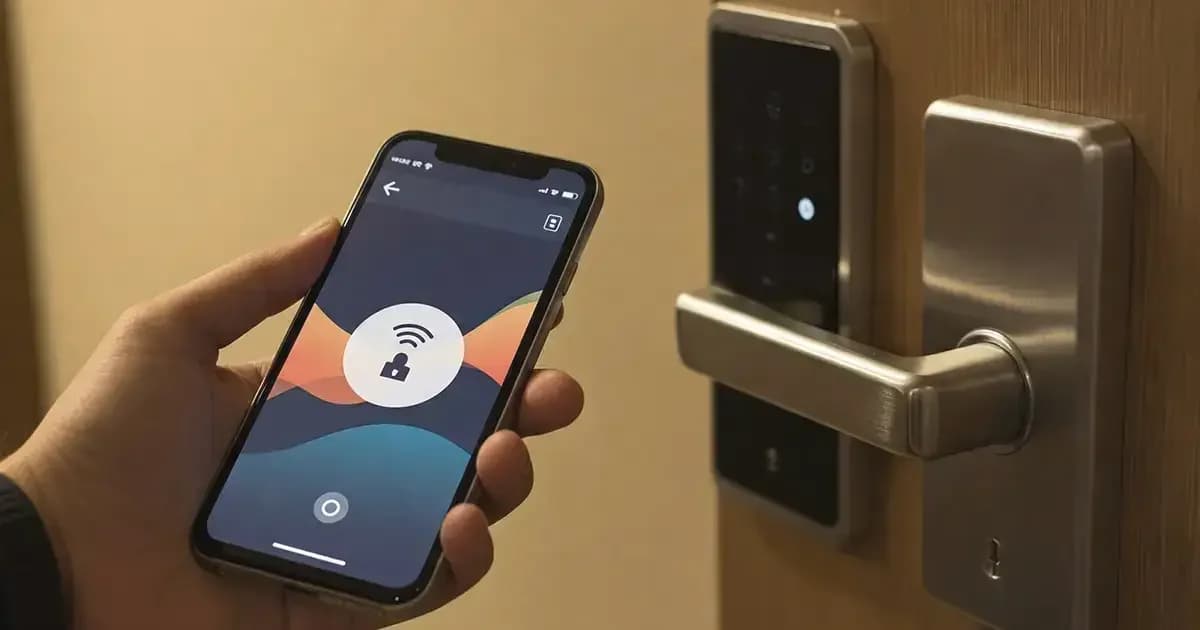
No platform covers every niche. Additions like smart locks, local government reporting, and accounting software and are better handled by specialists. Choose partners that integrate two ways with your core, and certified marketplace partners over one-off custom connections when you can.
6. Plan for multiple properties and teams
Growth changes the questions. Ask whether one login covers every property, whether guest profiles and reporting roll up across them, and whether rates, rules and permissions can be set once and applied to many. Look for portfolio-level reporting, single sign-on and user permissions by role, and shared guest profiles so a repeat guest is recognized at any property.
7. Review the stack regularly
Properties change. A hostel adds a bar, a boutique hotel adds meeting space, an owner acquires a second property. Set a yearly review to retire tools nobody uses, merge tools that overlap and check that every system still shares data with the core.
What an open API adds to your tech stack
An API lets software applications share data and trigger actions in each other. In a hotel stack, it’s what lets your core platform talk to door locks, accounting software, check-in tools, and anything you or a technology partner builds.
But beware that an open API on a spec sheet is not the same as an open API you can build on. Simone Puorto, a hospitality tech futurist and guest on The Turndown, put it bluntly:
There’s a lot of talking about, you know, open system, open API, that’s all great, but we never really think about the quality of this API, of this documentation.
There’s a lot of talking about, you know, open system, open API, that’s all great, but we never really think about the quality of this API, of this documentation.
So when you evaluate any platform, ask whether its own front end runs on the same API you’ll get, how fresh the data is and how well the documentation holds up.
AI is only as good as the stack underneath
Every platform will have AI. The difference is what sits underneath it. AI can only act on what it can see, so a stack of disconnected tools gives it a narrow, delayed view of your hotel.
Cloudbeds is built on one unified data layer spanning operations, distribution, guest experience and revenue marketing. That is why Cloudbeds RMS can see pickup, competitor pricing, and channel mix together, and why Cloudbeds Guest Experience can use an AI agent that answers guest messages from your own property materials and can create housekeeping and maintenance tickets directly.
A quick audit for your current hotel tech stack
Use these questions to find the weak points in your own setup:
- Can you list every system your team logs into and who owns each one
- Do any two tools do the same job
- Does a guest have one profile across reservations, messages, and marketing
- Does a rate change in one place reach every channel immediately
- Can you run occupancy, ADR, and RevPAR reports without a spreadsheet
- Do your integrations sync in both directions, or one
- If you added a second property tomorrow, would you need to rebuild anything
- Can a new front desk hire become productive within a week or two
If you answered “no” to more than a few, your stack is probably costing you time and revenue you can’t see on an invoice.
Build your ideal stack.
See how Cloudbeds can help you design your dream tech stack.
Book a demo
About Lana Cook
Lana Cook is a Content Manager at Cloudbeds where she is able to combine her love of writing and passion for travel. She has spent the last few years writing about all things technology and the ways in which it can be used to help businesses thrive. When she’s not busy writing, you can find her checking out the latest movie or searching for a new TV show to binge.