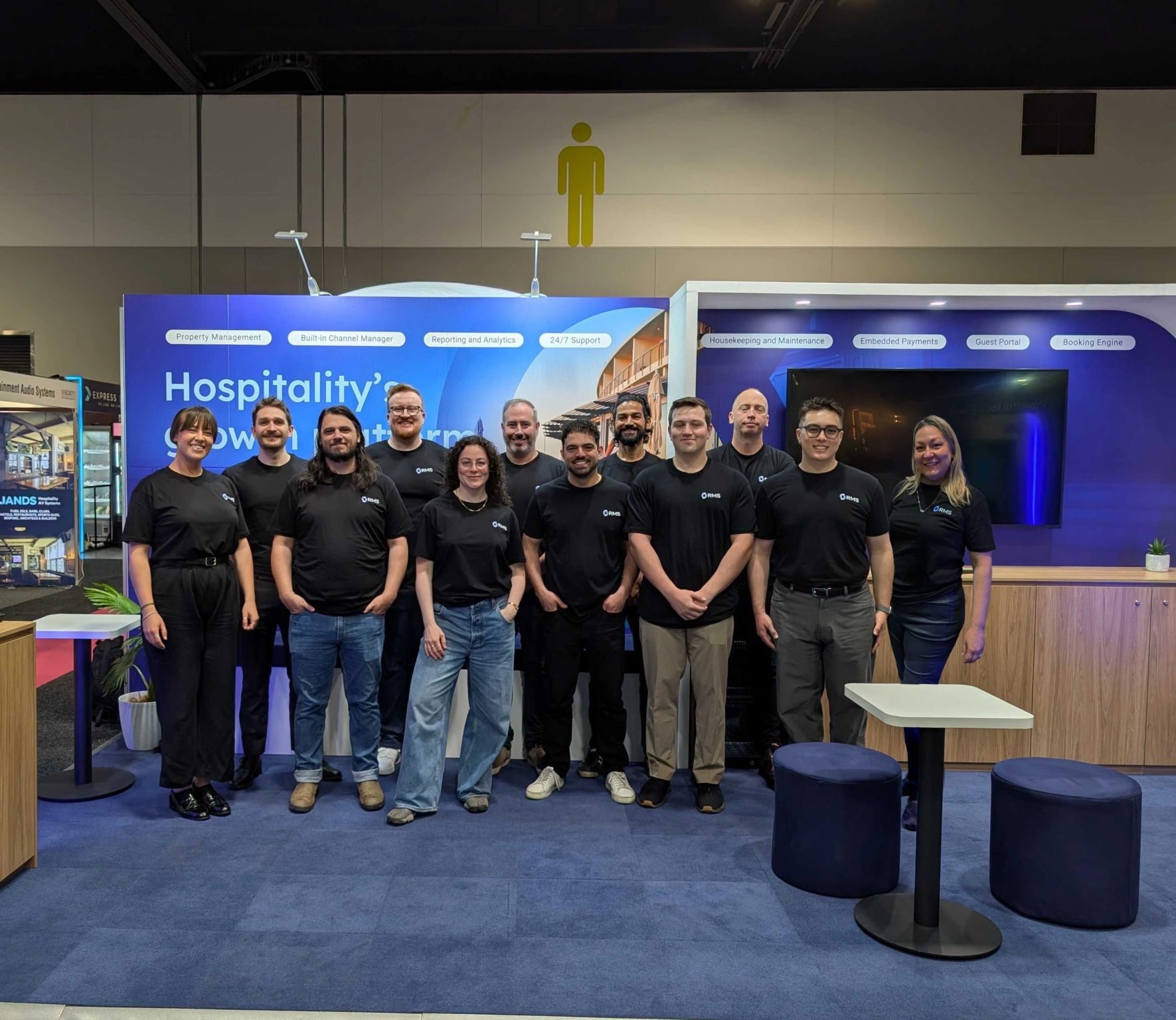
NoVacancy Sydney 2026 had one topic on repeat: AI. Panel after panel promised the future had arrived. But underneath the noise, a handful of genuine, practical signals stood out, and they were the kind that should shape how hoteliers choose their next tools.
Here's what we took away...
1. Keep the human in the loop
The strongest, most consistent message from the conference floor wasn't about what AI can do, it was about what it shouldn't do alone. Hoteliers want AI that drafts, recommends and speeds up decisions, but not everyone is prepared to let go of control and let AI act unsupervised on their behalf. And nor should they. Hoteliers want flexibility, options. Guest messages, revenue calls, room assignments and the rest, but in a way in which the human stays the decision-maker. That’s the principle we call human-in-the-loop. When you're evaluating a provider, look for that principle built into the product. It's a design choice, and it's one RMS makes deliberately.
2. Cut through the AI noise, look for friction removal
Nobody yet knows exactly which AI innovations will stick in hospitality, but what we do know is what to look for: tools that solve a specific, named blocker in your operation, not tools that exist because "AI" is in the pitch. RMS is building to become a system of insight and action, delivering measurable outcomes that AI makes possible, like making day-to-day operations more efficient, employee admin easier, revenue more automated, and the guest experience more intelligent.
3. Connectivity is the real unlock
Adding more tools and building a “stack” doesn't automatically make your business smarter, in fact, it can just as easily add more headaches. The hoteliers getting real value are the ones building an ecosystem: software that's customisable to their specific business, but that all works together without the guesswork of stitching it together themselves.
Not everyone’s an IT guy, and this is exactly why RMS has invested so heavily in our partner network, bringing the likes of RoomPriceGenie, SiteMinder, Sadie AI, Canary Technologies, Duetto, Lighthouse, and more seamlessly into the platform, so our customers can build the ecosystem that's right for them, without losing the connective tissue between systems.
4. Revenue is bigger than ADR
The conversation around revenue management has moved past average daily rate and occupancy. The forward-thinking operators at NoVacancy were talking about total revenue per guest. Turning a room booking into a package: the spa treatment, the late checkout, adding experiences. If your tools only optimise the room rate, you could be leaving revenue on the table.
5. Challenge your AI, especially on revenue
One of the sharpest points raised at the conference: AI can lead you to a decision faster, but faster isn't the same as right. Revenue managers need to keep asking where a recommendation came from and whether it holds up, especially when it comes to forecasting. That’s why it’s important to have a human in the loop - The goal isn't blind trust in a model; it's knowing where your source of truth actually sits. RMS is building an open ecosystem, focusing on tools like MCP’s to help hoteliers connect tools and sources to maintain data integrity without friction.
Look for an advisor, not just a vendor.
If there's one thing NoVacancy made clear, it's that hoteliers don't want another tool to figure out on their own; they want a partner who can tell them what's worth adopting and why. That's the role RMS plays: not just a PMS, but a trusted advisor as the industry works out what AI, connectivity and revenue growth actually look like in practice.
We're building for that future because it's the one our customers will thrive in.

![Hotel Operations Management: A Complete Guide [2026]](https://images.unsplash.com/photo-1662620546993-54addae6f725?crop=entropy&cs=tinysrgb&fit=max&fm=jpg&ixid=M3wxMDgwOTg1fDB8MXxzZWFyY2h8MXx8SG90ZWwlMjBPcGVyYXRpb25zJTIwTWFuYWdlbWVudCUyMENvbXBsZXRlJTIwR3VpZGUlMjAyMDI2fGVufDF8MHx8fDE3OTA4OTgxNTl8MA&ixlib=rb-4.1.0&q=80&w=1080)






.jpg)