Strategy
Brand loyalty fades when a cheaper option is one click away. Discover 7 strategies for 2026 and track progress with NPS, CLV, and sentiment.
Key takeaways
- Brand loyalty is the emotional connection that drives customers to repeatedly choose one brand over alternatives, even when cheaper or more convenient options exist.
- Loyal customers cost less to retain than new ones cost to acquire, spend more over time, and actively recommend the brand to others.
- Building brand loyalty in 2026 requires consistent experiences, personalized engagement, fast customer care, and smart use of AI to anticipate customer needs.
- Key metrics for tracking brand loyalty include net promoter score, customer lifetime value, engagement rate, and sentiment analysis.
What is brand loyalty?
Brand loyalty is the connection between a brand and a customer that drives someone to make repeat purchases from a specific brand. They stick with that brand even when alternative suppliers or products may be cheaper or more easily accessible.
The lineup outside the Apple Store to get the latest iPhone the first morning it’s available? That’s brand loyalty in action.
What separates loyalty from habit is the emotional connection behind the purchase. A habitual buyer picks your product because it’s there. A loyal customer picks it because it says something about who they are, and because they trust you to deliver. That trust is built over time through familiarity with your brand (also known as brand awareness), satisfying early experiences, and consistency after the sale.
[contentuprade]
Brand loyalty vs. customer loyalty
Brand loyalty and customer loyalty sound interchangeable, but they come from different places. Brand loyalty is emotional and identity-driven. Customer loyalty is usually transactional, powered by price, points, or convenience. Both are worth having, but only one survives a competitor’s discount.
Dimension
Brand loyalty
Customer loyalty
Main driver
Emotional connection, identity, shared values
Price, rewards, convenience
Motivation
“This brand is for me”
“This deal works for me”
Price sensitivity
Low. Will pay more
High. Shops on value
Switching behavior
Rarely switches, even when alternatives are cheaper
Switches when a better offer appears
Typical example
Lining up for a new product launch
Using a points card at whichever store has it
The brand loyalty pyramid
The brand loyalty pyramid was developed in the 1990s by David Aaker, hailed as “the father of modern branding.”
Just as the sales funnel shows how potential buyers move through the conversion process, the brand loyalty pyramid shows how customers move through the process to becoming brand-loyal.
The pyramid has five stages:
- Switchers: People who have bought your product but are just as likely to buy a competitor’s product next time.
- Habitual buyers: People who buy your products out of habit but could easily be swayed to another product if it’s cheaper or more convenient.
- Satisfied buyers with switching costs: People who are satisfied with your brand but primarily stick with your products because there are barriers to switching (such as learning how to use a new tool or platform, or having to buy new cords or accessories).
- Buyers who like the brand: At this point the connection becomes emotional, and the buyer becomes passionate about your brand for reasons they may not be able to articulate clearly.
- Committed buyers: These are the people lining up to buy a new product the moment it launches. They love your brand and aren’t afraid to show it.
Why is brand loyalty important?
Brand loyalty matters because it lowers what you spend to grow and raises what each customer is worth. It’s obvious that you want people to choose your brand over your competitors. Brand loyalty ensures they do so again and again. But it provides more value to your brand than the simple revenue from customer retention and each purchase. Here’s why.
How loyal customers reduce acquisition costs and increase lifetime value
Acquiring a new customer is harder (and more expensive) than selling to a repeat customer.
Part of that is targeting efficiency. The more interaction you have with a customer or prospect, the better you can personalize your offers. Plus, you can target specific conversion goals (upsell? refill?) rather than using CPM awareness marketing campaigns.
Loyalty also cushions you when budgets tighten. When consumers cut back, the brands they already trust are the ones they keep buying, which makes retained revenue more predictable than new-customer revenue during uncertain periods.
Brand loyalty increases your lifetime customer value. That, in turn, increases the amount that you can afford to spend on customer acquisition and increases the ROI of your social marketing strategy.
Why loyal customers drive word of mouth and advocacy
Loyal customers do more than buy your products themselves. They share their love for your product with others, which turns retention into a growth channel. That value shows up in written customer feedback and in everyday word of mouth.
Word of mouth is the most common source of brand discovery among internet users in the United States. And shared social content (the digital version of word of mouth) is the most powerful way to turn brand awareness into consideration.
What drives brand loyalty?
Loyalty isn’t one big gesture. It’s the accumulation of small, repeated signals that a brand is reliable and worth caring about. Researchers Latif et al. describe loyalty as a progression from familiarity to satisfaction to trust to advocacy, which maps closely to the drivers marketers can actually influence:
- Familiarity: People can’t be loyal to a brand they don’t recognize. Awareness is the entry point.
- Satisfaction: Early positive experiences with your product set the baseline expectation.
- Consistent experiences: Delivering the same quality and tone every time is what converts satisfaction into trust.
- Emotional connection: Loyalty sticks when buying from you feels like an expression of identity, not just a transaction.
- Shared values: Customers stay with brands whose positions and behavior match their own.
- Community: When customers connect with each other around your brand, loyalty becomes social as well as personal.
- Advocacy: Once someone recommends you publicly, their loyalty gets reinforced by their own endorsement.
In short, loyalty grows when a brand is recognizable, dependable, and worth associating with.
How to build brand loyalty: 7 strategies for 2026
Building brand loyalty comes down to knowing your customers well and treating them consistently well. As you saw in the brand loyalty pyramid, customers become truly passionate about a brand when they feel like they have a relationship with it. Relationship-building is where digital marketing truly shines.
Here are the seven brand loyalty strategies we’ll cover:
- Understand what your customers actually want
- Use user-generated content to build emotional connection
- Personalize experiences across every touchpoint
- Reward your most loyal customers
- Deliver fast, human-centered customer care
- Stay authentic and avoid the behaviors that erode trust
- Use AI to anticipate needs, not just react to them
1. Understand what your customers actually want
To build authentic brand relationships that form the basis of brand loyalty, you need to understand who your customers are and what they want.
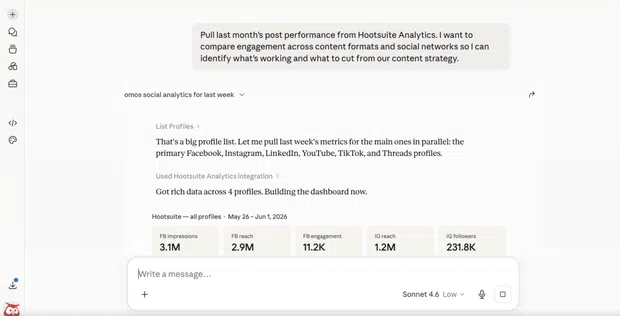
A social analytics tool like Hootsuite Analytics is critically important here in helping you understand your customers beyond their basic demographic details. You’ll get a clear understanding of how your audience engages with your content across platforms, so you can create more of the content that builds loyalty.
Pair that with Lumen, the insights and listening app inside Hootsuite Social OS, to see what customers are saying when they aren’t talking to you directly. Those unprompted conversations often reveal preferences and frustrations that performance data alone won’t surface.
Turn customer conversations into your next breakthrough product
Request a demo to see how Hootsuite can help your product team discover emerging trends, validate ideas with real customer insights, and bring better products to market faster.
2. Use user-generated content to build emotional connection
Research published in the Archives of Humanities & Social Sciences Research found that user-generated content is “a significant factor influencing brand loyalty on social media.”
When you share content created by your fans and followers, you make it easier for those followers to feel an emotional connection with your brand. Sharing content from followers also helps to showcase your brand values through a more personal lens. And connecting with those brand values is critical to forming the committed buyer relationships at the top of the brand loyalty pyramid.
3. Personalize experiences across every touchpoint
That same academic research found that personalization on social media is a “critical strategy for enhancing brand loyalty.” The payoff is measurable: a Gartner survey found personalized experiences made customers 1.8x more likely to pay a premium. Some of the methods suggested are targeted advertising and customized content.
Target audiences within social media, or segmented lists for your other digital marketing efforts, allow you to create the most relevant content for different customer and prospect groups. A tool like Hootsuite Social Advertising allows you to use advanced targeting while managing ad spend and performance across platforms alongside your organic content, all in one place.
AI-powered content tools are also valuable here, since they can help you create multiple versions of a post for different audiences. Wisdom, the AI layer in Hootsuite Social OS, works alongside Hootsuite’s AI writing capabilities to speed that work up. Just remember that relationship-building requires a human touch, so review all AI-assisted content to make sure it aligns with your brand voice.
4. Reward your most loyal customers
Your job is not over when fans become brand-loyal customers. But you do need to shift the way you market to these brand loyalists.
They’re already convinced about the value of your product and services, and they’ve personally connected with your brand. Rather than highlighting the value of your features and benefits, you need to focus on the relationship. That means developing rewards programs that recognize their loyalty.
This could be an incentive as simple as a customer loyalty program, such as Starbucks Stars or airline miles, and these programs are evolving fast, with Gartner predicting 1 in 5 will offer fully personalized perks by 2030. But digital marketing also creates the opportunity to connect one-on-one with your greatest advocates.
Your greatest fans are already talking about you on social media. Lumen can help you find them so you can connect and look for ways to work together. In just a few clicks, you can identify top brand advocates based on their engagement rate, reach, and social network.
Reach out to these loyal customers to find ways to work together, such as affiliate commissions or an influencer marketing partnership with existing high-profile brand ambassadors.
5. Deliver fast, human-centered customer care
Customer relationships are the foundation of brand loyalty. When a relationship sours, brand loyalty can go out the window, and most of those make-or-break moments now happen in a DM or a comment thread.
Your social team members are the keepers of those relationships. Empower them to actively engage with your social followers, while maintaining that critical brand voice, by creating clear social media guidelines and a social media style guide.
Be sure to allow time for engagement and social conversation when planning your team’s workload: 53% of people say that responding to direct questions and comments in a timely way is one of the most appealing aspects of a brand’s social media presence. Nest, the engagement app in Hootsuite Social OS, helps your team stay on top of incoming messages in one inbox so no one ever feels ignored.
Digital channels are also a primary contact method for customer service, so uniting social media and customer support is an important way to keep customers happy. Hootsuite’s integration with Salesforce provides both teams the information and access they need to do the work they do best and provide your customers with the best (and fastest) care.
6. Stay authentic and avoid the behaviors that erode trust
Building brand loyalty through digital marketing requires you to put your audience first. Yes, you’re a brand, and you’ll want to post some promotional content. But that’s not the stuff that builds relationships and loyalty. In fact, posting too much promotional content is one of the top ways to lose followers on social media.
However, an even greater problem is posting inauthentic content. Digital audiences are looking to connect with brands in a way that feels personal. They can’t develop feelings of loyalty if they feel like they’re being taken for granted.
Two other trust breakers deserve the same attention. Mishandling customer data carries legal and regulatory consequences, not just reputational ones. Research shows consumers feel they lack control over how companies use their data, so treat privacy commitments as non-negotiable. And taking a public stance you don’t follow through on internally reads as values inconsistency, which erodes loyalty faster than silence would.
Here are the rest of the brand sins to avoid when trying to build brand loyalty on social media:
7. Use AI to anticipate needs, not just react to them
The loyalty advantage in 2026 goes to teams that spot a shift before it becomes a complaint thread. AI-powered insights make that possible by surfacing patterns across millions of conversations that no team could read manually.
In practice, that looks like three things.
- Lumen flags sentiment changes and emerging topics around your brand as they build, so you can respond while it still counts as care rather than damage control.
- Wisdom turns those signals into context your team can act on inside governed workflows, keeping responses on-brand at scale.
- And behavioral and sentiment data lets you tailor offers and content to what a customer is likely to want next, instead of what they bought last.
Keep a human in the loop. AI is good at finding the signal. Your team is what makes the response feel like a relationship.
What weakens brand loyalty?
Loyalty erodes quietly, usually through small failures that stack up rather than one dramatic misstep. These are the most common culprits:
- Inconsistent experiences: When quality, tone, or service varies between channels or visits, customers stop assuming you’ll get it right.
- Slow or impersonal customer service: An unanswered message undoes months of good marketing.
- Mishandled customer data: A breach or an unclear data practice can trigger regulatory penalties and permanently damage trust.
- Values misalignment: Saying one thing publicly and doing another internally gives loyal customers a reason to leave.
- Ignoring feedback: Customers who repeatedly ask for something and get silence will eventually ask someone else.
- Over-reliance on discounts: Constant promotions train buyers to shop on price, which builds transactional habits instead of loyalty.
The common thread is predictability. Customers stay loyal to brands they can count on, and every item above makes you harder to count on.
Does brand loyalty differ by generation?
Brand loyalty does differ by generation, though not always in the way the headlines suggest. Younger consumers aren’t allergic to loyalty, they just earn it and withdraw it faster, and they weigh different factors when deciding who deserves it.
- Gen Z: Values authenticity, social responsibility, and peer recommendations. They’ll switch quickly if a brand feels performative, and creator and community proof carries more weight than brand advertising.
- Millennials: Respond to experience and personalization. Relevant recommendations, well-run loyalty programs, and brands that remember them tend to hold their attention.
- Gen X and Boomers: Prioritize consistency, quality, and reliable service. They’re slower to switch, but harder to win back once an experience disappoints.
Practically, that means one loyalty playbook won’t work across your whole audience. Lead with community and transparency for younger segments, and with dependability and service quality for older ones.
How to measure brand loyalty
There’s no single metric that measures brand loyalty. By combining a few indicators, though, you can get a solid sense of how much loyalty you’ve earned.
Metric
What it measures
How to track it
Engagement rate
How much of your audience interacts with your content
Social analytics, as a percentage of reach or audience size
Volume and sentiment of mentions
How often people talk about you, and how they feel
Social listening with AI-powered sentiment analysis
Social share of voice
Your share of category conversation versus competitors
Listening and competitor benchmarking
Net promoter score
Willingness to recommend your brand
One-question survey, post-purchase or post-support
Customer lifetime value
Total revenue from a customer over the relationship
CRM and purchase data
Engagement rate
This measures how much of your audience engages with your content in some way (likes, shares, comments) as a percentage of your reach or audience size.
A high engagement rate indicates that your audience is interacting with your brand, a key step toward the connection that leads to true brand passion.
Volume and sentiment of brand mentions
People who love your brand say great things about you online.
Tracking volume of mentions tells you how much people talk about you. Adding sentiment tracking allows you to understand whether those mentions are positive or negative. In other words, it helps you understand how people feel. The volume and proportion of positive mentions are both important tracking points for brand loyalty.
Lumen uses AI-powered sentiment analysis to analyze brand mentions across .
Social share of voice
Volume and sentiment of mentions track your own brand conversations over time. Social share of voice tracks your share of the overall social conversation at any point in time compared to your competitors.
This allows you to understand your position in the industry and get a sense of how many people are loyal to your brand versus the alternatives.
Net promoter score (NPS)
Net promoter score is a numeric score based on a simple one-question survey. The question?
How likely are you to recommend this brand (or product or service) to a friend?
You can divide respondents into three categories:
- Promoters (score 9-10): These equate to committed buyers and brand-likers on the brand loyalty pyramid.
- Passives (score 7-8): These could be satisfied or habitual buyers. They’re satisfied with your brand but are not truly loyal yet.
- Detractors (score 0 to 6): These people are not even on the brand loyalty pyramid. They’re unhappy about some element of their brand experience.
To calculate NPS, subtract the percentage of detractors from the percentage of promoters. Passives are excluded from the calculation.
Customer lifetime value
Customer lifetime value measures the total amount that someone will spend with you over their lifetime as a customer. It’s a metric that heavily impacts your bottom line.
A customer lifetime value higher than the initial purchase price of your product or service indicates repeat purchasing. A customer lifetime value significantly higher than the initial purchase price indicates a longer period of customer loyalty.
3 brand loyalty examples (and what you can learn from them)
These three brand loyalty examples show what the strategies above look like when real customers are involved.
1. Warby Parker saves the day
What happened
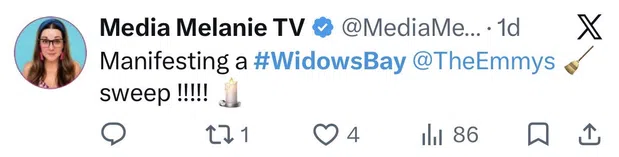
A Warby Parker customer received better-than-expected customer service in a challenging situation and shared the experience on X.
Key takeaways:
- Every customer interaction is an opportunity to build brand loyalty, no matter how the customer feels about the brand at the outset.
- Mistakes and problems can actually enhance brand loyalty if handled correctly. This story started with a broken pair of Warby Parker glasses and ended with a brand shoutout and a happy customer.
- Offline interactions lead directly to online word of mouth.
2. Starbucks makes a seasonal fan favorite item permanent
What happened
When Starbucks introduced its baked apple croissant as a seasonal fall item, it quickly became a fan favorite and reportedly sold out quickly at many locations.
When the croissant came back as a seasonal item in fall 2024, customers bombarded the Starbucks social media channels with requests for it to become permanent. Starbucks listened. At the time of writing, their announcement of the change had gathered nearly 25,000 likes on Instagram in just two days, along with a flood of comments from happy and loyal customers ready to become repeat buyers of this item.
Key takeaways:
- Digital channels can be a primary source of customer research, even for bricks-and-mortar businesses. It’s one of the few places where customers can directly reach out and ask for what they want.
- On that note: Give your customers what they want. Scarcity can be a way of driving demand, of course. But not at the cost of customer satisfaction. Consistent requests for a particular product, service, or feature provide an opportunity to drive brand loyalty by responding directly to your fans.
3. GoPro rewards their loyal customer base
What happened
GoPro offers a number of rewards challenges, where customers can upload photos or videos shot on GoPro products for the chance to be featured on GoPro’s social channels or win cash or GoPro prizes.
Here, GoPro got the chance to share a beautiful UGC image that highlights what the product can do. The customer and photographer was happy, and the photo got more than 15,000 likes within the first day of posting.
Key takeaways:
- Rewarding loyal customers reinforces their commitment to the brand. Doing so publicly shows other fans that you support the community that supports you.
- UGC is an inexpensive way to fill your social feed while driving brand loyalty by creating community engagement.
FAQ: Brand loyalty
What is brand loyalty?
Brand loyalty is the emotional connection between a customer and a brand that drives repeat purchases, even when alternatives are cheaper or more convenient. It shows up as repeat buying, willingness to pay more, and active recommendation to others.
What is the difference between brand loyalty and customer loyalty?
The difference between brand loyalty and customer loyalty is what motivates the repeat purchase. Brand loyalty is driven by emotional connection and identity, while customer loyalty is driven by transactional factors like price, convenience, and rewards. Brand-loyal customers stay through a price increase; customer-loyal buyers often don’t.
What are the four C’s of customer loyalty?
The four C’s of customer loyalty are consistency, communication, community, and care. Together they represent the foundational elements that keep customers returning: dependable experiences, clear two-way conversation, a sense of belonging, and service that solves problems quickly.
What are the 5 pillars of brand loyalty?
The five pillars of brand loyalty are brand awareness, product quality, customer experience, emotional connection, and trust. Each builds on the last, which is why skipping one (like running great ads with poor post-purchase support) tends to stall loyalty before it forms.
Does brand loyalty still exist?
Yes, brand loyalty still exists, but it looks different than it did a decade ago. Consumers increasingly value authenticity, shared values, and personalized experiences over habit or convenience alone, which means loyalty has to be re-earned more often than it used to be.


.png)