Picture a race car flying down a country highway, only to find itself stuck behind a tractor. The car’s engine is spectacular. But it can’t go any faster than the tractor.
That’s what many companies encounter, often without realizing it, when they build with AI. They drop an agent into one step of a workflow, and everything before and after it still moves at the speed of the organization around it. The agent finishes in seconds. Then the work waits for a review, a handoff, or a change request.
This is why you hear that 95% of companies aren’t getting value from AI. The value gets trapped at every human-scale step the agent has to wait on.
Think of reasoning across every client health conversation that’s ever happened, searching 27 years of Salesforce data, and getting an answer. That’s work no human can do, but if you make one step agentic, the step after it has to be agentic, too. If it isn’t, you’re stuck at human scale, behind the tractor, and that’s where ROI stalls out.
What happens when everyone’s a builder
The fastest way to become an agentic organization is to create a secure and governed open environment where everyone has the opportunity to build. At Salesforce, 74% of employees have used or interacted with an agentic coding tool like Claude Code or Codex at least once, and usage among nontechnical employees is up to 66%, more than triple the usage in Q1. Most of them can’t write code, but they’re willing to experiment with telling a machine what they need.
But if the right methodology and infrastructure aren’t in place, everyone building everything everywhere can be an insecure nightmare. An agent without the right guardrails can be wrong (and confidently so), and it will act on that error at machine speed. IT also still needs to own trust, integrity, and compliance. IT still needs to own the systems of record and the data semantics, such as what a customer is or what revenue means. You can expose all of that through APIs and MCPs, because we’re no longer building only for people. We’re principally building for agents that people will use outside of IT control/build/own.
That’s why we’ve developed something we call Rapid Innovation Squads, or “RIS” for short.
How RIS works
In early 2026, my team and I realized that agentic transformation goes far beyond the tooling. I found myself asking: What if a product person didn’t have to talk to a business person, who then talks to engineers? What if they could all be one small team, building the solution together, with no program and no baked product requirements document? How much faster could humans and agents go together, with the right structure, guardrails, and tools, while keeping things secure? What would it look like to rebuild our teams, processes, and systems for an agentic scale?
The RIS recipe is simple. It starts with an opinionated and empowered business stakeholder, someone who owns a problem and has strong views on how to solve it. Then you bring in agentic builders. That might be one, two, or five people, but the team is as small as possible. You also shrink the problem to its smallest useful form.
The daily rhythm looks like this:
- Join morning stand-up. The squad joins a stand-up. The meeting is recorded and transcribed.
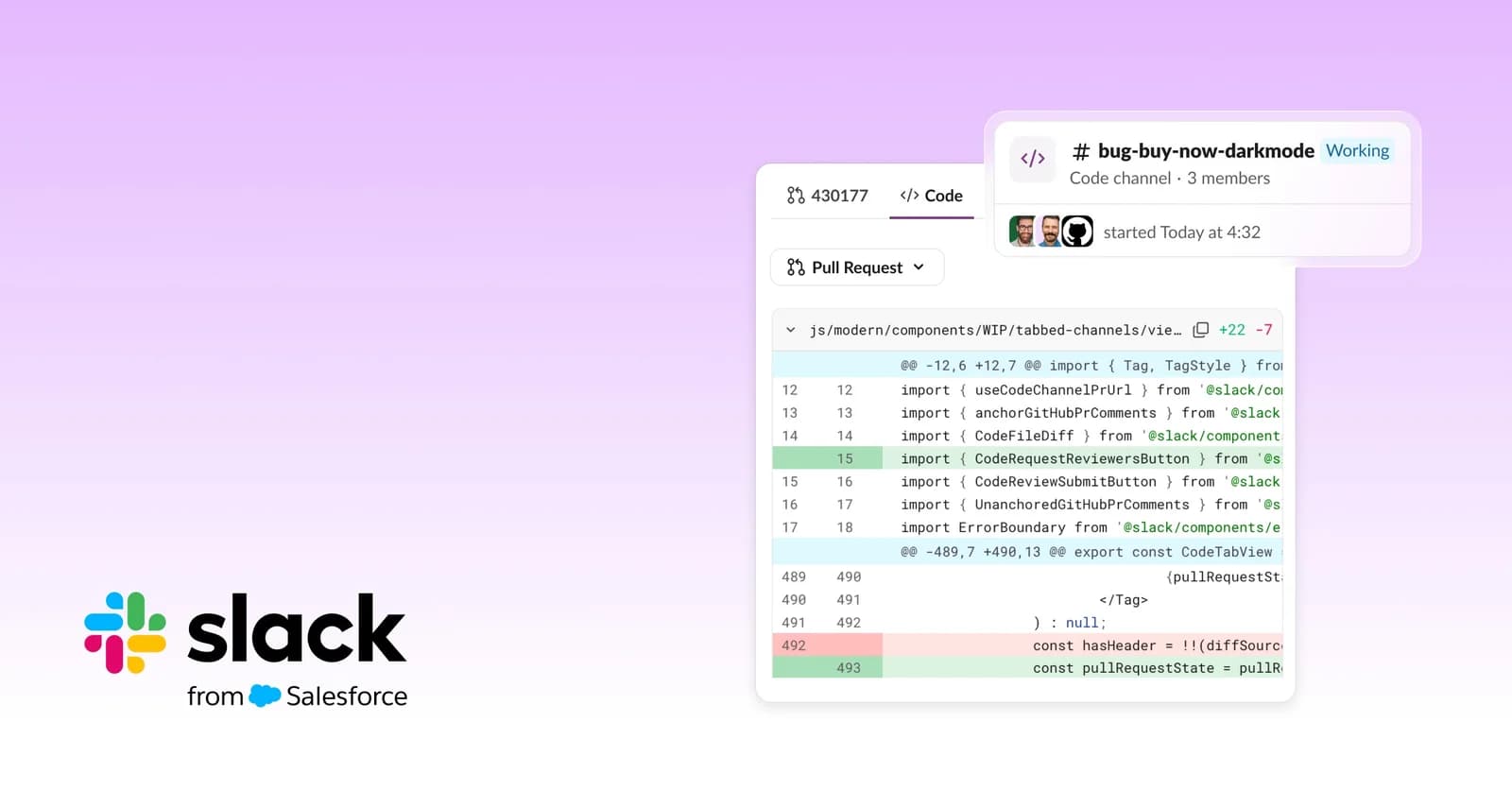
- Be public by default. The transcript goes into a public Slack channel, so the rest of the organization and all the agents can learn from what one squad is doing. Iteration happens there too. People react, suggest changes, and build on each other’s work in the thread. (If a project is truly sensitive, the channel can be private.)
- Hand it to the agents. The transcript is fed into an agentic coding tool. The team walks away, and the agents get to work on what was discussed.
- Repeat after lunch. Everyone on the team is a builder, and everyone shows up with ideas and prototypes.
- Repeat at the end of the day. The agents keep building, testing, and iterating overnight so the team starts each morning with working progress to review rather than a backlog.
The payoff is speed. Partnering with an opinionated stakeholder gets you decisions about 10 times faster. Pair that with agentic coding tools, and you get outcomes about 30 times faster. Think about speed as a proxy for value delivery if you are doing it right.
RIS at Salesforce
At Salesforce, SMB sellers were juggling multiple tools and losing time to context switching. Buying signals — website visits, usage spikes, renewal windows, and more — were scattered across systems, and the team wanted a persistent surface, inside Slack, that consolidated all of those signals into a clear daily work list. Instead of handing a 12-month project plan to engineering, however, we took the problem to a three-person RIS squad that worked in a 24-hour loop of plan, build, swarm, review, and ship and delivered the Sales Signals Slack app in days. A traditional project plan would have stretched the project across months. The app has already generated 28,000 opportunities.
Other RIS projects follow the same pattern: small teams, short timelines. For example, our solution engineers used to spend two to three hours a week logging their activity, and the process was prone to mistakes. In less than four weeks, a three-person squad (one business leader and two agentic builders) shipped a new Slack Skill that scans an engineer’s calendar, Slack data, and Salesforce systems to essentially pre-fill a timesheet for confirmation and approval by the engineer. The sprint got the tool built 70%–80% faster than if they had used a traditional Agile process, adoption is at 80%, and 23,000 weekly activities are now logged automatically.
Our legal department has seen similar success. The teams routed and triaged about 39,000 cases a year, and it used to take about 20 minutes to route each one to the right attorney. Worse, sometimes those routings were duplicative, causing attorneys to waste time working on a case someone else was already addressing. A small squad combined deterministic rules with Agentforce to route cases almost instantly, saving $350,000 a year, a 70x return that paid for itself within a month. The agents also de-duplicate cases in flight, and they remember who has worked on what across the full history to refine which attorney a case goes to. The result is routing that’s almost three times better at picking the right lawyer on the first try.
What to do next
In December, we’re taking this model companywide. RISFest is an open call to every Salesforce function to submit a real business problem and have a Rapid Innovation Squad build the solution in days, not quarters. It’s how we prove the model at scale, across every team in the enterprise. This is the anti-hackathon: We’re straight up shipping solutions.
If you take one thing from our experience so far, take this. Don’t stop at automating a task. Redesign the whole workflow so every step runs at agentic scale. To do that:
- Start with a problem and an opinionated stakeholder who owns it.
- Keep the team small and the problem smaller.
- Give builders, technical or not, safe building blocks, and keep IT in charge of trust, compliance, and the data foundation.
- Work in public so every squad teaches the next one.
The race car is ready. Now clear the road.
Go deeper:
- Scale Your Agentic Enterprise: A Step By Step Guide (RIS chapter and worksheet)
- Salesforce on Salesforce: More stories about how we use our own technology to run our business.
- Watch the Dreamforce keynote
Joe Inzerillo President, Enterprise and AI Technology