Ruggable’s biggest product problems were out in public, posted on Reddit. Home décor communities there had a lot to say about the brand’s two-piece rug system and its wash process, and the brand wasn’t part of the conversation.
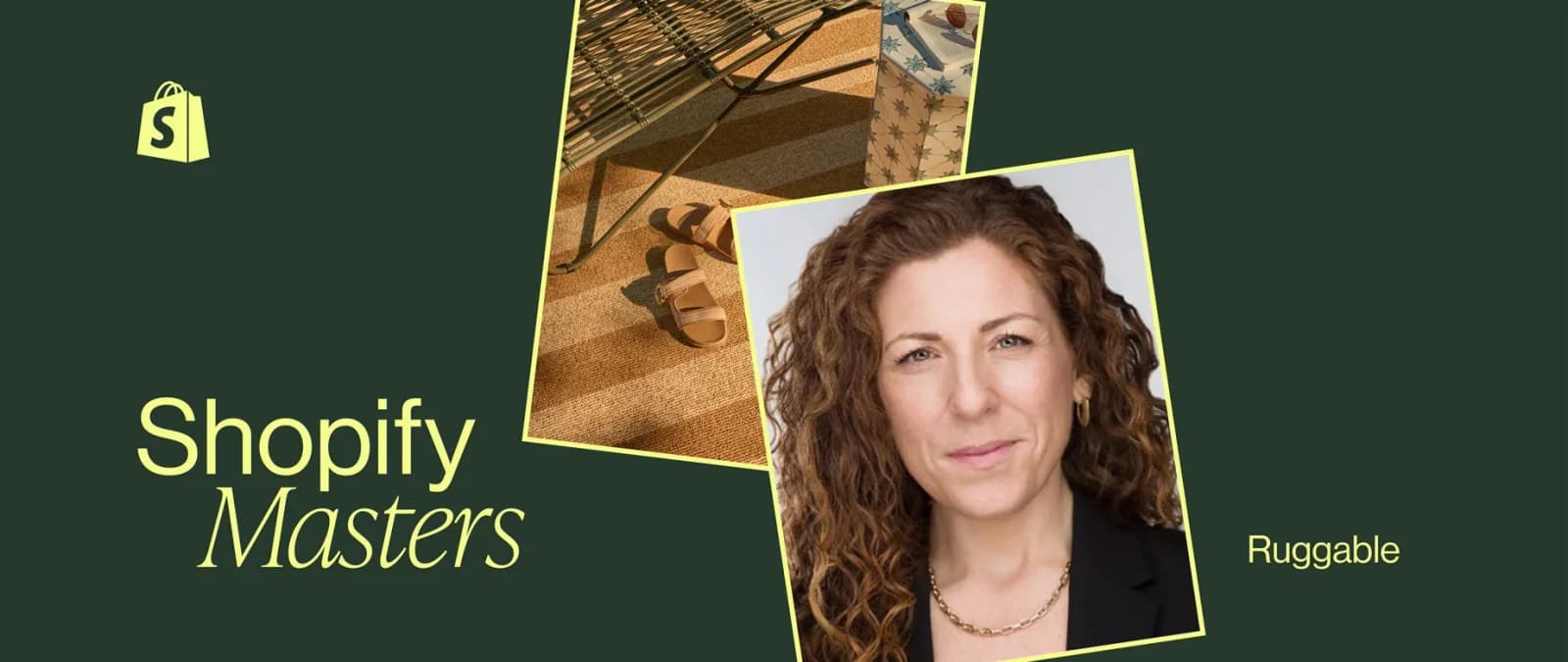
Sarah Kleinman is Ruggable’s chief commercial officer. She has worked at The North Face, Gap, and Vans, and she specializes in turnarounds, the stretch when a brand’s growth slows or stalls. At Ruggable, a washable rug brand that has sold 14 million rugs, she and the leadership team used those complaints to plan new products. The one-piece rug that came out of that work made up more than 70% of revenue within eight weeks.
Sarah explains where to find honest feedback, how to decide which complaints to act on, and how to win back customers who already left. She also covers why the same work now affects how brands show up in AI shopping results.
On what was actually stalling Ruggable’s growth:
First, it wasn’t just me. I came to Ruggable to work with our incredible CEO, Nicole Otto, and our first job was understanding what was causing the stagnation.
We figured out right away that the business was over-indexed in two core areas. It had incredible operational rigor. Every product is made to order, which is an amazing business model that creates a lot of retail flexibility. And it had really used media to grow. I don’t know anybody who hasn’t seen a million Ruggable ads.
But the spaces around those two disciplines were really underdeveloped. So we invested in product innovation, which hadn’t happened in a long time. We tripled our design team, because design is why you buy a rug. We built some of the first-ever commercial functions, with experts in running websites and wholesale. And we built out all the parts of marketing that aren’t media: telling the story of the products and the story of the brand.
On why leaders belong in the Reddit threads:
Any retail leader should go to the universe of the customers to understand what’s happening. When we looked, we found really valid, really important feedback. Customers loved the brand, but there was dissatisfaction, and it was our job to meet their expectations.
Home décor has a big community on Reddit, and we had a very vocal audience there. Reddit was our gold mine, honestly. On top of not taking the feedback, the brand also wasn’t present and engaging with those audiences. Nobody was saying, “Hey, we hear your concerns. We want to address them.”
Any leader who isn’t spending huge amounts of time in the Reddits of the world, [and] in the comments across all of the social universe, is really missing the forest for the trees.
On her filter for which complaints to act on:
I’m a real data-driven leader, so you have to look at the input that has material impact. Usually that’s the comments that make up the lion’s share of your engagement. You also have to make sure you’re weighing comments from your core audience.
The brand had historically been chasing all kinds of decorators. Once we got crystal-clear on who we were serving, it was very clear which feedback we had to listen to.
Our core customer is the helm of the home, the person creating that space and creating the beauty. I fall squarely in that group. We aren’t chasing high-end luxury design. We’re serving real-life middle-class families, real people living beautiful, busy, messy lives.
On finding fixes already sitting in the pipeline:
We took the core concerns, frustration with the two-piece system that was the backbone of the historical brand and with some parts of the wash process, and we launched new products to address them.
Luckily, there was already some really great product innovation work in the pipeline. We went to the product innovation teams, saw what was coming, and said, "Oh my goodness, this is a treasure trove." Candidly, a lot of what we did was put resources and energy into speeding up great work that was already there.
That gave us our all-in-one innovation. We also just launched Performance Weave, an amazing new material that replaces jute. It’s super soft, no shedding. Now we have fun, exciting new product coming out every quarter, and product innovation is the backbone of our retail calendar.
On changing the product Ruggable was known for:
Ruggable had always been known for its two-piece system containing a rug cover and a nonslip rug pad. I always joked that if you wanted to get a divorce, you could set up a Ruggable rug, because lining up the two pieces was insane. I would never do that with my husband. Now we have a one-piece rug that’s so much softer and more flexible. You just roll it out in your living room, and you can stay married and redecorate at the same time.
Humans do not like change. I’ll be honest, I’ve historically been the change agent. For the last 15 or 20 years, digital leaders have had to be the change agents in every organization, always pushing something kind of scary. And candidly, I don’t really like change either, so I get it.
We of course respect and love our historical customers who love the two-piece. But the one-piece material, which we built around the voice of our customer, made up more than 70% of our revenue in less than eight weeks. It turned on a dime. A shift that big, that fast, at scale, showed how hungry the market was for it.
On replying to complaints from two years ago:
I really have to credit our incredible CMO, Lauren Sherman, for this. She launched an amazing offense we called Project Second Chance. We went out tirelessly across the internet and responded to customers: “Hey, I know you left this comment two years ago. We have addressed your concerns. Please come back. We’d love to show you our new innovation.”
That took our marketing team and our customer service team working together. Customer service is one of those underrated functions at every organization.
Honestly, we’re still in the middle of it. When you’re reintroducing yourself to a big market, it takes time. We’re still winning people back to try us again and showing them that we’re evolving and will keep evolving with them.
On the message that brings customers back:
We’re always learning here. We’ll probably be working on creative forever. But inside the organization and outside it, being transparent is what works: “Hey, we heard you. You asked, and we listened.” That’s what our marketing teams found resonated most.
Then you do the hard work of one-to-one conversations with customers, getting in the feeds and responding to people one by one. I always say that with every transaction, you either have a detractor or an advocate, and it’s up to you how that goes.
That applies to the whole life cycle. You live with a rug, then you wash it, then you keep living with it, so it takes a long time to know how it’s going. We’re accountable to that every day, and we try to get better at it all the time.
On why brands can’t game AI shopping results:
The irony is that everything we just talked about is how you show up in agentic shopping. What determines those results has moved from being brand owned to really being democratic, right? It comes from the broader universe of consumer feedback. Look at the Reddits of the world and the TikToks of the world, and you can see where the sentiment really shines and sings.
It’s much harder to game the system, so it forces brands to make great products and create great experiences. Honestly, I think that’s really wonderful. It makes brands super accountable.
Having one-to-one conversations with customers in your brand’s voice is one of the most powerful tools you have. The question is how you find the resources. That’s where you can use AI internally for the easy, low-lift transactions, so your energy goes to the high-value interactions that really matter.
To hear why moving season reshaped Ruggable’s retail calendar, what actually gets rug shoppers to convert, and how the brand tailors merchandising for shoppers in Maine versus Tampa, catch Sarah’s full conversation on Shopify Masters.