What to Do Before EasyPost’s Holiday Code Freeze
Every holiday season, EasyPost limits changes to its platform to protect your peak. The weeks when your volume is highest are the weeks you can least afford a surprise from a new release, so we keep the platform stable to give you a smooth holiday season.
A code chill starts on November 2nd, when only low-risk changes go out. The full code freeze runs from November 23rd through December 14th, and EasyPost eases out of code freeze with a chill that continues until January 4th.
So what does that mean for your team?
It means the EasyPost setup that you have on November 2nd is the one you’ll ship with through the holidays. Any account changes you need from EasyPost should be requested before then by making them in your dashboard or reaching out to your CS representative.
You should know, however, that carriers don’t completely freeze. Outages, capacity caps, and surcharges can still happen in December, and the setup you have in place on November 2 decides how much room you have to respond to them. The setup you lock in on November 2nd also decides how much margin you keep when a package is lost, a claim goes unfiled, or a lane is priced higher than it needs to be.
What steps do I need to take?
- Finish every carrier connection before November 2nd
Finish every carrier connection before November 2nd
Connect and test every carrier account and service you’ll use through January before November 2nd, including services you only switch on for the holidays (like weekend delivery or faster tiers for late-placed orders). That way, any connection problems will be fixed before peak volume arrives.
Check credentials while you’re connecting accounts: an expiring API token or an unfinished re-authentication step tends to show up as a wall of failed label requests on a Monday morning in December. If you connect your own FedEx account, finish its multi-factor authentication (MFA) step now. FedEx’s deadline to do so is October 30th, and accounts that miss it can lose access to rates and label purchases.
Then set up a backup carrier for your highest-volume lanes and test it with real labels. Carrier outages and capacity caps happen every holiday season. When one hits, the EasyPost status page will tell you which carrier is out, and your tested backup carrier is what will let you keep shipping while the carrier recovers.
Your backup doesn’t have to be another national carrier. Next-generation delivery partners like GOFO and Veho now cover large parts of the country (GOFO about 75% of the U.S., Veho about 52%), and they aren’t carrying everyone else’s holiday volume. EasyPost customers can activate them in Wallet without a separate contract or integration. Test one lane and keep the rest of your volume where it is. Lanes outside a partner’s footprint route back to the nationals, so test service, not just rate.
- Test your integration at peak volume
Test your integration at peak volume
Test your integration at projected December volume now to ensure your setup works. After November 2nd, very little changes on the EasyPost side, so how your integration performs in testing now is how it will perform at peak levels.
When you test, look past whether labels print. The failures that cost the most in December happen after the label is created, like tracking updates that stop, return labels that don’t generate, or packages that are lost without any sort of insurance coverage. Nothing flags an error when the label is created, so you hear about these failures from customers.
We recommend that you check these integrations in particular:
- API version. Confirm your integration runs on the current API version and client library, and ask your EasyPost point of contact whether anything you currently use is scheduled to retire before January.
- Webhooks and tracking. When webhook deliveries fail, order status stops updating and “where is my order” tickets climb. Make sure a failure will send someone on your team an alert, not just a log entry.
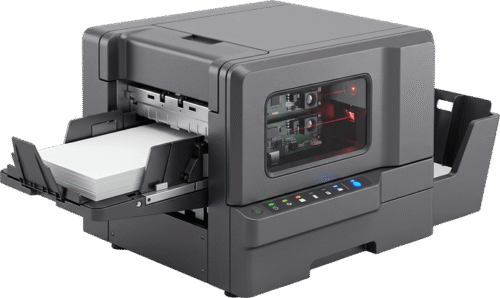
- Label printing at peak volume. Test batch label creation, label formats, and every printer on the floor at your expected December volume.
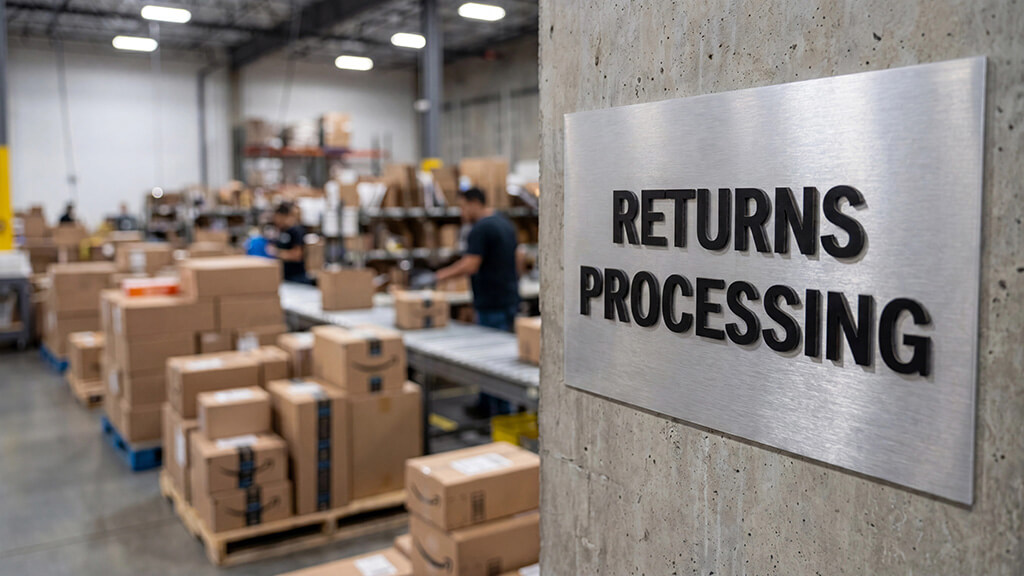
- Return labels. Returns surge after the holidays, while the freeze is still on. Configure and test return labels now.
- Put routing decisions where you can change them during code freeze
Put routing decisions where you can change them during code freeze
Our freeze stops changes to the EasyPost platform. It doesn’t stop you from changing your own settings in the dashboard, so those settings are where you’ll have room to adjust in December. If your own team freezes code over the holidays, set them up before your freeze starts.
Rate shopping is an easy example of this: shippers using Luma Select can change rate-shopping rules directly from their EasyPost dashboard. That means despite a code freeze, they can move volume from one carrier to another, or loosen a delivery requirement from a three-day to a five-day SLA when a carrier’s network backs up. None of it requires a code change on your side or ours.
Rate-shopping rules are only as good as the assumptions behind them. Most teams set a default carrier by zone or a “cheapest option” rule and never revisit it. Luma AI evaluates the carrier and service options you already have, including where a slower service on your current carrier still meets the delivery promise for less. Luma customers see 15% average cost savings, and one recommerce marketplace saved $2M+ a year and cut roughly 273,000 late deliveries without adding a single carrier. Review those recommendations now, while you can still change your rules before your own freeze.
Surcharges are another reason to put your rules in a place where they can be adjusted. Carrier-mandated changes during our freeze are generally limited, and surcharges are the ones most likely to move your costs. You can account for them with fixed rules or with dynamic rate shopping that will pick an alternative carrier when a rate gets too high. Add your holiday delivery cutoffs at the same time, so late orders route to a service that will arrive on time.
- Close the account gaps that cost money after a package ships
Close the account gaps that cost money after a package ships
- Check your payment methods. An expired card or outdated billing method can stop label purchases in the middle of a peak shipping day.
- Insure yourself against loss, theft, or damage. Look at what happens when a package is lost, damaged, or stolen: UPS, FedEx, and USPS all cap default liability at $100 and don’t cover packages against theft. EasyPost’s Insurance API covers loss, damage, and theft across 100+ carriers, at 1% of package value or $1, whichever is larger. Turn it on now, because it can’t cover packages already in transit. You can do that in the dashboard [LINK: dashboard page, Tyler to provide] or through the API, and our freeze doesn’t affect either.
- Make sure the USPS money you’re owed gets filed. USPS includes up to $100 of coverage on most Ground Advantage and Priority labels, but someone has to file the claim, and nobody has time in December. EasyPost’s USPS Claims files eligible claims for you. Just make sure your integration passes a product value on every label before your freeze, so every eligible claim can be filed.
- Know who to contact and where to look
Know who to contact and where to look
- Know who to contact. During a freeze, the fastest fixes come from knowing who to contact in an emergency. Make sure your team members who will be on call over the holidays know that information too.
- Plan for volume surges. If you expect a shipping volume more than 30% higher than normal, tell your EasyPost contact before November 2nd. That gives EasyPost time to plan capacity for your extra volume before it arrives.
- Understand your analytics tools. Finally, learn your way around the Luma Insights dashboards, which every EasyPost customer can use free during peak. They show which shipments are still in transit, their current status, and your parcel spend. A stalled shipment you spot there is one you can act on before the customer asks about it.
Your before-freeze checklist
- Every carrier account and service you’ll need through January is connected and tested by November 2nd
- Carrier credentials are current by November 2nd, with no expiring tokens or pending re-authentication (FedEx MFA by October 30th)
- A backup carrier is set up and tested on your main lanes by November 2nd
- Your integration is on a current API version by November 2nd, with nothing you use scheduled to retire before January
- Webhook failures trigger an alert to a named person by November 2nd
- Label printing is tested at peak volume by November 2nd, including batch labels, formats, and printers
- Return labels are configured and tested by November 2nd
- Rate-shopping rules, surcharge rules, and holiday cutoffs are set in the dashboard, ahead of any code freeze your own team runs
- Payment methods are up to date by November 2nd
- Shipping insurance is on by November 2nd
- Your integration passes product values by November 2nd, so eligible USPS claims get filed
- Your on-call team knows your EasyPost contact and escalation path by November 2nd
- Your EasyPost contact knows by November 2nd if you expect volume more than 30% above normal
- Your team knows the EasyPost status page and the Luma Insights dashboards by November 2nd
Anything on this list you can’t finish by November 2 is worth a conversation with your EasyPost contact this week.
Get your peak setup checked before November 2nd
Talk to an EasyPost shipping expert about carrier connections, rate-shopping rules, coverage, and volume plans while there’s still time to change them before the freeze.
Talk to a shipping expert