When it comes to hotel reporting, a top-line number is only the starting point.
Operators need to break it apart, understand what’s driving it, move between property and portfolio views, trace it back to the underlying transaction, and bring that data into the other systems they use to run the business.
That’s where reporting depth starts to matter.
It’s the difference between reporting that gives you a surface-level view of performance and reporting that lets you keep exploring the data as the questions become more specific and the business more complex.
Going deeper depends on what’s available beneath the report. The more context each reservation, guest, rate, and transaction carries with it, the more questions teams can answer without piecing the data together themselves.
What is hotel reporting depth?
Reporting depth describes how far a hotel’s reporting system goes beyond surface-level dashboards, whether the underlying data is unified, current, and structured enough to answer real operational and portfolio-level questions without extra manual work.
A system with real depth gives you three things at once:
- Enough pre-built reports to answer day-to-day questions quickly and reliably
- The flexibility to export or customize reports without fighting the platform
- An underlying architecture that connects related data across the hotel, so reports have the context needed to show the full picture
That last point matters more than it might seem. When data is fragmented across systems or relationships have to be reconstructed manually, reporting becomes an exercise in reconciliation before analysis can even begin. Only 15% of hotel operators say they’re very confident in the accuracy and timeliness of their operational data, while 27% spend more than 11 hours a week reconciling numbers across systems.
Reporting depth is ultimately about reducing that distance between having the data and being able to trust, understand, and use it.
Why “more reports” isn’t the same as “more depth”
A long list of reports can cover a lot of standard use cases. The limitation shows up when the question doesn’t fit neatly into one of them.
A revenue leader wants to understand whether an ADR increase came from higher rates or a shift in channel mix. Finance needs to trace a revenue discrepancy back to the transactions and reservations behind it. An operations leader wants to compare weekend performance across a specific group of properties, excluding outliers or properties that weren’t open for the full period. Or a commercial team wants to see which promotions are driving bookings from high-value repeat guests, then break that down by property and stay date.
Those aren’t unusual questions. But if answering them means exporting several reports, matching fields in Excel, or sending a request to a BI team, the system may have plenty of reporting without much depth.
Deeper reporting removes more of that work. It gives teams the flexibility to move beyond predefined views while preserving the relationships and definitions that make the data useful in the first place.
What reporting depth looks like in practice
Reporting depth isn’t one feature. It’s the combination of what you can see out of the box, how far you can take the analysis yourself, and how much context is already built into the data.
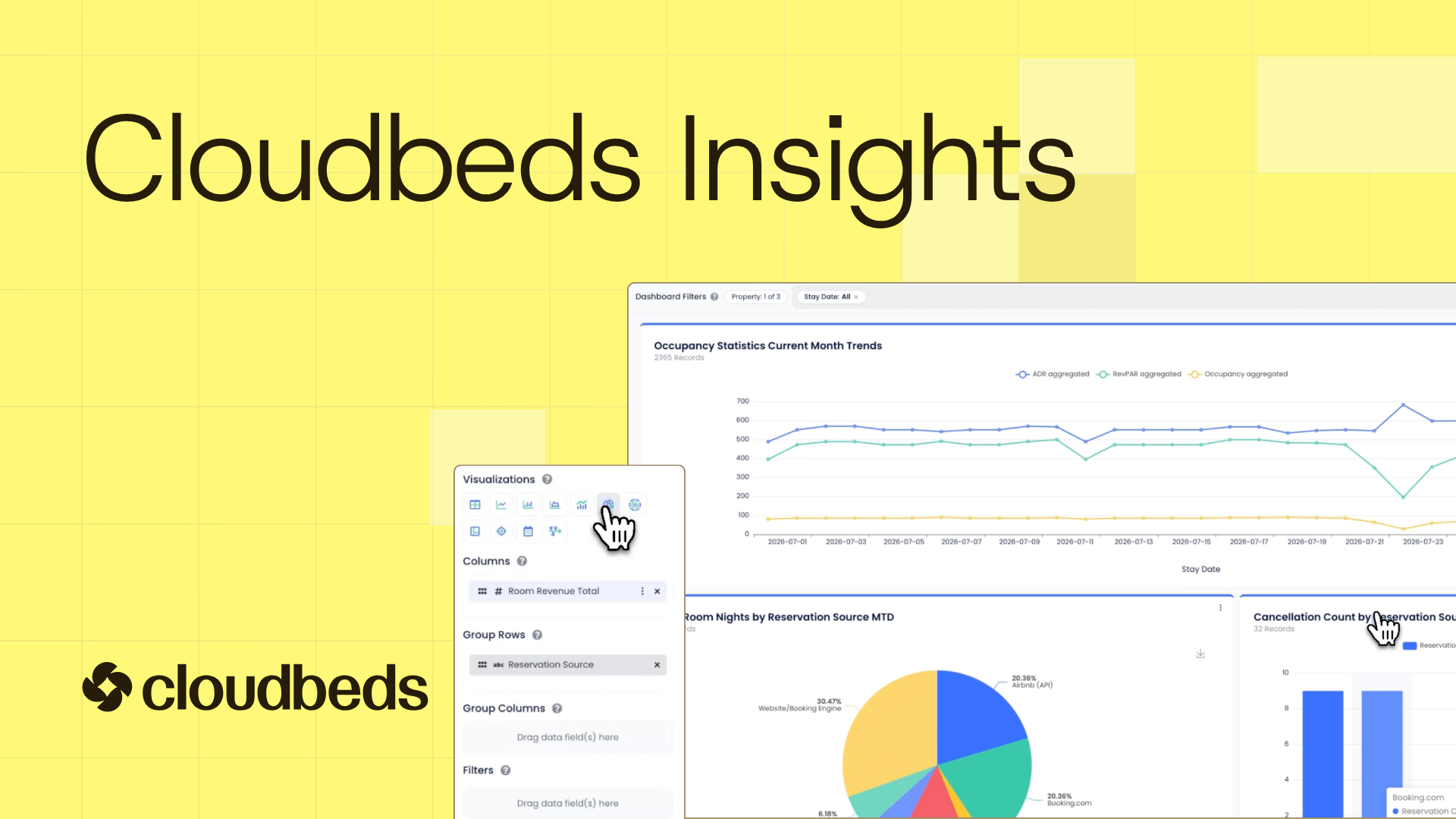
Cloudbeds Insights, the reporting and data intelligence layer built directly into the Cloudbeds platform, was designed with those needs in mind. It combines pre-built operational and performance reports with a custom builder for more tailored analysis, while giving hotels the ability to export their data or access it through APIs for use in their own systems and BI environments.
Building from the data up
When creating Insights, Cloudbeds worked backward from the questions hotel teams needed to answer. The development team looked at the reports and workflows important to customers, traced the information required back through the data, and determined how records needed to be stored, related, and defined at the source.
Sometimes that meant making changes deeper in the platform. If answering a question required connecting a transaction to a reservation, guest, room, rate plan, or promotion, those relationships needed to exist reliably in the underlying data rather than being reconstructed every time someone ran a report.
The same applied to definitions. A metric such as occupancy needs to mean the same thing wherever it appears. Where a genuinely different calculation is required, that difference needs to be explicit rather than allowing two definitions to sit under the same label.
The result is reporting where much of the context teams need is already there, giving them more room to explore the data without first having to piece it together themselves.
Working from current data
Scheduled refreshes create a gap between what’s happening at the hotel and what teams can see in their reports. That matters when a revenue manager is checking occupancy and pacing before adjusting rates or leadership is looking across a portfolio to decide where attention is needed that day.
Because Cloudbeds Insights is built directly into the Cloudbeds platform, reporting reflects current data across the business without requiring teams to move data into a separate reporting system first.
For Bespoke Hotels, which manages more than 50 independent properties across the UK, that changed how its revenue team worked. Previously, the team logged into properties individually, exported static reports, and rebuilt the data in Excel, adding time between seeing what had happened and being able to act on it.
Now, revenue managers can move between properties in seconds and see performance and pacing against last year, then segment the data by factors like length of stay, day of week, and customer type from a consistent portfolio view.
We’re saving 5–10 hours a week per hotel. With over 50 hotels, that time saving is enormous — and it finally lets my team be strategic, not reactive.
We’re saving 5–10 hours a week per hotel. With over 50 hotels, that time saving is enormous — and it finally lets my team be strategic, not reactive.
Standardizing reporting without losing flexibility at scale
As a hotel portfolio grows, reporting has to do two things that can easily come into tension: give teams the flexibility to explore their data while keeping the core numbers consistent across every property.
A GM may want to analyze performance by room type, channel, segment, or date. Regional and corporate teams need that same flexibility, but they also need to know that occupancy, revenue, and other key metrics mean the same thing everywhere they look. Otherwise, every portfolio-level analysis starts with another round of reconciliation.
Reporting depth at scale means creating that consistency without limiting how teams use the data. Core reports and definitions can be standardized across the organization, while teams can still build the views they need for their own analysis.
For hotel groups and management companies, Cloudbeds Insights brings multi-property reporting into the same data environment as property-level reporting. Leadership can view the full portfolio or narrow the data to specific properties and groups, while standardized reports can be managed centrally and shared across the organization. As properties are added, they become part of that reporting structure without requiring teams to rebuild the same reporting setup property by property.
The importance of consistency becomes clear when it isn’t there. Before moving to Cloudbeds, Pandora Hotels was extracting data into custom Excel files every day, only to find that numbers from different reports didn’t always agree.
We were using another system where the data wasn’t reliable. The data extracted from one report and another didn’t match. It was very difficult to conduct analysis with any confidence.
We were using another system where the data wasn’t reliable. The data extracted from one report and another didn’t match. It was very difficult to conduct analysis with any confidence.
With centralized, reliable reporting, the team could spend less time reconciling its data and more time using it. Within the first quarter, one Pandora property achieved a 26% increase against its total annual revenue goal.
Moving from insight to action
Reporting often sits one step removed from the work itself. You spot something that needs attention in a report, leave that view to find the relevant reservation or guest record, take action somewhere else, then return to reporting to see the result.
The deeper reporting is connected to the operational system underneath it, the shorter that distance becomes.
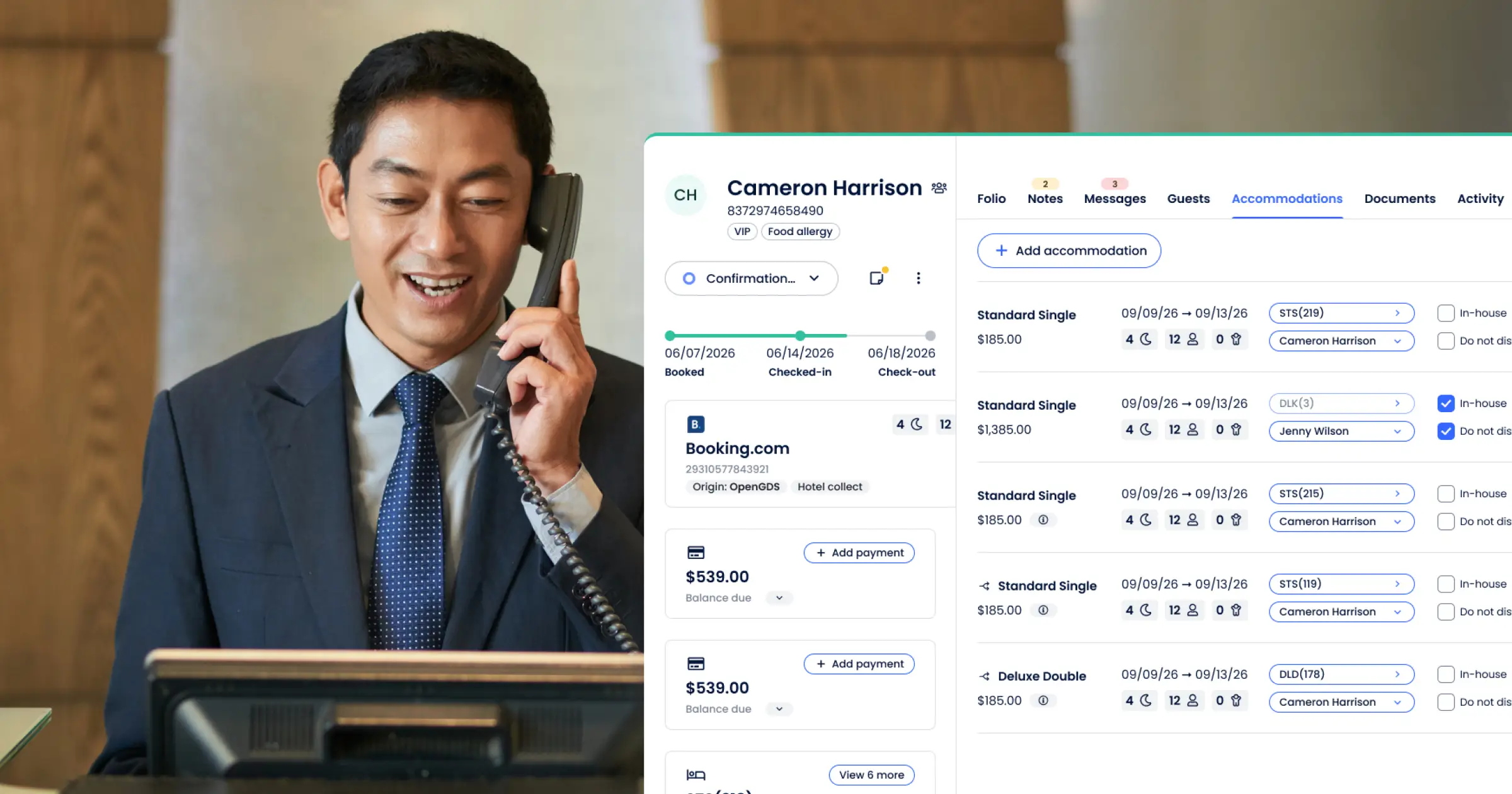
Inside Cloudbeds Insights, teams can move directly from a report to the record behind the data. Click a reservation number, and you can open the reservation, check in a guest, add a transaction or comment, then return to the updated report without leaving the platform. The same connection extends to guest profiles and other operational records.
That turns reporting from a destination teams visit to review what happened into part of the workflow itself. During a night audit, check-in review, or daily operations meeting, teams can investigate what they’re seeing and act on it from the same place rather than treating reporting and operations as two separate steps.
Why depth connects to more than just reporting
Reporting depth is one of the clearest ways to see how connected a hotel’s technology really is.
When data is connected underneath the platform, that context can carry through to reporting. Revenue teams can go deeper into performance, finance teams spend less time reconciling data, and operations teams can work from the same view of what’s happening across the business.
Some of the work required to make that happen isn’t particularly visible. It means standardizing definitions and calculations so the same metric means the same thing wherever it appears, preserving the relationships between reservations, guests, transactions, rates, and other records as the platform evolves, and making those relationships available to reporting rather than asking users to recreate them every time they have a new question.
That work rarely shows up on a feature comparison. But it determines how much confidence teams can have in what eventually shows up in a report.
So when evaluating hotel reporting, don’t stop at dashboards, filters, or the number of reports available. Look at what sits underneath them. How is the data structured? What relationships are already built in? How current is it? And how easily can your teams access and work with it?
Because the depth you see in reporting ultimately depends on the depth of the data underneath it.