While there’s no replacing humans, getting closer to humanness is the name of the game for scaling in voice AI. Humanness, in this context, means natural timing and clear, consistent voice quality. The same conversational rhythm we have when we’re talking person-to-person.
Low latency plays a crucial supporting role by keeping the conversation flowing. The underlying voice network you choose keeps latency low and voice quality high.
I talk to voice AI companies every week. The ones I see scaling fastest figured out early that the network underneath them matters as much as the model on top of it.
Why humanness is a latency problem
When you’re scaling a voice AI product, end users aren’t reacting to your prompt engineering. They’re reacting to the rhythm of the conversation. Specifically, the gap between when they stop talking and when your agent starts. Human conversation runs on tight turn-taking. Drop a half-second of dead air in there and people immediately get frustrated that they’re talking to a bot. They start over-explaining, they talk over the agent, they hang up. This is well known.
It’s always a best practice (and sometimes required) for people to know when they’re talking with an AI agent instead of a human. But we’re big champions of efficient, comfortable conversations that help customers get what they need. Everyone wants low latency because lag makes it less awkward and more natural to engage with AI. What’s harder is demonstrating you have it, and harder still is sustaining it as you scale.
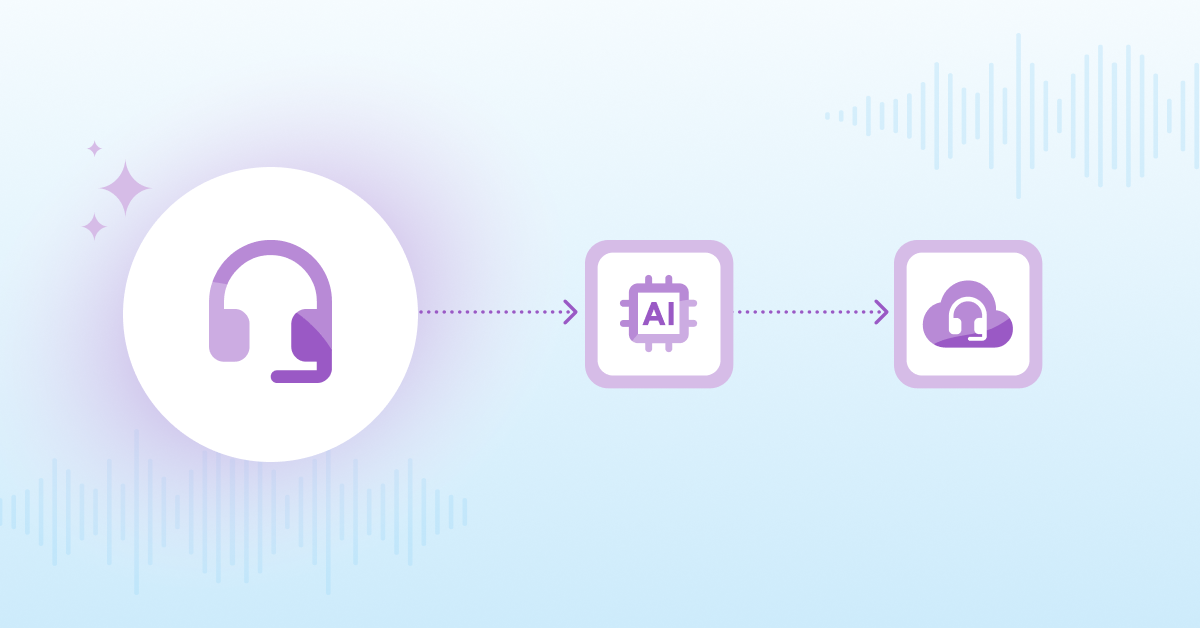
Latency in voice AI isn’t one number. It’s a stack:
- The model’s time to first token
- The speech-to-text and text-to-speech layers on either side of it
- And underneath all of it, the voice network carrying the call
Teams spend most of their optimization budget on the top of that stack. They tune endpointing, pick a faster TTS, swap models. All of that helps. But the floor of what you can achieve is set by the network underneath. The better your core network, the better your AI latency. There is no software trick that compensates for a call that’s bouncing through providers of varying quality before it ever reaches your agent.
Owned network versus a network of networks
When you sign up with a voice API or SIP trunking provider, you’re inheriting whatever their network is. There are basically two models out there.
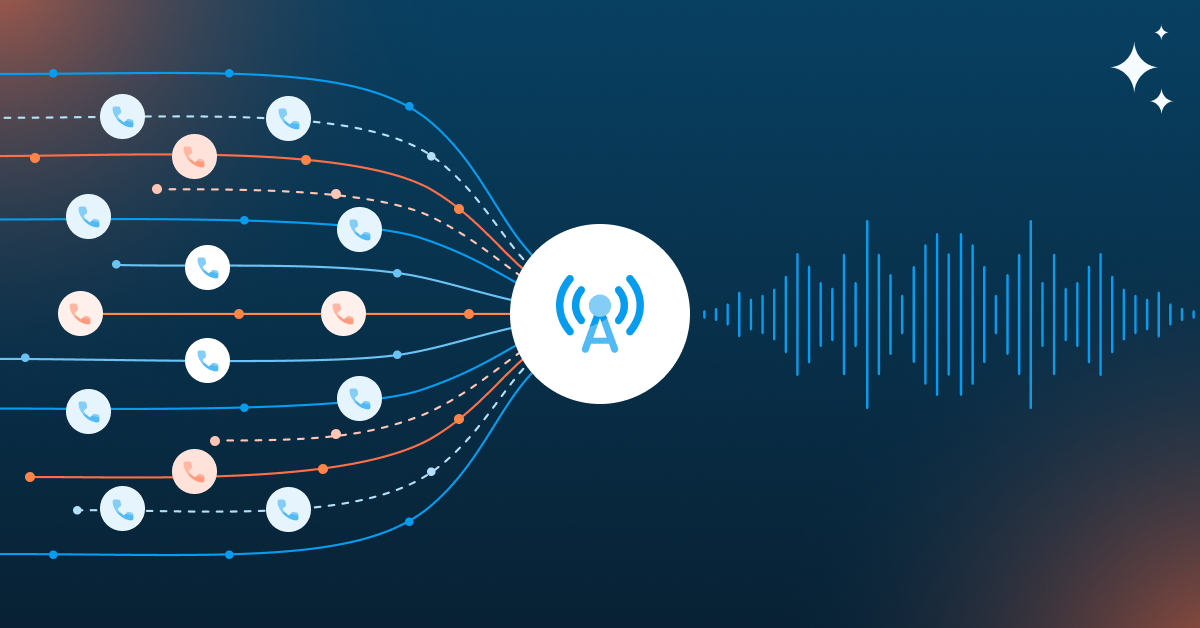
The first is an owned and operated network. Bandwidth has run our own network since 1999, as a CLEC in the US and National Operator in 30+ countries. When a call comes in, it stays on the infrastructure we own end-to-end. We control the routing, we control the quality of service, and we know exactly what’s happening on every leg of the call.
The second model is more like a network of networks. Calls get handed off across a collection of providers of varying quality. A call might be fine one day on one underlying provider and noticeably different the next day on another. For a typical voice app you might not notice. For voice AI, where you’re trying to keep total round-trip latency under the threshold where humans start to perceive lag, that day-to-day variance is the difference between an agent that performs seamlessly and one that clearly struggles.
This is what I mean when I tell companies we offer a more consistent, predictable experience. It’s not a marketing claim. It’s the direct consequence of owning the network instead of renting pieces of one.
What “scales” actually means
There’s a pattern I see constantly. A voice AI startup builds a proof of concept on whichever provider has the lowest-friction signup. They validate the use case. Traffic grows. And then things start to wobble.
The wobble isn’t usually a single dramatic outage. It’s quality degradation. Calls aren’t going through. Service feels off. And it’s not necessarily a provider problem in the strict sense. It’s a volume problem. If 1% of your calls have issues when you have 100 customers, that’s one or two people. The same 1% with 1,000 customers is 10 or 20 people having a bad experience every day. It creates a churn engine.
The more you scale, the more you expose yourself to opportunities for something to go wrong. And the difference between providers shows up exactly when it matters most. How your partner helps you triage and fix things when you’re running at volume is pivotal.
At Bandwidth, we’ve made a name for ourselves through how we partner with our customers when it comes to visibility and troubleshooting. Owning the network means we can actually see what’s happening on a call and tell you whether it’s a network thing, a routing thing, or something in your stack. When the network is a black box of third parties, nobody can tell you that.
Why hyperscale voice AI teams come to us
Most voice AI companies aren’t pure greenfield. The bigger ones are selling into call centers and enterprises that already have voice traffic running somewhere. The customer’s job-to-be-done is usually to enhance an existing IVR or call flow with an AI agent, not to invent voice from scratch.
When you’re the voice AI vendor in that conversation, your underlying telecom partner is doing a lot of heavy lifting on your behalf. The end customer is going to judge your product on the quality of the call. If the call sounds bad or the latency is inconsistent, that’s your product to them, no matter whose network is actually carrying it.
For hyperscalers in this space, three things tend to matter more than anything else once you’re past proof of concept:
- Voice quality at volume. Carrier-grade audio comes from an owned network with direct-to-PSTN connections, not from layering on top of someone else’s stack.
- Consistent latency. Not just a good median number, but a tight distribution. P95 and P99 matter as much as P50 when you’re running millions of minutes.
- A partner who can move at your speed. Voice AI feature velocity is intense right now. We’re shipping faster than we have in years, which means we’re keeping up with customers who are scaling just as fast.
What we just shipped, and what’s coming
A concrete example of what I mean by partner velocity. One of the bigger cost and exposure problems for voice AI companies has been call leg management. The traditional setup is: a customer calls a number, the AI does its thing on the call, and the call gets sent back. You end up with multiple call legs and you’re on the hook for the duration of every leg. If the AI hands off to a human and that human talks for ten more minutes, you’re paying for ten minutes you didn’t need to be in.
The more efficient way is to expose a SIP domain or URI for routing. The AI takes the call, does its work, and refers the call back out so you’re no longer in the middle of it. Inbound call routing to a SIP domain is live today on Bandwidth Voice. SIP Refer is now available and for companies with agent-human referrals, it’s a huge cost saver. Instead of paying for the minutes a customer is talking to a human agent, you only pay for AI time on the call segment that actually uses AI.
What to ask your voice partner
If you’re a voice AI team thinking about who’s underneath you, here are the questions I’d push on:
- Do you own and operate your own network, or are you routing across other providers?
- What’s your latency profile look like, and how consistent is it day to day?
- When something goes wrong at volume, who am I talking to and how fast can they triage it?
- What new capabilities are you shipping specifically for voice AI use cases this quarter?
The quality we’ve been calling humanness is hard. It’s a real engineering problem, and the model is only part of it. The voice network underneath your agent is what determines whether your product actually sounds natural or just sounds clunky.
If you’re scaling voice AI and want to talk through what your network is doing to your latency, get in touch. That’s the conversation I’m having with customers every day.