Infobip’s Chief Revenue Officer and Chief Growth Officer on two decades of global expansion, hard-earned trust, and what changes once AI enters the platform.
Ana Rukavina Content Marketing Specialist
Goran Juršić Chief Growth Officer
Ante Pamuković Chief Revenue Officer
Twenty years on, Infobip operates across more than 60 countries, with over 80 offices and thousands of employees around the world. But this global scale was never simply a question of getting bigger. It was built market by market, relationship by relationship, through trust and a willingness to keep changing without losing sight of the customer.
Ante Pamuković, Chief Revenue Officer at Infobip, has spent much of that time building the company’s footprint market by market. Goran Juršić, Chief Growth Officer, has spent his helping drive that growth as the platform’s channels and technology continued to evolve underneath it. The complexity kept climbing every year, and the bar the company holds itself to never dropped to meet it.
Trust is the one resource that doesn’t show up on a roadmap, can’t be manufactured on a deadline, and is difficult to win back once it’s lost. When a client entrusts part of their business process to Infobip, they’re not outsourcing a task. They’re handing over something that shapes how they show up in front of their own customers, which is a different kind of stake entirely.
Trust very much needs to be earned. Your clients and their stakeholders expect the best out of you. And when they trust you with part of their business process, or with outcomes that really matter to their business, that’s something there’s no negotiating on.
Trust very much needs to be earned. Your clients and their stakeholders expect the best out of you. And when they trust you with part of their business process, or with outcomes that really matter to their business, that’s something there’s no negotiating on.
Ante Pamuković
Chief Revenue Officer, Infobip
Projects today pull in more systems, more stakeholders, more dependencies than they did two decades ago, and every added layer creates another place where things could go wrong. None of that gives anyone permission to treat trust as negotiable just because the project got harder to manage. If anything, the more moving parts a deal has, the more a client is counting on someone keeping the promise steady beneath all of it.
Growing into more than 60 countries and 80 offices didn’t happen by exporting one way of doing business into each new market. It happened by investing in local operations and relationships as the company expanded, which is also what gave leadership a real sense of how business actually works differently across cultures and regions, rather than a single global playbook applied everywhere.
Building our business globally, investing in local operations and local relationships as we moved along. We’re present in over 60 countries with over 80 offices at the moment. This gave us a lot of understanding, brought us really close to our clients, and helped us understand how business develops in different cultures and different regions around the world.
Building our business globally, investing in local operations and local relationships as we moved along. We’re present in over 60 countries with over 80 offices at the moment. This gave us a lot of understanding, brought us really close to our clients, and helped us understand how business develops in different cultures and different regions around the world.
Ante Pamuković
Chief Revenue Officer, Infobip
That same emphasis on relationships shaped how growth itself needed to be measured. For years, success came down to counting activity moving through a single channel. Customer expectations evolved past what that number could capture. End users now expect a brand to reach them wherever makes sense at the time, rather than staying loyal to one channel, so success shifted from tracking volume in a channel to tracking whether the whole communication actually landed with the person on the other end.
We were looking at what we were trying to achieve, selling units of something, and the definition of that was mathematically simple. Now, with the changes happening in the world, end users expect different things. It’s not that important anymore to drive your own strategy for one channel. It’s how the whole environment, the communication, flows together between the brand and the end user in a richer and highly personalized way.
We were looking at what we were trying to achieve, selling units of something, and the definition of that was mathematically simple. Now, with the changes happening in the world, end users expect different things. It’s not that important anymore to drive your own strategy for one channel. It’s how the whole environment, the communication, flows together between the brand and the end user in a richer and highly personalized way.
Goran Juršić
Chief Growth Officer, Infobip
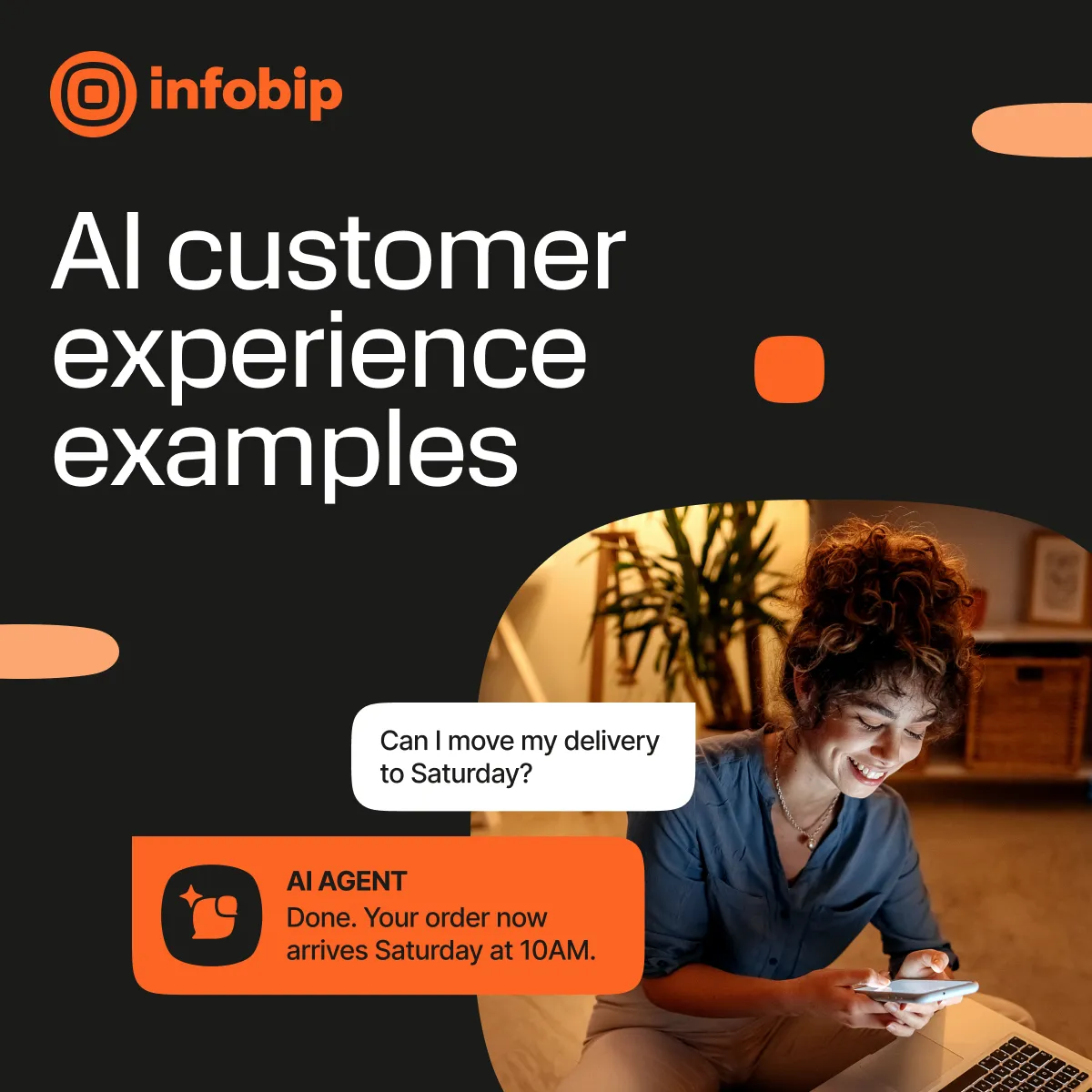
AI has stopped being a talking point and turned into a factor that will decide which companies stay relevant over the next five to ten years. For a platform built on connecting brands with the people they’re trying to reach, that means building AI in at the infrastructure level rather than adding it as a feature later, and building toward agents that can act on someone’s behalf instead of waiting for them to open an app.
This is something that’s going to drive which companies are going to be successful for the next five to ten years. This is why the platform, and Infobip itself, is trying to be an AI-first company. Probably in the future we’ll be using personal agents, or brand agents. Driving to work, I’d probably want to plan most of my day through some kind of voice capability that can pick up everything happening in my calendar, my communications, and react to it.
This is something that’s going to drive which companies are going to be successful for the next five to ten years. This is why the platform, and Infobip itself, is trying to be an AI-first company. Probably in the future we’ll be using personal agents, or brand agents. Driving to work, I’d probably want to plan most of my day through some kind of voice capability that can pick up everything happening in my calendar, my communications, and react to it.
Goran Juršić
Chief Growth Officer, Infobip
AI is just the latest version of something that’s been true the whole way through. The technology evolved at every stage, the go-to-market model changed with it, and each shift tested the same mindset all over again. “Over the years we changed pretty much everything, and we’ll probably continue to,” Ante says.
“The only part that stays the same is the passion for the business and for technology, and for the connections we want with our clients and partners, and the effect we want to have on their outcomes.” What didn’t move was the standard both leaders keep circling back to: earn the trust, stay close to the customer in every market, and treat reinvention as routine rather than crisis.