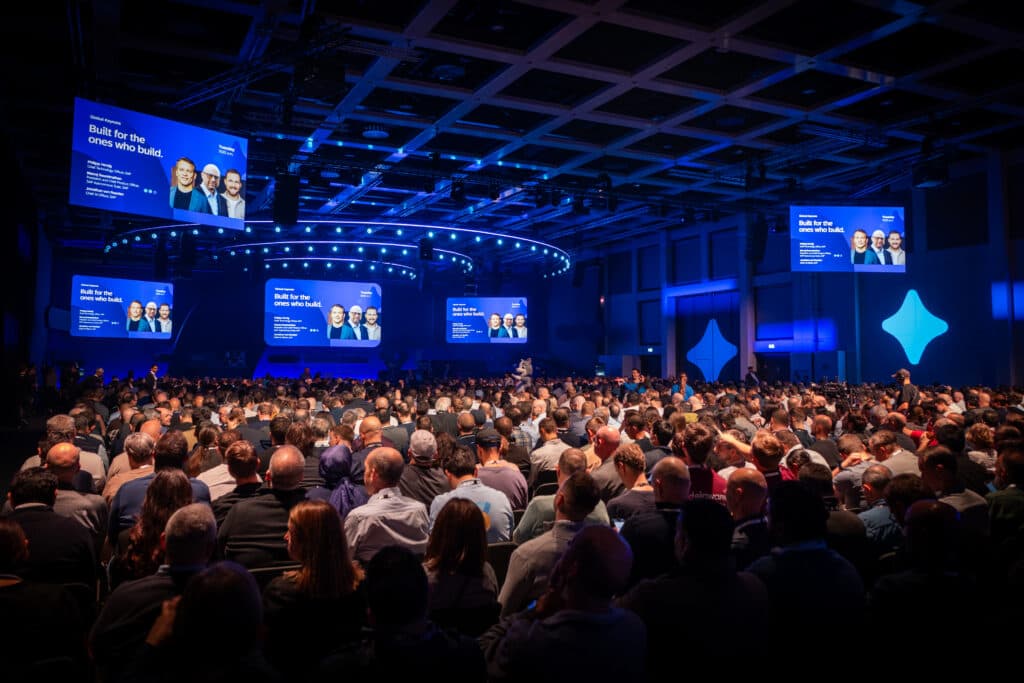
This week at SAP TechEd, SAP introduced a range of solutions focused on AI governance. While the solutions address different dimensions of governance in the era of AI, they all reflect the same basic principles:
- Build on proven business controls: You already have governance standards and practices in place. AI governance should connect to and extend these controls.
- Adopt innovation with confidence: The approach to governance we advocate is the same publicly available and documented approach we use to develop, deploy, and govern the solutions and services we deliver.
- Stay in control as your business grows: The controls and standards you have in place should not only promote AI adoption, but also enable you to assess costs, risks, and value as adoption increases.
Since the advent of this new world of autonomous technology, people have endeavored to identify the most impactful application of it. As the path to value realization has become clearer, a new challenge has emerged: ensuring both that AI usage does not lead to unintended and potentially harmful consequences and that this usage remains compliant with emerging regulatory regimes.
By adhering to the principles outlined above, SAP makes it possible accomplish both ends. More importantly, as we showed at SAP TechEd, SAP also provides the solutions necessary to govern, control, and innovate now and into the future.
AI governance announcements from SAP TechEd
Here’s what we talked about at SAP TechEd on the AI governance front.
True AI governance isn’t about figuring out if policies and rules have been followed after the fact; it should be about making sure governance is applied when it matters. SAP Enterprise AI Gateway ensures this kind of proactive governance by consolidating authentication, policy enforcement, and routing at runtime, while also allowing for continuous monitoring, usage tracking, and auditing. The gateway thus controls traffic across MCPs, APIs, agent-to-agent connections and LLMs. Building on SAP Integration Suite, the gateway consolidates and streamlines real-time oversight and control over AI in action.
As a compliment to the gateway, we also announced customer access to curated SAP Sovereign Cloud LLMs directly through SAP AI Core. This allows customers to use these LLMs in critical processes while adhering to established governance standards. What’s more, by allowing direct access on SAP Sovereign Cloud, customers can reduce both cost and complexity in AI operations.
Being able to provide agents with the architecture context they need to operate effectively is also essential to the control of agent behavior. At SAP TechEd, we described new features in the SAP LeanIX portfolio enabling enterprise architects to control the architecture data Joule Agents use to make and execute decisions.
This architecture context feature relies on a knowledge intake agent to extract relevant information from security and architecture decision documents, as well as propose connections to the SAP LeanIX knowledge graph, and submit all data for human approval before making it available to agents.
Finally, to support EU AI Act assessments directly in SAP AI Agent Hub, we also introduced our new AI Governance Assistant. The assistant audits and flags incomplete documentation in the agent inventory, pre-fills fields from completed assessments, identifies systems that appear high-risk but lack classification, and triggers reassessment when a fact sheet changes materially.
And just as the architecture context feature depends on human approval, all outputs from the AI Governance Assistant appear as drafts for legal and compliance review.
SAP and AI governance in depth
The solutions and innovations around AI governance we discussed at SAP TechEd are part of a much broader story. That story is, to a degree, historical. SAP has long played a key role in the governance of core operational and financial functions. Our approach to AI governance is built on—and a logical extension of—this legacy.
Of course, SAP is hardly new to this, having long ago established clear internal standards for AI governance while continuously introducing features and solutions devoted to AI governance. Among these solutions is SAP AI Agent Hub, itself an outgrowth of AI governance capabilities in SAP LeanIX. By allowing companies to quickly create and maintain a reliable inventory of agents, regardless of platform, MCP servers, and LLMs, the hub’s powerful discovery features are essential to comprehensive AI governance.
The other part of the story is value. While governance of AI is crucial for myriad reasons, companies invest in AI to achieve measurable business goals. As it turns out,t he observability necessary for effective governance can be leveraged and augmented to serve the purpose of performance management and evaluation.
With SAP Signavio agent mining capabilities, for example, you can monitor agent behavior within the context of your business processes. In this way, you can ensure agent compliance while capturing the business impact agents deliver.
Governance should not be an afterthought
The evolution of AI is not going to slow down, and neither will AI adoption. Unfortunately, while the focus here rightly falls on continuously discovering new ways to leverage AI for operational excellence and competitive advantage, this focus should not mean that governance takes a back seat.
Governance, on the contrary, is the key to successful AI adoption.
It is important to remember that governance in the era of AI is not simply a question of regulatory or corporate compliance. Because this technology involves varying degrees of autonomy, governance must be applied to the behavior of the technology itself, not just to the behavior of the humans managing it. This is one reason that we emphasize runtime enforcement of governance policies.
The challenge we see today, however, is that no one has yet established clear industry benchmarks and standard practices for AI governance. There also seems to be a general lack of established platforms focused on governance.
We say a “general lack” because, in point of fact, SAP offers precisely such a platform, one built on decades of governance expertise and experience.
Governance has never been an afterthought for us. And when it comes to AI governance today, as the many innovations outline here show, it is absolutely top of mind.
Dominik Rose is chief product officer for SAP LeanIX at SAP.