From vision to reality: In 2026, SAP executives at SAP TechEd demonstrate how developers, customers, and partners can use SAP’s comprehensive AI tools and SAP Business AI Platform to build the Autonomous Enterprise.
In 1996 SAP held its first event for developers. Thirty years later in Berlin, SAP CTO Philipp Herzig told the SAP TechEd keynote audience, “We are experiencing the biggest and fastest technological shift in our lifetime.”
“For decades developers have been building systems in a structured, deterministic way. But the world for builders has changed tremendously with AI,” he said. “It changes what’s possible. This is what SAP TechEd is all about: combining both classical and new technologies that unlock the magic for business and provide endless opportunities to innovate.”
From vision to execution
Underscoring his point, Herzig noted that during the SAP Sapphire conference earlier this year, the company “put out a bold vision to enable the Autonomous Enterprise, re-imagining every business process end-to-end with AI. And just like 30 years ago, the whole tech stack is shifting.”
For SAP, this is reflected in Joule Work and the new SAP Business AI Platform. Herzig described Joule Work as a “groundbreaking new way to experience software” that taps into SAP’s five autonomous domains and assistants that reason and act across SAP and non-SAP data, and SAP Business AI Platform as “the foundation where you build and extend agents, manage all your data, and govern AI experiences.”
Designed for better business outcomes
Elaborating, he emphasized that SAP Business AI Platform “isn’t just another tech platform, it’s specifically designed to build better business outcomes, deliver faster time-to-value and better price performance.” In addition, it is enterprise-readiness from day one: secure, governed, and compliant, “all made possible through our unique context layer built on 50 years of domain and industry expertise.”
Together, Joule Work and SAP Business AI Platform underpin SAP’s commitment to build the Autonomous Enterprise. “And it’s here today,” Herzig told the audience. “We are excited to show you our latest updates at SAP TechEd.”
For the rest of the keynote, Herzig and his SAP colleagues—including SAP Chief AI Officer Jonathan von Rueden; Manoj Swaminathan, president and chief product officer for SAP Autonomous Suite; Tina Berlin, head of AI Foundation EU at SAP; Michelle Niedernhuber, lead product manager for SAP AI Agent Hub; and Soeren Ruder, chief product officer and global head of Customer Experience & Solutions—detailed these updates and demonstrated them on stage.
Joule Work
Beginning with Joule Work, Herzig said SAP had re-designed the user experience from the ground up: “All to make it more delightful and intuitive to use than ever. One starting point. One experience.”
Joule Work now connects all SAP applications as well as Office365, Claude Cowork, Glean, and ServiceNow out of the box. It remembers preferences and context from past interactions and continuously adapts. In addition to the conversational interface, shareable spaces that dynamically assemble data into interactive applications are also available.
The keynote speakers described Joule Work as a redesigned, cross-application AI experience available everywhere, including web, desktop, mobile, voice, and even Apple CarPlay. And they noted that Joule Work has been tested for months by more than 110,000 SAP employees, along with more than 150 customers, who joined the SAP Early Adopter Care program, “all so you get the best AI experience.”
One early adopter, Robert Mueller from Bosch Digital, joined Herzig on stage and said his teams had been testing Joule Work, Joule Studio, and the first assistants and agents and that the first user feedback had been positive. “Our next step is to bring Joule into daily use,” he said.
SAP Autonomous Suite
Manoj Swaminathan then took the stage to demonstrate the SAP Autonomous Suite. “For over five decades, SAP has built the systems that help you run your business in the best way possible. Continuing that focus, we now deliver out-of-the-box a suite of SAP-managed assistants and agents across five horizontal domains, with industry specialization.”
“I’m excited to announce today 40 assistants and 300 agents between SAP and our partners for you to explore,” he added. “These give you a baseline for systems of intelligence and systems of action, built around three priorities, delivering: automation, intelligence and insights, and optimizations, with value that can be realized and measured, across reduction in cost, increased productivity, increased speed, improved quality, and more.”
The new assistants include a Financial Consolidation Assistant that can reduce the time to close the books by up to 68%, a Sourcing Assistant that can reduce total cost of ownership by 15%, and a Supplier Management Assistant that detects and responds to supplier risk 60% faster.
“For these tasks, an answer that is ‘probable’ is just not good enough,” Swaminathan said. “You need the right answer, every single time, and they need to be compliant and traceable. That is what these assistants and agents uniquely enable, because every single one of these agents are ISO and SOC compliant.”
SAP Business AI Platform
He noted that every agent is natively an Agent to Agent (A2A) endpoint, connected through SAP’s A2A gateway, and the platform supports extensions by default. “For you as a builder, we’ve made available the SAP Business AI Platform, the foundation the SAP Autonomous Suite is built on, so you can build to whatever your requirements are in Joule Studio.”
“You might ask, ‘I’m already doing this with support from public models, why build on top of SAP’s Business AI Platform?’ Because a public model does not know your processes, your master data or your company. SAP Business AI Platform does,” Swaminathan shared. “Our AI agents are embedded in the deterministic workflows of our applications. They deliver the one true answer as they run on the same data, following the same rules, and leave the same audit trail as our applications and you decide the level of autonomy.”
But he pointed out that the SAP Autonomous Suite does not restrict itself to only back-office operations. “Our biggest customers are losing 11% of revenue to unplanned downtime experiences with on-site operations. Customers understand the problem but there hasn’t been a solution that responds to these challenges until now.”
Physical AI by SAP
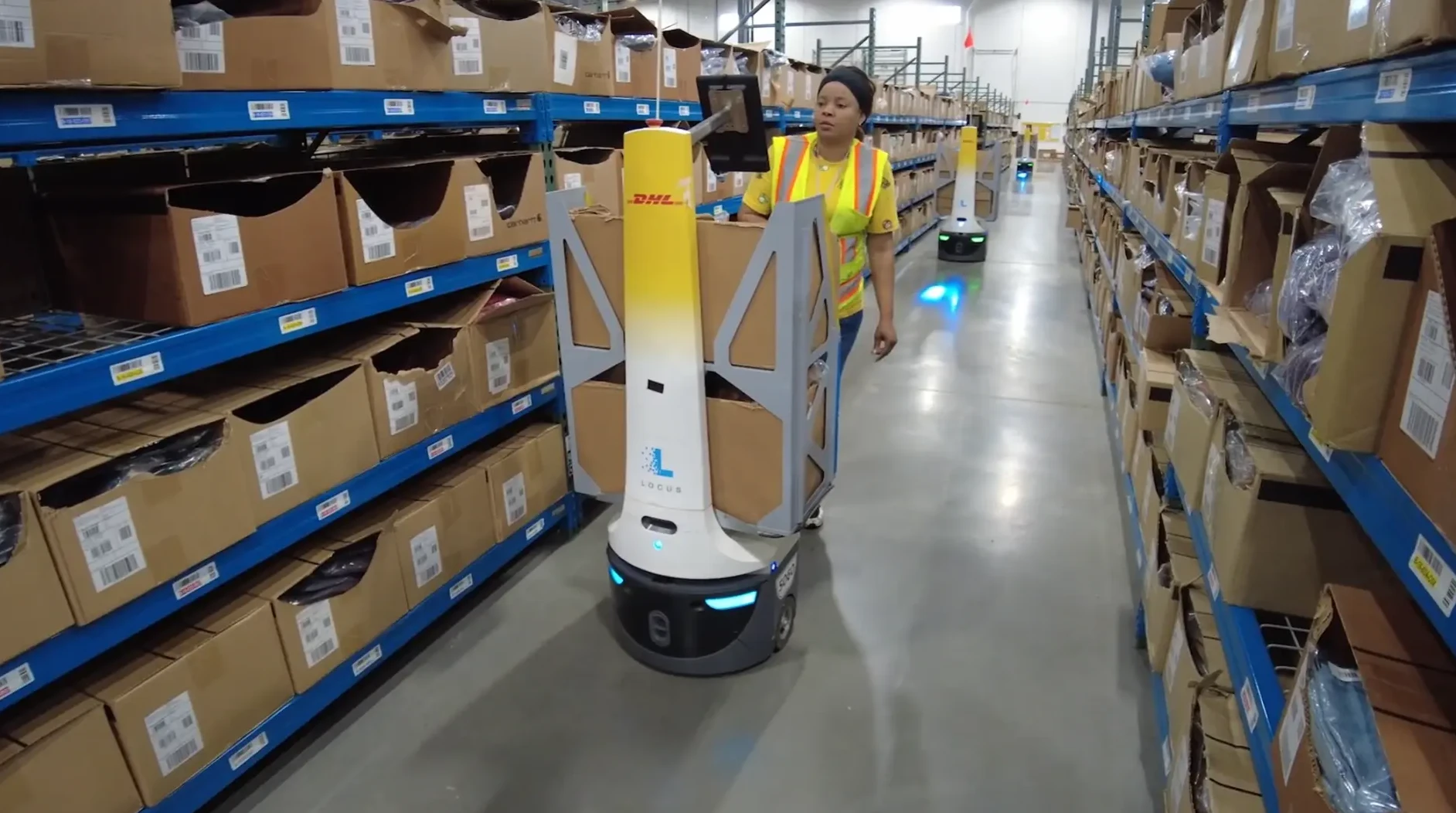
To address this issue, Swaminathan announced physical AI by SAP, which extends the Autonomous Enterprise into the physical world, turning business decisions into physical action, and bringing verified outcomes back into SAP in a secure and governed way.
During an on-stage appearance, Ricky Watts, who runs the Industrial and Robotics Division of Intel, said the company is already running physical AI at its operational site in Chengdu, where SAP warehouse management is driving autonomous robots closing the loop, writing outcomes back into SAP as live transactions.
Jonathan von Rueden then took over the keynote stage to talk about the more than 300 standard Joule agents across the suite and how Joule Work and skills can adapt and customize standard agents to get the most from AI. If you want to go further still, he said, “Joule Studio is just one click away.”
Joule Studio: Extend, build, and integrate your agents
Joule Studio, SAP’s agent-building platform, lets anyone customize AI with a skill: a natural language description and a few lines of code defining what an agent should do, opening agent-building beyond developers.
If you want to go deeper, and need to know where to begin, the Process Consulting Agent identifies where and what to build before development begins. “Just say what you want to get it done,” said von Rueden. SAP Knowledge Graph finds the relevant APIs, MCP servers, and data products, and Joule Studio generates the specifications, structure, and integration logic.
The result: Moving from intent to a working agent takes roughly 2.5 hours instead of 13. Because agents don’t need to guess at requests, they use fewer tokens. “In our testing, that adds up to 50% lower cost per task,” von Rueden told the audience.
“With Joule Studio on SAP Business AI platform, we focus on four things: business outcomes, time to value, performance for price, and enterprise readiness with deep integration.”
That last point matters in complex landscapes. With dozens of platforms, data sources, and tools running alongside SAP systems, agents need to work across those boundaries safely and with governance, without a custom integration for every new platform.
“You’d expect a certain level of out-of-the-box capabilities and we’ve delivered,” he said. Agent gateway is generally available today, connecting agents and endpoints across any landscape boundary.”
For more complex scenarios requiring rate limiting, routing, protocol translation, and advanced access control, SAP is announcing SAP Enterprise AI Gateway, built on SAP Integration Suite as a natural overlay to agent gateway.
Herzig then returned to the stage to underscore the importance of reliable data for business AI. “Any AI system is only as good as the data it reasons over,” he said, “data that lives in different physical systems, be it SAP or non-SAP, on clouds, on-premise, and the edge.”
SAP Business Data Cloud
“So how do you bring it together in a consistent, AI-ready way?” The answer, Herzig said, is SAP Business Data Cloud, which provides customers with universal business context across their entire multi-cloud landscape. “And thousands of customers are benefitting from the outcomes, time to value, and lower cost already today.”
In addition, he announced that the full scope of the entire Databricks platform will now be available natively in SAP Business Data Cloud. This means that data from different systems can now be combined into a “golden” master record, providing customers with a unified, AI-ready data foundation.
SAP executives also introduced a new SAP Business Data Cloud Ontology Manager, available as beta. With it, customers can enrich SAP Knowledge Graph with their industry-specific concepts or build entire ontologies.
A new Governance Assistant ensures compliance with EU regulation, while agent observability, and SAP Signavio agent mining close the loop between agent design and production behavior to deliver governance. Runtime verification enforcement ensures that agents not verified in SAP AI Agent Hub cannot be invoked.
Governance
All of it is SAP-managed with governance built in: ISO and SOC compliant, runtime enforced, with every agent testable and traceable via SAP AI Agent Hub. And the new SAP Enterprise AI Gateway delivers policy enforcement, enhanced observability, and runtime controls all in one place.
“For AI governance we need to connect the design time layer where we define, assess and verify an agent with the runtime layer that enforces, monitors and optimizes agent behavior,” Michelle Niedernhuber said.
With the EU AI Act now in force, SAP is releasing the AI Governance Assistant for the SAP Early Adopter Care program customers in November, she shared. The assistant uses existing information, guides the agent owner through the remaining questions, and produces an audit-ready AI risk classification.
Together, SAP AI Agent Hub and SAP Enterprise AI Gateway serve as the design and runtime integration layer that connects oversight with enforcement. By connecting oversight, runtime enforcement, and continuous improvement, SAP gives enterprises confidence that their agents operate as intended.
“Governance is not what slows AI adoption,” Niedernhuber noted. “It is what makes AI adoption at scale possible.”
AI proven under pressure: SAP brings AI to space
Rounding out the keynote, Herzig announced that together with partner Hewlett Packard Enterprise (HPE), “SAP is taking our tabular foundation models, SAP-RPT and TabPFN, for real-time predictions in space to put AI to work under extreme conditions.”
In space, a delayed decision can mean the difference between system safety and total loss. SAP’s AI enables faster decision-making and earlier failure prediction, when the stakes are highest.
Herzig explained how the foundation models analyze live hardware telemetry, identify sensor degradation, and reconstruct missing readings in real time. The outcome is a structured report recommending actions to the spaceship crew or ground staff on what to do to prevent a problem from becoming a crisis.
“Now, if we can run predictions like this in one of the most unforgiving environments, think about what this means for your operations here on Earth. That’s AI proven under pressure,” Herzig said, bringing the keynote to a close.