Retail marketing helps your business expand its reach, connect with customers, nurture relationships and tell your brand story. It can also be used to differentiate yourself from your competition.
Problem is, setting the right budget ratios for retail advertising can be tricky. Should you think outside the box and blow your budget on a series of in-store events? Will social media be more effective if you spend money on video creation or ads? Which social media should you focus on? Gone are the days of choosing between TV, radio and print ads—retailers have more advertising channels than ever, and there is no one-size-fits-all strategy.
In this article, we’ll go through 16 advertising and retail marketing ideas and retail marketing tips that will help your brand stand out. We’ll cover:
- What is retail marketing?
- Components of retail marketing
- Types of retail marketing channels
- Benefits of retail marketing
- 8 retail advertising ideas to catch the eyes of potential customers
- 8 retail marketing and promotion ideas
- How to implement your retail marketing strategy
- Find the right marketing mix for your retail store
- FAQs about retail marketing and advertising
Prepare your business for the future of commerce
Download our free playbook and learn how to sell on different channels, boost loyalty and increase foot traffic with technology.
What is retail marketing?
Today, retail marketing, also known as retail advertising, can mean organic content (like blog posts), paid content (like advertisements) or a mix of both. This includes both in-person and digital strategies, which can encompass everything from running giveaways on social media to having a sign outside your brick-and-mortar store detailing a special promotion.
In many cases, businesses benefit from using a combination of retail marketing strategies at once (which is sometimes referred to as a “marketing mix”) to reach more people.
However, knowing exactly which portions of your budget to allocate to each part of the mix isn’t cut and dry. Some companies will get by with an entirely social media-based strategy, while others thrive with direct mail and referral campaigns. The trick is to know what retail marketing strategies work for your customer base, which means testing and recording results to fine-tune your approach.
The 4 Ps
Retail marketing has four key components, also known as the “4 Ps”: Product, Price, Place and Promotion.
- Product. First is the product, which is the physical item that’s being sold.
- Price. The second is price, which refers to the pricing strategy that the merchant uses to sell the item. (Examples include “everyday low prices,” implementing pricing psychology like using $X.99, etc.).
- Place. Third is place which refers to the location or platform used to sell products.
- Promotion. Finally, there’s promotion, which is what the retailer does to get the word out and entice sales.
Successfully executing your retail marketing strategies requires a solid handle on the 4 Ps. Tracking these components and ensuring that they’re all working together is essential to any marketing initiative.
Want one of our best retail marketing tips? Use a POS and retail management system that allows you to manage the 4 Ps with ease. With the right platform, you can semi-automate your products, prices, places and promotions, so you can focus on bringing your retail marketing ideas to life.
When you’re considering which advertising strategy to use for your business, it’s a good idea to look at a number of different options to see what would work best.
Components of retail marketing
Let’s now take a look at the key components of retail marketing in more detail.
Product strategy
Product strategy defines what a retailer sells and how the assortment meets customer needs. It includes choosing product categories, brands, styles and quality levels, as well as managing inventory effectively.
The key is ensuring top-selling items remain in stock when customers want them, while clearing out dead stock before it ties up working capital.
Pricing strategy
Pricing strategy determines how much products cost and how prices support the retailer’s goals. When setting product prices, retailers need to consider competitors, customer expectations, costs and profit margins. Modern retail relies on pricing strategies like everyday low pricing, high/low (promo-driven) pricing and discounts to balance volume and margin.
Store placement and distribution
Store placement and distribution strategy covers where and how customers can find and buy products (across in-store and digital channels). That includes choosing store locations, designing and setting store layout, managing online and in-store availability and planning how products move from suppliers to stores or directly to customers.
Promotion and advertising
A promotion and advertising strategy guides how a retailer generates awareness, acquires new shoppers and drives customer retention.
Tactics can include promotional emails, digital ads, social media, in-store signage, events, special offers, loyalty campaigns and everything else in between. The goal is to generate more in-store and online traffic while also maximizing basket sizes.
Customer experience
Customer experience is the overall impression customers have while interacting with the retailer across their retail and marketing channels, from browsing and buying to delivery, returns and customer support. Store design, in-store experience, website usability, smooth checkout and customer service quality all contribute to an experience that either drives repeat visits or turns shoppers away.
Types of retail marketing channels
With consumer expectations constantly changing and evolving, today’s retailers can’t just rely on a single channel to drive sales and revenue. They typically have to leverage a mix of physical and digital touchpoints. Below are the common types of retail marketing channels retailers can use.
In-store retail marketing
In-store retail marketing may include visual merchandising, interactive displays, signage, window layouts, product demonstrations and staff recommendations. It creates immediate sensory engagement, enabling shoppers to touch, test and experience products before purchasing, which directly shapes their purchasing decisions while they’re in the store.
Offline retail marketing
Offline retail marketing helps retailers to reach customers through traditional, non-digital channels, such as direct mail, print ads, radio, billboards, events and local community sponsorships. These retail marketing tactics can build awareness in a specific community and give retailers a way to connect with shoppers beyond their physical stores.
Digital marketing for retail
Digital marketing uses online channels to attract, engage and convert shoppers. That includes a retailer’s ecommerce storefront, search, email and SMS marketing, paid ads and social media platforms. These channels give retailers the power to target high-intent shoppers with greater precision, retarget past shoppers and track ROI down to the penny.
Omnichannel marketing for retail
Omnichannel retail marketing connects all your physical and digital channels so customers can seamlessly move between them with a unified shopping experience. For example, a shopper might discover a product on social media, check availability on a retailer’s website and purchase it in-store–all while having a consistent experience across all touchpoints.
When done right, retail marketing can yield a number of benefits for retailers. These include:
Increase brand awareness
Being visible and memorable is everything in today’s crowded retail market, where consumers have nearly unlimited choices. First and foremost, retail marketing increases your brand awareness, helping more shoppers discover your brand and remember what makes it worth choosing among hundreds of competing brands. Consistent, relevant marketing puts your brand top of mind before a customer even realizes they need to shop.
Drive foot traffic and sales
Great products won’t sell themselves without strategic retail marketing that gives shoppers a clear reason to visit your physical store or online shop. With timely promotions, targeted emails and SMS alerts or localized Google campaigns, you can guide shoppers from discovering an offer to exploring your products and making a purchase.
And with exclusive in-store events, you can offer additional value that online retail simply cannot replicate, driving higher foot traffic into your store.
Improve customer experience
Today, shoppers don’t just buy products–they buy into experiences. Smart retail marketing tactics help create that memorable customer experience shoppers are willing to pay for. That might include highly personalized product recommendations, interactive in-store experiences or friction-free loyalty programs, allowing shoppers to earn and effortlessly redeem points online and in-store.
Thoughtful retail marketing not only improves customer experience, but also increases customer satisfaction and brand loyalty.
Generate customer insights
Every retail marketing campaign can provide you with valuable data to learn from. Combining data on how shoppers respond to your seasonal discounts and promotional emails with your POS inventory reporting helps you reveal what sells, what sits, when people buy and what drives repeat purchases.
These insights can also help you understand what people respond to, what to adjust and where to focus your future marketing efforts.
Create a competitive advantage
With tough competition in the retail market, differentiating your brand and capturing customer attention becomes even harder. By implementing creative and highly engaging retail marketing strategies, you can truly differentiate your brand, leave a lasting impression on shoppers and make them and choose your brand again and again over your competitors.
Boost revenue growth
When you systematically build brand awareness, bring people into the shop and create experiences that help your brand stand out, that increases your sales, drives customer loyalty and boosts your revenue. Ultimately, effective retail marketing increases both transaction value and the lifetime value of every customer, boosting your profitability. According to a survey, 40% of consumers who interacted with a live marketing event said they made a purchase while there.
8 retail advertising ideas to catch the eyes of potential customers
Here are some ideas that can help you bring new customers into your store (or to your ecommerce site).
1. Leverage social media
When it comes to retail and social media, there are four platforms you should seriously consider:
- TikTok
These are the most consumer-centric networks, making them ideal for merchants looking to reach new customers.
Marketing on Facebook
Even with the rise of newer platforms like TikTok, Facebook is still the most popular social media platform in the world, with more than three billion monthly active users.
Facebook is ideal for sharing frequent updates with customers, promoting products, creating on-platform events and features like live broadcasting to make meaningful connections.
You can also provide direct links to your website in your posts, or connect your Facebook page to a shoppable catalog.
Start a Facebook Group
Think of Facebook Groups as clubs or communities where your most engaged customers and fans can congregate.
One example of a company that’s leveraging Facebook Groups is Peloton, an indoor cycling brand. The company established the Official Peloton Rider Page, which is “intended to be a community board for Peloton members to share their experiences on the Peloton bike and iOS app.”
The group is very active, and people use it to share their workouts, ask questions, dish out tips and more.
See if you can do something similar for your Facebook presence. If you sell something that’s centered around a particular lifestyle or interests (e.g. fitness, food, crafts), then consider creating a Facebook Group for your customers and potential customers.
Run Facebook ads
If you’re running Facebook ads, your team should be taking advantage of Facebook’s A/B testing features and keeping track of metrics (e.g. clicks, engagement, sales, etc) to optimize future campaigns.
Take note of the numbers, then use those insights to determine your return on investment (ROI). This will help you determine which ad types are right for you and how much to budget for Facebook advertising.
If you’re looking for an effortless way to run ad campaigns that convert, Lightspeed Advanced Marketing lets you create automatic customer segments by behavioral data, attribute sales and revenue to your marketing campaigns so you know which ones are working, create highly targeted Facebook ads that supercharge results and way more.
Marketing on Instagram
Instagram is one of the most popular social platforms today, with over a billion monthly active users. What started as a photo sharing app in the early 2010s has now become a full-blown photo, video and shopping destination for consumers and businesses alike.
Your business can connect with your community by sharing short video clips to Instagram Stories or Reels, posting product or in-store photos to the feed or hosting live events through Instagram Live. You can also share longer videos through Instagram TV (IGTV). And creating an Instagram Shop will let customers view and buy products directly from the app.
Carefully curate your visual content
Want another essential retail marketing tip? Your Instagram posts should be anything but random. Your business needs to create a clear brand aesthetic so that when people visit your profile, they get a quick idea of who your brand is.
Check out Clad and Cloth’s profile. You can see instantly from their collection of photos that this brand produces casual clothing items and likes a clean, neutral palette with pops of color.
So, if you haven’t done so yet, spend some time thinking about your brand aesthetic—does it need a refresh? Ask yourself what kind of first impression you want people to have about your brand. The answer will give your social media manager direction for your Instagram’s look and feel.
Use Instagram Stories
Instagram Stories allow you to be more informal with your aesthetic, as people expect Stories to be more spontaneous and less curated. You can use them to give people behind-the-scenes glimpses at your store or showcase new products.
A secondary feature of Instagram Stories is that you can create a few permanent ones to display on your profile, highlighting things you really want your potential customers to see.
Check out what Rose & Funk is doing. The retailer uses these permanent Story spots to make it easy for people to view interior designs, shop for items and more. They even created custom Story cover images to make them look more attractive.
Stories can also do double duty as Reels, always-on videos with a wider reach beyond just your followers. Instruct your marketing team to set a threshold of engagement—if a story passes it, it’s a candidate for being converted into a Reel.
Marketing on Pinterest
If you have an ecommerce website, using Pinterest is a smart choice. Pinterest, like Google and YouTube, functions as a search engine. Over 500 million users flock to the platform to research buying decisions or find inspiration and how-to guides. If your business can provide the answer they’re looking for, you’ll likely find success.
You can also work on creating content-focused pins with tutorials showing how to use a product. Here’s a great example from Sephora’s page:
Pinterest also has shopping capabilities, so you can tag your products in certain pins for customers to shop directly from the platform. Advertising on Pinterest is another popular option. Promoted Pins can help you create targeted campaigns so that your ideal demographic will see your content.
Curation is key
Like your Instagram profile, make sure that your team keeps your Pinterest boards carefully curated. Boards should be curated to make it simple for potential customers to navigate to things they’re interested in.
J.Crew, as you can see, has boards that make it easy for you to discover their denim collection, vintage styles and even shop by stripes.
Be patient
The Pinterest algorithm doesn’t necessarily surface your content quickly. It can often take up to six months for your content to really start appearing in people’s feeds. So while your business should be pinning your products, pages that will do best for you organically are likely to be links to your blog posts.
You can allocate a budget for blog posts specifically for Pinterest, such as gifting guides that help get your brand lift and will then direct your customers to your correct pages all year round. As for products, they’ll do great on Pinterest in ad form.
Marketing on TikTok
TikTok is taking the social media world by storm. As one of the world’s fastest growing apps, TikTok became the first non-Facebook owned app to reach 3 billion installs globally.
The short-form video format combined with TikTok’s interest-based algorithm makes the platform very small-business friendly. If you have someone on your team who is comfortable in front of the camera, all you need is a smartphone and our tips and tricks to get your business seen by thousands.
By connecting your ecommerce platform to TikTok through the TikTok Pixel, you can gather data about sales and customer actions on your site. You can use that data to create more effective ad campaigns and attract your target audience to your store.
2. Beef up your email marketing
Email marketing is still the most effective marketing channel, bringing in major ROI for businesses worldwide. Taking advantage of email to acquire new customers just requires a little savvy—and a centralized tech stack that lets you sync customers across all of your locations and channels certainly can’t hurt.
This is something Sunmed, Your CBD Store, America’s largest brick and mortar CBD chain, knows all too well. Before switching to Lightspeed’s one-stop platform to power their entire business, efficiently managing customer profiles and segments—and being able to send consistent messaging—was a serious struggle.
“We were seeing a lot of duplicate customer records in our stores. So at the same store, you would have the same customer with three or four different profiles… Lightspeed has enabled us to capture more accurate customer master file data, which enables us to better understand customer needs.” — Wilfredo Rodriguez, CFO, Sunmed, Your CBD Store
One of the best things about email marketing is that it allows you to keep customers engaged without depending on (or bending over backwards to please) an algorithm.
Using an advanced marketing automation tool like Klaviyo, especially when its integrated with your point of sale, allows you to sync your customer data from your POS, create personalized email flows and launch campaigns that drive repeat sales.
Segment your non-customers
The best way to use email marketing for getting new customers is to segment your subscribers who haven’t purchased yet into their own list. (For even more effective and personalized emails, you should further segment this list by other relevant pieces of information.)
You can then send people who haven’t purchased yet targeted campaigns with first-time buy offers or giveaways.
Showcase your story and values
Another great campaign idea is to send an email detailing your brand story. It’ll get people engaged with your brand and excited about your values.
The Farmer’s Dog is killing it on this front. Check out this gorgeous email sent to customers who haven’t yet purchased a product. Their story is touching and the 20% off coupon is a solid CTA to end on.
(And fun fact: their marketing automation software also serves a personalized 20% off CTA to customers who read the email and then go to the website independently. Genius.)
Provide value
Email promotions aren’t the only way to acquire new customers.
You also have to think about the long game of email + content marketing, in which you send valuable content without any hard sells or strings attached. This builds trust and positions your brand as an authority, so when people are ready to buy, they’ll think of you.
Check out what The Dollar Shave Club (DSC) is doing. While DSC sends promotional emails now and then, they also have “DSC Original Content” emails that contain informative (and entertaining) articles on grooming, health, style, work and more.
3. Consider influencer marketing
Influencer marketing, if done well, can help your business reach its marketing goals. But one of the lesser-known retail marketing tips is that when it comes to influencers, follower count isn’t everything. In fact, engagement rate is a better metric for determining whether or not an influencer is worth partnering with.
Influencers in the middle often have much higher engagement rates than their mega or micro follower counterparts—think 5,000 to 500,000 as a budget sweet spot. A high engagement rate signifies a high amount of trust, and therefore a higher likelihood of conversion for your business.
Find influencers that create content for the same target audience as your business and see if they are interested in partnering with your brand. You can do this by searching through your tagged photos, relevant hashtags or even your competitors’ accounts to create a shortlist of people to reach out to.
You can hire influencers to create photos or videos promoting the products in your store or a specific event, like a grand opening.
How Morphe skyrocketed sales with influencer marketing
One brand, Morphe, used influencer marketing to become one of the most powerful names in the beauty industry in less than a decade. Morphe was founded in 2008 with the intention of using beauty influencers, particularly those on Youtube, as their primary way to generate sales.
They have given many, many beauty influencers affiliate codes, but Morphe really refined the art of marketing by working very strategically with a certain few top influencers, whom they pay extra.
They also collaborated with these influencers to create customized beauty items, like eyeshadow palettes, which the influencers then encouraged their followers to purchase.
This strategy paid off in a big way when Morphe’s top influencer, Jaclyn Hill, delivered Morphe 1 million sales of her palette in just six months. At $38/palette, that’s pretty life-changing for a brand.
4. Use your in-store assets
In-store retail marketing focuses exclusively on leveraging the customer’s in-store experience to promote brand and product awareness. Some of these strategies will also drive traffic into the store.
There are seven in-store retail marketing strategies you should think about using if you have a brick-and-mortar retail store:
- in-store merchandising
- window displays
- curbside displays
- staff training
- partnerships and collaborations
- in-store or virtual events
- referral and loyalty programs
In-store merchandising
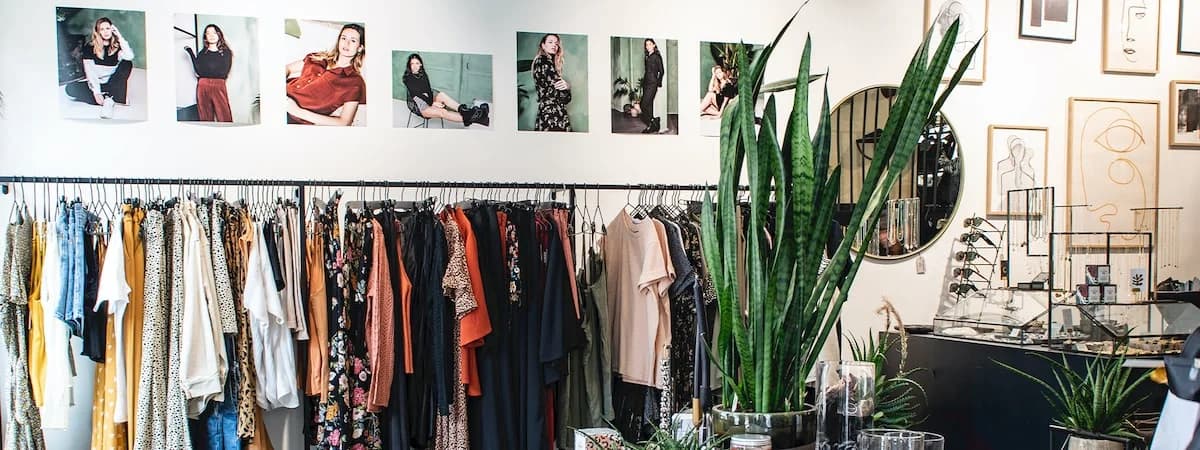
The best way to attract and convert customers is to wow them with your amazing merch. See to it that you’re always stocking the right products. Then once you have the right merchandise, come up with creative displays and arrangements to make them pop.
In-store visual merchandising includes everything from storefront displays and product displays to your cash wrap and retail POS system. The idea is to display your products in a way that draws attention to them and inspires customers to make a purchase.
This can include any of the following:
- Signs promoting your special deals, like a buy-one-get-one offer
- Putting your fastest-selling items on a mannequin in the center of the store
- Point of purchase displays near your register encourage users to make last-minute impulse purchases
- Identifying your “lakefront property”—the area of your store that generates the most revenue
Window displays
When creating window displays, use lighting, color and mood to your advantage.