Dev48
Language
  • About
  • Services
  • Industries
  • Technologies
  • Articles
  • Contacts
Book a call
    Home/Articles/Praxist autoresearch built for production
Dev48
info@dev48.org+375 29 320-40-96WhatsApp@isky_by

© 2026 · All rights reserved.

PRAXIST: Autoresearch, Built for Production

Фото: Alexas_Fotos (Pixabay) — https://pixabay.com/photos/self-confidence-self-consciousness-2121159/

September 26, 2026 at 12:24 AM

PRAXIST: Autoresearch, Built for Production

Fir t public preview at AI4 2026. Open- ource relea e to follow.

First public preview at AI4 2026. Open-source release to follow.

July 15, 2026Sapient Intelligence

The world’s first autonomous research system delivering validated, enterprise-ready results

Tired of repetitive model tuning or running out of new ideas to explore? Free yourself from the tedious side of research. PRAXIST is the world's first production-ready, open-source autonomous research system. It handles the repetitive heavy lifting while you focus on exploring ideas, developing insights, and tackling higher-level research questions. PRAXIST enables a new research paradigm—one in which just a few lines of instruction can autonomously turn a baseline into an above-SOTA result. At a fraction of the cost of Claude Code, PRAXIST can conduct research, write code, design and configure experiments and simulations, analyze results, refine iterations, and tune models—all with minimal human intervention. This fundamentally transforms both the workflow and economics of enterprise R&D. Today, PRAXIST supports more than 50 task types across over 30 industries and achieves leading performance on agentic research benchmarks such as MLE-bench. With PRAXIST, research teams can experience a 100×-accelerated frontier research workflow, powered by:

  • An autonomous, end-to-end research process
  • Advanced technology for AI-driven research and experimentation
  • State-of-the-art harness techniques
  • Leading research results produced autonomously by PRAXIST

The next generation of leading researchers will not simply use AI. They will know how to turn it into a decisive research advantage.


← All articles

What this article says

More in AI & Machine Learning

All →
Non-Contact Measurement of Wire Outer Diameter: Full-Length Measurement of Running Wire With High Resistance to Vibration
Keyence

Non-Contact Measurement of Wire Outer Diameter: Full-Length Measurement of Running Wire With High Resistance to Vibration

Non-Contact Measurement of Optical Fiber Outer Diameter: High Resistance to Runout When Measuring Traveling Core Fibers and Preforms
Keyence

Non-Contact Measurement of Optical Fiber Outer Diameter: High Resistance to Runout When Measuring Traveling Core Fibers and Preforms

Give your Vercel AI SDK agents memory with Redis Agent Memory
Redis

Give your Vercel AI SDK agents memory with Redis Agent Memory

What is an API endpoint? A guide to connected software
ElevenLabs

What is an API endpoint? A guide to connected software

Is Grok (Bot) Getting Better? Part 2: You Shouldn't Have to Ask.
Unbiased AI

Is Grok (Bot) Getting Better? Part 2: You Shouldn't Have to Ask.

Amazon Leo to launch 40 satellites on its first Vulcan mission
Amazon

Amazon Leo to launch 40 satellites on its first Vulcan mission

More from Sapient Intelligence

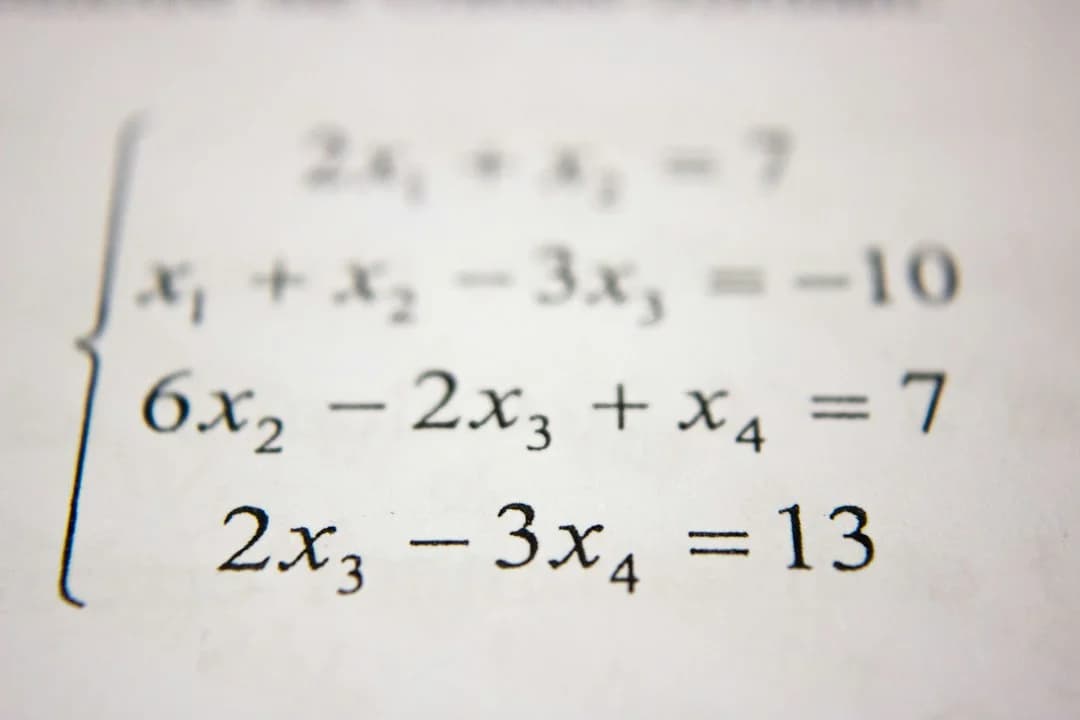
The Shape of a Calculation: A Geometric View of Arithmetic: Part 1
Sapient Intelligence

The Shape of a Calculation: A Geometric View of Arithmetic: Part 1

Beating PPO-LSTM Without Backpropagation: How signal-adaptive trust regions turn binary spiking policy search into a fast, stable alternative for continuous control
Sapient Intelligence

Beating PPO-LSTM Without Backpropagation: How signal-adaptive trust regions turn binary spiking policy search into a fast, stable alternative for continuous control

What is Latent Space?
Sapient Intelligence

What is Latent Space?

PRAXIST: Autoresearch, Built for Production
Sapient Intelligence

PRAXIST: Autoresearch, Built for Production

The Shape of a Calculation: A Geometric View of Arithmetic: Part 1
Sapient Intelligence

The Shape of a Calculation: A Geometric View of Arithmetic: Part 1