Eleven years ago, Parker Bolden had a bad feeling. He was, as he puts it, “perpetually devastated” all the time. Everywhere he looked in the world, things always seemed to get worse over time. Worse materials, worse craftsmanship, worse quality, worse longevity. The feeling was so powerful, he decided to make a change.
He left his finance job. “I decided that I wanted to return to my roots, growing up on a farm, making things with my hands,” he says. Without income, he downsized into an old Airstream trailer and fixed it up. To him, an Airstream represented the best in design, durability and engineering. His method of restoration was slow, meticulous, obsessive. He sold the trailer almost immediately. Then, he bought three more and did the same.
That’s how his Airstream restoration company, Perpetually Devastated, was born. The studio sits on an 11-acre farm in Coquille, Oregon, where Parker and a small team turn vintage Airstreams into fully restored works of ultimate craftsmanship. That same philosophy is still there. “Restoration, at its most rigorous, does not invent value, it reclaims it,” Parker says. When selecting vintage units for upfit, he looks for a sturdy shell with good bones. “There is nothing built quite like an Airstream. I think it says a lot about Airstream as a company that we are reimagining items that they created nearly 60 years ago, for their timeless design and their quality.”
“There is nothing built quite like an Airstream”
He refuses to rush. Perpetually Devastated takes on roughly one major build a year. Design director Negar Vali, who joined a few years ago, says the slower pace runs through the rest of their lives too, not just the workshop. “Everything I do right now on the farm, we make our own food, preserve it,” she said. “It's part of what we do for Perpetually Devastated: trying to reuse everything we can, and not waste anything.”
Parker calls it the slow train. “Authorship, I think, is why we go slow,” he says. “Because we're small, we're very flexible. We're able to pivot mid-project if the use case changes, if the design changes.”
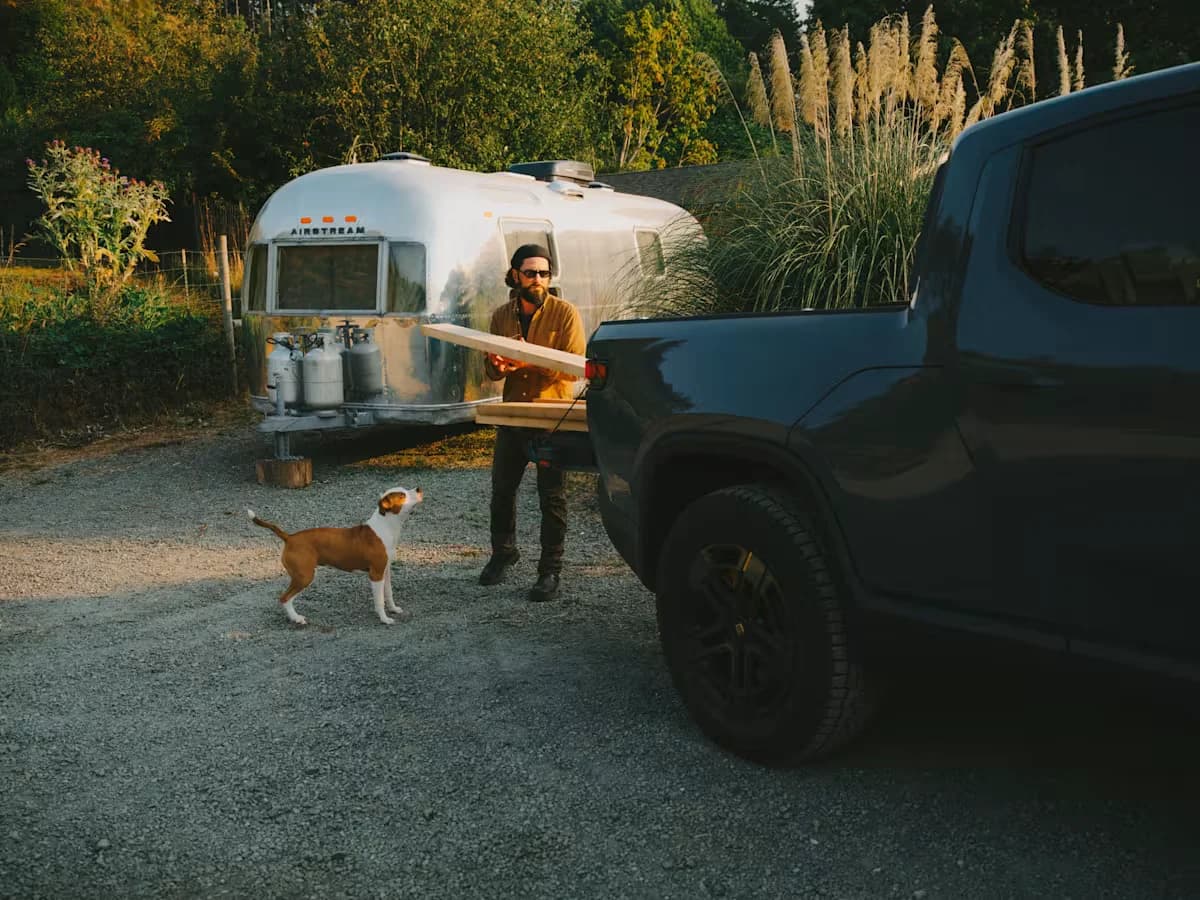
On the day of our photo shoot, he is in the middle of building a side table out of a salvaged myrtle-wood stump turned on the shop's lathe. The table is bound for a seven-month Airstream restoration going to a private property outside Highlands, North Carolina. Negar designed that interior to be “fun, bright, happy, with vibrant colors and patterns,” she says. “I was looking for a side table for staging the latest project, and I found one, but the client didn't really like it,” she says. “It was too minimal and too boring.” Parker’s answer was to make one from scratch.
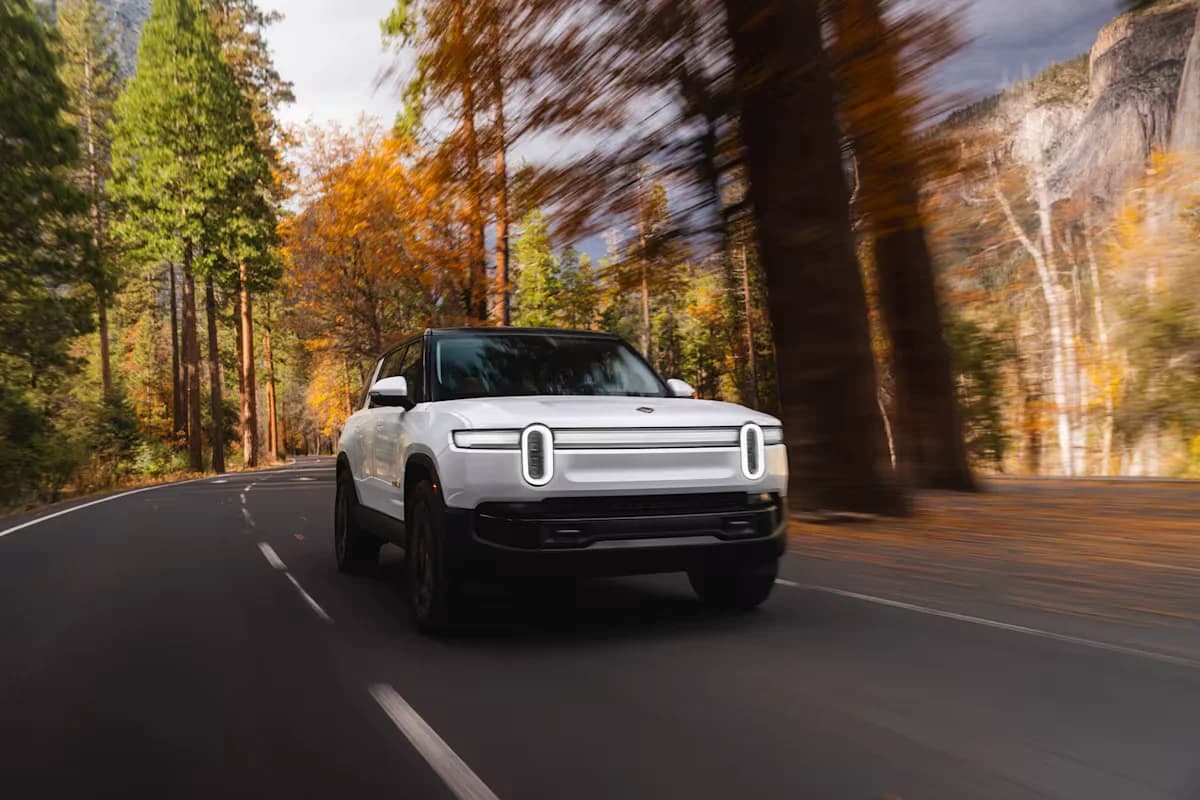
Parker needed some convincing before taking the R1T for a day, as part of the Rivian shoot. “I was fully prepared to not like the Rivian, because I'm really into older things,” he says. Then he drove one. “That is a very cool vehicle. You got my sign-off on that one.”
“It knows who I am, and it knows what I need.”
Both Parker and Negar see common cause with Rivian. “I think the big overlap is creating a space,” Parker says. “When you're inside of that vehicle, it feels similar to being inside one of our finished builds. It doesn't feel like a mass market production automobile to me.”
Negar made the same comparison from behind the wheel. “The feeling, when we were driving the Rivian, was very similar,” she said. “Every corner, it was well thought through, and it was intentional.” Parker put it more directly: “The space knowing you, rather than you just knowing the space, is where I feel like there's overlap. It knows who I am, and it knows what I need.”
The good news is that, whether or not you manage to get your hands on one of Parker’s builds, the R1T is indeed a perfect match for what Parker and team are doing.