Americans are starting to take their health into their own hands—spending more time and money on longevity. But what does longevity really mean?
Most people think of longevity as living longer, but there’s another aspect to consider: healthspan, the years you spend in good health, free from chronic disease and serious illness.
Between 2009 and 2019, life expectancy in the United States rose by about six months, while healthy life expectancy fell. A 2026 Global Burden of Disease analysis found that Americans now spend about 14 years of life in poor health on average.
How Does Biological Age Relate to Longevity?
Biological age is an estimate of how old your body seems based on biomarkers of physiological processes. Your biological age is different from your chronological age, the number of years since you were born. Some people track biological age to understand how they’re aging and what it might mean for their healthspan.
A biomarker is “a defined characteristic that is measured as an indicator of normal biological processes, pathogenic processes, or responses to an exposure or intervention, including therapeutic interventions.” Some methods for estimating biological age use biomarkers such as DNA changes or proteins in the blood. For instance, a commonly studied method is the epigenetic clock—a laboratory test that uses a blood, saliva, or tissue sample to estimate how old your cells appear based on chemical changes in your DNA.
Newer research has tested an “organ clock” that analyzes thousands of proteins in your blood to estimate how specific organs are aging. People whose hearts appeared older than expected for their age had more than double the risk of heart failure over the next 15 years, and for most organs, faster aging was linked to a 15 to 50% greater risk of death from any cause.
Biomarkers used to study aging aren’t limited to molecular measures. Some researchers also describe physiological measures, such as cardiorespiratory fitness, as biomarkers because they reflect functional capacity and are associated with morbidity and mortality. These are just a few of many methods used to study biological aging. Different methods capture different body systems and physiological processes, so no single test measures your holistic “biological age.”
Can a Wearable Estimate Your Biological Age?
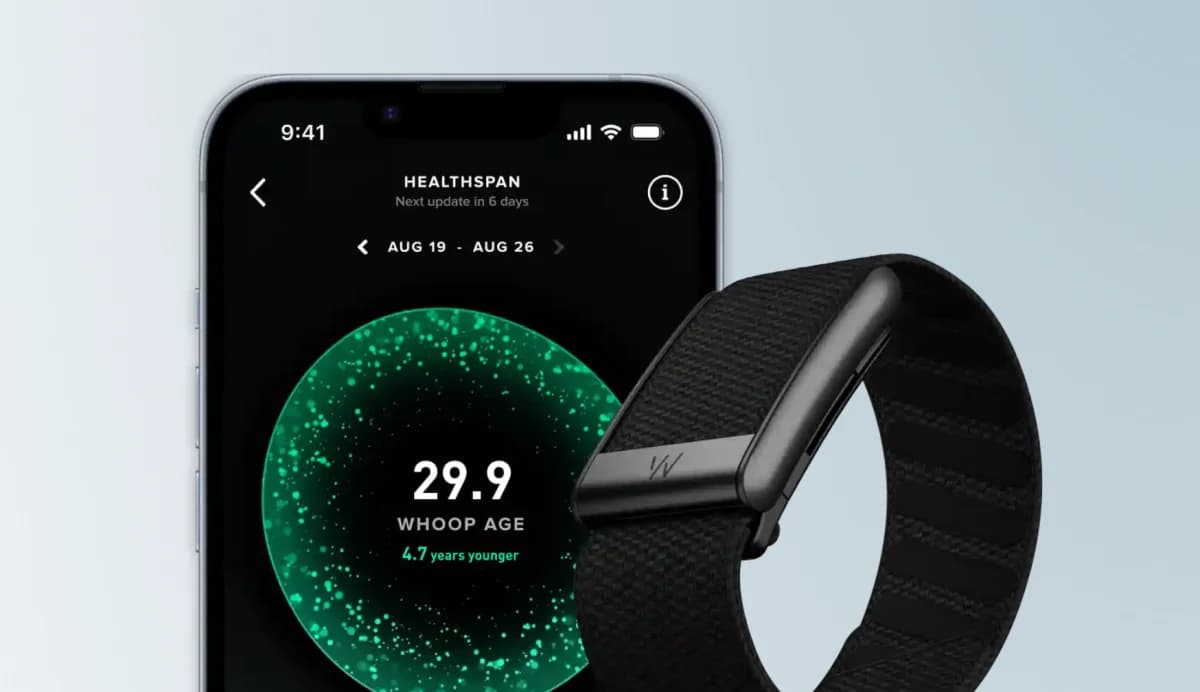
No wearable can measure your biological age directly. Some, like Oura, estimate how specific parts of the body may be aging. Oura’s Cardiovascular Age estimates how your arteries are aging based on signals associated with pulse wave velocity, the speed at which your pulse travels through them. Arteries tend to stiffen with age, and stiffer arteries carry the pulse faster. Cardiovascular Age is most useful as a trend read alongside your other data.
Which Wearable Measures Correlate With Long-Term Health?
Several measures a smart ring can track overnight have been linked to long-term health and mortality in large studies.
Tips For Healthy Aging
- Aerobic fitness: Regular aerobic exercise, like brisk walking, cycling, or swimming, is one of the most reliable ways to raise your VO₂ max. In a 2025 meta-analysis in The Lancet Public Health, taking about 7,000 steps a day was associated with a 47% lower risk of death from any cause, compared with taking just 2,000 steps.
- Strength training: Consistent strength training also helps maintain the muscle mass and bone density associated with healthy aging. In a 2022 meta-analysis of 16 studies, strength training was associated with a 10–17% lower risk of death from any cause.
- Prioritize recovery and stress management: Resting heart rate and HRV both respond to how well you recover. Consistent sleep, rest days, and less alcohol can all help lower your resting heart rate and increase your HRV.
- Sleep consistency and duration: A regular sleep schedule predicted mortality risk more strongly than sleep duration. Going to bed and waking up at similar times each day can support long-term health.
Lifestyle choices can greatly impact your health, but some aspects of health are entirely out of your control. A 2026 study in Science estimated that genetics account for about half of the variation in human lifespan, with lifestyle, environment, and chance making up the rest.
Member Tip: Use Tags in the Oura App to log habits like late meals, alcohol, or workouts. After a few weeks, look at your Trends to see which habits affect your Resting Heart Rate, HRV, and sleep.
Using a Smart Ring to Promote Healthy Aging
Aging researchers often describe healthy aging in terms of intrinsic capacity, the physical and mental abilities a person can draw on as they get older. A 2024 review in The Journal of Frailty & Aging examined how wearables could support healthy aging by grouping intrinsic capacity into five domains: vitality, locomotion, psychological well-being, cognition, and sensory function.
Oura captures aspects of vitality and locomotion through some of the biometrics mentioned above, but it only partly measures locomotion by tracking how much you move. Features like Daytime Stress and Resilience may offer an indirect view of physiological stress, but a wearable can’t directly measure cognition or sensory function.
Oura’s biometric data can be read alongside Health Panels and Lab Uploads. Reviewing these measurements over months is the most effective way to see how your habits are shaping your long-term health.
Frequently Asked Questions About Longevity
How accurate is a smart ring’s VO2 max, and how does it measure it?
A smart ring can’t measure VO2 max directly. A precise reading requires a lab test that analyzes the air you breathe during aerobic exercise. Oura’s Automatic VO2 Max feature estimates VO2 Max from your regular GPS-enabled walks, runs, and hikes, and it activates after five qualifying activities. Automatic VO2 Max is currently available in Oura Labs for Oura Ring Gen3 and later.
What’s a good VO2 max for my age?
VO2 max naturally declines with age, so “good” depends on your age and sex. In U.S. reference data from lab treadmill tests of healthy adults, the median VO2 max for men is about 48 mL/kg/min in their 20s, 33 in their 50s, and 24 in their 70s. For women, it’s about 38 in their 20s, 23 in their 50s, and 18 in their 70s.
What should you look for in a health tracker for longevity?
The best wearable for longevity is one you’ll comfortably wear every day and night. Many of the signals tied to long-term health, including resting heart rate, HRV, and body temperature, are most reliable when measured during sleep. It also helps to choose a device that brings sleep, activity, and recovery together in one place and shows how your numbers change against your own baseline over time.