Are you a new parent? It’s likely two things are true in your life right now: you love your child deeply, and you also long for the sleep you once knew. While most of us weren’t getting enough high-quality rest before parenthood, parenting takes sleep deprivation to new and exhausting levels.
One recent study found that in their child’s first year, dads lose an average of about 13 minutes a night—that’s about 80 hours over the course of the first year. Moms lose an average 62 minutes in the first three months of their child’s life, and an average of 40 minutes a night over the entire first year, for a whopping 243 lost hours of sleep by their child’s first birthday.
In addition to losing significant sleep time, parents also experience major declines in the quality of their sleep; this same study found that parents’ satisfaction with their sleep doesn’t rebound to pre-parenthood levels until their children are six years old.
The sleep challenges facing new parents are often particularly intense, but the impact of sleep loss on parents is no different than for anyone else: insufficient and poor-quality sleep compromise the body’s mental, emotional, and physical health.
Here are some of the most important steps new parents can take to protect and enhance their sleep—and their children’s—during the first weeks, months, and years of parenting.
Create a Better Sleep Environment for You and Your Newborn
There’s a core set of environmental issues to pay attention to in maintaining a sleep-promoting environment for your family.
1. Temperature
For adults and children from infancy onward, the optimal sleep temperature is the same: 68-72 degrees Fahrenheit. Infants self-regulate their body temperature poorly, so keeping the room in this range helps prevent overheating. For infants and young children who are napping, it’s particularly important to keep the temperature of sleeping spaces steady throughout the day and night. Adjust heating and cooling systems and sunlight exposure in bedrooms as needed, so sleeping areas are always nap-ready.
2. Noise
The barking dog, the slamming screen door–just a couple of the sounds that strike fear in parents’ hearts. White noise machines (or apps) can be effective in masking environmental noise and helping babies and young kids stay asleep during naps and at night. And research indicates white noise may help adults fall asleep more quickly.
New parents need to pay particular attention to the decibel level of white noise. A 2014 study found that many white noise machines designed for use with infants produced a level of sound that could cause damage to babies’ hearing. To protect your child from noise-induced hearing loss, make sure the machine is placed no closer than 7 feet from your child’s crib or bed, and that the decibel level does not exceed 50 dB.
3. Light
Darkness is essential for stimulating the production of melatonin, a key hormonal sleep facilitator and regulator of circadian sleep-wake cycles. During naps and nighttime sleep, keep sleep spaces dark (blackout curtains can help). If you use a nightlight, choose a dim, warm, or red one, and keep it out of your baby’s direct line of sight. During the day, do the opposite: daylight exposure helps babies develop their day–night rhythm and supports your own sleep.
3. Split the night shift when you can
The sleep deprivation of the earliest months of parenthood is intense. You’re waking every couple of hours to feed your newborn, falling back in bed, and before you know it, it’s time for someone to get up again. These short stints of sleep deprive parents not only of sleep amounts, but also of time spent in deep, slow-wave sleep and REM sleep, twostages of sleep where the body undertakes significantphysical andmental repair and rejuvenation.
If possible, split overnight parenting duties to allow both partners to get longer blocks of sleep, so you’re getting more time in these restorative sleep stages.Knowing your chronotype can help guide you: use your and your partner’s natural, biological preferences for evenings and mornings in divvying up late-night and before-dawn feedings, changings, and soothings.
Member Tip: Oura estimates your Chronotype from your sleep timing, activity, and temperature trends—it may shift when your routine or life changes for an extended stretch, such as becoming a new parent. You can view your Chronotype on the Body Clock card in the Oura App after 40 to 90 days of wear.
4. Set yourself up to fall back asleep quickly
Paving the way for a quick return to sleep depends a lot on what you don’t do while you’re up.
Don’t turn on bright lights. Use the dimmest lighting possible, and consider installing red-light nightlights around the house, rather than turning on overheads. (This includes trips to the bathroom.)
Don’t turn on the television or power up your phone. These devices deliver a double-whammy to your ability to fall back asleep. The bright,blue-rich light from these devices suppresses melatonin and stimulates alertness. And the content you consume will stimulate you mentally, pulling you further from the calm quietness of mind that eases a transition back to sleep.
Don’t start thinking about tomorrow. You’ve got an endless to-do list, but the middle of the night is not the time to doom scroll through it in your mind.
Member Tip: In the Oura App, you can access Explore content, which includes meditation and breathwork sessions to support your sleep. Start a session, lock your phone, and control playback from your lock screen so the light stays off. For a simple timer with an optional soundscape, tap the + on the Today screen to start an unguided session.
How Long Should I Nap During the Day When I am Sleep-Deprived with a Newborn?
For new parents, “sleep when your baby sleeps” is a tried and true piece of advice. It’s how you can make up for the loss of overnight sleep. The goal for new-parent napping is to replenish sleep and boost your energy during your day without interfering with your ability to sleep at night.
Both short naps and longer naps have a place in a new parent’s sleep recovery strategy. I recommend naps in two intervals:
- A 15-20 minute nap can give you a short-term boost to your physical energy and mental sharpness without leaving you feeling groggy when you wake up.
- A 90-minute nap is a more deeply restorative daytime rest that can take you through a full sleep cycle, giving you some of the benefits of deep, slow-wave sleep and REM sleep.
Dads and moms can use the quick, 15-20 minute nap throughout the day, up to about 3-4 hours before bedtime. To avoid interfering with your nighttime sleep routine, it’s recommended to avoid a 90-minute nap within 5 hours of your anticipated bedtime.
And when you get to bedtime? Go to bed. Keeping as much of a consistent nighttime routine in place as possible will help you maximize your sleep throughout your early-childhood parenting months and years.
Member Tip: With Oura’s Nap Detection feature, any nap between 15 minutes and three hours appears on your Today timeline and Sleep screen, and it counts toward your Sleep and Readiness Scores.
Stay Attuned to Your Mental Health
It’s common for new parents to experience mental health challenges. Postpartum depression can occur for moms—and dads, too. Research suggests that 8-17% of moms and 7-9% of dads experience PPD.
In fathers, PPD often manifests with feelings of being overwhelmed and not up to the task of parenting, and these feelings in turn can lead to feelings of anger and frustration. Sleep is critical to emotional regulation and resilience.
Alongside the other transformational changes of becoming a parent, the lost sleep of new parenthood can make parents more emotionally reactive and more prone to negative thinking, and increase feelings of stress, depression, and anxiety.
Researchers are now exploring whether continuous biometric and sleep data could help explain why some new parents develop mood disruptions, and others don’t. A 2026 review in Reproduction points out that sleep, circadian rhythms, and hormones all shift during pregnancy and after birth, and that these same systems are linked to depression and anxiety. Wearables are not a diagnostic tool, though, and none is currently validated to diagnose or screen for postpartum depression. If something feels off, talk with your care provider.
Use Oura to Understand Your Sleep as a New Parent
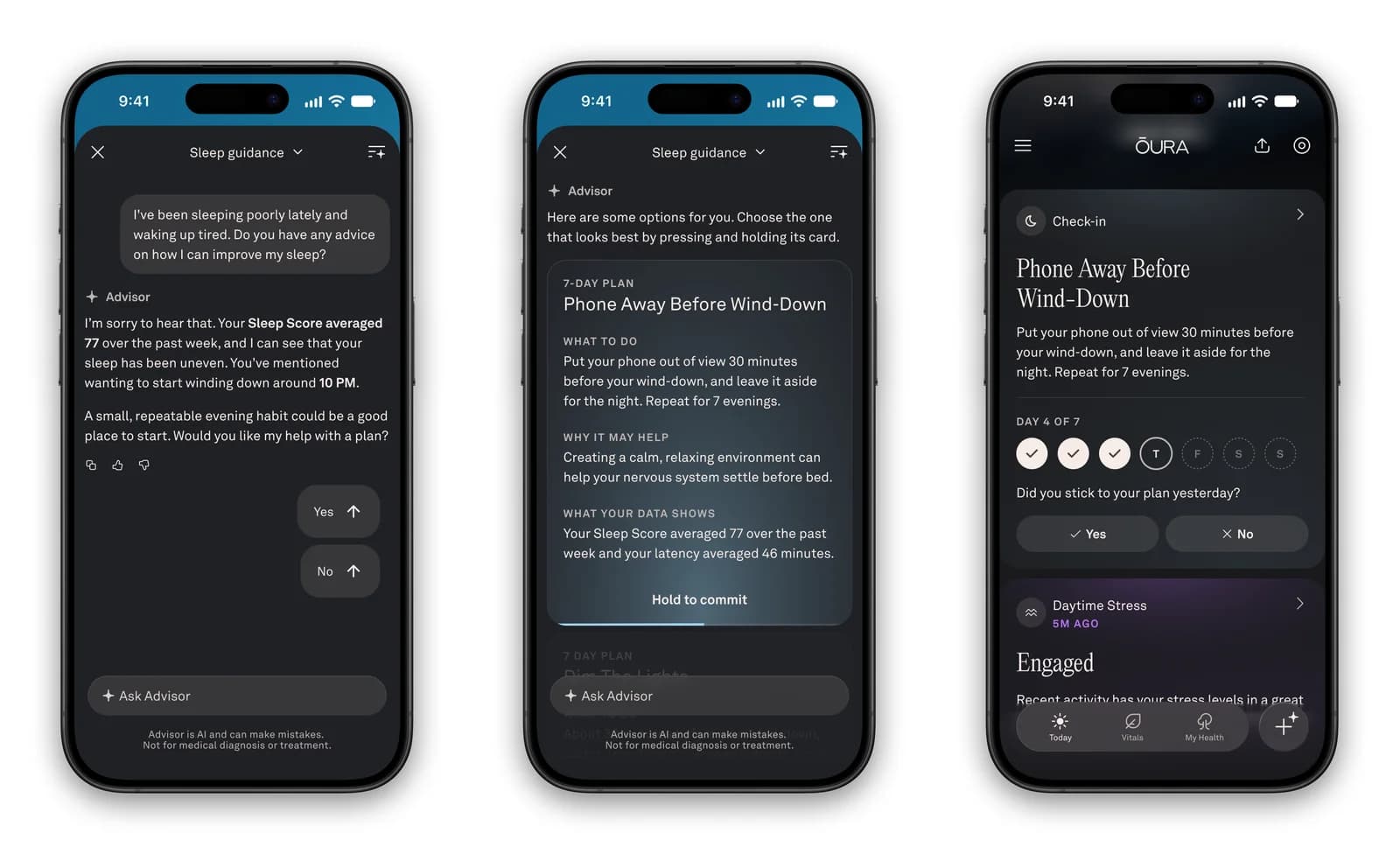
Your sleep will look different for a while. As your Oura data adjusts to this new season, your personal baselines will shift with it. Night feeds and newborn wake-ups break sleep into shorter stretches, which may pull down contributors to yourSleep Score like Restfulness and Efficiency.
If your Sleep Balance shows sleep debt building, naps can help. Short daytime sleep counts toward your rest, so napping when the baby naps is one of the simplest ways to make up some of what the nights take.
If you’re curious, you can add a quick Tag for things like night feeds or a partner taking a shift. Over time, Trends may show patterns that are useful to notice or to talk through with your partner or care provider. Above all, let your data support you rather than add pressure.