Strategy
Captivate your audience with expert short-form video tips for brands and social media managers, plus metrics like completion rate and shares.
Key takeaways
- Short-form video defined: Video content typically under 60 seconds, built for vertical, mobile-first platforms like TikTok, Instagram Reels, YouTube Shorts, and Snapchat Spotlight.
- Why it matters for marketing: Most consumers prefer short video when learning about a product, and platform algorithms surface it to people who do not already follow you.
- How to stand out: Strong hooks in the first two seconds, platform-native vertical formatting, accessible captions, trend awareness, and consistent posting.
- How to measure it: Track completion rate, engagement rate, shares, and click-throughs rather than view counts alone.
- Tools that help: Hootsuite Social OS lets teams plan, publish, and measure short-form video across every channel from one calendar.
What is short-form video?
Short-form video is video content typically under 60 seconds, created for vertical, mobile-first platforms. Short videos are intended to be quick, easily digestible content for viewers scrolling through social media feeds or other outlets.
The definition has shifted as platforms raised their limits. TikTok now accepts uploads far longer than a minute, and YouTube Shorts allows up to three minutes. But the practical sweet spot has not moved much: the videos that get watched all the way through are still short.
Common examples of short-form videos include TikTok videos, Instagram Stories and Reels, YouTube Shorts, and Snapchat Spotlight and Stories.
Bonus: Claim your pack of free animated Instagram Reels templates created by Hootsuite’s professional designers. Easily customize them in Canva, and take your Reels game to the next level today.
Short-form vs. long-form video
Long-form video usually runs longer than two minutes and is built for depth: tutorials, interviews, documentaries, product walkthroughs. Short-form video is built for attention: it earns a view from someone who was not looking for you.
Here is how the two formats compare.
Dimension
Short-form video
Long-form video
Typical length
Under 60 seconds
Best platforms
TikTok, Instagram Reels, YouTube Shorts, Snapchat Spotlight
YouTube, LinkedIn, owned channels, webinars
Production effort
Low. A smartphone and a good idea
Higher. Scripting, editing, often multiple takes
Best use case
Awareness, discovery, trend participation, product teasers
Education, demos, thought leadership, search-driven content
Engagement pattern
High volume of quick views, strong share potential
Fewer views, longer watch time, higher intent
Monetization
Shorts revenue sharing, brand deals, shoppable tags
Mid-roll ads, sponsorships, gated offers
Most strategies benefit from both. Short-form video is where you win attention, and long-form is where you keep it.
Why does short-form video matter for marketing in 2026?
Short-form video matters because it is how most people now prefer to learn about products, and because platforms distribute it to audiences you have not built yet.
Short-form video content isn’t new. In fact, Vine, the short-form video app that launched publicly in January 2013, was an early pioneer of the format. But what started as a niche platform has grown into something much larger, with Instagram, TikTok, and YouTube all building short-form video features of their own.
Consumer preference is the clearest signal. Data from Wyzowl found that short videos seem to perform best when marketers assess video ROI, and that, given the choice, most people would prefer to learn about a product through a short explainer video versus other content.
Reach follows the same pattern. On YouTube, Shorts average more than 200 billion daily views, which gives even small channels a realistic shot at discovery.
Part of the appeal is practical. With an average video length of 15 to 30 seconds, creators can deliver their message in a very small window of time, allowing viewers to consume content on the go with little to no commitment.
Short-form videos can also be shared and watched from any device, which furthers their accessibility and popularity among users. From sending Snapchat stories on the subway to watching YouTube Shorts in the dentist waiting room, viewers can access and engage with content at any time.
Cost is the other factor. Short-form video is generally cheap and easy to produce and requires minimal production effort. All you need is a smartphone and a good idea. Plus, hosting platforms like TikTok and Instagram are all free to use.
In short, short-form video content matters for marketers because:
- Distribution: Algorithms surface it to non-followers, so reach is not capped by follower count
- Cost: Production costs stay low relative to the reach it can generate
- Consumer preference: 62% of U.S. adults prefer short-form video over text or long-form alternatives when consuming content
- Speed: Teams can react to trends and cultural moments within hours, not weeks
- Commerce: Shoppable formats shorten the path from view to purchase
Best platforms for short-form video in 2026
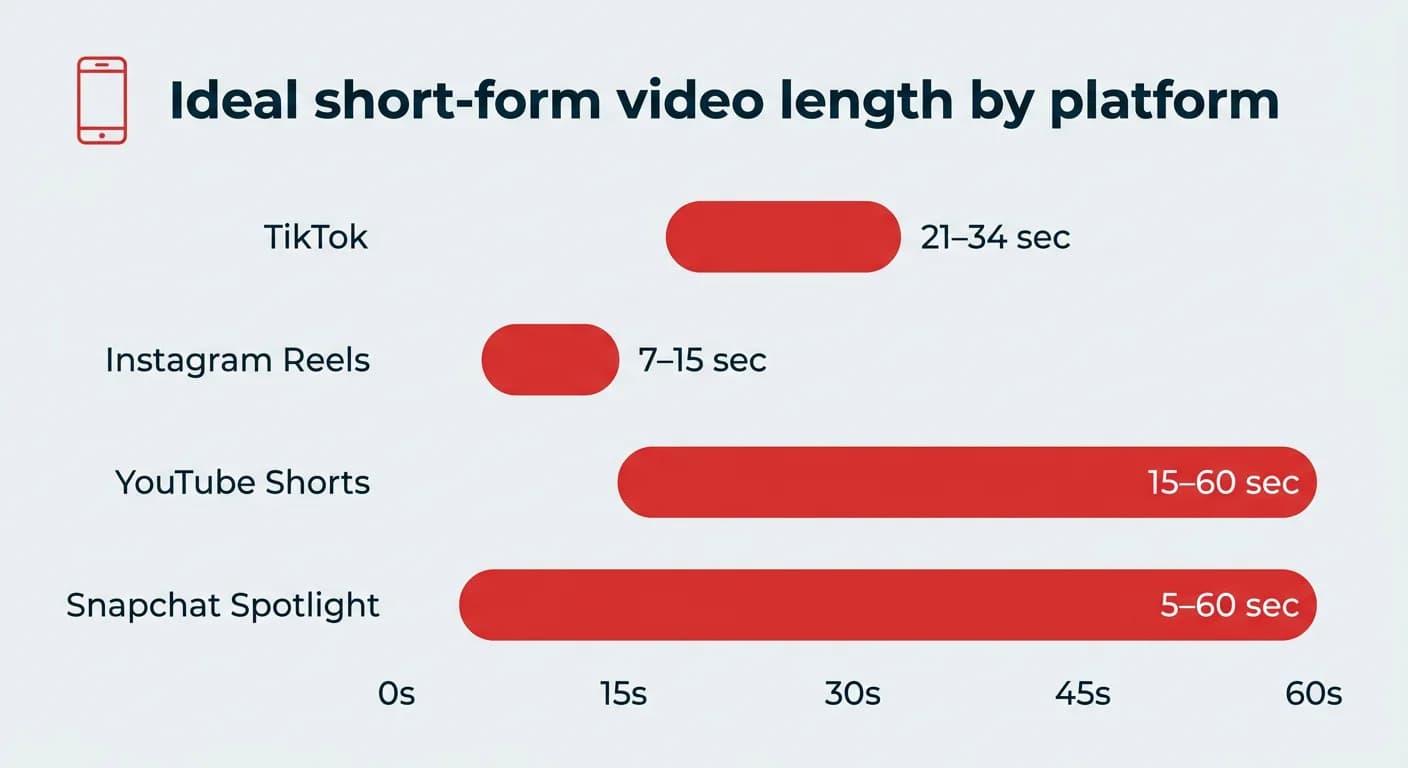
The four platforms that matter most for short-form video are TikTok, Instagram Reels, YouTube Shorts, and Snapchat Spotlight. Each has a different maximum length, a different ideal length, and a different audience, so the same video rarely performs identically across all four.
Ideal short-form video length by platform
Platform
Ideal length
Primary audience
Key algorithm factor
Monetization
TikTok
21 to 34 seconds
Gen Z and millennials
Watch time and completion rate
Brand deals, TikTok Shop
Instagram Reels
7 to 15 seconds
Millennials and Gen Z
Sends and shares per reach
Brand deals, Instagram Shopping
YouTube Shorts
15 to 60 seconds
Broad, skews wider in age
Viewed vs. swiped away
Ad revenue sharing, YouTube Shopping
Snapchat Spotlight
5 to 60 seconds
Teens and young adults
Time spent and replays
Creator programs, brand partnerships
TikTok
TikTok is still the default home for short-form video and the platform where trends usually start. Short is the sweet spot here: TikTok told WIRED Magazine that its recommended video length sits between 21 and 34 seconds, and the same reporting found that around half of TikTok users find videos longer than a minute stressful.
Discovery is driven almost entirely by behaviour rather than follower count. TikTok’s algorithm suggests videos based on what users watch, rewatch, and finish, which is why completion rate matters more than any vanity metric.
Instagram Reels
Reels can run up to three minutes when recorded in-app, but Hootsuite reporting found that between 7 and 15 seconds is where you want to land. Reels — especially when built from ready-made Reels templates — is the strongest option if your audience already follows you on Instagram, because it feeds both your followers and the Explore surface.
Instagram weights shares and sends heavily, so a Reel that people forward to a friend will travel further than one that only collects likes.
YouTube Shorts
YouTube Shorts allows videos up to three minutes, though 15 to 60 seconds remains the practical range. Shorts offers built-in ad revenue sharing through the YouTube Partner Program, which makes it attractive for creators and for brands running always-on content.
Pew Research found roughly nine-in-ten U.S. teens use YouTube versus 63% for TikTok, and YouTube skews broader in age overall, so it is worth testing if your buyers are older than the typical TikTok audience.
Snapchat Spotlight
Spotlight is Snapchat’s public, algorithmic feed, and clips can run up to 60 seconds. The audience skews young, and the tone is casual, so polished brand films tend to underperform here.
Use Spotlight for raw, playful content and for reaching teen and young adult audiences who spend less time on other platforms.
How to create short-form videos that stand out
Standing out is less about production value than about matching the format. Here are the eight things that make the biggest difference:
- Use vertical, platform-native formatting
- Hook viewers in the first two seconds
- Tap into trending sounds, formats, and challenges
- Showcase products in action
- Leverage user-generated content
- Partner with creators and influencers
- Make your content accessible
- Include a clear call to action
1. Use vertical, platform-native formatting
Most short-form video platforms are designed for content to be viewed on mobile devices in a vertical format, at a 9:16 aspect ratio.
Vertical formats allow videos to take up the full width of a phone screen, creating a more immersive and engaging experience for the viewer.
On platforms like Instagram, TikTok, and Snapchat, users are used to scrolling through vertical feeds and will be more likely to watch your content if it’s in the same format. By contrast, horizontally aligned videos can often appear small and difficult to view, resulting in lower engagement.
If you want to know the best sizes for content on every platform, check out our social media size guide.
2. Hook viewers in the first two seconds
Short-form video is just that: short. This means you only have a few seconds to capture your viewers’ attention.
Starting your video with a strong hook, through on-screen text, eye-catching visuals, or with a tantalizing story, can help draw your audience in and keep them watching.
The best types of short-form videos for marketing capture attention, evoke emotions, elicit action, and inspire engagement. Focus on creating an emotional narrative that will stick with viewers long after they finish watching.
3. Tap into trending sounds, formats, and challenges
Short-form video trends move fast, and the best creators are the ones who can stay ahead of the curve.
Are there sound bytes or songs that are being used again and again? Filters, animations, and visuals that you see posted day after day? Audiences are drawn to these trends, and incorporating them into your videos will increase the chances of your video reaching more people.
Humour is part of the same instinct. Avoid offensive content, but don’t hold back on cultural references that make your video feel native to the feed.
Trend awareness only pays off with consistency. Platforms like TikTok and Instagram prioritize accounts that post between three and five times per week, while Snapchat rewards posting multiple times per day. Regular posting gives the algorithm enough content to work with, though quality still matters more than volume.
4. Showcase products in action
One of the best ways to leverage short-form video content as a brand is by showcasing your products in action. Explainer videos help potential customers visualize how and why they would use the product, building anticipation for it, if done correctly.
You can easily showcase a product’s features, benefits, and testimonials all within a few seconds of viewing time. If your product has a niche use, like Vessi’s waterproof sneakers, show viewers all the ways they can use them in their everyday life.
Consider installation and set-up videos for more technical products. Your customers will appreciate the convenience and you’ll be able to better educate them on how your product works.
5. Leverage user-generated content
A great way to get more eyes on your short-form content is to tap into user-generated content (UGC). This can be anything from customer stories, reviews, and testimonials to videos of your customers using the product.
By leveraging UGC, you build trust with potential customers as they can see the real-life experiences of people who have used your products or services. You can then share this content on your channels for added exposure.
Building hype around product drops, launches, and promotions fits short-form video platforms well. Offer free products or trials for the best TikTok Stitch or Duet videos. Or, engage a well-known creator to talk about your product and create a branded hashtag, the way Shaq did for Papa John’s.
6. Partner with creators and influencers
If you’re looking to reach a wider audience, teaming up with influencers or relevant brands can be highly effective. Creator recommendations carry real purchase influence with younger audiences, which is why creator partnerships now sit inside most short-form video budgets rather than beside them.
Partnering with relevant brands and influencers can increase your reach and help create more engaging content for your short-form videos. Look for influencers with a similar target audience to yours and a good track record of producing high-quality content.
For brand partnerships, consider companies that have similar values to yours, or products that are complementary.
7. Make your content accessible
Accessibility in social media is no longer a nice-to-have, but an absolute must.
People with disabilities should be able to view your short-form video content as easily as any other viewer. That’s why you need to make sure that any text or audio included in your videos is accessible and optimized for viewers who may have hearing or visual impairments.
This might include adding text overlays or captions, as well as any visual cues that might help viewers understand the content. Additionally, you should focus on providing high-quality audio that can be heard clearly.
Here are a few more tips on making short-form video content accessible:
- Leave enough time for viewers to read animations or text.
- Use post captions to describe video content.
- Apply captions and text to solid backgrounds.
- Avoid flashing content and give trigger warnings if used.
- Follow WCAG (Web Content Accessibility Guidance) 2.1 guidelines.
8. Include a clear call to action
Short-form video content is not complete without a clear call to action at the end. This should be your cue to direct viewers on what they should do next, whether it’s subscribing to a channel or visiting your website.
Shoppable formats make this easier than it used to be. TikTok Shop, Instagram Shopping, and YouTube Shopping all let you tag products directly in a video. If you don’t have the option to tag a product, add a purchase link in your bio or in the video description so you capitalize on every view.
If you’re using links in your bio, be sure to add UTM tracking parameters so you can easily track how many people click through and make a purchase.
Bonus tip: Avoid cross-posting content with watermarks
One of the most significant barriers to brands and creators when it comes to short-form video content is resourcing. While a 15-second video might not seem like a lot of effort, creating original content does take time and effort.
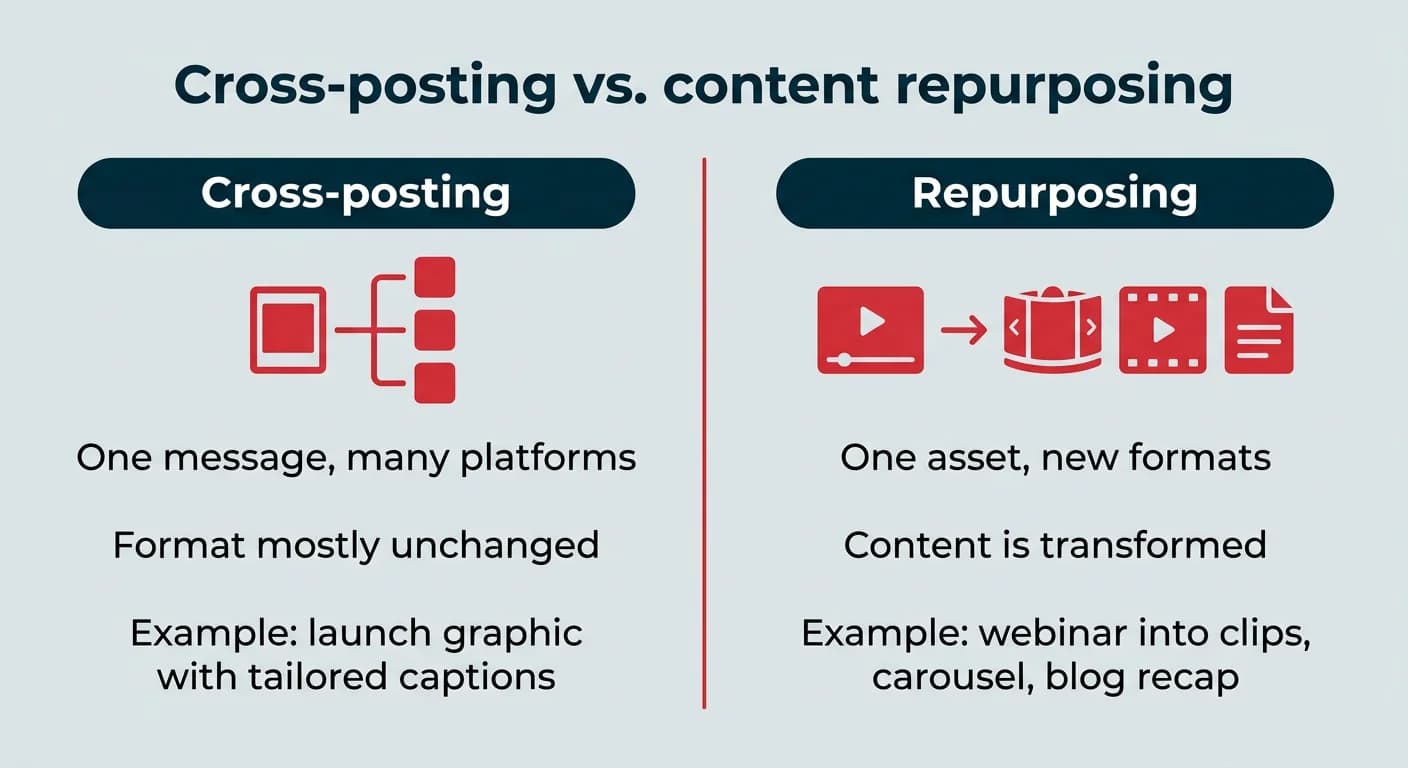
Because of this, many brands opt to cross-post the same video across multiple social media platforms. While this can save time, it’s important to note that recycled content, especially content with clear watermarks, can hurt your reach on platforms like Instagram.
Instagram still prioritizes original content in Reels recommendations, which means visibly recycled video can be shown to fewer people. TikTok and YouTube apply similar logic to reposted clips.
Cross-posting is not off the table entirely. Check out our blog on removing TikTok watermarks so you can repurpose content without getting penalized.
Short-form video trends shaping 2026
The format itself is stable, but how teams produce and distribute short-form video is changing quickly. The 2026 social trends data points to four shifts worth planning around.
AI-assisted production. Text-to-video, automatic captioning, and AI editing tools have moved from novelty to default. Most teams now use them to produce variants of a single idea rather than to generate videos from scratch, which cuts turnaround time without flattening brand voice.
Shoppable short-form. TikTok Shop, Instagram Shopping, and YouTube Shopping have made the video itself a checkout surface. Expect more product-led creative built specifically for tagged purchases rather than retrofitted from awareness campaigns.
Vertical-first storytelling beyond social. Brands are reusing 9:16 video on websites, in email, and in paid placements, which means shooting vertical by default saves reformatting work later.
The short and long divide is blurring. Platforms keep raising maximum lengths, but engagement still favours brevity. The useful read is that longer limits give you room, not permission.
Best short-form video tools for creators and teams
Creating and sharing short-form videos is easier when you have the right tools. Check out our top picks below.
Hootsuite Social OS
Scheduling short-form video manually across four platforms gets expensive fast. Hootsuite Social OS brings planning, publishing, and performance into one place so you can set up a consistent posting schedule instead of rebuilding one every week.
You can plan, publish, and monitor TikToks, Instagram Reels and Stories, and YouTube videos from a single calendar. Unlike many native schedulers, which cap how far ahead you can schedule, Hootsuite lets you queue posts as far out as you want.
Analytics then show how each video performed across channels, so you can compare completion and engagement side by side rather than exporting from four dashboards. Multi-account support means agencies and larger teams can manage every brand and channel through connected workflows.
Start growing your following on TikTok right now — for free
Try Hootsuite free for 14 days and see how it can help you skyrocket followers, reach, and engagement on TikTok.
Adobe Express
Built for editing on the go, Adobe Express is a good fit for social teams who need to turn around short-form video content quickly without opening a desktop editor.
Take advantage of the preloaded templates and themes, drag-and-drop features, and video resizing capabilities to create custom short-form videos quickly. Plus, add text, animation, and stickers to give your videos a unique edge.
CapCut
CapCut is a strong option if you want more control over cuts, captions, and effects. It shares a parent company with TikTok, so templates tend to match whatever is trending on the platform.
With CapCut, you can trim and merge clips and add sound effects, custom fonts, and stickers. The core editor is free, with paid tiers for advanced features.
How to measure short-form video performance
Measuring short-form video well means looking past view counts, since a view can be registered in under a second on most platforms. The metrics that actually predict business impact are the ones tied to attention and action.
- Completion rate: The share of viewers who watch to the end. This is the single strongest signal to most algorithms, and the best early read on whether your hook works.
- Average watch time: How long people stay. Useful for comparing videos of different lengths.
- Engagement rate: Likes, comments, and saves relative to reach. Shows whether the content resonated, not just whether it was served.
- Shares and sends: The clearest sign of value, and the metric Instagram and TikTok weight most heavily for distribution.
- Click-through rate: Clicks on your link, product tag, or profile divided by views. The bridge between awareness and intent.
- Conversions: Purchases, sign-ups, or leads attributed to the video through UTM parameters or in-platform shop data.
Benchmarks vary by platform and audience size, so the more useful comparison is against your own recent posts. Track the same metrics weekly, look for the videos that outperform your median, and work out what they had in common.
Hootsuite analytics pulls these metrics together across TikTok, Instagram, YouTube, and your other channels, so you can tie short-form video performance to traffic, leads, and revenue in one report instead of stitching exports together.
FAQ: Short-form video
What is short-form video?
Short-form video is video content typically under 60 seconds long, designed for vertical, mobile-first platforms like TikTok, Instagram Reels, YouTube Shorts, and Snapchat Spotlight. Platforms allow longer uploads, but engagement still concentrates in the shorter range.
How long should a short-form video be?
The ideal length for a short-form video depends on the platform, but most high-performing videos fall between 15 and 60 seconds. TikTok’s recommended range, as shared with WIRED, is 21 to 34 seconds, Instagram Reels perform best at 7 to 15 seconds, and YouTube Shorts tend to land between 15 and 60 seconds.
What is the difference between short-form and long-form video?
Short-form video is typically under 60 seconds and optimized for quick, mobile consumption, while long-form video runs longer than two minutes and is suited for deeper storytelling, tutorials, or thought leadership. Short-form wins attention and discovery; long-form builds depth and search visibility.
Which platform is best for short-form video?
The best platform for short-form video depends on your audience and goals, but TikTok, Instagram Reels, and YouTube Shorts are the three dominant options for most brands in 2026. TikTok is strongest for trend-driven discovery, Reels for reaching existing followers, and Shorts for broad age reach plus revenue sharing.
How do you make money from short-form video content?
Are YouTube Shorts vertical or horizontal?
YouTube Shorts are vertical, using a 9:16 aspect ratio designed for full-screen mobile viewing. Horizontal video can technically be uploaded, but it displays with large empty bars and generally underperforms.
What is the 8-minute rule on YouTube?
The 8-minute rule on YouTube refers to the minimum video length required to place mid-roll ads, which applies to long-form content rather than Shorts. Shorts are monetized through a separate revenue-sharing pool tied to views in the Shorts feed.
How often should you post short-form videos?
Most platforms reward consistency, so posting short-form videos three to five times per week is a strong starting point for building momentum and algorithmic favour. Snapchat is the exception, where multiple posts per day are common.
What makes a short-form video go viral?
A short-form video is more likely to go viral when it combines a strong hook in the first one to two seconds, a trending sound or format, emotional resonance, and high shareability. Completion rate is usually the underlying driver, since platforms push videos people finish.
Can you schedule short-form videos in advance?
Yes, you can schedule short-form videos in advance using tools like Hootsuite Social OS, which lets you plan and publish TikToks, Instagram Reels, YouTube Shorts, and Snapchat content from a single calendar. You can also schedule further ahead than most native platform tools allow.
Save time managing your social media marketing strategy with Hootsuite. Publish and schedule posts, find relevant conversions, measure results, and more â all from one dashboard. Try it free today.
The #1 social media tool
Create. Schedule. Publish. Engage. Measure. Win.
Hannah Macready is a freelance writer with 12 years of experience in social media and digital marketing. Her work has appeared in publications such as Fast Company and The Globe & Mail, and has been used in global social media campaigns for brands like Grosvenor Americas and Intuit Mailchimp. In her spare time, Hannah likes exploring the outdoors with her two dogs, Soup and Salad.
The #1 social media tool
Create. Schedule. Publish. Engage. Measure. Win.