Metrics like revenue are often used to measure growth, but retention is just as important, if not more so. After all, without active, recurring users, what’s the point of having an app? Building it is one thing; making sure people keep using it is another. That’s where “stickiness” comes in. This term refers to how often users return to your app and is measured by comparing daily active users (DAU) to monthly active users (MAU).
CleverTap’s 2022 Fintech App Engagement Benchmark Report found an average stickiness quotient of 22% for fintech apps, indicating that approximately one in five monthly active users returned on a typical day. This provides a useful historical reference, although engagement patterns vary across banking, payments, lending, and investment apps.
According to CleverTap’s Market Research in Financial Services, loyal customers drive 2.5x higher transaction value than others. Referred prospects are 3.5x more likely to onboard. However, 50% of banking executives fail to fully leverage their high-NPS customers to drive value.
What Is Stickiness and How Do You Measure It?
To calculate app stickiness, divide the average number of daily active users (DAU) by the number of unique monthly active users (MAU) over the same period. DAU measures users who are active on a given day, while MAU counts unique users active during the month. Multiply the result by 100 to express stickiness as a percentage.
Stickiness Rate = (DAU ÷ MAU) × 100
A high stickiness rate generally indicates frequent repeat usage, although its significance depends on how often customers need to use the app. A low stickiness rate may indicate users aren’t finding enough value to return often. The good news? You can improve this metric with targeted strategies.
Fintech Best Practices to Improve DAU and MAU
A company’s stickiness rate reflects how well it delivers value each time a user interacts with the app. Every app is different, so the key to better customer engagement is understanding what they are looking for—and delivering it.
Here are seven practical strategies to increase daily and monthly active users in fintech apps:
1. Simplify Onboarding
Make it as easy as possible for users to get started. A long or confusing sign-up process creates friction, which can cause users to abandon your app before they even begin.
Break onboarding into manageable steps, clearly explain KYC requirements, and allow users to resume incomplete applications where supported. Track registration-to-KYC completion and time to first transaction to identify where new users struggle to become active customers.
2. Encourage Habitual Nudges
Turn financial tasks into habits. Encourage routine behaviors like reviewing spending, paying bills, or tracking savings goals with timely, personalized nudges.
For example, a reminder before a credit card payment deadline or a monthly savings progress update gives users a practical reason to return. Use engagement history and customer preferences to determine when these reminders are most relevant.
3. Cross-Sell Through Context, Not Spam
A one-size-fits-all approach won’t work. The best fintech brands use life-stage data to predict and recommend the next best product. For example, customers who regularly receive salary credits but have not explored savings or investment features could receive relevant recommendations based on their financial goals and eligibility. Such recommendations can encourage product discovery and repeat engagement without overwhelming users with unrelated offers.
4. Leverage User Analytics
Use behavioral analytics to understand which actions bring users back and where engagement declines. Track onboarding completion, first transactions, repeat payments, feature adoption, and inactivity patterns across different user segments.
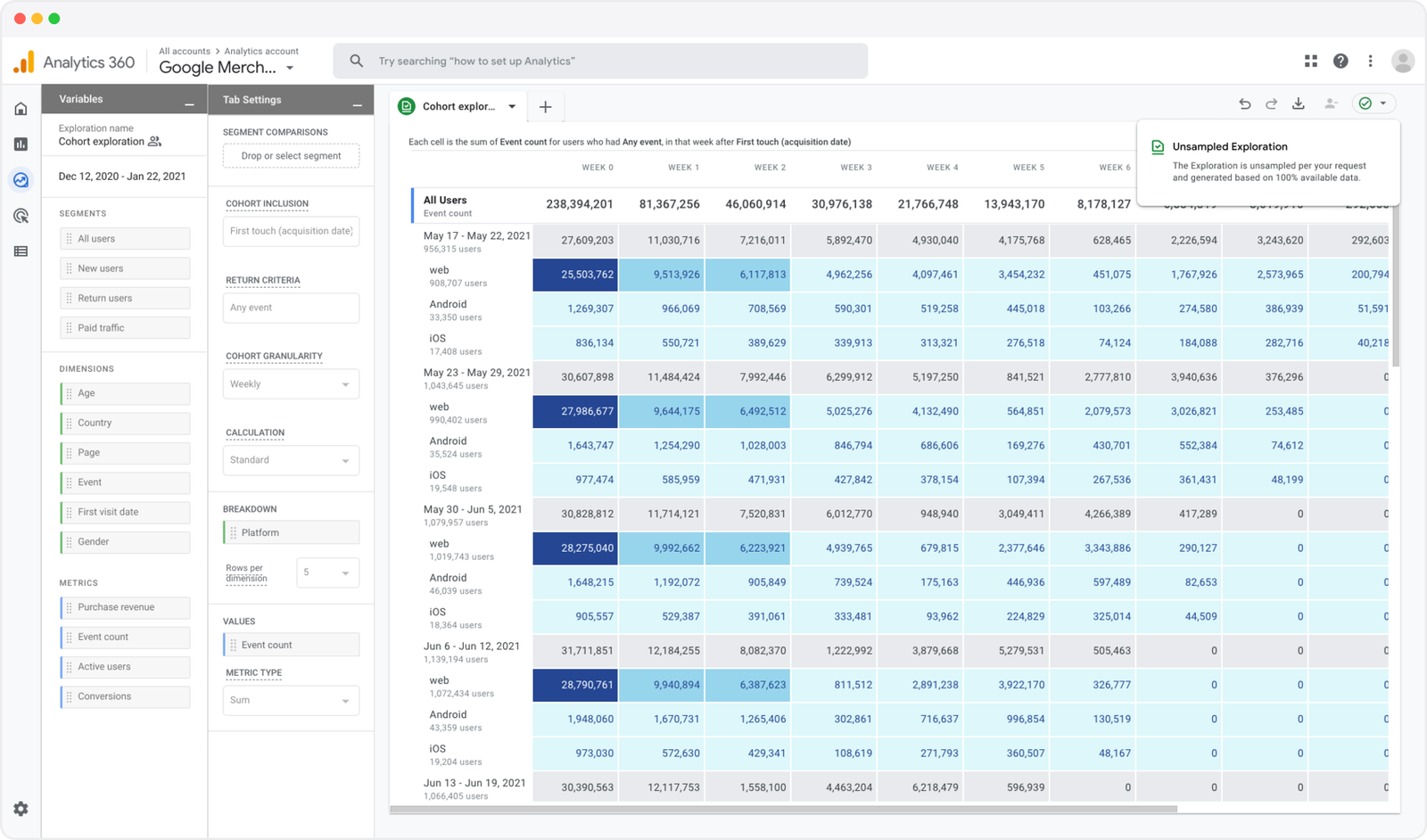
Funnel analysis can reveal where users abandon important journeys, while cohort analysis shows whether newly activated customers continue returning over time. Use these insights to identify friction, refine engagement campaigns, and measure improvements in DAU, MAU, and retention.
5. Personalize in Real-Time at Scale
Relevance = retention. Use behavioral and contextual data to trigger hyper-personalized alerts, like notifying a user when their balance dips below ₹1,000 or providing relevant savings insights after salary credit. This real-time personalization makes the app feel intelligent and helpful, not intrusive.
6. Gamify Engagement
Introduce rewards or challenges that encourage users to interact more often. Gamification taps into users’ desire for progress and recognition, keeping them motivated to return.
Use savings milestones, financial wellness challenges, and tiered rewards to recognize meaningful customer progress. For example, a budgeting app could reward users for consistently reviewing their monthly spending or reaching savings goals. Referral programs can also encourage advocacy, provided the incentives align with applicable financial services regulations.
Use savings milestones, financial wellness challenges, and tiered rewards to recognize meaningful customer progress. For example, a budgeting app could reward users for consistently reviewing their monthly spending or reaching savings goals. Referral programs can also encourage advocacy, provided the incentives align with applicable financial services regulations.
7. Re-Engage Dormant Users
Identify users whose activity has declined and segment them based on their last meaningful interaction, transaction history, and typical usage frequency. A payment app could remind inactive customers about useful features, while an investment app might highlight relevant portfolio updates. Use personalized push notifications, email, or other preferred channels to encourage a return, and measure reactivation through subsequent app activity rather than message opens alone.
Identify users whose activity has declined and segment them based on their last meaningful interaction, transaction history, and typical usage frequency. A payment app could remind inactive customers about useful features, while an investment app might highlight relevant portfolio updates. Use personalized push notifications, email, or other preferred channels to encourage a return, and measure reactivation through subsequent app activity rather than message opens alone.
Listen: Podcast: How to Re-Engage Mobile App Users
How to Measure Improvements in Fintech DAU and MAU
Increasing active users requires tracking both the size of your engaged audience and how frequently customers return. Monitor these metrics together to understand whether your engagement strategies are producing sustained improvements.Daily Active Users (DAU): Tracks unique users who perform a qualifying action each day.Monthly Active Users (MAU): Measures unique users who engage with the app during a defined monthly period.DAU/MAU Ratio: Shows the percentage of monthly active users who engage on a typical day.Activation Rate: Measures the percentage of new users who complete a meaningful first action, such as KYC verification or an initial transaction.Repeat Transaction Rate: Tracks how many transacting customers complete additional transactions within a defined period.Retention Rate: Measures the percentage of users from a defined cohort who return or remain active over a specified period.Evaluate these metrics across customer cohorts, product categories, and lifecycle stages. For example, an increase in DAU alongside stable or growing MAU may indicate stronger engagement, while a rising stickiness ratio accompanied by declining MAU requires further investigation.
Increasing active users requires tracking both the size of your engaged audience and how frequently customers return. Monitor these metrics together to understand whether your engagement strategies are producing sustained improvements.
- Daily Active Users (DAU): Tracks unique users who perform a qualifying action each day.
- Monthly Active Users (MAU): Measures unique users who engage with the app during a defined monthly period.
- DAU/MAU Ratio: Shows the percentage of monthly active users who engage on a typical day.
- Activation Rate: Measures the percentage of new users who complete a meaningful first action, such as KYC verification or an initial transaction.
- Repeat Transaction Rate: Tracks how many transacting customers complete additional transactions within a defined period.
- Retention Rate: Measures the percentage of users from a defined cohort who return or remain active over a specified period.
Evaluate these metrics across customer cohorts, product categories, and lifecycle stages. For example, an increase in DAU alongside stable or growing MAU may indicate stronger engagement, while a rising stickiness ratio accompanied by declining MAU requires further investigation.
Fintech Expert Tip: Find the Right KPIs for Your Engagement Model
Not every app will (or should) have the same engagement patterns. For example, a trading app may see more daily use than a loan management app. What matters is tracking the metrics that make sense for your specific use case.
For apps with less frequent usage, weekly active users (WAU), WAU/MAU, monthly retention, or repeat transaction rates may provide more meaningful insights than DAU/MAU alone. Define what “active” means for your app, whether it’s making a payment, reviewing a portfolio, or using a core feature, and apply that definition consistently. Evaluate these metrics alongside DAU and MAU to distinguish healthy engagement from occasional app visits.
DAU/MAU vs. User Engagement: Understanding the Difference
Stickiness and engagement are closely related, but not the same. Stickiness is a formula that compares daily to monthly usage. Engagement is broader—it looks at how often and how deeply users interact with your app over time.
Engagement is especially useful for apps that aren’t meant to be used every day. In these cases, it’s important to define what “active” means. Is it just logging in? Or completing an action like making a payment or exploring a feature?
Unlike retention, which measures whether users return after a defined period, stickiness measures how frequently monthly active users engage on an average day. A fintech app can retain customers over several months without those customers needing to use it daily.
Unlike retention, which measures whether users return after a defined period, stickiness measures how frequently monthly active users engage on an average day. A fintech app can retain customers over several months without those customers needing to use it daily.
Once you define what counts as meaningful activity, you can track engagement accordingly.
Common Pitfalls to Avoid When Measuring Engagement
Even if your app isn’t used daily, you can still use DAU and MAU in a way that fits your business. But it’s easy to make mistakes when measuring engagement. Here are a few to avoid:
- Don’t mistake launch spikes for long-term success. Just because a campaign brings in new users doesn’t mean they’ll stick around.
- Don’t copy another company’s KPIs. Your app is unique. Your metrics should be, too.
- Don’t focus on total active users alone. A large user base means little if those users don’t return. Repeat users are what really matter.
- Don’t interpret stickiness in isolation. An increase in DAU/MAU does not always indicate growth. If MAU declines faster than DAU, the ratio can rise even as the active user base shrinks.
- Don’t count every app interaction as meaningful engagement. Track actions such as transactions, balance checks, or feature usage consistently. Exclude passive or automated events that do not represent intentional user activity.
How CleverTap Can Help Your Fintech Business
CleverTap is built to help fintech businesses tackle a key challenge: driving sustained engagement across complex, regulated, and high-stakes user journeys. As a mobile-first engagement and retention platform, it enables financial apps to shape user behavior at crucial points, like onboarding, activation, or reactivation, while supporting secure, privacy-conscious customer engagement across onboarding, activation, and reactivation journeys.
For fintech apps offering payments, lending, or investment services, CleverTap supports:
- Improve onboarding and streamline KYC flows
- Nudge users toward first transactions
- Drive wallet top-ups
- Send loan repayment reminders
- Reactivate dormant users
- Recommend personalized financial products
These capabilities help fintech businesses maintain engagement over longer decision-making cycles and during critical financial interactions.
Unified Customer Data Platform
- 360° Customer Profiles: Unifies behavioral and profile data from connected sources to provide context for segmentation, personalization, and lifecycle engagement.
- TesseractDB™: Supports up to 10 years of user history and thousands of data points per user, enabling fintech brands to identify long-term engagement patterns and personalize interactions at scale.
Predictive AI & Smart Engagement
- Clever.AI guides next-best actions, curates AI-driven journeys, and personalizes recommendations using behavioral and intent data.
- Scribe helps marketers generate, edit, and refine campaign messages using brand context, preferred tone, and insights from past campaign performance.
- Predictive Segmentation detects early customer intent and life-stage changes to trigger proactive outreach.
Real-Time, Dynamic Personalization
- Event-triggered messaging enables fintech apps to send timely communications based on relevant account or transaction events, such as payment confirmations, balance updates, and application status changes.
- Dynamic segmentation based on evolving customer behavior, preferences, and context.
- Personalized journeys, offers, and multichannel campaigns tailored by lifecycle stage and intent.
Product & Experience Optimization
- Product Experiences enables A/B testing of UI/UX elements to customize the in-app experience and improve ROI.
- No-code experimentation enables marketers and product managers to make real-time changes without relying on technical dependencies.
Omnichannel Engagement
- 15+ Channels include: Push notifications, In-app, Email, WhatsApp, SMS, and more – all orchestrated from one platform.
- With Omnichannel Engagement, choose the best time to send. Optimize message delivery for maximum engagement.
Secure and Compliant Customer Interactions
- End-to-end encryption for PII data security and compliance, especially critical for regulated entities.
- Message archiving helps maintain compliance and audit readiness by archiving all customer communications.
Loyalty, Retention, and Cross-Sell
- Behavior-driven offers help incentivize specific actions based on transaction or inactivity patterns.
- Referral Campaigns can be triggered by loyalty or NPS scoring to maximize acquisition via high-value customers.
Lifecycle Marketing & Predictive Segmentation
CleverTap helps fintech brands automate personalized engagement with:
- Lifecycle Optimizer helps move users from one stage to another (e.g., “KYC Complete” → “Wallet Funded”) with minimal manual input
- RFM Segmentation automatically classifies users into groups like “At-Risk” or “Champions”
These tools are ideal for fintech apps where timing, trust, and nudges play a central role in user retention.
How a Leading Indian Bank Used CleverTap to Improve Engagement and Conversions
CleverTap enabled one of India’s top private-sector banks to elevate user engagement on its mobile app. Originally launched in 2008 to enhance digital banking, this app was revamped in 2020 to unify banking and payment services for customers of any bank. The objective: increase engagement through actions like fixed deposits, cross-sells, and journey completions.
The Challenge: Despite offering over 250 services, in-app campaigns drove only 1% of app and website traffic. The bank needed to increase product page visits, improve conversion rates for key actions, and drive more cross-sell revenue.
The Solution: The bank adopted CleverTap’s engagement and analytics toolkit, including:
- 49+ Journey campaigns to drive usage and re-engage lapsed users
- A tailored Next Best Offer (NBO) model via in-app interstitials
- Drop-off notification campaigns to recover incomplete user journeys
- Behavioral analytics (funnels, trends, pivots) for insights and optimization
The Results:
- In-app campaigns now contribute 25% of app and website traffic, up from 1%
- 4x increase in users creating fixed deposits through multiday drop-off campaigns
- 10–12% overall business growth attributed to CleverTap
“CleverTap is critical to running our day-to-day business. With analytical features like funnels, flows, trends, and pivots, we understand our customers’ behavior and how well the journeys we’ve created perform.” — Ankur Srivastava, Mobile Marketing Manager
“CleverTap is critical to running our day-to-day business. With analytical features like funnels, flows, trends, and pivots, we understand our customers’ behavior and how well the journeys we’ve created perform.” — Ankur Srivastava, Mobile Marketing Manager
Want the full story? Read the case study here.
The journey from app download to active, engaged user isn’t linear. It’s shaped by thoughtful onboarding, contextual nudges, and meaningful experiences at every turn. When fintech brands shift their focus from mere conversion to customer lifetime value, they unlock not just usage but loyalty, advocacy, and growth.
Turn behavioral insights into personalized journeys that improve activation, encourage repeat transactions, and re-engage inactive customers with CleverTap. Talk to us today!
Where Does Your Fintech App Stand?
Knowing how your app compares to others in the fintech space is the first step in improving retention. Want to see how your metrics stack up against industry averages? Check out our Fintech App Engagement Benchmark Report.
Posted on October 21, 2026