Sentry wanted everyone experimenting with AI, so people could use it however they saw fit. A few months in, the bill was climbing and nobody could tell who was spending what, on which models, or whether those models were the right fit. In July 2026, Sentry moved its internal AI usage onto OpenRouter, cleaned up roughly 500 Anthropic and OpenAI keys within three weeks, and in August it switched off direct access to both. The rollout gave Sentry tighter control and wider model access at the same time. They can now trace spend to the person or workspace behind it, and engineers can try any new model without a vendor approval.
Results
- Industry: Developer tools and observability
- Headquarters: San Francisco, California, United States
- Employees: ~400
Sentry is the application monitoring platform millions of developers use to find and fix broken code. Its customers adopt AI coding tools faster than almost anyone, and everyone at Sentry works the same way. They try new models the day they ship and build their own agents, and AI access is open to everyone.
Today, every internal tool at Sentry that needs a model API key runs through OpenRouter, including Warden, Sentry’s agent for code and security review. So does the official Sentry MCP server its customers connect to.
Nobody Could Say Where the Money Was Going
Daniel Griesser, who has spent ten years at Sentry and runs its telemetry team from Vienna, led the company’s move to OpenRouter. He describes the company’s early approach to AI tooling as the Wild West. Sentry held enterprise accounts with Anthropic and OpenAI, anyone could create API keys, and there was no process for doing so. That was deliberate. Leadership wanted people experimenting, and for a few months the arrangement worked.
The trouble started with visibility. Sentry’s co-founder David Cramer built a spend dashboard on top of the providers’ own APIs, a couple of days of work that Sentry later published on GitHub as abacus. It held up until Sentry moved to enterprise account types. Some reports arrived as a CSV of total spend, with no split by person or by model and no data on cache hits. Meanwhile, the spend kept climbing.
One case showed how much the reporting could hide. An engineer’s usage hit $3,000 a day because a custom extension on their coding harness was breaking the prompt cache on every request, so tokens that should have been served from cache were billed at full price. It ran for a couple of days before Griesser spotted it, and he only caught it because the engineer was using an API key they had created themselves. Folded into an enterprise login, he says, the same usage would never have surfaced. Once caching worked again, the engineer’s usage dropped to a fraction of that.
“We needed to change something, because it wasn’t sustainable. We had no clue where the money was going or who was spending what.” Daniel Griesser, Senior Director of Engineering, Sentry
“We needed to change something, because it wasn’t sustainable. We had no clue where the money was going or who was spending what.”
Daniel Griesser, Senior Director of Engineering, Sentry
The second problem was choice. Before OpenRouter, Sentry’s engineers had a handful of models from two providers. Getting anything else meant a new vendor approval, and for someone who wanted to spend an afternoon testing an open-weight model, that process wasn’t worth starting. Engineers who wanted to try those models used their own personal accounts, which put the usage outside anything Sentry could see.
“Adopting or randomly trying any other model through any other provider was basically a non-starter conversation.” Daniel Griesser, Senior Director of Engineering, Sentry
“Adopting or randomly trying any other model through any other provider was basically a non-starter conversation.”
Daniel Griesser, Senior Director of Engineering, Sentry
Everyone Gets a Key and a Budget
Before picking a vendor, Griesser looked at running LiteLLM to manage team access. It was doable, but Sentry would have had to host and maintain it. For managing how people across the company use AI day to day, it wanted something it didn’t have to operate.
Griesser already knew OpenRouter from his own work, and with Cramer backing the move, legal review and approvals went quickly.
“We can click everything around in the UI, set it up, and someone else has the responsibility to keep it running.” Daniel Griesser, Senior Director of Engineering, Sentry
“We can click everything around in the UI, set it up, and someone else has the responsibility to keep it running.”
Daniel Griesser, Senior Director of Engineering, Sentry
Zero data retention was a requirement, so Sentry enabled it by default and otherwise limited routing to its own provider keys through bring-your-own-key (BYOK). The coding harnesses and most workspaces run on Sentry’s existing Anthropic and OpenAI keys that way, with OpenRouter handling attribution and limits.
Rollout began at the start of July 2026. Everyone got access on day one, including teams outside engineering, and people could create as many keys as they wanted. By default, each key is bound to the user who creates it. Each workspace has an overall cap set at a budget Sentry’s CFO approved, and no workspace has reached its cap.
Moving a tool over was the quick part. Because OpenRouter exposes Anthropic-compatible and OpenAI-compatible endpoints, Griesser says it meant changing three variables and keeping the SDK the tool already used. The cleanup took longer. Only about 50 of the roughly 500 Anthropic and OpenAI keys were in daily use, and Sentry had to track down every one of them. Griesser did much of the chasing himself, giving each owner a week’s notice to create an OpenRouter key before the old one was turned off. The whole migration took about three weeks, and in August, Sentry switched off engineers’ direct access to both platforms, so they can no longer create keys there.
Trying a New Model Now Takes a Config Change
In its first three months on OpenRouter, Sentry’s account used 147 models. That count treats each version as its own model, so several Claude and GPT lines appear more than once. When a new model ships, such as a Grok or Gemini 3.7 release, an engineer points a key at it and runs the eval.
“It used to take some time to get a new model approved. And now it’s not a problem anymore.” Daniel Griesser, Senior Director of Engineering, Sentry
“It used to take some time to get a new model approved. And now it’s not a problem anymore.”
Daniel Griesser, Senior Director of Engineering, Sentry
In a July post on X, Cramer wrote that Sentry benchmarked Grok 4.5 against the eval suites for Warden and Junior, and that it performed well for its price and latency. On the account, Grok 4.5 became one of the largest models by spend.
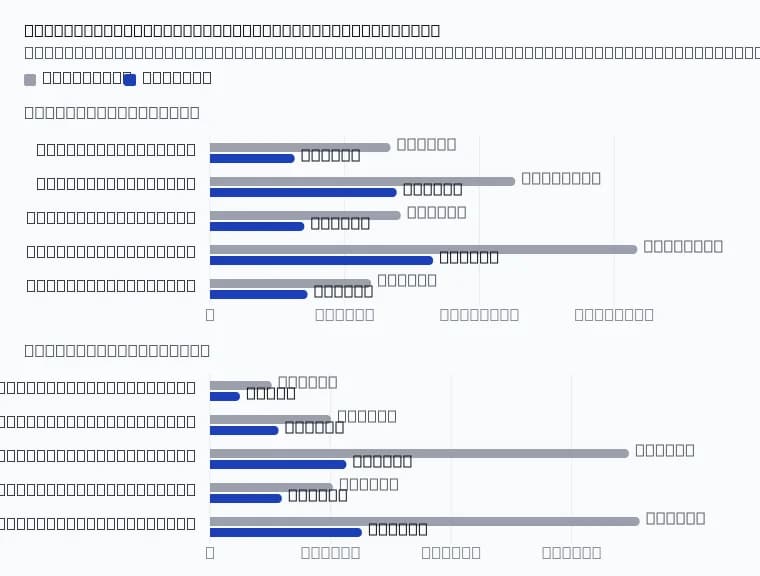
Frontier models still carry most of Sentry’s usage. Open-weight models took about 12% of tokens, most of it from Kimi K2.6 running eval suites for Sentry’s internal tooling, Warden included.
“People definitely experimented with the open-weight models, and for some use cases are using them because they’re more cost-efficient for the task they need their model to do.” Daniel Griesser, Senior Director of Engineering, Sentry
“People definitely experimented with the open-weight models, and for some use cases are using them because they’re more cost-efficient for the task they need their model to do.”
Daniel Griesser, Senior Director of Engineering, Sentry
GPT-5.6 Luna is the default for high-volume tools like the official Sentry MCP server, and it carried 30.8% of the account’s tokens for 5.2% of its model spend.
Teams Bring Their Own Tools
By token volume, the second most-used coding tool on Sentry’s account is Pi, a minimal open-source terminal agent from Earendil, nearly matching Claude Code. Behind them come OpenCode, Codex, Cursor, and a long tail of agents Sentry’s engineers built themselves, all running on the same account.
“It’s such a nice experience if you’re using your own agent harness, or building an agent yourself. You have one key, you can configure which model you want to use.” Daniel Griesser, Senior Director of Engineering, Sentry
“It’s such a nice experience if you’re using your own agent harness, or building an agent yourself. You have one key, you can configure which model you want to use.”
Daniel Griesser, Senior Director of Engineering, Sentry
113 people now have accounts, and they reach past engineering. Rahul Chhabria, Sentry’s VP of Marketing, built a production service to run Sentry’s startup program, and it now runs on OpenRouter. The support team built its own evals on the same account. In all, 45+ apps send traffic through it.
Every Request Has an Owner
The move to OpenRouter didn’t change the volume of Sentry’s spend, Griesser says. Because keys are bound to users or workspaces, every request ties to an owner and a model, and usually to the tool that sent it. Any engineer can click their username and see what they’ve spent.
Outliers Surface in the Dashboard
Griesser skims the dashboard about every two weeks. In late September, he found $8,000 of usage on a single key in Sentry’s Tools workspace. The key had the wrong owner. An engineer had created it for a tool someone else owned. Griesser renamed it and turned it into a workspace key. Keys can move between workspaces, or from a person to a workspace, without regenerating the token, so nothing had to be redeployed.
Sentry now sets a $1,500 weekly budget per person in its default workspace, and every workspace has its own cap. Those limits are its guardrail against spend outliers. When a key hits its limit, it stops. Either the person asks why, or a notification fires, and the question gets escalated.
“Before, it was very easy that one engineer or one user was able to explode our overall AI bill, because there was no control and no guardrail, and no backstop.” Daniel Griesser, Senior Director of Engineering, Sentry
“Before, it was very easy that one engineer or one user was able to explode our overall AI bill, because there was no control and no guardrail, and no backstop.”
Daniel Griesser, Senior Director of Engineering, Sentry
Leadership Stopped Bracing for Surprises
For Sentry’s engineering leadership, the limits put a ceiling on surprise bills. Asked what he would tell another engineering leader weighing the same move, Griesser kept it short.
“Adopt it and don’t look back. It just solves problems that you don’t really want to spend time with.” Daniel Griesser, Senior Director of Engineering, Sentry
“Adopt it and don’t look back. It just solves problems that you don’t really want to spend time with.”
Daniel Griesser, Senior Director of Engineering, Sentry