As the days get colder and the calendar fills with holiday plans, many of us find ourselves reaching for tissues a little more often. In the Centers for Disease Control and Prevention’s (CDC) November 20, 2026 update, seasonal influenza and COVID-19 activity are increasing in many parts of the United States, while rhinovirus/enterovirus (RV/EV) and respiratory adenovirus (HAdV) are elevated nationally.
Oura’s own data show a similar seasonal pattern. Among 248,359 members in five countries, Symptom Radar notifications were more common in October through December 2025 and early October 2026 than in the same members’ January-through-September months. Notifications rose in every country: by 24.5% in Germany, 24% in the UK, 19% in the US, and about 12% in India and the UAE.
Most of the time, you don’t realize you’re getting sick until the sore throat or chills start. By then, your body has likely already launched an inflammatory response. The time between exposure to an infectious disease and the first symptoms is known as the incubation period. Some of your body’s response during that window may show up in your Oura data.
Member Tip: Symptom Radar helps identify early signs of strain in your body, empowering you to take proactive steps toward rest and recovery. It needs at least seven nights of sleep data in the past 14 days, so it’s key to wear your ring to bed consistently.
How Do Wearables Track Early Signs You May Be Getting Sick?
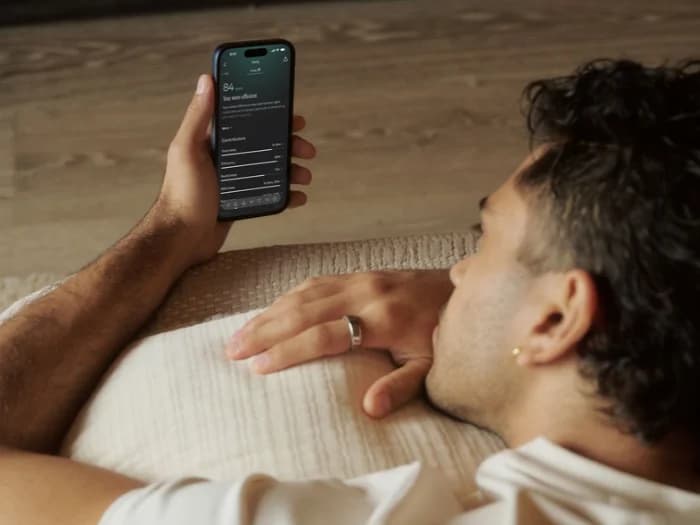
When you get sick from an infection, your immune system has a lot of strategies it can deploy to help you heal. This usually shows up as signs of strain in your body. Oura’s Symptom Radar feature looks for changes in your Oura data that may indicate something is straining your body and shows one of three results each morning: No signs, Minor signs or Major signs.
Where Did Symptom Radar Come From?
In the UCSF-led TemPredict study, temperature data from the first 50 participants who reported COVID-19 showed that fever often began before people reported symptoms, and sometimes in people who never reported other symptoms at all. A later TemPredict paper analyzed data from 63,153 participants and trained a research algorithm on 73 confirmed cases, using temperature alongside heart rate, heart rate variability, respiratory rate, and activity. On average, the algorithm detected physiological changes 2.75 days before participants were tested, while symptoms began about two days before testing.
That research became the groundwork for Symptom Radar, which Oura’s teams developed and refined over several years before it launched in December 2024.
Member Tip: If you’re pregnant, your baseline signals shift substantially, and Symptom Radar may interpret some of those changes as strain on your system. Interpret Symptom Radar, and all data, in the context of your symptoms, vaccinations, and infectious disease exposures.
How May Your Sleep Change When You’re Sick?
On nights when Symptom Radar showed signs of strain or members tagged themselves as sick, they went to bed earlier and slept a little longer, but the extra time was lighter and more broken.
The figures below come from Oura’s Flu Season 2026 analysis of members in Germany, India, the UAE, the UK and the US. It compared each member’s illness nights from October to December 2025 and October 1–22, 2026 with their own nights without illness from January through September of both years. Ranges show the lowest and highest results across the five countries.
Across all nights, sleep barely changed between seasons, with total sleep shifting by less than five minutes and Sleep Score by less than a quarter of a point, so these changes show up mainly on illness nights. Some of the lower Sleep Score on illness nights is expected, since the same changes that can prompt Symptom Radar to show signs of strain, such as a higher temperature or heart rate, can also disturb sleep.
Member Tip: When you’re feeling under the weather, add a Cold, Flu, Sick, or FeverTag to your day, along with Tags for things like late caffeine or alcohol. Later, you can look back at your Trends to see how those habits lined up with your recovery.
What Can You Do When Symptom Radar Shows Signs of Strain?
When Symptom Radar shows signs of strain, treat it as a prompt to check in with yourself. How you feel is more important than any single reading, and you know your body best. If the result lines up with low energy or early symptoms, these habits may help support your body while it recovers:
- Prioritize sleep: If you can go to bed earlier or squeeze in a mid-day nap, it may support your immune system. In a 2021 review, people who regularly slept less than the studies’ “normal” range had about 30% higher odds of colds and other upper respiratory infections.
- Drink more fluids: A fever can increase how much water you lose, and it’s easy to drink less than usual when you don’t feel well. Warm drinks like tea or broth may also help soothe a scratchy throat.
- Prioritize rest over hard workouts: A walk may be fine if you feel up to it, but intervals, heavy lifting, and long sessions can wait. Many sports medicine physicians say symptoms above the neck, such as a runny nose, sneezing, or a mild sore throat, may be fine for light activity. Fever, vomiting, diarrhea, or a wet cough are signs your body would benefit from rest. Once you feel better and any fever has been gone for at least 24 hours, you can gradually.
Member Tip: If you’re feeling sick, you can turn on Rest Mode and pause your Activity Score, activity goal, and activity contributors, so the app stops nudging you to move while you recover.
When To Contact Your Care Team
There are some red flag symptoms that should prompt you to seek medical care. These include if you have trouble breathing, chest pain or chest pressure, a high fever that won’t come down, confusion, cannot stay hydrated or have symptoms that improve and then return worse.
It may also be worth talking to your doctor if you are very early in the course of illness, and you have a likely exposure to someone with an infection like influenza or COVID-19. If someone is early enough in their infection’s course, treatment with appropriate antiviral medications can decrease the risk of needing to be hospitalized or having complications. This is especially true if you are at higher risk for infectious complications, like if you are pregnant, taking immunosuppressive medications, or have other medical conditions like asthma, diabetes, and heart disease.
How Can You Tell If You’re Recovering?
Start with how you feel—if your symptoms are easing and your energy is coming back, you’re likely on the road to recovery. Your Oura data can give you more information as your signals drift back toward your usual range over several nights. This might look like your temperature settling back to its usual range, your HRV returning to your baseline, and Symptom Radar showing No signs again.
Frequently Asked Questions
Is there a device that can tell me when I might be getting sick before I feel symptoms?
A wearable can sometimes pick up the physiological changes that come with early illness, such as a rise in temperature, change in breathing, resting heart rate, or HRV before symptoms appear. In early research using the Oura Ring, fever onset often showed up in temperature data before people reported symptoms. Other factors like alcohol, travel, hard training, stress, or pregnancy can cause similar shifts.
How do wearables detect early signs of illness?
Wearables worn overnight can monitor biometrics that tend to shift when you are getting sick, including temperature, respiratory rate, resting heart rate, and HRV. Because everyone’s baseline is different, the most useful approach compares those signals with your personal baseline and demographic information. Symptom Radar looks for several small changes happening together, which may reveal strain.
What’s the best way to know if my body is recovered enough for a workout?
Start with how you feel. If any fever has been gone for at least 24 hours and your symptoms are limited, light exercise may be fine. Your Readiness Score, resting heart rate, and HRV Balance can show whether your body is back near its usual range. It’s recommended to build back gradually. If you have chest pain, shortness of breath, or a high fever, talk with a healthcare provider before returning to exercise.
This article is for informational purposes only and is not medical advice. Oura Ring is not a medical device and is not intended to diagnose, treat, cure, or prevent any disease. Symptom Radar may not work optimally for people with pre-existing medical conditions or during pregnancy. Talk with a healthcare provider before making any changes and seek care promptly if your symptoms are severe or worsening.