As the AI overlords descend upon us, spreading their gospel to the impressionable masses while hiding behind the ever-present asterisk reminding us to check their facts, business myths can quickly start to sound like established facts.
Let’s cut to the chase: Myths tend to be overblown. They’re fun on their own, reminding company leadership that everyone has their Achilles’ heel, but they create a culture of doubt and miseducation, which, in a business setting, can make or break deals.
For MSPs, a guaranteed contract is what they strive for. In other words, they need to be convincing enough to land a deal, for which they must demonstrate certain qualities, including their own cyber resilience. But here’s where myths tend to mix things up, possibly overstating, or worse, understating an MSP’s qualities.
So, before the mythmakers (human or AI-powered) reshape expectations beyond recognition, it’s worth clearing the fog. MSP cyber resilience is too important to leave to half-truths. Let’s unravel five myths that can tank a deal faster than any malware, and get to what resilience should look like.
Key points of this article: MSP/client relationships are laced with myths. These myths distort decision-making, potentially costing an MSP their contract, and a business the support they might need. This support could reinforce their cyber resilience, despite quite a few misconceptions about what it takes to achieve it. An MSP isn’t just a resilience checkbox, and their capabilities may not be enough to take you all the way from prevention to full protection. Due diligence commands both parties understand the full scope of their relationship and tailor their expectations accordingly. As cloud becomes the center point of business activity, its weaknesses need to be studied, and, while some forms of quick recovery like backups might offer additional resilience, they’re not the be-all and end-all. At the forefront of the resilience debate, however, is its overall relevance for even smaller businesses. They might see it as overkill, but, against a quickly evolving threat landscape supported by malware-as-a-service actors, anyone can be targeted, even the MSPs themselves.
Key points of this article:
- MSP/client relationships are laced with myths. These myths distort decision-making, potentially costing an MSP their contract, and a business the support they might need.
- This support could reinforce their cyber resilience, despite quite a few misconceptions about what it takes to achieve it.
- An MSP isn’t just a resilience checkbox, and their capabilities may not be enough to take you all the way from prevention to full protection. Due diligence commands both parties understand the full scope of their relationship and tailor their expectations accordingly.
- As cloud becomes the center point of business activity, its weaknesses need to be studied, and, while some forms of quick recovery like backups might offer additional resilience, they’re not the be-all and end-all.
- At the forefront of the resilience debate, however, is its overall relevance for even smaller businesses. They might see it as overkill, but, against a quickly evolving threat landscape supported by malware-as-a-service actors, anyone can be targeted, even the MSPs themselves.
Myth one: An MSP relationship is just a resilience checkbox
When risk reduction is the name of the game, MSPs serve a prominent role in hacking away at the term “IT resilience” through their specialist knowledge and practical experience. This often works out great for the contract issuers; they get to deal with their bread and butter (let’s say, car parts production) while their MSP partner keeps their IT running. No fuss, no stress, and a box checked for the insurer to see that their tech-related needs are well-maintained.
But, do you know what your MSP actually does? Conversely, is the MSP ready to put the oven mitts on and pull out the parts manufacturer from under a heavy burn (e.g., a cloud-enabled supply-chain attack)?
MSPs, like companies, vary. Some only do basic monitoring, with the occasional ticket solving, while others commit to advanced capabilities like identity protection, continuity planning, or professional security (in the form of MSSPs). These realities (or, should I say, limits?) need to be understood by both sides of a contract; otherwise, scope and maturity considerations could easily set the paper bearing the checkbox on fire.
Myth two: MSP = prevention = resilience
In cybersecurity, it is understood that a major tool MSPs use is remote monitoring and management software, of which there are multiple kinds, from those offering bespoke integrations with security platform components to simpler ones with a “less action, more observation” approach. In any case, an MSP’s eyes should be on the business.
However, beyond routine checks and software-enabled automation lies an assumption that any form of regular monitoring equals a degree of prevention of, if not resilience to, IT troubles.
This couldn’t be further from the truth. Depending on the MSP and the scope of their contract, they might not offer a proper “security umbrella.” What’s more, an MSP’s security troubleshooting may be limited to general support, unlike the specialist capabilities of an MDR service or a security-focused MSSP. Cybersecurity isn’t necessarily an MSP’s core business, just as a car mechanic wouldn’t necessarily have the expertise to work on airplane engines.
Mind you, some MSPs do offer these services. But, when offering specialized security monitoring, there are a lot more liabilities involved, and it could bring a lot of overhead to the budget due to the insurance required, more staffing costs … you get the picture. It’s practically the same reason why SMBs don’t usually go for in-house SOCs.
Mind you, some MSPs do offer these services. But, when offering specialized security monitoring, there are a lot more liabilities involved, and it could bring a lot of overhead to the budget due to the insurance required, more staffing costs … you get the picture. It’s practically the same reason why SMBs don’t usually go for in-house SOCs.
All things considered, when discussing MSP-provided prevention, focus on what kind of resilience you require, and work with your partner to develop preventive measures that support it. It takes two to tango, after all.
Myth three: All you need is a few backups
An interesting perspective that’s often discussed within companies and, perhaps, even MSPs, is that, for heightened resilience, backups are enough. They solve all your remediation problems in a few clicks, reverting from a pesky malware infection to a few days ago, when everything was hunky-dory.
Except, ransomware can also encrypt or delete file backups. In fact, ESET Research and our MDR teams have seen multiple cases of ransomware actors like Mallox or CosmicBeetle going after company backups to strengthen their extortion schemes. So, unless an organization is actively following the 3-2-1 backup rule, they might be in big trouble.
Also, who’s to say the backups wouldn’t be too outdated, misconfigured, or even unrecoverable? Storage, be it hard drives or flash drives, can start failing in time. So, some redundancy needs to be implemented if backups are being used anyway. Therefore, be it an MSP or a company looking for resilience advice, think of backups as only one component of a broader recovery strategy.
Myth four: Cloud is secure on its own
Ah, cloud, a buzzword whose role got taken by AI. Or has it? As organizations progressively adopt cloud-powered solutions (AI being one of them), they might assume that a service from a reputable vendor is inherently secure, requiring no further scrutiny.
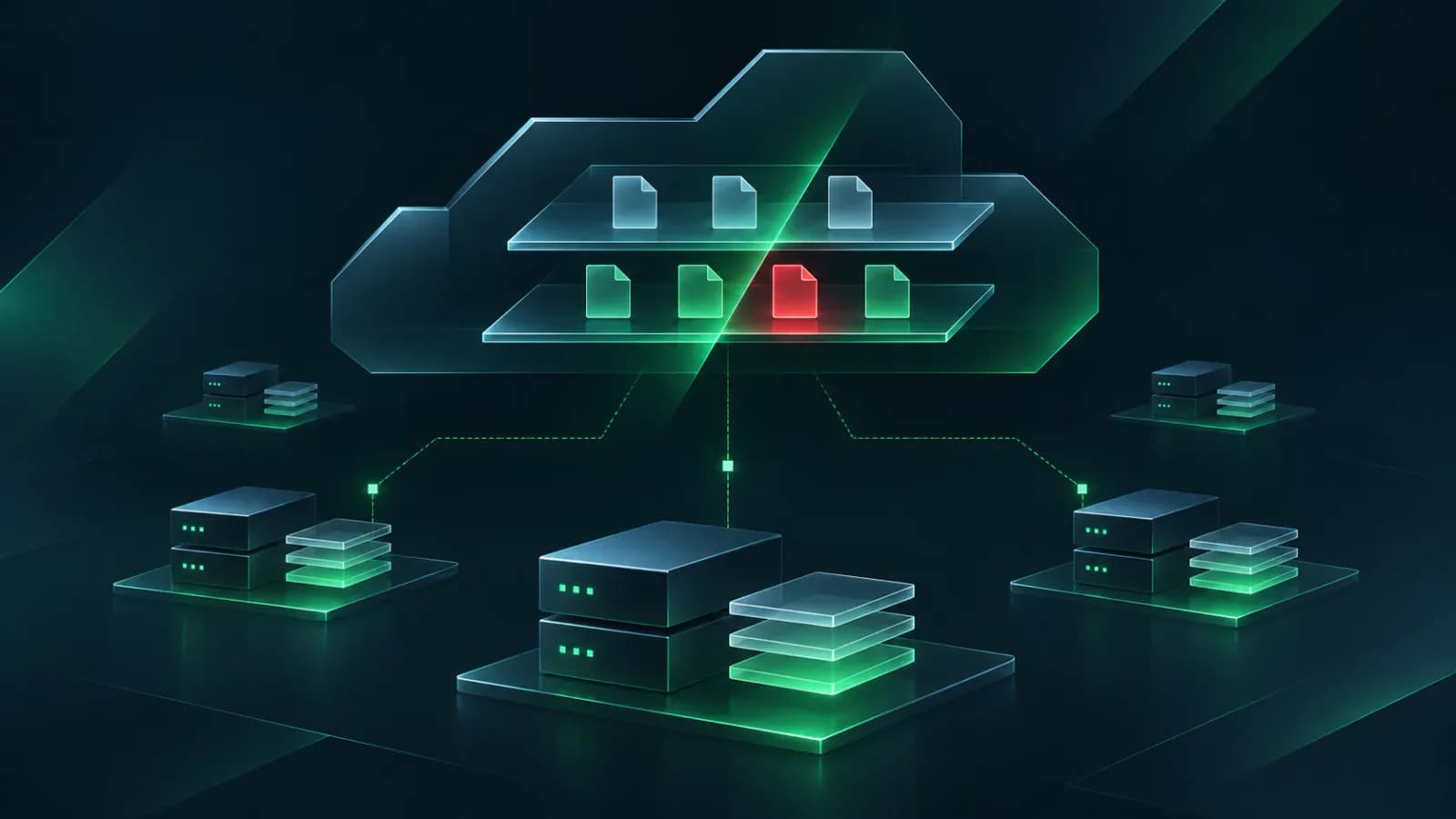
RMM solutions can also be cloud-based, and the same is true for some security platforms used by MSPs. And the more software-as-a-service (SaaS) tools you or your partner use, the lengthier the supply chain gets … increasing threat exposure.
We have countless cases of SaaS falling prey to exploitation, with key companies breached. Not even open-source software is free of this danger.
We have countless cases of SaaS falling prey to exploitation, with key companies breached. Not even open-source software is free of this danger.
For an MSP using cloud-powered software or managing a company that uses it, it’d be a good idea to plan for the cloud vulnerability gap with appropriate zero-trust frameworks as well as continuous monitoring with a capable open XDR solution. While the former safeguards access privileges, the latter can monitor discrepancies from the norm. This becomes especially useful when an MSP’s own tools are turned against them, which is a tactic that modern threat groups such as MuddyWater like to employ.
Myth five: Resilience is overkill for smaller companies
The last myth is, from a broader POV, related to costs. Having not experienced a breach, many companies, especially smaller ones, would scoff at contracting a security-minded partner. It’s an extra cost, and why would they even pay for one when basic endpoint security is enough? Any resilience is good resilience, is it not?
This assumes that attacks only target larger organizations, and wholly underestimates the risk inherent in not having proper support.
First off, downtime can be costly for SMBs trying to get by, and a breach can add further financial strain. For context, IBM’s 2026 Cost of a Data Breach Report puts the global average cost at US$4.99 million. Second, with ransomware-as-a-service (RaaS) operators like RansomHub lowering the barrier to entry for attackers, the expectation is that more widespread attacks will happen. Notably, MSPs themselves have already been targeted, to be exploited as attack vectors in said context.
So, what gives? Are SMBs ready to forgo resilience for some meager returns? If SMBs, and, honestly, even MSPs of such size, are to remain protected, it might make sense to search for a partner with a proven track record that can maintain their business continuity or extend it to their clients.
Conclusion: Busting the resilience mythos
If MSPs endeavor to win the trust of potential or even current clients, they must demonstrate measurable resilience. A partner cannot rely on vague assurances of protection, especially when there are bad actors out there looking to exploit one’s miseducation and false sense of security.
FAQ: MSP resilience myths
What is MSP cyber resilience?
MSP cyber resilience is a managed service provider’s ability to maintain and restore IT services when disruptions or cyberattacks occur. It involves more than monitoring or prevention: service scope, continuity planning and recovery capabilities all matter, so clients should confirm which responsibilities their MSP covers.
Does using an MSP guarantee cybersecurity and business continuity?
No. MSP services vary, and routine IT monitoring does not automatically include specialized security or business continuity support. Review the contract to understand whether it covers identity protection, incident response and recovery, and where an MSSP or managed detection and response (MDR) service may be needed.
Are backups enough for MSP cyber resilience?
No. Backups are one part of a broader recovery strategy. Ransomware can encrypt or delete backups, and outdated, misconfigured or unrecoverable copies may not support recovery.
Are cloud-based MSP tools automatically secure?
No. Cloud-based remote monitoring and management (RMM) tools and other software-as-a-service platforms can introduce vulnerabilities and supply-chain exposure. MSPs should account for these risks through appropriate access controls, zero-trust approaches and continuous monitoring rather than relying solely on a vendor’s reputation.
Why do small businesses need cyber resilience?
Small businesses can also be targeted by cybercriminals, and downtime or a breach can strain their finances. Cyber resilience helps them prepare for disruption rather than rely on basic endpoint security alone. A suitable MSP or security partner can support business continuity, depending on the services agreed.