First published in Puunvuoro, September edition, 2024.
Overview
During the past 20 years, digitalization has transformed the pulp and paper industry, and its value has been widely recognized in the field.
“Corporate investment programs are driving transformation, and digitalization is already generating value. For many of our customers, implementing digital solutions with existing legacy systems to improve paper machine performance has been a cost-effective way to start their digitalization journey,” says Stefano Cinquina, Global Business Line Manager Pulp and Paper, ABB Process Industries.
Attracting a new generation of digitally literate workers to the pulp and paper industry is difficult in some areas because there is a perception that the industry is outdated.
“Especially in Europe and North America, there is a shortage of employees in the field. The skills demand has changed, and pulp and paper plants need more skilled workers than they did twenty years ago. The employees need to be able to operate complex systems. Therefore, there is a need to upskill the existing personnel and attract a new generation of employees.”
Recruiters should look outside the box
Cinquina points out that the industry needs experts from many fields, for example physicists and electronic and optical engineers.
“In countries like Finland, where the pulp and paper industry is a significant employer, engineering students have an accurate view of the business, but that is not the case in many other countries. I encourage people to learn across industries, and employers to look at a broad range of relevant skills instead of focusing on narrow specializations when they are recruiting.”
Unlike previous generations, employees today seldom want to stay with one company or even in the same line of work for decades.
“Pulp and paper mills should not try to replace any outgoing or retiring employees on a like-for-like basis. They should rather break down his or her expertise and build a team with the right skills. New employees may bring their experience from other fields with them,” Cinquina says.
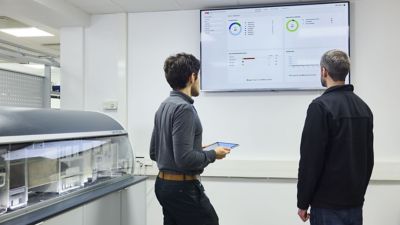
Digitalization can help in transferring knowledge from one employee to another. Operators can find answers to problems with the help of digitalization and generative AI. The intelligent machines can suggest corrective settings in order to optimize operational effectiveness.
“Each plant does not need to have senior experts in every specialized field, since remote support for problematic situations can be used. Digital information from assets at the mill can be accessed remotely via the cloud.”