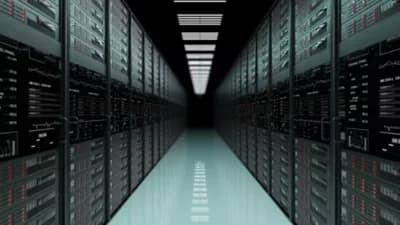
Data centers, the backbone of our digital lives, face a surge in energy needs due to AI, rising to as much as four percent of total electricity use by 2030. However, by embracing energy-efficient solutions and automation, data centers can be leaders in the global energy transition.
Web Story
2024-07-21
<p>Data centers, the backbone of our digital lives, face a surge in energy needs due to AI, rising to as much as four percent of total electricity use by 2030. Beyond data centers themselves, peak electricity demand in the U.S. is forecast to grow 26% by 2035, with data center infrastructure alone potentially reaching 176 GW — five times today's levels. This represents just one component of a broader electrification wave.<br> </p>
<p>Data center energy consumption will more than double between now and 2030 due to soaring demand for AI and other compute-intensive applications. However, this must be viewed within the context of broader electrification pressures: electricity demand globally is growing 2.5 times faster than overall energy demand, driven by industrial electrification, electric vehicles, heat pumps, and building cooling.<sup>1</sup></p>
<p>Data center operators are looking to optimize how they source and use energy for greater reliability and lower greenhouse gas emissions</p>
<p>ABB supports data centers in the energy transition with a wide range of solutions for greater energy efficiency and fossil-free power</p>
DATA CENTERS AND THE ENERGY TRANSITION
<p>From video streaming to artificial intelligence (AI), data centers are the humming powerhouses behind our always-on world. These specialized facilities are home to computer servers, often numbering in the thousands.</p> <p>Massive growth in AI applications and the energy-hungry graphics processing units (GPUs) that support them is now driving unprecedented levels of electricity demand. For example, a search in a popular AI chatbot requires 15x the power of a traditional search engine query.<sup>2</sup> Accordingly, data center energy demand is projected to increase 160 percent by decade’s end, from 1-2 percent of global electricity consumption today to 3-4 percent by 2030.<sup>3</sup></p> <p>There are roughly 8,000 data centers in the world; together, they account for around one percent of total global energy-related greenhouse gas emissions, according to recent analysis by the <a href="https://www.iea.org/energy-system/buildings/data-centres-and-data-transmission-networks">International Energy Agency</a> (IEA). Remarkably, this puts the emission levels from these facilities nearly on par with whole segments of the economy, such as chemicals and aviation.</p> <p>While surging demand for data center capacity presents a challenge, it's also an opportunity. By embracing energy-efficient technologies and automation, data centers can become key players in the energy transition, ensuring a sustainable future for the digital age.</p>
THE ENERGY-EFFICIENT DATA CENTER
To support data centers, ABB offers a comprehensive portfolio of solutions designed to increase power density (a measure of how efficiently data center space and resources are utilized) and optimize energy use — from substations to power protection, from cabling to cooling, and more. Equally critical is integrating data center infrastructure with broader grid requirements: as grids become more constrained (with 2,500+ GW of projects stalled in connection queues), on-site renewable integration and grid-interactive capabilities become essential to data center operators seeking reliable, sustainable power.
"At ABB, we understand that increasing demand for data requires more power – and this means more energy consumption. Our data center power and automation solutions optimize performance and energy efficiency, helping data centers to be reliable and future-ready while reducing their impact on the planet." Giampiero Frisio, president, Smart Power, ABB
"At ABB, we understand that increasing demand for data requires more power – and this means more energy consumption. Our data center power and automation solutions optimize performance and energy efficiency, helping data centers to be reliable and future-ready while reducing their impact on the planet."
Giampiero Frisio, president, Smart Power, ABB
OPTIMIZING DATA CENTER POWER
<p>ABB’s solutions for data center operators address a variety of power-oriented challenges, including ensuring power availability, maximizing uptime and increasing energy efficiency. Acting like backup batteries for an entire facility, highly efficient <a href="https://new.abb.com/ups/systems">uninterruptible power supply</a> (UPS) systems provide reliable power to IT equipment in data centers. If the main power goes out, the UPS kicks in seamlessly, providing enough power to keep servers running and prevent critical data loss. UPS systems are far greener than the diesel generators that have traditionally served as backup power for data centers.</p> <p>ABB’s UPS systems boast industry-leading efficiency ratings, minimizing energy losses during power conversion. Our smart power solutions, including HiPerGuard and MegaFlex UPS systems, for medium- and low-voltage respectively, address these core needs by ensuring availability, uptime, reliability and security. </p> <p>ABB offers a broad range of <a style="background-color: rgb(255,255,255);" href="https://new.abb.com/data-centers/powerdistribution">power distribution systems</a> for data centers, from the substation to the facility’s main grid for its support systems and the server room itself. These distribution systems include transformers, which step down voltage from the main electricity grid to the lower voltages used by the IT systems found in data centers. ABB's high-efficiency transformers are designed for low energy losses (i.e., energy lost through heat), ensuring efficient power delivery throughout the facility.</p> <p>The <a href="https://new.abb.com/news/detail/116182/new-500-petaflop-data-center-operates-with-innovative-abb-power-solution">KCY Cloud Data Center</a> in Sichuan province, China, exemplifies how data centers can achieve significant energy efficiency at scale. With a clear focus on supporting AI applications, this enormous facility boasts a processing power of 500 petaflops (500 x 1015 calculations per second), making it one of the region's largest data centers.</p> <p>Minimizing downtime and ensuring a reliable power supply were top priorities for the company. ABB provided KCY with a space-saving solution for data center power distribution using high-performance circuit breakers, as well as software for improved energy management.</p>
HARNESSING FOSSIL-FREE ENERGY
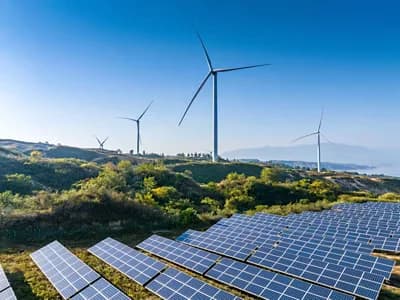
Data centers are also increasingly seeking ways to incorporate non-fossil energy sources like solar, wind and nuclear power into their operations – and even supply energy generated on site with renewables (e.g., solar installations) into the grid. Microgrids offer opportunities for data centers to leverage on-site generation coupled with battery energy storage systems (BESS) as part of their energy mix.
By integrating renewable energy sources like solar and wind power into the microgrid, data centers can reduce their dependence on fossil fuels. The BESS acts as a buffer, storing excess renewable energy during peak generation and releasing it during periods of high demand, ensuring a reliable and clean power supply for the critical operations of the data center.
DATA CENTERS AS PART OF BROADER BUILDING ELECTRIFICATION
Data centers are not operating in isolation. The building sector is the largest contributor to additional global electricity demand through 2030, accounting for 49% of growth. This includes data centers, office buildings, residential spaces, and other infrastructure all competing for grid capacity. Data center operators who integrate automation, demand response, and renewable energy management not only improve their sustainability profile but also become grid-supporting assets.
INNOVATIVE COOLING TECHNOLOGIES
<p>The IEA points out that while approximately 40 percent of total energy consumed within a data center is attributable to server resources, an equal share is associated just with the cooling of data center infrastructure, which produces a lot of heat.<sup>5</sup> Improving the energy efficiency of cooling systems has a huge payoff for data center operators in terms of both lower costs and reduced emissions.</p> <p>ABB optimizes cooling with solutions like <a href="https://new.abb.com/data-centers/cooling-system">high-efficiency motors and variable speed drives</a> (VSDs) for heat management applications like pumps, fans and compressors. The ABB motors powering these data center cooling systems run at very <a href="https://new.abb.com/service/service/motion/energy-efficiency-and-circularity/energy-savings-calculator">high efficiency</a>, saving electricity versus outdated models. Intelligent VSDs adjust motor speed in real-time based on specific cooling needs, reducing energy consumption significantly compared to traditional fixed-speed operation.</p> <p><a href="https://datacentre.solutions/blogs/57922/ultra-low-harmonic-drives-the-sustainable-solution-to-data-center-cooling" target="_blank" rel="noopener noreferrer">Ultra-low harmonic (ULH) drives</a> offer significant benefits for data centers by providing greater energy efficiency at partial loads (i.e., where cooling systems are not operating at maximum capacity). The high power quality, enhanced operational reliability and easier integration and maintenance of ULH drives make them a sustainable and economical long-term cooling solution.</p> <p>Additionally, ABB offers advanced airflow management solutions that ensure efficient heat distribution within the data center, minimizing wasted energy.</p> <p>Excess heat from data centers, traditionally released into the atmosphere, presents a unique opportunity for sustainable district heating as well (a district heating system is a centralized network of insulated pipes, usually connected to a power plant, that delivers heat and hot water to multiple buildings in a community). This is a true win-win: Data centers benefit from a reduction in energy associated with cooling, while communities can harness this readily-available heat source, minimizing reliance on fossil fuels.</p> <p>ABB’s expertise in automation and control systems, including supervisory control and data acquisition (SCADA) and intelligent pump control, is instrumental in managing the complex dynamics of these integrated systems. ABB's VSDs also play an important role in optimizing energy efficiency and ensuring reliable operation of heat pumps within district heating networks.</p>
DATA CENTER AUTOMATION
Automating key processes within data centers, such as cooling systems and lighting, with ABB Ability™ Data Center Automation solutions can lead to significant energy savings. Sensors and control systems support optimal equipment operation and minimize energy waste.
Proactive maintenance is crucial for ensuring data center equipment operates at peak efficiency and assets can remain in use for longer.
ABB Ability™ Digital Powertrain solutions continuously monitor and assess the health, performance and energy use of key equipment, including motor-driven systems like pumps and fans, helping to make better decisions for safer, more efficient operations.
Global telecommunications firm Ericsson partnered with ABB for automation of their data center operation near Stockholm, Sweden. The system unifies power management, building management and fire safety systems, providing Ericsson with centralized control and real-time insights. This allows for faster response times to potential issues and minimizes downtime risks, while increasing the energy efficiency of the site.
Footnotes: