First published in Pulp & Paper Logistics in the May/June 2020 issue.
Myth #1: Automated testing is too expensive
While automated paper testing solutions have a higher initial cost than stand-alone instruments, mills achieve a good payback fairly rapidly through quality improvement and a reduction in rejects. Automated testing can perform up to ten times as many measurements in the same time as it takes for manual testing, delivers better accuracy and can automatically store and manage quality information.
The results generated by automated testing are instantly available remotely and if available, can be linked with other tools such as data historian systems to enable analysis of the impact of process adjustments. Reducing dependence on manual testing also frees up human resources to focus on quality improvement while reducing quality control costs. Paper mills focusing on Six-Sigma levels of quality achievement will benefit greatly from the increased volume and accuracy of paper quality data.
Myth #2: Paper mills need to upgrade to an advanced quality system in order to fully utilize all the test data automated testing provides
Modern automated testing provides all the analytical tools needed to review paper quality and optimize production. Detailed cross-machine information makes it easier to maintain high quality across the width of the entire jumbo reel while ensuring all rolls delivered meet end-users’ required specifications.
Built-in dashboards typically include tools to follow both short- and long-term quality trends and detect deviations so corrective actions can be taken. While results can be transmitted to other quality systems, the built-in data visualization software includes the necessary functions for quality management, so it is not necessary to upgrade any other systems to see immediate value.
Myth #3: Automated testers give different results than stand-alone testing equipment
Since the dawn of automated testing, equipment manufacturers have striven to use the same measurement principles as the benchtop instruments, following ISO procedures and calibrated to the same standards. No correlation is required when an automated testing module uses identical components as the benchtop instruments, thus providing identical test results.
Myth #4: Detailed cross-machine sample testing is not necessary or too expensive
Manual testers typically take measurements at only three positions across the machine and the process can be adjusted using these measurements. Automated systems, however, can make more frequent measurements, e.g. every 30 cm across a 10 m wide machine, in the same time or less.
This not only gives a more accurate average, but constantly provides profile information that can be used to verify online sensors and adjust the cross-machine profile of parameters such as moisture, basis weight, thickness and gloss. Without accurate measurements, these parameters cannot be controlled, and quality suffers. To achieve this manually, more resources and more budget are needed, whereas with automated testing, no extra labor or material costs are required to obtain this increased testing frequency as well as detailed CD profiles.
Myth #5: Operation of an automated tester requires extensive training to operate and maintain
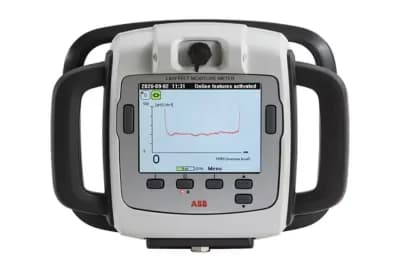
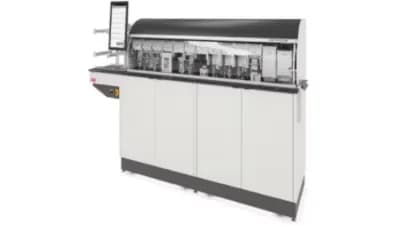
The latest automated testing systems are simple to operate, requiring minimal training. For example, with ABB’s newest L&W Autoline, the intuitive touchscreen interface and trouble-free paper feeding systems further reduce operator involvement compared with previous generations. Once a paper sample is fed into the device, testing starts by touching the screen, with results automatically collected and organized into reports that are available mill-wide. Maintenance procedures are very similar to those of the benchtop instruments when they use the same measurement principles.
Myth #6: Testing feedback time is not critical
Many people think that having rapid feedback of test results is not critical because the quality data is only used for quality assurance, and not for quality and process optimization. Standard testing procedures require conditioning of the paper for up to several hours before testing. But if machine operators can have quality information within 15 minutes of a turnup, they can avoid production outside quality limits and the expense of rejecting paper.
An automated paper tester such as ABB’s L&W Autoline takes a machine-width strip of paper from a finished reel of paper and can conduct several different tests at multiple cross-direction positions within about 10 minutes, providing rapid feedback to operations. This avoids multiple steps in manual testing, such as sample preparation, sample conditioning, manually entering values, calculations, compiling data and comparing to quality specs.
Myth #7: It is hard to service equipment running 24/7
Automated paper testing equipment runs 24 hours a day and 7 days a week, and it’s important to keep it running smoothly. Users typically have a service agreement to take care of equipment maintenance that they can’t handle themselves. Mills seeking to implement automated testing should be confident that their chosen equipment supplier has a reliable, worldwide network of service representatives to handle this requirement and this maintenance can be non-interruptive to the system, allowing continuity of quality testing.
Myth #8: Automated testing equipment will not meet our specific requirements
The latest automated testing equipment is highly customizable, meeting the needs of mills of all sizes and with different levels of testing requirements.
Building on the legacy of almost 50 years of automatic paper testing, ABB’s L&W Autoline has been continuously improved in terms of efficiency, testing capabilities, scalability and ease of use. New modules have been developed to provide testing of many different types of paper, from fine paper to board. Each L&W Autoline is scalable and customizable, in that the testing modules to be included are selected by the users to match their needs in a system that is now available in two sizes. If needs change, the modules are “plug-and-play” - easily swapped in and out of the system.
The latest Autoline can even start testing a second sample before a first sample is finished, which can save up to 20% of overall testing time. The data collection system manages all the results coming from each of the individual testing modules and matches them up with the cross-machine position and sample number. The equipment also queues samples, so that a user does not need to be present to start testing of the next sample as soon as the equipment is available.
Debunking myths with facts: 30 years of automated testing at Stora Enso’s Langerbrugge mill
Stora Enso’s paper mill in Langerbrugge, Belgium, makes recycled newsprint and supercalendered paper, and has relied on the L&W Autoline for the majority of its lab testing since the 1990s. It first purchased the equipment to minimize the need for manual testing, reduce the number of instruments needed and obtain cross-machine profile data in order to optimize quality requirements. In 2019, the mill upgraded its Autoline equipment.
“Thirty years of experience with L&W Autolines made it an easy decision to proceed with a new generation last year,” says Monique Gistelinck, Technology Manager at the mill. “We rely on the Autoline to deliver high uptime and trustworthy results. It is unthinkable nowadays to work without this system.”
Overcoming misconceptions for higher quality achievements
For today’s paper and packaging mills, the costs of implementing automated testing are outweighed by its multiple benefits. With a typical return on investment of less than two years achievable through detailed quality reports and faster process optimization, more mills should be ready to make this transition. Ensuring a competitive edge comes from the comprehensive, accurate and rapid test results that are easily achieved with automated paper testing.
PAPER INDUSTRY STATISTICS
It’s estimated that digitalization could save the pulp and paper industry $20 billion by 2025, raising productivity, reducing waste, and keeping mills safe.