Key takeaways:
- The Genesis Mission aims to integrate quantum, AI, and high-performance computing to accelerate scientific discovery, energy innovation, and national security.
- IBM is contributing quantum hardware, software, and research to help advance quantum-centric supercomputing across government, industry, and academia.
- Recent initiatives span quantum error correction, quantum algorithms, fault-tolerant quantum computing, and applications in materials science, energy, and high-energy physics.
- IBM researchers are exploring hybrid quantum-classical approaches for materials simulation, molecular modeling, and fusion-energy research.
- IBM expects quantum, AI, and classical computing to work together as a unified compute framework for solving increasingly complex scientific challenges.
One year ago, the US Department of Energy kicked off the Genesis Mission, a federal initiative launched to build an integrated quantum, AI, and high-performance computing platform for scientific discovery, energy innovation, and national security. To honor this anniversary, we are reprinting the below article, originally published in the Fall 2026 edition of Issues in Science and Technology.
But things are moving fast. Even since publishing this story, IBM has made important progress toward realizing the mission’s objectives across quantum algorithms, scientific discovery, energy research, and the development of useful, fault-tolerant quantum systems. In the past month alone:
- Oak Ridge National Laboratory (ORNL), IBM, and AMD launched a co-design platform for quantum error correction, combining IBM QPUs with AMD GPUs and CPUs to help researchers define and accelerate the classical and quantum workflows for scientifically relevant quantum computing applications in materials science, chemistry, and energy research.
Oak Ridge National Laboratory (ORNL), IBM, and AMD launched a co-design platform for quantum error correction, combining IBM QPUs with AMD GPUs and CPUs to help researchers define and accelerate the classical and quantum workflows for scientifically relevant quantum computing applications in materials science, chemistry, and energy research.
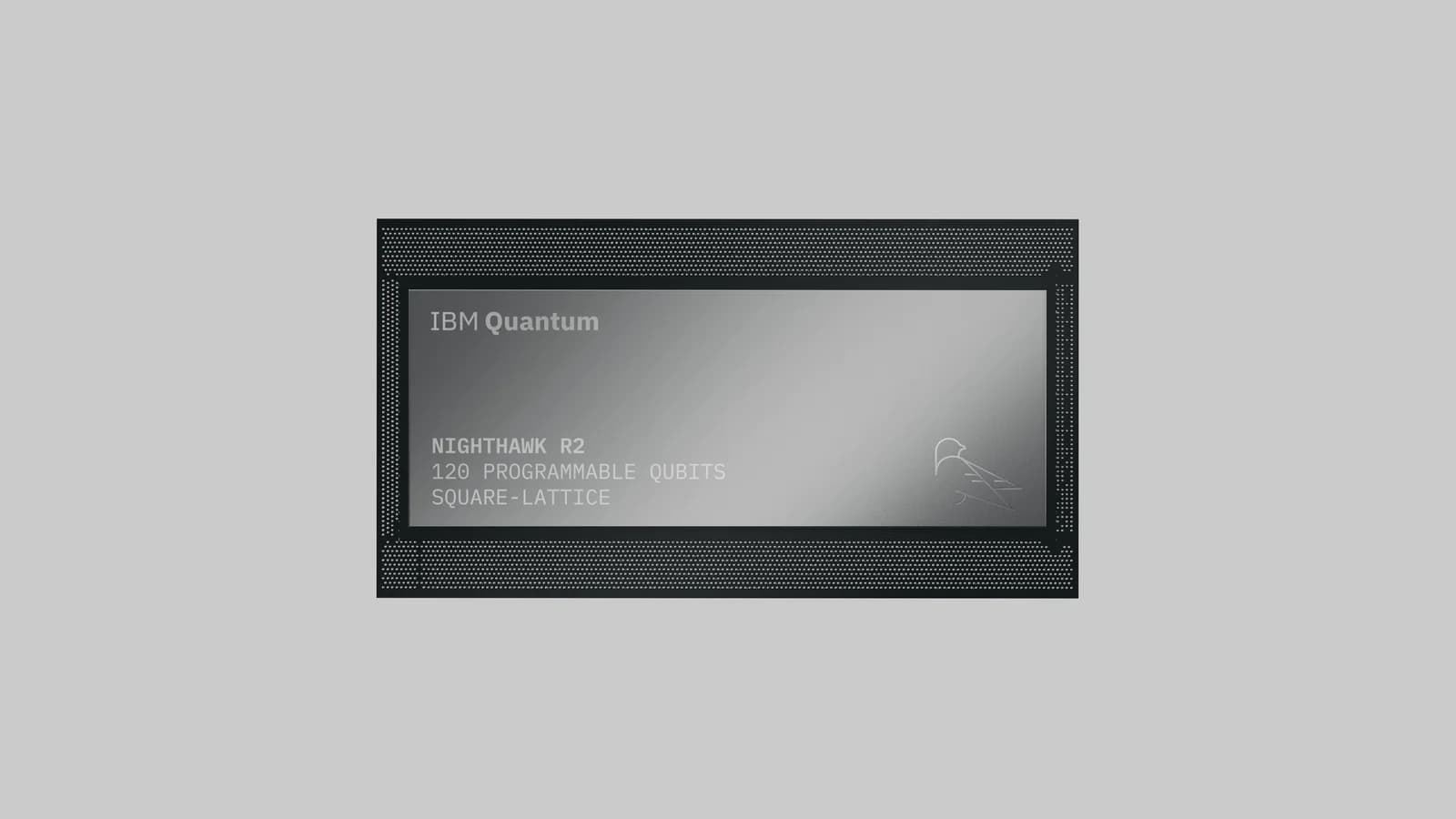
- IBM deployed an IBM Quantum System Two with an IBM Quantum Nighthawk r2 processor at the University of Chicago's Hyde Park Labs to support the National Quantum Algorithm Center (NQAC) and the wider Illinois quantum ecosystem, advancing quantum algorithms and applications for use cases in drug discovery, energy, and high-energy physics.
IBM deployed an IBM Quantum System Two with an IBM Quantum Nighthawk r2 processor at the University of Chicago's Hyde Park Labs to support the National Quantum Algorithm Center (NQAC) and the wider Illinois quantum ecosystem, advancing quantum algorithms and applications for use cases in drug discovery, energy, and high-energy physics.
- IBM and NVIDIA announced integration of the open-source Quantum Resource Management Interface (QRMI) with Slurm’s Hierarchical Resources (HRES) feature to give Slurm, the high-performance computing (HPC) workload manager NVIDIA develops, more visibility into quantum resources and workloads.
IBM and NVIDIA announced integration of the open-source Quantum Resource Management Interface (QRMI) with Slurm’s Hierarchical Resources (HRES) feature to give Slurm, the high-performance computing (HPC) workload manager NVIDIA develops, more visibility into quantum resources and workloads.
- IBM and NVIDIA, together with Fermi National Accelerator Laboratory (Fermilab), announced the upcoming launch of a modular quantum computing co-design platform to explore computationally demanding problems in high-energy and nuclear physics.
IBM and NVIDIA, together with Fermi National Accelerator Laboratory (Fermilab), announced the upcoming launch of a modular quantum computing co-design platform to explore computationally demanding problems in high-energy and nuclear physics.
- IBM and AMD announced Pelagos, an open-source framework that tests quantum error correction decoders against billions of simulated error patterns on GPUs, helping accelerate the development of fault-tolerant quantum computing.
IBM and AMD announced Pelagos, an open-source framework that tests quantum error correction decoders against billions of simulated error patterns on GPUs, helping accelerate the development of fault-tolerant quantum computing.
As we celebrate the Genesis Mission’s first anniversary, we are excited to see the incredible progress toward building the future of computing as a community effort across government, industry, and academia, and even more excited about the path that lies ahead.
The US Department of Energy’s Genesis Mission aspires to accelerate an evolution in computing that can help the United States address national and global challenges faster. The initiative connects the expertise and resources of DOE’s national laboratories with a consortium of the country’s leading industry, academic, and philanthropic organizations. As a Genesis consortium member, IBM is contributing access to its hardware, software, and research across artificial intelligence and quantum computing. More importantly, IBM’s involvement in Genesis provides its ecosystem of members and users across enterprises and universities with new opportunities to advance quantum-centric supercomputing. This combination of quantum, AI, and classical computing can soon be used to perform calculations beyond the ability of any single compute architecture, solving major hurdles in science that have previously strained classical-only systems.
This capacity has been a long time in the making. Quantum computing emerged in the 1960s and ’70s from research studying the physics underlying computation itself. Both classical and quantum computers represent a unit of information as a string of binary digits. Systems computing classical information can only manipulate a single binary string at a time, while systems capable of computing quantum information assign amplitudes to every possible bitstring at once, and then use constructive and destructive interference to change the value of these amplitudes. At the end of the computation, called a quantum circuit, these amplitudes turn into probabilities used to determine a single bitstring output.
This form of computation provides a mathematical framework to create algorithms that would otherwise require exponentially more classical compute resources to tackle. Quantum algorithms have widespread applicability for problems across life sciences, energy, chemistry, machine learning, optimization and logistics, and more.
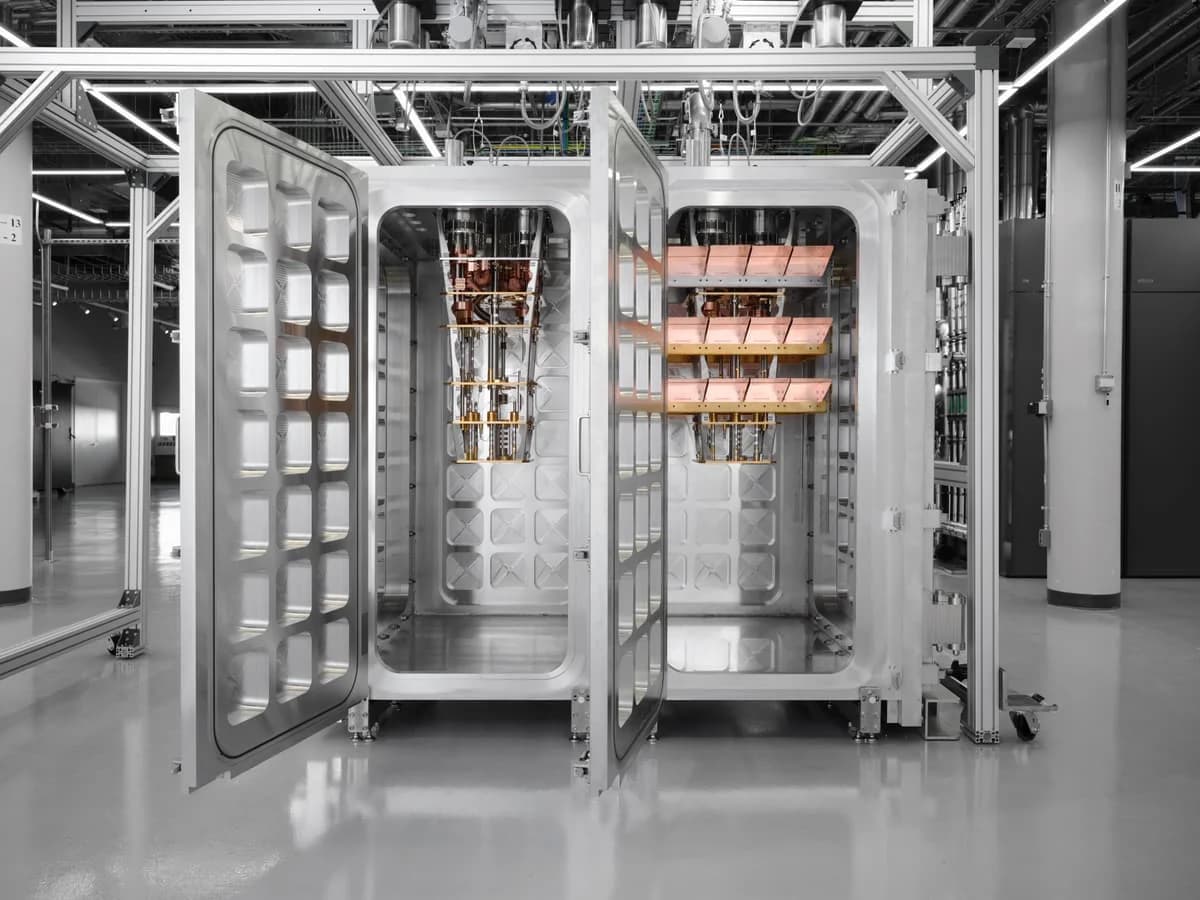
Since the first quantum algorithms emerged in the 1990s, companies around the world have attempted to build hardware capable of running them—in essence, devices that offer fine-tuned control over real or engineered atoms to recreate the mathematics of quantum mechanics. Among the most promising architectures are superconducting qubits: chips produced using similar processes to today’s microchips but incorporating superconducting materials, which display quantum properties and conduct current without resistance. These chips must be kept isolated in dilution refrigerators at temperatures colder than deep space to maintain their quantum properties and reduce sources of noise.
Quantum algorithms have widespread applicability for problems across life sciences, energy, chemistry, machine learning, optimization and logistics, and more.
IBM is collaborating with partners across the United States and around the world to realize the quantum-centric supercomputing framework capable of running these algorithms. In 2024, we installed an IBM Quantum System One on the campus of Rensselaer Polytechnic Institute (RPI) as part of the Curtis R. Priem Constellation. Together, we are researching closed-loop workflows across this system and RPI’s Artificial Intelligence Multiprocessing Optimized System supercomputer. We are doing similar work alongside the RIKEN Center for Computational Science in Japan, running workflows across an IBM Quantum System Two and the Fugaku system, ranked the ninth-largest supercomputer in the world.
These collaborations informed IBM’s publication of a reference architecture for quantum-centric supercomputing, which describes how other high-performance computing centers can co-locate quantum computers and next-generation classical computers with open software and standard interfaces. The Genesis Mission offers an opportunity to test this approach at a national scale. DOE’s national laboratories run some of the world’s most capable supercomputers. IBM will bring quantum resources into that platform through access to our systems—open interfaces that let lab software use a quantum computer like any other system, and workflows co-designed with lab scientists. This integration will take years to build and prove, so the work must begin now.
Equally important is the ongoing work to discover new quantum algorithms and use cases. As a member of the Quantum Science Center (QSC) at Oak Ridge National Laboratory, IBM is contributing to research into quantum algorithms for hybrid quantum-classical systems that can be used to simulate materials. QSC is one of five National Quantum Information Science Research Centers created by the National Quantum Initiative Act of 2018. Each center is committed to solving problems across quantum hardware, software, and algorithms. (IBM is a member of four of the five centers.)
To further advance promising quantum-centric supercomputing applications in large-scale materials and molecular simulation, IBM Research scientists are also exploring a family of techniques called quantum diagonalization methods, which split computation problems across classical and quantum computers. In the spring of 2026, IBM, Cleveland Clinic, and RIKEN used these techniques to simulate a protein-ligand complex with over 12,000 atoms, the largest biologically meaningful molecular simulation performed with quantum hardware to date. The classical computing components were performed on the Fugaku supercomputer at RIKEN and the Miyabi-G supercomputer operated by the University of Tokyo and the University of Tsukuba.
Beyond these applications, there is broad agreement that hybrid compute is required simply to advance quantum computing. A project led by IBM researcher Kristan Temme to use large language models to search scientific literature to find problems that could benefit from existing quantum algorithms was selected as part of Genesis Mission’s first request for applications. Other research uses AI models to find optimal error-correcting codes to advance fault-tolerant quantum computing. By 2029, IBM plans to deploy the first fault-tolerant quantum computer, called IBM Quantum Starling, which will be able to accurately run a hundred-million quantum operations on 200 fault-tolerant qubits. We expect to further this research as part of our collaboration in the Genesis consortium.
Another example of how AI and quantum are interacting can be seen in recent work from IBM, Oak Ridge National Lab, and a consortium of partners on one of the Genesis Mission’s key interests: nuclear fusion. Together, we studied the composition of molten salts lining the inside of a tokamak reactor to optimize the generation of tritium fuel necessary for nuclear fusion, using up to 64 qubits and 2,654 two-qubit gates. The quantum-centric calculation matched leading classical methods without the simplifications such calculations usually require. In this case, researchers employed AI agents to study 70 years’ worth of experimental data on molten salts and propose specific candidates to be explored further with quantum-centric supercomputing. AI is also helping to uncover the thermal properties of these materials.
All told, the Genesis Mission clarifies the nation’s aims for the future of computing: to accelerate scientific discovery and solve the world’s hardest problems by building a single compute framework combining the latest hardware, software, and algorithms across classical, quantum, and AI.
We hope that Genesis will further define quantum’s role in a quantum-centric supercomputing workflow; that the large-scale integration of resources can yield great strides in using AI to mature error correction; and that the design and implementation of quantum-centric supercomputing algorithms will indeed achieve the initiative’s goals to “accelerate discovery science, strengthen national security, and drive energy innovation.” We are eager to see this translate to real wins for more Americans.
The mission closely aligns with IBM’s vision. IBM has been a leader in quantum computing since the field’s inception. IBM fellow and information theorist Charlie Bennett helped devise the mathematical basis for quantum, and theoretical physicist David DiVincenzo outlined the five minimum requirements for creating a quantum computer while working as a researcher at IBM.
IBM was the very first to put a quantum computer on the cloud for anyone to program. The company has deployed over 90 systems and maintains a fleet of processors with over 100 qubits capable of running up to 7,500 quantum operations each. And it was at an IBM-sponsored conference in 1981 that physicist Richard Feynman argued that “nature isn’t classical, dammit, and if you want to make a simulation of nature, you’d better make it quantum mechanical, and by golly it’s a wonderful problem, because it doesn’t look so easy.”