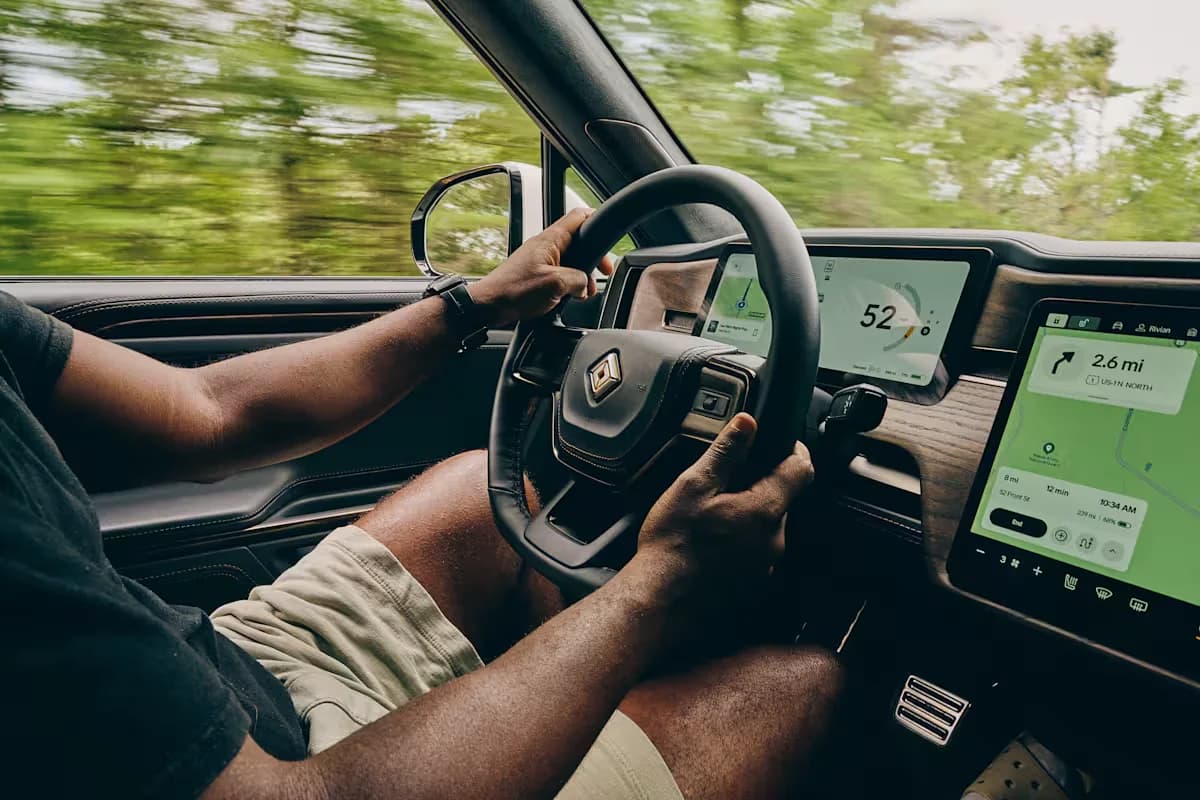
Love or hate it, a manual transmission changes the driving experience. If you’re thinking about switching to an electric vehicle (EV), you may be wondering whether all EVs are automatic or if some models let you shift gears yourself.
EVs typically don’t shift gears in the same way that gas-powered vehicles do. Electric motors deliver power to the wheels differently from gasoline engines, allowing EVs to accelerate smoothly without the pauses you feel with traditional gear changes.
Let’s take a closer look at how EVs’ gears function and what driving an electric car feels like.
When you’re driving an EV, it can feel like driving a gas-powered vehicle with automatic transmission. EVs usually have the same gear selections you’d find in a gas car with an automatic transmission: P (for Park), R (for Reverse), N (for Neutral) and D (for Drive).
Most EVs drive much like automatic cars, but their powertrains work differently. A conventional automatic transmission shifts between multiple gear ratios, while most EVs use a single-speed transmission and don’t need to change gears as they accelerate. Some EVs are multi-speed, but they’re the exception — not the rule.
How an EV transmission works
A gasoline engine operates most efficiently within a certain range of engine speeds. If they spin too slowly, the engine can’t make enough power to speed up the car. Multiple gears help keep it within those ranges as vehicle speed changes.
A gas car has several gears to make sure the engine’s moving parts don’t spin too slowly or too fast as the car picks up speed, much like the gears on a bike that help you pedal at a steady pace.
An electric motor works well across a wider speed range. The motor produces strong torque (the twisting force that turns the wheels) from a standstill and keeps working well as speed climbs. One gear ratio covers everything from creeping out of a parking spot to cruising on the highway.
The gears in a car are housed inside a transmission, also called a gearbox. The transmission transfers power from the engine or motor to the wheels. In a gas vehicle, the transmission holds several gears and switches between them as you drive.
But an EV transmission is simpler, typically with a single-speed gearbox. In other words, an EV uses one gear from a stop all the way to highway speed, so the electric car gearbox never needs to shift.
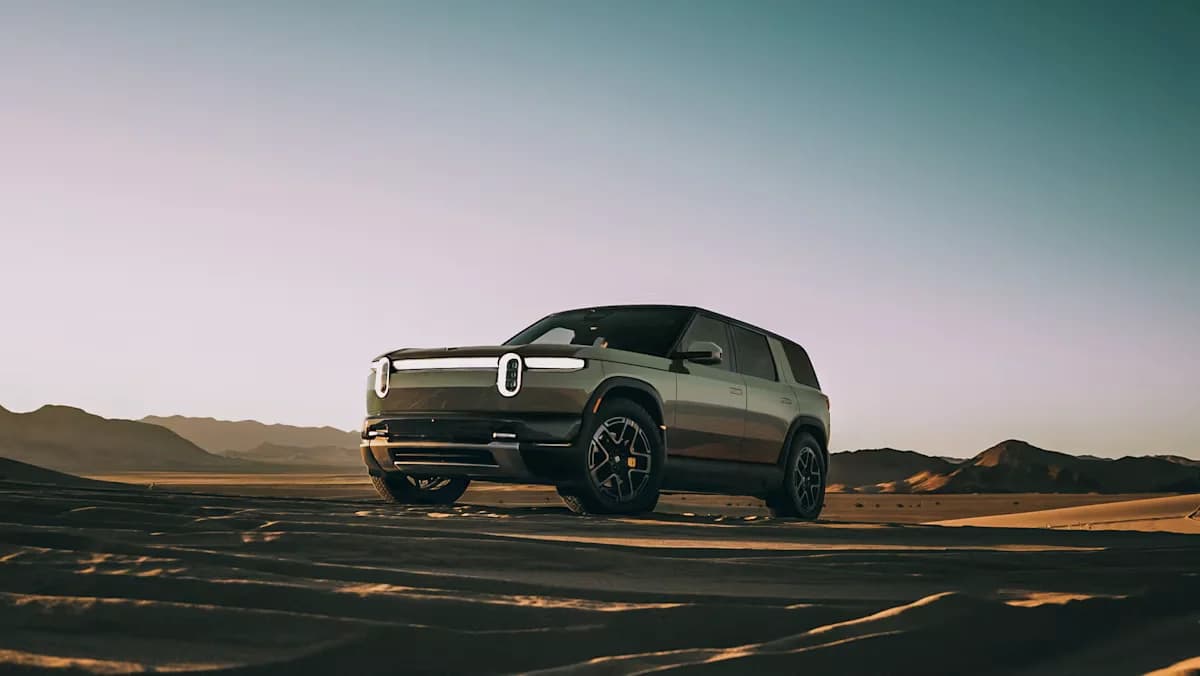
In an R1T or R1S, you can pick the gear position P, R, N or D with the drive stalk on the right side of the steering wheel. Push the stalk fully down for Drive and all the way up for Reverse. A partial push up selects Neutral, and the button on the end of the stalk selects Park.
What does an electric car feel like to drive?
The first thing many new EV drivers notice is how smoothly the vehicle accelerates. The motor never pauses for a gear change, so electric car acceleration builds in one steady push. Electric motors run quietly and smoothly, and when you push on the accelerator pedal, the response is immediate.
This makes navigating stop-and-go traffic easier. With no clutch to work, inching through a parking garage takes less footwork. Most EVs also use regenerative braking, which slows the car when you lift off the accelerator and sends some energy back to the battery.
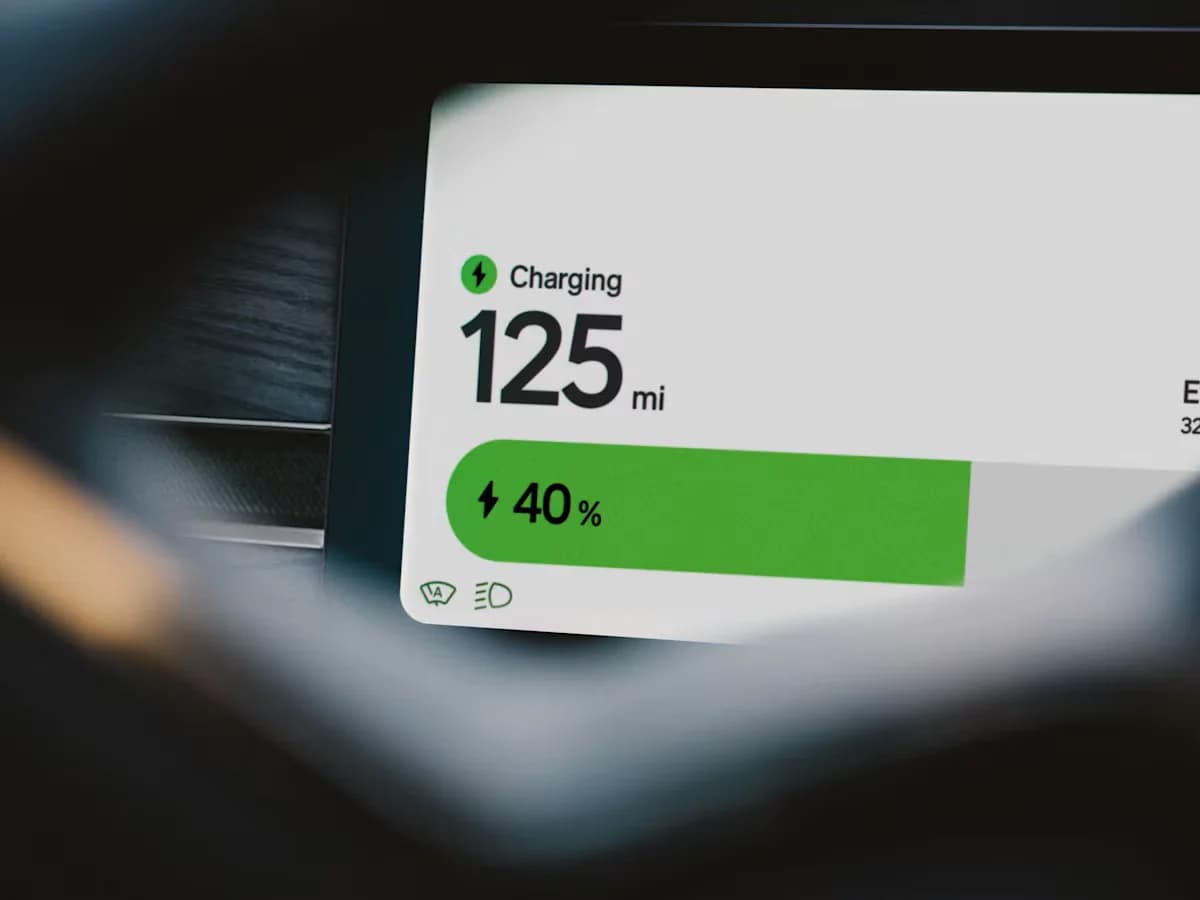
R1T and R1S enable you to adjust how the vehicle slows down. You can set regenerative braking to low, standard or high. On the high setting, your vehicle slows down quickly and sends more energy back to the battery, while low allows the vehicle to slow down more gradually.
Regenerative braking also allows you to use the accelerator pedal to both speed up and slow down. Press the pedal to accelerate and ease off to let regenerative braking slow down and stop the vehicle under normal conditions, though drivers should always remain alert and ready to use the traditional brake pedal whenever an immediate or firmer stop is needed.
In R1T and R1S, you can set the suspension to soft, moderate or firm. A softer setting smooths out bumps on a rough road, and a firmer setting feels steadier when you turn corners.
Drive Modes make R1T and R1S even easier to set up for your drive ahead. Instead of adjusting each setting yourself, you pick a Drive Mode with one touch. Your Rivian vehicle sets the accelerator response, regenerative braking, suspension and steering to suit where you’re going.
Rivian also updates the software regularly, so you can get new features over time. For example, a recent software update allows you to keep Standard ride height in Sport Mode, one of the Drive Modes.
Can electric cars have manual transmissions?
Technically, yes, an electric car manual transmission is possible. Engineers are testing multi-speed gearboxes for EVs. But multi-speed EV gearboxes are rare outside of research projects, and most EVs don’t need them to drive well.
A true manual transmission uses a clutch pedal to connect and disconnect the gearbox from receiving power from the engine, and the driver picks each gear while driving. Manual-style EVs mostly simulate gear shifting through software systems.
In simulated shifting, the software creates the feel of changing gears instead of using real gears. When you move the gear stick, the software briefly changes the motor’s power, so the car feels like it’s changing gears. Some cars also play engine sounds through the speakers.
The R1 Quad-Motor’s software gives drivers hands-on control. RAD Tuner lets you build your own Drive Modes by adjusting power output, torque bias and brake regeneration, giving you tailored performance on demand.
Experience electric driving with Rivian
Whether automatic or manual, a gas car switches between several gears to send power to the wheels. On the other hand, an EV sends power from the motor to the wheels through one fixed gear. Because the motor never pauses for a shift, an EV speeds up smoothly.
R1T and R1S also let you adjust regenerative braking, suspension and ride height to suit the road you’re on. Book a demo, and feel what it’s like to drive without gear changes.
FAQ
Can electric cars stall like gas-powered cars?
Electric cars generally don’t stall like gas-powered cars with manual transmissions. A gas engine has to keep running even when the car is stopped, and the engine can stall if you let the clutch out too fast. An EV has no clutch, and an EV doesn’t need to keep its motor idling when the vehicle is stationary, so you can start moving slowly or quickly without the car losing power.
Do electric cars have a reverse gear?
Most EVs back up by running the motor in the opposite direction, so the single-speed gearbox doesn’t need a separate reverse gear. Backing up works the same way as in a gas car with an automatic transmission. You select Reverse, check your surroundings and press the accelerator.
Do electric cars need transmission fluid?
An EV doesn’t use the automatic transmission fluid found in many gas cars. The EV’s gearbox still holds fluids that lubricate the gears, but EVs have fewer fluids that need regular service overall.
Informational purposes only. The information provided in this article is intended for general informational purposes only. It does not constitute professional advice or expert guidance. Where appropriate, seek professional assistance. While we strive to ensure accuracy, we do not assume any responsibility or liability for any inaccuracies, omissions or errors in this content.